
 Worksheets
Phylums Mollusca & Echinodermata
Total questions: 35
Worksheet time: 20mins
Mollusks have
bilateral symmetry
radial symmetry
no symmetry

To which group of mollusks does this squid belong?
cephalopod
bivalve
gastropod

To which group of mollusks this clam belong?
Gastropods
Cephalopods
Bivalves
Arthropods
Which is the group of mollusks that has a spiral-shaped shell?
Gastropods
Cephalopods
Myriapods
Bivalves

To which group of mollusks this octopus belong?
Cephalopods
Gastropods
Bivalves
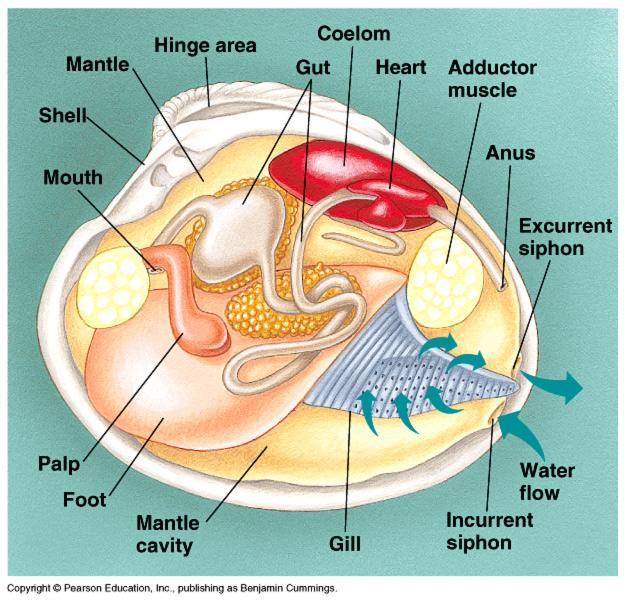

Which part of the Mollusk body contains most of the organs?
Foot
Visceral Mass
Trochophore
Mantle

To which group of mollusks this nautilus belong?
Cephalopods
Bivalves
Gastropods

Which part of the Mollusk body is the tissue covering the body and secretes the shell of bivalves and other shelled mollusks?
How do Bivalves eat?
Filter feeders
Radula
Tentacles
Beak
All of the following are Bivalves, EXCEPT:
Clams
Mussels
Snails
Oysters
Scallops
What substance does bivalves secrete to form the shell?
carbon calcinate
Calcium carbonate
carbon calcium
carbonic calcinic
Organs that are in contact with blood supply and specialized for gas exchange.
fin
radula
bivalve
gills
Which TYPE of mollusk has two shells?
Bivalve
Gastropod
Cephalopod
Which of the following is a role of the oyster and/or oyster reef? (Select ALL that apply)
produce medicines for human use
part of the food chain
habitat for other organisms
filter water


What class does this chiton belong to?
Bivalvia
Scaphopoda
Gastropoda
Polyplacophora
What controls the opening and closing of bivalve shells
Mantle
Radula
Adductor Muscles
Siphon

What is a distinct characteristic of the Phylum Echinodermata?
Five-rayed symmetry
Segmented body
Unsegmented body with a head, foot, and lump of body organs
Jointed legs and an exoskeleton
Choose all the correct characteristics about echinoderms.
marine invertebrates
marine vertebrates
have pentaradial symmetry
tube feet help with movement and feeding

Choose the correct description of how echinoderms eat and digest food.
use tube feet to open up shells
stomach releases enzymes, food is digested inside the body
the everted stomach enters the shell
stomach releases enzymes, food is digested outside the body

What is the job of tube feet?
gas exchange in respiration
used as a way to release waste
help with locomotion
stick to the seafloor

Identify the group of marine organisms the species in the picture belongs to.
plankton
echinoderms
crustaceans
chordates

