wayground logo

Free Printable Worksheets

Font size

S
M
L
XL
Worksheets

Nuclear Processess

Total questions: 46

Worksheet time: 1hrs 14mins

Name
Class
Date
1.
The four fundamental forces of nature are: 
a)
Electromagnetism, Gravity, Strong Nuclear, Weak Nuclear
b)
Gravity, Strong Nuclear, Weak Nuclear, Medium Nuclear
c)
Normal Force, Force due to gravity, Magnetism, Nuclear 
d)
Nuclear, Electricity, Gravity, Atomic 
2.
_____________ is the force that binds protons together in the nucleus of an atom. 
a)
Gravity 
b)
Electromagnetism 
c)
Strong Nuclear 
d)
Weak Nuclear 
3.
When an atom undergoes radioactive decay,  the energy that is released is due to: 
a)
Gravity 
b)
Electromagnetism 
c)
Strong Nuclear 
d)
Weak Nuclear 
4.
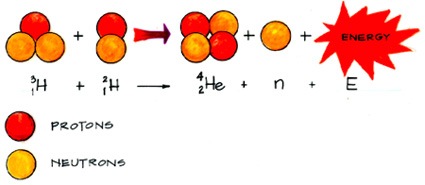
Which process involves the joining of small nuclei?
a)
Beta decay
b)
Alpha decay
c)
Nuclear fission
d)
Nuclear fusion
5.
What is nuclear fission?
a)
Big nucleus splits to small nuclei
b)
Small nuclei fuse into a bigger nucleus
c)
Stars
d)
Making compounds
6.
_______________ is the process by which unstable atoms emit radiation until they become stable.
a)
Radiation
b)
Chemical Reaction
c)
Radioactive Decay
d)
Isotopes
7.

_______ occurs when unstable nuclei release a helium nucleus.

a)

Alpha Decay

b)

Beta Decay

c)

Gamma Decay

d)

Gamora Decay

8.

_______ occurs when a neutron turns into a proton and the atom releases an electron.

a)

Alpha Decay

b)

Beta Decay

c)

Gamma Decay

d)

Gamora Decay

9.
If the half life of a radioactive element is 100yrs, how long would it take for the radioactivity to reduce by one half?
a)
200yrs
b)
100yrs
c)
50yrs
d)
300yrs
10.

_______ occurs when an excited nucleus releases radiation.

a)

Alpha Decay

b)

Beta Decay

c)

Gamma Decay

d)

Gamora Decay

11.
What is a chain reaction?
a)
When electrons travel are emitted causing electricity
b)
When a nuclear fission reaction occurs, the protons emitted can strike other nuclei in the sample, and cause them to split
c)
When a nuclear fission reaction occurs, the neutrons emitted can strike other nuclei in the sample, and cause them to split
d)
When a nuclear fission reaction occurs, the electrons emitted can strike other nuclei in the sample, and cause them to split
12.

Any reaction that involves the particles in the nucleus of an atom are called ________?

a)

Fission

b)

Nuclear Reaction

c)

Fusion

d)

Particle Accelerator

13.

Which of the following correctly display nuclear fission?

a)
b)
c)
d)
e)
14.

Which of the following correctly display nuclear fusion?

a)
b)
c)
d)
e)
15.

Which is used in radioactive dating?

a)

Carbon-14

b)

Index fossils

c)

Hydrochloric acid

d)

Law of superposition

16.

Through relative dating, a geologist finds a fossil that is approximately 10,000 years old. Which radioactive element would geologist use to accurately calculate the fossils age?

a)

Gallium 67 with a half life of 78 hours

b)

Carbon-14 with a half-life of 5,700 years

c)

Plutonium-238 with a half-life of 88 years

d)

Iodine-129 with a half-life of 16 million years

17.

Which method would be best for scientist to use to determine the absolute age of a Precambrian igneous rock.

a)

index fossil

b)

law of superposition

c)

radiometric dating

d)

law of original horizontality

18.

What percentage of rubidium-87 atoms will be left after four half lives?

a)

25.0%

b)

12.5%

c)

6.25%

d)

3.125%

19.

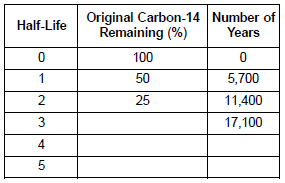
After 22,800 years, approximately what percentage of the original carbon-14 remains?

a)

15%

b)

12.5%

c)

6.25%

d)

3.125%

20.
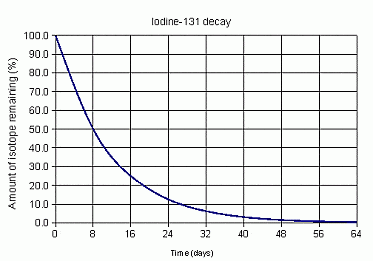
What is the half-life of iodine-131?
a)
32 days
b)
8 days
c)
16 days
d)
24 days
21.
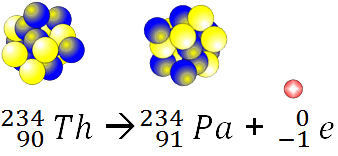
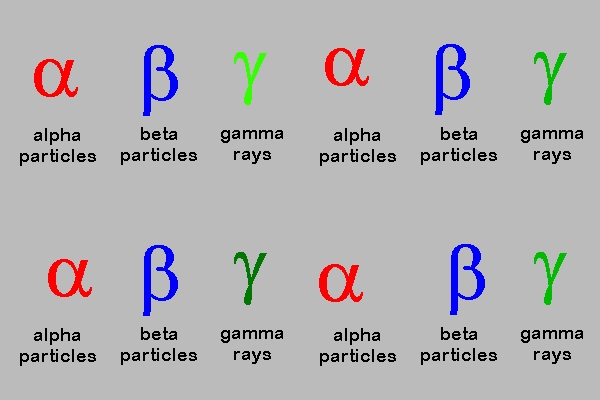
Which type of nuclear radiation is being emitted here?
a)
Alpha
b)
beta
c)
gamma 
d)
none
22.
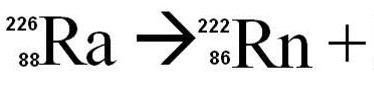
Complete the nuclear equation and determine the type of decay that is occurring in this reaction. 
a)
alpha
b)
beta
c)
gamma
d)
none
23.
In order of most to least penetrating radiation we have
a)
Alpha , Beta,  Gamma
b)
Beta , Gamma , Alpha
c)
Gamma, Beta, Alpha
d)
Gamma, Alpha, Beta
24.

When a nucleus undergoes gamma decay, the atomic number of the element....

a)

remains the same

b)

decreases by one.

c)

increases by one.

d)

increases by two.

25.

The Nebular Theory is:

a)

A theory on how the Milky Way galaxy was formed

b)

A theory on how the universe was formed

c)

A theory on how the solar system will be destroyed

d)

A theory on how the solar system was formed

26.
A nebula is:
a)
A cloud of ice
b)
A cloud of dust and gas
c)
A cloud of just gas
d)
A cloud of just dust
27.
A nebula starts to collapse because of:
a)
A nearby star shining it's light
b)
A passing spaceship
c)
A passing comet
d)
Gravity
28.

A nebula collapses down into a disk known called:

a)

A compact disk

b)

An irregular cloud

c)

An Prostellar disk

d)

An circular disk

29.

What forms in the very center of the Protostellar disk?

a)

A protosun

b)

A planet

c)

A protoplanet

d)

A planetesimal

30.
The group of inner planets are known as:
a)
The Terrestrial Planets
b)
The Gas Giants
c)
The Outer Planets
d)
The Hallow Planets
31.
The group of outer planets are known as:
a)
The Terrestrial Planets
b)
The Gas Giants
c)
The Inner Planets
d)
The Rocky Planets
32.
Intense pressure in the protosun (protostar) caused:
a)
Fire in the Sun to start
b)
Helium to break down into Hydrogen
c)
Nuclear Fusion to start
d)
Nuclear Fusion to end
33.

Stars are made mostly

of which two elements?

a)

Hydrogen and helium

b)

Hydrogen and oxygen

c)

Nitrogen and helium

d)

Nitrogen and oxygen

34.

Which is the stage where a massive star

explodes and releases a lot of energy?

a)

Red supergiant

b)

Supernova

c)

Black hole

d)

Main sequence

35.

In about 5 billion years, our sun will

grow 100 times its size into its

next stage called a

a)

Supernova

b)

Neutron star

c)

Red giant

d)

White dwarf

36.

What color are the hottest stars?

a)

Blue-white

b)

Yellow

c)

Blue

d)

Red

37.

Which of the following is the correct

order of the life cycle of our sun?

a)

yellow star, red giant, white dwarf

b)

yellow star, white dwarf, red giant

c)

white dwarf, yellow star, red giant

d)

yellow star, red giant, supernova

38.

During which phase does the core of a

massive star have so much gravity that

even light can’t escape?

a)

Supernova

b)

Black hole

c)

White dwarf

d)

Neutron star

39.

The biggest most massive stars in the

universe are known as

a)

Blue giants

b)

Red giants

c)

White giants

d)

Red supergiants

40.
Which star is the coldest?
a)
Yellow Star
b)
Red Star
c)
Orange Star
d)
Blue Star
41.
Compared to the rest of the stars, our sun is considered...
a)
Extremely Large and Cold
b)
Small with a medium temperature
c)
Medium size with medium temperature
42.
Which category is our Sun located in?
a)
White Dwarfs
b)
Supergiants
c)
Main Sequence
d)
Giants
43.

Using the HR diagram, choose the color of Zeta Eridani

a)

blue

b)

white

c)

yellow

d)

red

44.

Which star is considered a giant star?

a)

Mira

b)

Zeta Arindani

c)

Barnard's Star

d)

Betelgeuse

45.

Knowing the color of a star also tells us its __________

a)

age

b)

location

c)

temperature

d)

name

46.
As you move from the bottom to the top of the H R diagram the __________ changes.
a)
Temperature
b)
Luminosity or Brightness