wayground logo

Free Printable Worksheets

Font size

S
M
L
XL
Worksheets

STAAR Review Fall Units

Total questions: 53

Worksheet time: 53mins

Name
Class
Date
1.

Which elements are found in carbohydrates and lipids (sources of energy)?

a)

C, H, O, N, P

b)

C, H, O, N

c)

C, H, O

2.

Which biomolecule is responsible for insulation and long-term energy storage?

a)

Protein

b)

Nucleic Acid

c)

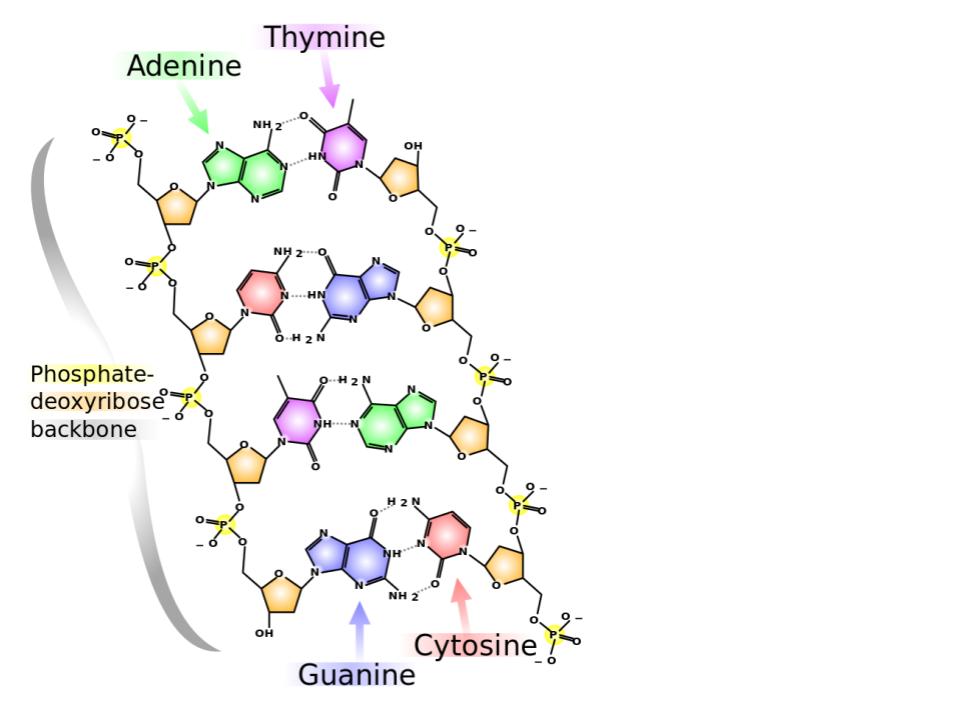
Lipid

d)

Carbohydrate

3.

Which biomolecule is made of amino acids and provides structural support?

a)

Nucleic Acid

b)

Carbohydrate

c)

Protein

d)

Lipid

4.

Which biomolecule is your main source of energy?

a)

Nucleic Acid

b)

Protein

c)

Lipid

d)

Carbohydrate

5.

1. What organelle is responsible for letting things in and out of the cell?

a)

Cell membrane

b)

Mitochondria

c)

Chloroplast

d)

Nucleus

6.

What organelle controls the functions within the cell (similar to the brain)? This organelle stores DNA!

a)

Lysosome

b)

Nucleus

c)

Nucleolus

d)

Chromosomes

7.

What is the powerhouse of the cell? It converts glucose into energy that the cell can use during cellular respiration.

a)

Mitochondrion

b)

Golgi body

c)

Nucleus

d)

Ribosomes

8.

Where are proteins synthesized? These structures are found in the cells of plant and animals. Bacteria too!

a)

Golgi body

b)

Mitoichondrion

c)

Chromosomes

d)

Ribosomes

9.

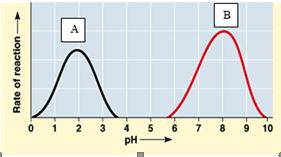
What is the optimal pH of enzyme A?

a)

8

b)

2

c)

5.7-10

d)

10

10.

Which molecule would most likely react with the enzyme?

a)

A

b)

B

c)

C

d)

D

11.

Plants and animals are both examples of ___________________ because their cells contain a _________________.

a)

prokaryotes, cell membrane

b)

eukaryotes, cell membrane

c)

prokaryotes ells, nucleus

d)

eukaryotes cells, nucleus

12.

What type of cell do bacteria fall under, as they possess no nucleus?

a)

Prokaryotic Cells

b)

Eukaryotic Cells

c)

Viral Cells

13.

The cell below is in a _________ solution. Water exited the cell because of the higher concentration outside the cell. As a result, the cell shrunk (smaller).

a)

Hypotonic

b)

Hypertonic

c)

Isotonic

14.

The cell below is in a _________ solution. Water entered the cell because of the higher concentration inside the cell. As a result, the cell swelled (bigger).

a)

Hypertonic

b)

Hypotonic

c)

Isotonic

15.

What will happen to a somatic cell in an isotonic solution?

a)

Swell (bigger)

b)

Shrink (smaller)

c)

Stay the same size

16.

What will happen if you place a plant cell in salt water?

a)

It will swell (bigger) because water will enter the cell.

b)

It will swell (bigger) because water will exit the cell.

c)

It will shrivel (smaller) because water will exit the cell.

17.

Osmosis is the movement of water. What will be the direction of the water movement?

a)

From side A to side B

b)

From side B to side A

c)

The water will move in both direction at equal rates!

18.

What type of transport involves movement across a protein channel? No energy required!

a)

Facilitated Diffusion

b)

Active Transport

c)

Diffusion

d)

Osmosis

19.

Osmosis is the movement of __________ across a membrane.

a)

food

b)

energy

c)

oxygen

d)

water

20.
Identify the Cell Cycle Stage.
a)
Prophase
b)
Interphase
c)
Anaphase
d)
Telophase
21.
Identify the Cell Cycle Stage.
a)
Anaphase
b)
Cytokinesis
c)
Telophase
d)
Metaphase
22.
Identify the Cell Cycle Stage.
a)
Interphase
b)
Anaphase
c)
Telophase
d)
Prophase
23.

In mitosis, the two resulting cells are -

a)

different from the starting cell and identical to each other.

b)

different from the starting cell and different from each other.

c)

identical to the starting cell and different from each other.

d)

identical to the starting cell and identical to each other.

24.

During the ___ phase, DNA is replicated.

a)

G1

b)

S

c)

G2

d)

M

25.
Which sequence of DNA bases would pair with this partial strand
ATG TGA CAG
a)
ATG TGA CAG
b)
TAC ACT GTC
c)
GTA AGT GAC
d)
CAT TCA CTG
26.
DNA replication results in two DNA molecules,
a)
each one with two original strands
b)
each one with two new strands
c)
each one with one new strand and one original strand
d)
one with two new strands and the other with two original strands
27.

What is the function of nucleic acids?

a)

Stores energy

b)

Stores genetic information

c)

Movement

d)

Physical structure

28.
order of replication
a)
3, 2, 1, 4
b)
2, 1, 4, 3
c)
2, 3, 1, 4
d)
3, 4, 1, 2
29.
What are the three components of a nucleotide?
a)
sugar, hydrogen, nitrogen base
b)
sugar, oxygen, nitrogen base
c)
sugar, phosphate, nitrogen base
d)
sugar, phosphate, protein
30.
The two strands of DNA are held together by:
a)
Hydrogen Bonds
b)
Phosphodiester Bonds
c)
Glycolsyl Bonds
d)
Glycosidic Linkages
31.
Which 2 molecules form the sides (backbone) of the DNA ladder?
a)
deoxyribose sugar and adenine
b)
deoxyribose sugar and a hydrogen bond
c)
deoxyribose sugar and the nucleus
d)
deoxyribose sugar and phosphate
32.
What determines the code, or information, of a DNA molecule?
a)
the shape (structure) of the nitrogen bases
b)
the order (sequence) of the nitrogen bases
c)
the color of the nitrogen bases
d)
the frequency (number) of nitrogen bases
33.

Which element is found in nucleic acids (DNA and RNA) but NOT in proteins?

a)

Nitrogen (N)

b)

Phosphate (P)

c)

Oxygen (O)

d)

Hydrogen (H)

34.
Fill in the complementary base pair (mRNA): T A G C T A
a)
A U C G A U
b)
A T C G A T
c)
U T C G A U
d)
T U G C T A
35.
What amino acid is represented by the codon UUA?
a)
Phenylalanine
b)
Tyrosine
c)
Leucine
d)
Stop codon
36.
What is the correct amino acid sequence for the mRNA code AUGCCAGUAUGA
a)
Met-Pro-Ala-Val
b)
Met-Pro-Val
c)
Tyr-Gly-His
d)
Tyr-Gly-Arg-His
37.
What is the purpose of this process?
a)
to create polypeptides and, eventually proteins for gene expression
b)
to copy original DNA strands into complimentary strands
c)
to generate and release ATP
d)
to regulate the internal environment of the cell
38.
DNA holds the code for
a)
lipids
b)
carbohydrates
c)
protein
d)
sugar
39.
Which organelle is DNA usually found in?
a)
cell membrane
b)
vacuole
c)
chloroplast
d)
nucleus
40.
The main function of tRNA is to...
a)
carry a message that, when translated, forms proteins
b)
form a portion of ribosomes
c)
string together complementary RNA and DNA strands
d)
bring amino acids from the cytoplasm to the ribosomes
41.
What mutation has occurred here? 
T-G-A-C-C-A
T-G-A-G-C-A
a)
Substitution
b)
Deletion
c)
Insertion
d)
Frameshift 
42.
Why is the order of amino acids so important?
a)
The order of amino acids dictates what shape the protein will fold into.
b)
It is not important. The protein folding chamber will force the protein to fold into the correct shape.
43.
ATTTGAGCC- Original
ATTGAGCC - Mutated
The example above is an example of a 
a)
Insertion- Frameshift
b)
Deletion- Substitution
c)
Deletion -Frameshift
d)
All of the above
44.

If a heterozygous tall pea plant (Tt) is crossed with a short pea plant (tt), what are the possible genotypes of the future offspring?

a)

100% Tt

b)

50% Tt, 50% tt

c)

75%Tt, 25%tt

d)

25%TT, 50%Tt, 25%tt

45.
products of meiosis are genetically
a)
different
b)
identical
46.

The product of Mitosis is ___ genetically identical cells while the product of Meiosis is ____ genetically different cells

a)

1:1

b)

2:4

c)

2:2

d)

4:2

47.

The diagram shows the process of crossing over. Which claim about crossing over in chromosomes is best supported by the diagram?

a)

Crossing over increases genetic diversity through deletion.

b)

Crossing over decreases genetic diversity through mutation.

c)

Crossing over increases genetic diversity by creating new combinations of genes.

d)

Crossing over decreases genetic diversity by inserting nucleotides into gene sequences.

48.
If T=Tall & t=short, what is the genotypic ratio?
a)
1:3
b)
3:1
c)
1:2:1
d)
2:2
49.
Two brown eyed parents (Bb) have a baby. What is the chance the baby is blue eyed?
a)
0 %
b)
25%
c)
50%
d)
75%
50.
W=white hair
w= non-white hair
If you cross a horse with WW and a horse with ww what fraction of the offspring would be expected to have white hair?
a)
none
b)
3/4
c)
1/2
d)
all
51.
If the dominant allele (B) represents brown hair and the recessive allele (b) represents blonde hair, which offspring represents a homozygous recessive genotype?
a)
BB
b)
Bb
c)
blonde
d)
bb
52.
What is the genotype for a pea plant heterozygous for round seeds (R), and homozygous recessive for green seeds (y)?
a)
Ry
b)
RRyy
c)
RrYy
d)
Rryy
53.
Based off this punnett square, what fraction of the offspring will have wrinkled, yellow seeds?
a)
9/16
b)
3/16
c)
1/16
d)
16/16