wayground logo

Free Printable Worksheets

Font size

S
M
L
XL
Worksheets

Biomes Overall Test

Total questions: 70

Worksheet time: 18hrs 30mins

Name
Class
Date
1.

One characteristic feature of the tundra is that only the surface thaws in the summer and refreezes in the winter, leaving a permanently frozen subsoil. This characteristic is known as

a)

Hoarfrost

b)

Glaciation

c)

Permafrost

d)

Crystallization

2.

The kangaroo rat is able to get all of the water it needs through its food and therefore, never needs to drink liquid. This animal has adapted to survive in which biome?

a)

Forest

b)

Tundra

c)

Desert

d)

Grassland

3.
Which biome is characterized by low temperatures and low amounts of rainfall?
a)
Tundra
b)
Desert
c)
Temperate Deciduous Forest
d)
Tropical Rainforest
4.
The most important abiotic factors when studying biomes are...
a)
Food and Water
b)
Rain and Sunlight
c)
Temperature and Oxygen
d)
Precipitation and Temperature 
5.
The biome known for trees with broad leaves that fall off the trees in the winter.
a)
Taiga/Boreal/Coniferous Forests
b)
Temperate Seasonal (Decidious) Forests
c)
Deserts
d)
Tropical Rain Forests
6.

Which biome covers most of the land mass near Earth's equator?

a)

Desert

b)

Grassland

c)

Tropical rainforest

d)

Temperate forest

7.

The rain forest soil is

a)

poor and rocky

b)

frozen soil

c)

thick and nutrient rich

d)

thin and nutrient poor

8.
Which biome, because of its climate, has the largest number of species of plants and animals?
a)
Tundra
b)
Rainforest
c)
Desert
d)
Coniferous forest
9.

Plants with spines and waxy leaves are well suited for life in which environment?

a)

Desert

b)

Temperate forest

c)

Grassland

d)

Tropical Rainfroest

10.

The taiga is also known as the...

a)

rainforest

b)

tundra

c)

temperate forest

d)

boreal forest

11.

This biome is also known as the deciduous forest.

a)

temperate forest

b)

boreal forest

c)

rainforest

d)

coniferous forest

12.
This occurs in the higher latitudes such as northern America or Russia. It has very cold winters and cool summers with moderate to low precipitation, mostly evergreen trees and a variety of animals in the summer. Which biome is this? 
a)
Grasslands
b)
Taiga
c)
Tundra
d)
Desert
13.
Which of the following is NOT a common adaptation of the animals in the taiga biome?
a)
Migrating to warmer climates in the winter
b)
Hibernating to survive colder seasons
c)
Color changes of fur and feathers throughout the year
d)
Hunting at night when food is more available
14.
Which of the following describes the seasons found in the taiga?
a)
Long summers and cold winters
b)
4 distinct seasons
c)
Winter throughout the year
d)
Long winters and short mild summers
15.
How much rain falls in the desert?
a)

more than 250 cm

b)

more than 25cm

c)

less than 25 cm

d)
none at all
16.

Which adaptation helps plants to reduce water loss?

a)

thick stems

b)

long roots

c)

wide leaves

d)

small leaves

17.
Which adaptation protects some plants from being eaten?
a)
thick, waxy skin
b)
thick stems
c)
thorns or spines
d)
thick leaves
18.
What is one thing both "hot" and "cold" deserts have in common?
a)
All the land is made of sand
b)
Underground water filters impurities from the sand.
c)
There is a dramatic change between night and day temperatures.
d)
Both get regular predictable rainfall. 
19.

How has an increase in global temperature impacted the biodiversity of deserts?

a)

Increases temperatures and allows biodiversity to prosper

b)

Causes more snowstorms

c)

Decreases temperatures and kills off biodiversity

d)

Causes more wildfires which wipes out vegetation

20.

Typical organisms of the Temperate Grasslands include:

a)

bison, lion, giraffe

b)

wildebeest, gazelle, meerecat

c)

rabbit, prairie dog, bison, fox

d)

deer, coyote, owl

21.

Which map represents the temperate grassland?

a)
b)
c)
d)
22.

The Chaparral Biome can sometime be referred to as _________

a)

The West Coast

b)

Mediterranean Climate

c)

Savanna

d)

That one place over there

23.

Due to the prevailing winds, Chaparral's tend to be on the ________ side of continents.

a)

Western

b)

Eastern

c)

Northern

d)

Southern

24.
What biome?
a)
Savannah
b)
Tundra
c)
Chaparral
d)
Desert
25.
What biome?
a)
Chaparral 
b)
Grassland
c)
Tiaga
d)
Tundra
26.
What biome?
a)
Tropical Rainforest
b)
Tiaga
c)
Temperate Forest
d)
Mountains
27.
What biome?
a)
Tiaga
b)
Grassland
c)
Temperate Rainforest
d)
Chaparral
28.

Where usually mangrove can be found?

a)

Desert

b)

Tropical rainforest

c)

Near volcano

d)

Near the river bank

29.

How mangrove can reduce soil erosion?

a)

The leaves reduce transpiration

b)

The leaves produce salt crystal

c)

The roots hold the soil particle

d)

The roots absorb more sea water

30.

The Savanna Biome is mostly made up of what?

a)

Trees

b)

Water

c)

Sand

d)

Grass

31.
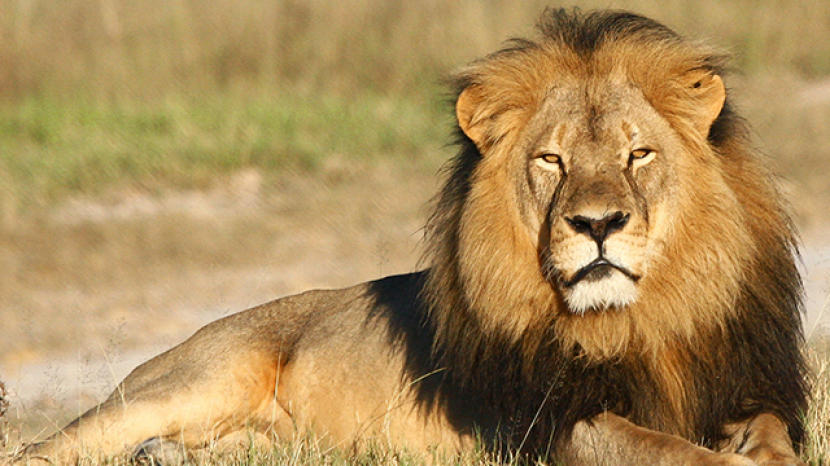
What animals are in the savanna
a)
Zebra
b)
bears
c)
turtles
d)
none of the above
32.
What is the African Savanna considered?
a)
Ocean
b)
Forest
c)
Grassland
d)
Tundra
33.
The most important abiotic factors when studying biomes are...
a)
Food and Water
b)
Water and Sunlight
c)
Temperature and Oxygen
d)
Water and Temperature 
34.
The Savanna biome has how many seasons?
a)
Two seasons - a long wet season and a shorter dry season
b)
Two seasons - a long dry season and a shorter wet season
c)
Three seasons - a long dry season and shorter wet and humid seasons
d)
Two seasons - a long dry season and a shorter humid season
35.

How many layers are there in a rainforest?

a)

2

b)

3

c)

4

d)

6

36.

How often does it rain in a rainforest?

a)

Rarely

b)

Not often

c)

Sometimes

d)

Most days

37.
a treeless biome that has permafrost
a)
Tundra
b)
Desert
c)
Taiga
d)
Deciduous
38.
Plants in this biome are adapted to poor soil, extreme temperatures and less than 25 centimeters of rainfall per year.
a)
Tundra
b)
Taiga
c)
Desert
d)
Grasslands
39.

Which land biome do we live in?

a)

Grassland

b)

Tundra

c)

Deciduous Forest

d)

Taiga

40.

Which biome has tree leaves that change color and drop off as the season changes from fall to winter?

a)

Tropical Rain Forest

b)

Deciduous Forest

c)

Tundra

d)

Coniferous Forest

41.
What is the main abiotic factor that will determine the location of a reef?
a)
light
b)
depth
c)
salinity
d)
temperature
42.

Where in the US are coral reefs located?

a)

Virginia & Florida

b)

Florida & California

c)

California & Hawaii

d)

Hawaii & Florida

43.
What is the biggest ecological benefit of coral reefs?
a)
tourism
b)
seafood
c)
habitat
d)
protection of shoreline
44.

What percentage of the ocean is taken up by coral reefs?

a)

10-12 percent

b)

25 percent

c)

less than one percent

d)

more than fifty percent

45.

As altitude increases, what decreases?

a)

Precipitation

b)

Temperature

c)

Abiotic Factors

d)

Elevation

46.

According to the diagram, which of the following both have large amounts of precipitation?

a)

desert & tropical rain forest

b)

seasonal forest & tundra

c)

tundra & desert

d)

tropical rain forest & temperate rain forest

47.
The tropical rain forest & tropical savanna biomes are similar in ___________, but ________________________________.
a)
temperature / the savannah doesn't receive enough rainfall to be a forest
b)
precipitation / the rain forest is hotter
c)
precipitation / the savanna is cooler
d)
temperature / the rain forest doesn't receive enough sunlight to be a savanna
48.
The farther a biome is from the equator, the more we would expect it to be 
a)
warmer & wetter
b)
warmer & drier
c)
cooler & wetter
d)
cooler & drier
49.

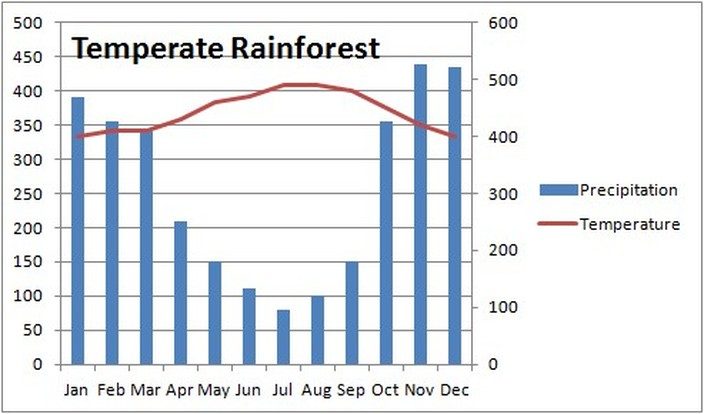
The biome shown in the climatogram above would best be described as a:

a)

temperate deciduous forest

b)

desert

c)

tundra

d)

tropical rain forest

50.

Characteristics of this biome include: warm year round, large herbivores and predators, drought resistant plants, animals give birth during the rainy season.

a)

tropical rainforest

b)

savanna

c)

desert

d)

tundra

51.

An animal adaptation for this biome is a change in fur color between the warmer and colder seasons.

a)

temperate forest

b)

tropical rainforest

c)

taiga

d)

none of these

52.

As altitude ____________, temperature _____________.

a)

decreases / decreases

b)

increases / decreases

c)

increases / increases

d)

none of these

53.

As altitude or latitude increases...

a)

vegetation increases

b)

rocks increase

c)

there is no change in vegetation

d)

vegetation decreases

54.

The air in the desert has ______ humidity while the air in the tropical rainforest has _______ humidity.

a)

high / low

b)

low / high

c)

low / low

d)

high / high

55.
What are the two main groups of aquatic biomes?
a)
saltwater and freshwater
b)
marine and freshwater
c)
marine and estuarine
d)
oligotrophic and eutrophic
56.
Aquatic food webs begin with what?
a)
krill
b)
zooplankton
c)
phytoplankton
d)
plankton
57.
Plankton that make food by photosynthesis are called what?
a)
krill
b)
zooplankton
c)
phytoplankton
d)
plankton
58.
Plankton that are more animal in nature are called what?
a)
krill
b)
zooplankton
c)
phytoplankton
d)
plankton
59.
These are lakes in mountain regions with clear water and few nutrients.
a)
estuarine
b)
oligotrophic
c)
eutrophic
d)
marine
60.
These are lakes in lowland areas with green water from phytoplankton and rich in nutrients.
a)
estuarine
b)
oligotrophic
c)
eutrophic
d)
marine
61.
An area of shallow water with emergent plants and dominated by trees is a:
a)
bog
b)
swamp
c)
marsh
d)
wetland
62.

Where are the Rocky Mountains?

a)

North-America

b)

South-America

c)

Asia

d)

Europe

63.

Where are the Himalayas?

a)

North-America

b)

Asia

c)

Europe

d)

Africa

64.

Which elevation would be the coldest ?

a)

100m

b)

500m

c)

1000m

d)

2000m

65.

What is the world's largest mountain system?

a)

Mount Everest

b)

Andes

c)

Appalachian Mountains

d)

Mount Rainer

66.

The (a)   is considered the driest desert in the world.

67.

Number 3 represents which biome?

a)

Grassland

b)

Desert

c)

Tundra

d)

Forest

68.

This biome is sometimes called Taiga; is filled with evergreen trees and has very long snowy winters...

a)

coniferous forest

b)

temperate deciduous forest

c)

temperate grassland

d)

desert

69.

What is the top zone, where photosynthesis occurs, of the ocean called?

a)

Photic

b)

Hadal

c)

Abyssal

d)

Bathyal

70.

What is the defining difference between the marine, freshwater, and estuary biomes?

a)

Salinity (dissolved salt)

b)

Sunlight

c)

Oxygen

d)

Amount of Water