wayground logo

Free Printable Worksheets

Font size

S
M
L
XL
Worksheets

8th Science Final 2021-2022

Total questions: 89

Worksheet time: 2hrs 40mins

Name
Class
Date
1.

Chemical Reaction

a)

a substance formed as a result of a chemical reaction

b)

a change in matter that produces one or more new substances

c)

the process in which substances undergo chemical changes that result in the formation of new substances

d)

a substance that enters into a chemical reaction

2.

Chemical Equation

a)

A representation of a chemical reaction

b)

the starting materials in a chemical reaction

c)

the new substances that are formed in a chemical reaction

d)

tells how many atoms, molecules, or formula units take part in a reaction

3.

The Law of Conservation of Matter

a)

tells how many atoms of an element are contained in one molecule or formula unit.

b)

the starting materials in a chemical reaction

c)

the new substances that are formed in a chemical reaction

d)

A law stating that atoms are not created or destroyed during a chemical reaction.

4.

Is the equation balanced?: 2H2O + O2 --> 4MgO + 3Fe

a)

yes

b)

no

5.

Balance this equation

_Al +_HCl --> _H2 +_AlCl3

a)

2,6,3,2

b)

it's already balanced

c)

4,12,3,4

d)

2,1,4,5

6.

The coefficient in 3H2O is

a)

6

b)

5

c)

2

d)

3

7.
How many atoms of carbon (C) are in C6H12O6?
a)
3
b)
6
c)
12
d)
24
8.
How many Sodium (Na) are in 6NaCl?
a)
1
b)
12
c)
6
9.
How many Hydrogen are in 4H2O?
a)
6
b)
8
c)
2
d)
4
10.
What coefficient should be used to make the following equation balanced?
N2+O2--> _NO 
a)
1
b)
2
c)
3
d)
4
11.

Which equation is balanced?

a)

PbO2 + 2H2

b)

SO2 + H20 --> H2SO4

c)

2Na + 2H2O --> 2NaOH + H2

12.
How many HCl molecules do you need to balance this equation? 
Mg +  __HCl --->  MgCl2 + H2
a)
1
b)
2
c)
3
d)
4
13.

What law governs the balancing of chemical equations?

a)

Law of Energy

b)

Law of Conservation of Matter/Mass

c)

Law of Gravity

d)

Law of Matter Movement

14.

Balance this equation

_Al +_HCl --> _H2 +_AlCl3

a)

2,6,3,2

b)

it's already balanced

c)

4,12,3,4

d)

2,1,4,5

15.

What are the coefficients that would properly balance this equation?

__Ca + __H2O --> __Ca(OH)2 + __H2

a)

2,1 --> 2,1

b)

1,2 --> 1,1

c)

1,2 --> 2,4

d)

1,2 --> 2,1

16.
What is the right ratio of chemicals for the BCE (Balanced Chemical Equation)?__CO + __Fe2O3--> __Fe + __CO2
a)
3,1 --> 2,3
b)
3,2 --> 1,1
c)
3,2 --> 2,4
d)
3,2 --> 2,1
17.
What two measurements are necessary for calculating speed?
a)
Mass and time
b)
Temperature and mass
c)
Mass and distance
d)
Distance and time
18.
What is the speed of an object that travels 60 meters in 4 seconds?
a)
240 m/s
b)
15 m/s
c)
0.067 m/s
d)
15 mph
19.
A measurement of how fast an object is moving
a)
Velocity
b)
Speed
c)
Vector
d)
Acceleration
20.
What is the speed of an object that travels 20 meters in 4 seconds?
a)
80 m/s
b)
0.2 m/s
c)
5 m/s
d)
24 m/s
21.

Total distance divided by total time, for an object shows:

a)

acceleration

b)

the size of one's toupee

c)

absolute speed

d)

average speed

22.

An old lady rolls down a hill at 3 meters/second. The hill is 36 meters long. How many seconds does it take the old lady to reach the bottom of the hill?

a)

39 seconds

b)

12 seconds

c)

15 seconds

d)

33 seconds

23.
You walk 10 meters to math class in 20 seconds. Your average speed is
a)
2 m/s
b)
0.5 m/s
c)
200 m/s
d)
5 m/s
24.

What is this?

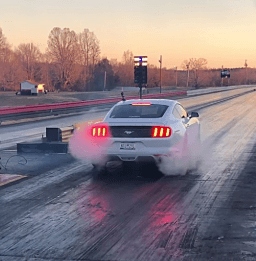
"This car is speeding up"

a)

Speed

b)

Velocity

c)

Acceleration

25.

What is this?

"This airplane is traveling at 500 mph, West"

a)

Speed

b)

Velocity

c)

Acceleration

26.

What is this?

"Rocky is running 8mph North"

a)

Speed

b)

Velocity

c)

Acceleration

27.

What is acceleration?

a)

A change in speed

b)

Speed + Direction

c)

Traveling at a constant speed

d)

Only time

28.

A horse accelerates from a velocity of 0m/s to 20 m/s in 3 seconds. What is the acceleration of the horse?

a)

60 m/s2

b)

6.67 m/s2

c)

0.15 m/s2

d)

30 m/s2

29.

A train decelerates from a velocity of 90 m/s to 80m/s in over 10 seconds. What is the train's acceleration?

a)

-1 m/s2

b)

1 m/s2

c)

10 m/s2

d)

-10 m/s2

30.

An elevator moves from rest to 2 m/s over 8 seconds. What is the elevator's acceleration?

a)

16 m/s2

b)

-8 m/s2

c)

0.25 m/s2

d)

2 m/s2

31.

Colin skateboards down the sidewalk in front of the school, traveling at 24 km/h. How much time would it take him to travel 6.0 km?

a)

0.25 h

b)

0.4 h

c)

5.4 h

d)

12 h

32.

While on a weekend trip to New York City, you spot Angelina Jolie and just HAVE to meet her. You run after her at 2.7 m/s. How far will you have moved in 15.9 s?

a)

22 m

b)

42.9 m

c)

4.95 m

d)

2.0 m

33.
How does friction affect speed?
a)
more friction decreases speed
b)
more friction increases speed
c)
less friction decreases speed
d)
less friction doesn't affect speed
34.
Friction is a force that acts in an ___________ direction of movement.
a)
similar
b)
opposite
c)
parallel
d)
west
35.
Which of the following is an example of friction that is helpful?
a)
Brakes used on a bike
b)
Tires from a car on the road
c)
Tread on the bottom of your shoes
d)
All are examples that are helpful
36.
Which of the following is an example of friction that is harmful?
a)
Pencil marking on paper
b)
Engine parts wearing out
c)
sand placed on ice in the winter
d)
Using an eraser to erase marks
37.
Which would NOT be a way of reducing friction?
a)
making the surfaces smoother
b)
using lubricants such as waxes, oils, or grease
c)
changing from sliding friction to rolling friction using ball bearings
d)
Using kitty litter on snow and ice to help your car gain traction
38.
Rougher surfaces have ...
a)
greater friction
b)
less friction
c)
the same level of friction
39.
The amount of friction depends on the weight of the objects pressing together.
a)
True
b)
False
40.
What type of friction is not moving?
a)
static
b)
sliding
c)
fluid
d)
rolling
41.
A type of friction that occurs when air pushes against a moving object causing it to decelerate.
a)
surface area
b)
air resistance
c)
velocity
d)
gravity 
42.

The force that causes objects with mass to attract one another.

a)

Weight

b)

Gravity

c)

Mass

d)

Magnetism

43.

The law that says every object in the universe attracts every other object, and that the force is affected by mass and distance: the greater the mass of an object,

the greater the attraction; the farther apart the objects, the weaker the attraction.

a)

Newton's First Law of Motion

b)

Newton's 2nd Law of Motion

c)

Newton's 3rd Law of Motion

d)

Newton's Law of Universal Gravitation

44.

The amount of matter in an object.

a)

Weight

b)

Volume

c)

Mass

d)

Capacity

45.
What is the net force and the direction of movement?
a)
50 Newtons, Left
b)
50 Newtons, Right
c)
500 Newtons, RIght
d)
450 Newtons, LEft
46.
What is Newtons 1st law of motion?
a)
Force= Mass multiplied by acceleration 
b)
An object at rest stays at rest unless acted on an unbalanced force. (inertia)
c)
For every action there is a equal and opposite  re-action.
d)
law of gravity 
47.
What law of motion does this picture represent?
a)
Newtons 3rd law
b)
Newtons 4th law
c)
Newtons 1st law
d)
Newtons 2nd law 
48.
What is Newtons 2nd law of motion?
a)
Pancakes 
b)
Force= Mass multiplied by acceleration
c)
For every action there is a equal and opposite  re-action.
d)
Law of gravity 
49.
What law of motion does this picture represent?
a)
Newtons 1st law
b)
law of gravity 
c)
Newtons 4th law 
d)
Newtons 2nd law
50.
What law of motion does this picture represent?
a)
Newtons 1st law
b)
Newtons 4th law 
c)
Newtons 3rd law 
d)
Newtons 2nd law
51.
A net force of 15 N is exerted on an encyclopedia to cause it to accelerate at a rate of 5 m/s2. Determine the mass of the encyclopedia?
a)
 m = 3.0 kg
b)
m = 4.0 kg 
c)
m = 3.0 ml 
d)
m = 30.0 g
52.
Determine the accelerations that result when a 12-N net force is applied to a 3-kg object. 
a)
3 m/s
b)
4 ft/s 
c)
13 m/s
d)
4 m/s 
53.
For every action there is a equal and opposite...
a)
action
b)
movement 
c)
re-action 
d)
Newtons law of inertia 
54.
What Newtons law does this picture represent
a)
Newtons 2nd law 
b)
Law of gravity 
c)
Newtons 1st law
d)
Newtons 5th law
55.
Mass is a measure of an object's inertia. Objects with greater mass have a greater inertia; objects with less mass have less inertia.
a)
true 
b)
false 
56.
__________ is the sum of all forces acting on an object. It is capable of accelerating a mass. 
a)
velocity
b)
gravity
c)
net force
d)
distance
57.
A unbalanced force means that an object is 
a)
zero net force
b)
changing its motion
c)
sitting still
d)
object at rest
58.
What is the tendency of an object to resist a change in motion?
a)
coffee
b)
motion
c)
inertia
d)
gravity
59.
The momentum of an object depends upon the object's ___________&_____________.  
a)
size and shape
b)
mass and speed
c)
mass and veloctiy
d)
mass and energy
60.
The total momentum before a collision is _________ the total momentum after a collision.
a)
equal to 
b)
less than 
c)
more than
d)
It depends on the type of collision
61.

Why does a semi truck have more momentum than a car if they are both traveling at 60kph?

a)

Truck is more massive

b)

Truck is less massive

c)

Car is moving faster

d)

Car is more massive

62.

Which would have more momentum between a train moving at 0 kph and a bug flying at 0.5 kph?

a)

Bug

b)

Train

c)

They are the same

63.

Determine the momentum of 1000-kg car moving northward at 20 m/s.........

a)

20,000 N

b)

20,000 Joules

c)

20,000 Kg * m/s

d)

20,000 kg * m/s north

64.
The equation to calculate momentum is
a)
p=mv
b)
p=1/2mv2
c)
p=mgh
d)
p=mg
65.

Holding a marble at the top of a ramp

a)

Potential

b)

Kinetic

66.

A slinky moving down a set of stairs

a)

Potential Energy

b)

Kinetic Energy

67.

A boy standing on top of a slide

a)

Potential Energy

b)

Kinetic Energy

68.

Dominos stand up on the floor

a)

Potential Energy

b)

Kinetic Energy

69.

A girl sliding down a slide

a)

Kinetic Energy

b)

Potential Energy

70.

Kinetic Energy is

a)

energy that matter has because of its position

b)

energy that matter has because of its motion

71.

A marble rolling down a ramp

a)

Kinetic Energy

b)

Potential Energy

72.

Dominos falling in a line

a)

Potential Energy

b)

Kinetic Energy

73.

Energy that matter has because of its position

a)

Potential Energy

b)

Kinetic Energy

74.

A car parked in a garage

a)

Potential Energy

b)

Kinetic Energy

75.

A ball being thrown on a playground

a)

Kinetic Energy

b)

Potential Energy

76.

A school bus leaving the school

a)

Kinetic Energy

b)

Potential Energy

77.

What energy is stored and waiting to be used?

a)

Kinetic Energy

b)

Potential Energy

78.

A kid at the top of a sledding hill has more _______ energy than at the bottom.

a)

Potential Energy

b)

Kinetic Energy

79.

A basketball player dribbling down the court has what type of energy?

a)

Potential Energy

b)

Kinetic Energy

80.

A quarterback throwing a football to the wide receiver. The ball has what type of energy?

a)

Kinetic Energy

b)

Potential Energy

81.

Standing at the top of the 6th grade stairs, students have more __________ energy than at the bottom of the stairs.

a)

Potential Energy

b)

Kinetic Energy

82.
At which point is potential energy greatest?
a)
W
b)
X
c)
Y
d)
Z
83.

Potential energy depends on the ________ and ________ of the object.

a)

Height (position)

b)

Mass

c)

Speed

d)

Friction

84.

Which diagram shows the wavelength of a wave?

a)
b)
c)
85.

What does a wave carry from place to place?

a)

energy

b)

matter

c)

people

86.

The highest point on a transverse wave is the

a)

compression

b)

crest

c)

rest position

d)

trough

87.

The lowest point on a transverse wave is the

a)

compression

b)

crest

c)

rest position

d)

trough

88.

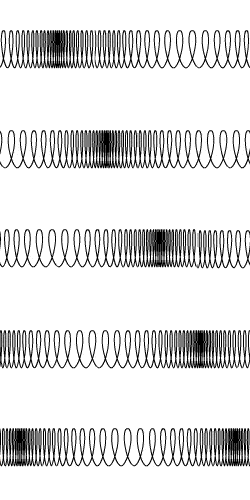
What type of wave is this?

a)

Longitudinal

b)

Transverse

c)

Electromagnetic

d)

x ray

89.
Which line represents the amplitude of the wave?
a)
A
b)
H
c)
From B to the resting point of the wave
d)
From E to G