
 Worksheets
8th Grade Exam 1
Total questions: 87
Worksheet time: 2hrs 35mins
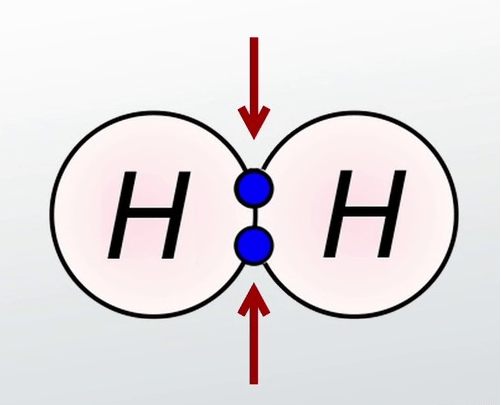
Ionic bonds form between ---
nonmetals.
metals and nonmetals.
Covalent bonds form between ---
nonmetals.
metals and metals
metals and nonmetals
What are valence electrons?
sum of the protons and neutrons
protons minus electrons
electrons in the inner shells
electrons in the outer shell
Atoms that gain an electron have an electric charge of ---
-1.
-2.
+1.
+2.
If an atom has 7 protons and 7 electrons, its electric charge is ---
-7
-14
0
+7
Atoms form compounds to become more ---
reactive
stable
explosive
toxic

Atoms gain lose, gain, or ______electrons to get a stable outer energy level.
share
split
create
destroy

A _______ is the force that holds atoms together in a compound.
Chemical Formula
Chemical Reaction
Chemical Bond
Synthesis Reaction
Why do chemical bonds form?
so the number of protons equals the number of electrons
to fill the outermost electron level
so an atom can become unstable
An electron has a ___ charge.
no charge
positive
negative
it depends
A proton has a ___ charge.
positive
negative
no charge
it depends
According to the Octet Rule, atoms of elements react with each other in order to attain ____ electrons in their outermost energy level or shell.
2
4
8
10

An atom of Neon complies with the Octet Rule because it has ___ electrons in its outer shell.
10
8
2
7

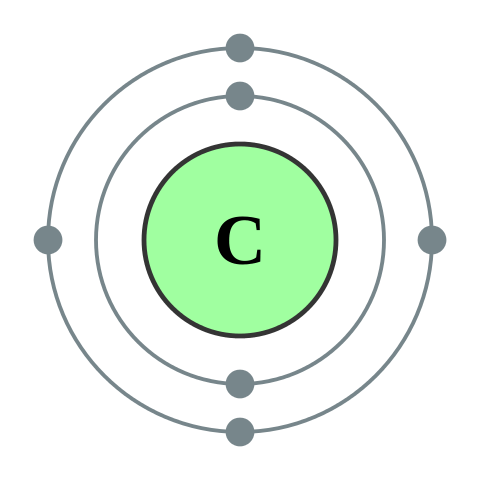
How many valence electrons does carbon have?
4
5
6
7
USE THE PERIODIC TABLE
How many valence electrons does Phosphorus have?
31
5
15
4
The period that an element is in, tells you what?
Number of protons
Number of electrons
Number of valence electrons
Number of shells
A substance that is formed as the result of a chemical reaction is a __________________
Product
Reactant
Starters
Enders
Which of the following is an example of a chemical change?
water freezes to form ice
sugar dissolves in water
gasoline burns in a car engine
a piece of metal expands when it is heated
A change in the shape of an object is an example of _________________.
a chemical change
energy
an endothermic change
a physical change
Which one shows that a chemical reaction has occurred?
dissolving
melting
formation of a gas
bending

What is the BEST definition of a chemical reaction?
A change in matter that produces one or more NEW substances
When two things combine and EXPLODE.
H2O
three hydrogen (H)
one sulfur (S)
four oxygen (O)


H2SO4


What are the reactants?
What are the products?
Which of the following best represents the Law of Conservation of Energy?
Energy CAN be created but NOT destroyed
Energy CAN be destroyed but NOT created
Energy can NOT be created Nor destroyed
Energy CAN be created and CAN destroyed

What is the atomic mass of Neon?
10
20.18
10.18
20


What is the atomic mass of Copper?
63.546
29
29.546
92


How many electrons does a Copper atom have?
63
29
92
34

What is the atomic mass of Gold?
79
196.97
79.97
275

What is the atomic mass of Helium
4.0026
2.0026
4
1
What is the atomic mass of Hydrogen?
1.008
2
1
0

How many neutrons does a Hydrogen atom have?
1
2
3
0

How many electrons does an Iodine atom have?
53
126
73
179

What is the atomic weight of Iron?
26
55.845
56
30

How many electrons does an atom of Krypton have?
36
83.798
47.798
119.798

What does the topmost number (3) represent?
Mass Number
Atomic Number
Atomic Mass
Number of Neutrons

How many electrons does a Hydrogen atom have?
1
2
3
0

How many electrons are in Aluminium?
40
27
13
14

How many protons are in Silicon?
7
42
28
14
The smallest piece of an element:
quark
electron
shell
atom
The cloud-like space that electrons travel around:
nucleus
shell
neutrons
Oort cloud
Protons and neutrons are found in the center of the atom called the:
nucleus
neutron
shell
cell
The subatomic particles are called:
protons, nucleus and electrons
protons, electrons and neutrons
protons, positives and negatives
cloud, shell and quarks
Substances that have only one kind of atom are called:
elements
nitrogen
electrons
nucleus
Electrons have a _____ charge.
neutral
negative
positive
both positive and negative
What is the study of matter?
Chemistry
Biology
Earth Science
Physics
The abbreviation for an element:
element name
atomic number
chemical symbol
atomic symbol
Who invented the simplified version of the atom?
Dmitri Mendeleev
Niels Bohr
Sir Isaac Newton
Albert Einstein
Fe + O2 -> Fe2O3
Al + O2 --> 2Al2O3
__P4 + __O2 --> __P2O3
_Mg + _Cl2 --> _MgCl2
Na + H2O --> NaOH + H2 is correctly balanced using the smallest whole numbers, the coefficient of the water is
_CF4 + _Br2 -- _CBr4 + _F2

