
 Worksheets
Electricity
Total questions: 91
Worksheet time: 58mins
Electrical wires with second layer of coating has
circuit breaker
fuse
earthing
double insulation
Residual Current Device
What is an example of a good insulator?
wood
copper wiring
stones
concrete floor tiles
You probably use the term heat many times a day. As an example, when you cook dinner, you heat your dinner on a hot stove. When you place a piece of cool metal in the sun, it is heated by the sun’s energy. Why is heat the correct term to use in these examples?
They show that when objects are touching, they are the same temperature.
They show that heat flows from something warmer to something cooler.
They indicate that heat is created to raise the termperature of something.
They indicate that the kinetic energy of the particles decreases when something is heated.
Click the statement that is true.
Thermal energy transfers from the cooler object to the warmer object.
Thermal energy transfers from the warmer object to the cooler object.
Thermal energy does not transfer at all.
A student likes to attend football games, no matter how cold and snowy the weather becomes. She is going to a game on a very cold day and takes along a hand warmer. She activates it and tucks it into the glove she is wearing. She holds her hands together, and before long, her hands are warm. Which best describes how her hands were warmed?
Heat was transferred by conduction, resulting in an increase in kinetic energy.
Heat was transformed by convection, resulting in the conservation of energy.
Thermal energy was transferred by currents, resulting in an increase in kinetic energy.
Heat was transformed by radiation, resulting in an increase in kinetic energy.
When food is cook in a microwave, radiation is giving off through what scientific concept?
Boyle's Law
Charles' Law
The Law of Conservation of Mass
Electromagnetic Spectrum
A student gets ready to go to school one day, and he finds out that his car's battery is dead. The headlights will not come on, and the car won’t start. What transformations usually happen when the battery is active and the headlights come on?
chemical → electrical → light
electrical → kinetic → light
light → electrical → chemical
thermal → electrical → light
True or false? Conduction involves DIRECT CONTACT between two objects?
True
False
What is not an example of thermal expansion
A hot air balloon rising in the air
A cold sidewalk on a winter day.
A bag of popcorn cooking in the microwave
A hot dog cooking on a grill
What is happening when a balloon's kinetic energy decreases and it gets smaller?
Expansion
Desolation
Radiation
Contraction
A family replaced the windows in their home with double-hung windows. This helps because a layer of gas between the two panes of glass acts as a good _______________
insulator
conductor
transformer
transfer
What does "the law of conservation of energy" mean?
Energy can be created
Energy cannot be created but can be destroyed.
Energy can be destroyed and created.
Energy can never be created or destroyed.
You are camping, and it is time to build a campfire. You gather logs and stack them loosely, and then you add small twigs and leaves to make the fire easy to light. As you sit by the fire, the logs burn bright in the darkness, and you feel the heat coming toward you. Which of these statements are true about the amount of energy transformed in the camp fire? Choose the two that apply.
The Law of Conservation of Energy applies to these transformations.
The chemical energy in the logs is lost during the transformation.
The fire is hotter than the logs were, so energy is gained in this transformation.
The amount of heat and light energy released equals the amount of chemical energy that is burned.
All matter is made up of _________.
atoms
cells
electricity
mass
Protons are ______ charged.
positively
negatively
not
Neutrons are _____ charged.
not
positively
negatively
Electrons are _____ charged.
negatively
positively
not
___________ and ________ are found in the nucleus of an atom.
protons and neutrons
protons and electrons
neutrons and electrons
_______ are found orbiting the outside of the nucleus.
electrons
protons
neutrons
When atoms lose or gain ______ an atom becomes charged.
electrons
protons
neutrons
Atoms that have more protons are _______ charged.
positively
negatively
Atoms that have more electrons are _____ charged.
negatively
positively
An atom that has lost or gained an electron is called an _____.
proton
cell
ion
charge
Oppositely charged atoms _____ each other.
attract
repel
Like charged atoms ______ each other.
repel
attract
The ____________ between two objects determines the level of attraction.
distance
mass
matter
electricity
The student conducted an experiment with circuits. Why was the bulb bright when he closed the switch?
The switch produced an electric current
Closing the switch broke the circuit
Closing the switch completed the circuit
The switch did not make a difference
Which of these materials is a good conductor of electricity?
Rubber
Metal
Newspaper
Glass
Why do electricians always wrap wires in plastic?
Plastic comes in many different colors
Plastic is a good electrical conductor
Plastic makes the wires easy to bend
Plastic is a good electrical insulator
A science class was completing an experiment on electrical circuits. Why did the bulb go out each time the switch was opened?
Opening the switch broke the circuit
The battery was probably going flat
There was too much electricity flowing
Opening the switch closed the circuit


Identify all insulator(s) below.


If lamp 1 is unscrewed from its holder, what will happen to lamp 2?
It will get brighter
It will get dimmer
It will turn off
Nothing

If one of the light bulbs burns out,
no electricity flow through the other bulbs
other bulbs can still light up
other bulbs will go out
other bulbs also burn out


Which of the following describes the circuit correctly?
A circuit with a cell, two bulbs connected in parallel with an open switch
A circuit with a cell, two bulbs connected in series and an open switch
A circuit with a cell, two bulbs connected in series
A circuit with a cell, two bulbs connected in series and a closed switch
Which of the following best explains an electric current?
An electric current is the flow of positive charges in a circuit.
An electric current is the flow of atoms in a circuit.
An electric current is the flow of electrons in a circuit.
An electric current is the flow of neutrons in a circuit.
Which of the following statements is correct about electrical insulators?
They do not contain any atoms.
Their protons are not allowed to move about freely.
The electrons are not able to move about freely.
They are good at conducting heat only.
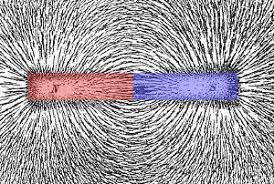
The entire region surrounding a magnet is known as the:
Magnetic Domain
Lodestone
A Compass
Magnetic Field
Where is the force of attraction the strongest on a magnet?
at the poles
in the middle
above the magnet
below the magnet
If two magnets come together what is it called?
Repel
Force
Attract
None of the Above
The AREA around a magnet where you feel a pulling force.
Gravity
Magnetic Field
Friction
Magnets have
different strength
same strength
no strength

What would happen is a north pole of a magnet came close to a north pole of another magnet?
they would be attracted to each other
they would be repelled from each other
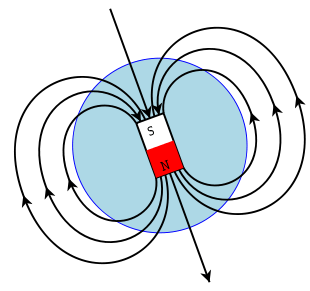
The area of magnetic force around a magnet is known as its _____________.
magnetic field
magnetic declination
magnetic fan lines
magnetic tan lines

Which of the following are Non-Renewable energy resources? (Check all that apply.)
coal
wind
solar
nuclear

One advantage of solar and wind power over fossil fuels is that
wind and solar are presently much less expensive than fossil fuels.
wind and solar come from natural processes and fossil fuels do not.
wind and solar are nonrenewable resources and fossil fuel are renewable.
wind and solar are continuously renewable and fossil fuels take millions of years to be formed.

Renewable or Nonrenewable: Coal
Renewable
Nonrenewable

Renewable or Nonrenewable: Natural Gas
nonrenewable
renewable

Renewable or Nonrenewable: Oil
Nonrenewable
Renewable

Renewable or Nonrenewable: Sunlight
Renewable
Nonrenewable

Renewable or Nonrenewable: Water
Nonrenewable
Renewable

Renewable or Nonrenewable: Wind
Renewable
Nonrenewable

This energy is from moving air.
Wind Energy
Geothermal Energy
Fossil Fuel Energy
Biofuel

This is electrical energy that comes from the force of energy of moving water. It is the most widely used type of renewable energy.
Coal
Hydroelectric Power
Wind Energy
Geothermal Energy

This is a liquid fuel derived from plant materials.
wind energy
biofuel (from biomass)
geothermal energy
solar energy

This is the energy generated in the Earth's core and produces steam and hot water.
Solar Energy
Hydroelectric Power
Fossil Fuels
Geothermal

Solar energy is a completely renewable resource.
Advantage
Disadvantage

Fossil Fuels produce carbon dioxide that pollutes the atmosphere.
Advantage
Disadvantage

Nuclear Power can generate high amounts of electrical energy in a single plant.
Advantage
Disadvantage

Biomass requires a lot of space.
Advantage
Disadvantage

Wind energy is pollution free.
Advantage
Disadvantage

Hydropower can have a negative impact on river wildlife.
Advantage
Disadvantage

Geothermal power is geographically limited-not available in many locations.
Advantage
Disadvantage

Fossil Fuels are a nonrenewable resource.
Advantage
Disadvantage
As computer chips have been manufactured smaller and smaller in size, there has been an increase in the loss of energy as electricity "leaks" out of the tightly packed wires in the chips. What is the most likely goal of those working to improve the computer chips?
finding a new color for the chips
finding a way to keep the wires insulated
finding a way to make the chips softer
finding a way to make the wires thicker
Which of the following questions is most important for a society to consider when deciding whether to use a new form of technology?
will it be useful to other societies?
what are the environmental, health, and economic costs and benefits of the technology?
how long should the warranty be for products containing the technology?
is the person who invented the technology a citizen of the society?
In the state of Tennessee, electricity customers are given the option of joining the Green Power Switch program. This program takes advantage of new forms of technology that use renewable resources in order to produce electricity. In order to join the program, customers must pay $4 more for 150kW-h of electricity.
Currently about 54,000 households in Tennessee have joined the program. What do you think is the primary motivation of the households that join the Green Power Switch Program?
The people who have signed up for the program are scientists who could earn money should the technology prove to be successful.
Most of the people who have signed up for the program do not understand that their participation is making their electricity bill go up.
The income per capita in Tennessee is higher than in other states, thus people there do not mind spending extra money on cutting-edge technology
Keeping the environment clean is more important to these households than spending a few extra dollars
Recently over 400 American companies have agreed to join the EPA's Green Lights program and replace their old light bulbs with new, energy-efficient light bulbs. The new light bulbs cost approximately 30% more than the old light bulbs. What is the most likely reason the companies agreed to make the replacement?
because all new technologies are better then older versions of the same technology
the new light bulb has a modern, high tech appearance
companies are trying to improve public image by making environmentally friendly choices
the new light bulbs may initially cost more, but will lower the company's energy costs in the long run,
What does Sustainability mean?
Planting lots of trees
The ability to continue using resources at the current rate (especially in an environmental sense)
using resources cheaply
showing lots of people the environment
What is biomass energy?
any organic matter that can be used by burning wood and other plant life.
Radiant energy emitted by the sun.
a combustible black or dark brown rock consisting mainly of carbonized plant matter, found mainly in underground deposits and widely used as fuel.
made by tapping into steam or hot water reservoirs underground; the heat is used to drive an electrical generator.

Fuelwood, charcoal, and manure provide up to ___% of energy in developing nations.
90
50
33
10

Is biomass energy a renewable energy source?
Yes, always, because you can grow trees again.
No, it's just like fossil fuels.
It depends, only if the source is not overharvested.
No, because manure is not renewable.
Biomass is
Organic matter
Inorganic matter
Derived from living thing
Derived from non-living thing
Example of biomass is/are:
wood
grass
animal waste
sand
Biomass can converted into fuel such as biodiesel and bioethanol
True
False

