
 Worksheets
MYP Semester 1 Final
Total questions: 90
Worksheet time: 2hrs 30mins

What is the atomic number of the atom shown?
4
15
16
19
34

What is the mass number of the atom shown above?
15
16
19
32
34
If you were to add a proton to a neutral atom what would change?
Element
Atomic Number
Mass Number
Charge
All of the above
If you were to add a neutron to a neutral atom what would change?
Element
Atomic Number
Mass Number
Charge
All of the above
If you were to add an electron to a neutral atom what would change?
Element
Atomic Number
Mass Number
Charge
All of the above
A scientist has discovered the the isotope Iodine-129. How many neutrons does the nucleus of this isotope contain?
53
76
182
74
In a neutral atom, what information does the mass number tell you?
The number of protons only.
The number of electrons only.
The total number of protons and the total number of electrons.
The number of neutrons only.
The total number of protons plus neutrons.
Experimental evidence indicates that the nucleus of an atom ___________________.
contains most of the mass of the atom
contains a small percentage of the mass of the atom
has no charge
has a negative charge

Look at the graphic above. Which of the following statements most accurately describes the structure of an atom?
The center point is the nucleus and the whole cloud is the probability of where one can find the electron.
The center point is the nucleus and the edge of the cloud is where the electrons are located.
The center point is the electrons and the whole cloud is the nucleus.
The center point is the electrons and the edge of the cloud is the nucleus.
Which of the following atoms is likely to form an anion?
Na
Mg
Al
P
If an atom has the electron configuration of 1s2 2s2 2p6 3s1 the atom will probably
gain 1 electron
lose 1 electron
fill the 3p orbital
lose the 2p orbital


Elements on the LEFT side of the periodic table will most likely form:
Positive ions
Negative ions
Neutral ions
Covalent bonds
An octet means...
18 electrons in the outer shell
8 electrons in total distributed among the shells
8 electrons in the valence shell
8 protons in the nucleus
How do ions form?
When an atom has more protons than neutrons.
When an atom gains/loses any amount of neutrons.
When an atom gains/loses any amount of valence electrons.
When an atom's mass is greater than the amount of electrons.
What is a cation?
When an atom loses an electron and becomes positive.
When an atom gains an electron and becomes negative.
When an atom loses an electron and becomes negative.
When an atom gains an electron and becomes positive.
What is an anion?
When an atom loses an electron and becomes positive.
When an atom gains an electron and becomes positive.
When an atom loses an electron and becomes negative.
When an atom gains an electron and becomes negative.
What is the atomic number?
the number of protons in the nucleus
the number of protons and neutrons in the nucleus
the number of neutrons in the nucleus
the number of protons in the energy levels
What is the mass number?
the number of protons in the nucleus
the number of protons and neutrons in the nucleus
the number of neutrons in the nucleus
the number of protons and electrons in the atom
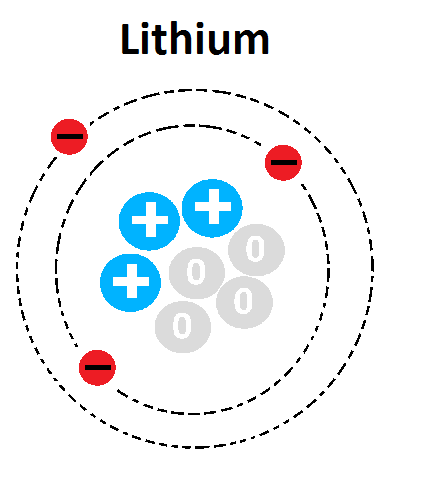
What is the atomic number of this atom?
1
3
4
7
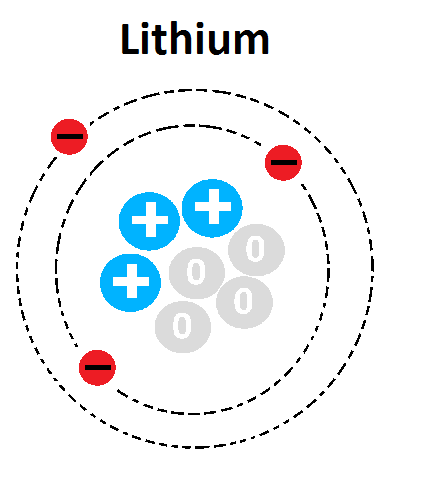
What is the mass number of this atom?
1
3
4
7

What does the 6 represent?
Atomic mass
atomic number
chemical symbol
element name
How is the number of neutrons in the nucleus of an atom calculated?
Add the number of electrons and protons together
Subtract the number of electrons from protons
Subtract the number of protons from the mass number
Add the mass number to the number of electrons
An atom has 10 protons, 15 neutrons and 10 electrons what is its mass number.
20
10
35
25
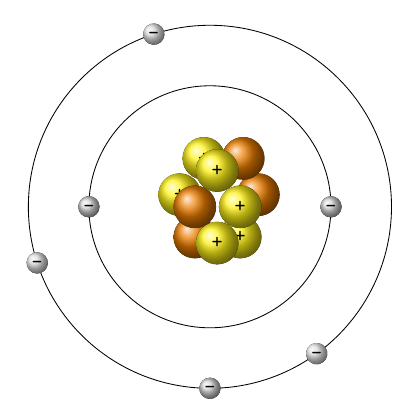
How many electrons does this atom have?
2
4
6
10


What is the atomic number of the atom pictured?
9
10
18
19
Which of the following determines the identity of an element?
number of protons
atomic mass
number of neutrons
number of shells
What is the symbol for silver?
S
Si
Ag
Au
What is the symbol for iron?
I
Fe
F
Ir
What is the symbol for sodium?
Na
So
Sd
S
What element is identified by the symbol K?
Krypton
Potassium
Khlorine
Fluorine
What is the symbol for mercury?
Mg
M
Ha
Hg
What element is identified by the symbol W?
Wolframium
Gold
Tungsten
Water
What element is identified by the symbol Pb?
Plutonium
Lead
Phosphorus
Phosphate

What is the period of the atom shown?
1
2
3
4
5

What is the group of the atom shown?
2A
3A
4A
5A
6A
Which of the following elements have similar properties to magnesium? (Select all that apply.)
Calcium
Strontium
Argon
Bromine
Sulfur
Which of the following are halogens that have the same number of valence electrons? (Select all that apply.)
Xe
Be
Cl
F
Br
In the modern periodic table, how are the elements arranged?
Increasing number of oxidation states
Increasing number of neutrons
Increasing atomic mass
Increasing atomic number
Increasing chemical properties

What is the name of the family that is highlighted?
Chalcogen
Halogen
Noble Gas
Transition Metal
Metalloids

Which element has a 8 valence electrons?
A
B
C
D
E

Which elements has 1 valence electron? (Select all that apply.)
A
B
C
F
E

To which family does this element belong?
Alkali Metal
Alkaline Earth Metal
Nitrogen Family
Halogen
Noble Gases

Which pair of elements would have similar chemical properties?
calcium (Ca) and cobalt (Co)
sodium (Na) and chlorine (Cl)
boron (B) and phosphorus (P)
oxygen (O) and sulfur (S)
sodium (Na) and calcium (Ca)
Which of the following are Alkali Metals?
Magnesium
Potassium
Sodium
Calcium
Iron
Which of the following are transition metals? (Select all that apply.)
Nickel
Calcium
Lithium
Barium
Silver
What is the trend in atomic radius as one moves down a group?
Atomic radius increases
Atomic radius decreases
Atomic radius does not change
Atomic radius decreases then increases
Atomic radius increases then decreases
What is the trend in atomic radius as one moves across a period?
Atomic radius increases
Atomic radius decreases
Atomic radius does not change
Atomic radius decreases then increases
Atomic radius increases then decreases
What is the general trend with ionization energy as one moves across a period from left to right?
Ionization energy generally decreases
Ionization energy generally increases
Ionization energy does not change
Ionization energy is the same value for all elements
Ionization energy is directly proportional to the atomic radius
What is the general trend with ionization energy as one moves down a group?
Ionization energy generally decreases
Ionization energy generally increases
Ionization energy does not change
Ionization energy is the same value for all elements
Ionization energy is directly proportional to the atomic radius
Which element has the highest electronegativity?
F
K
I
Cs
H
What is the trend in electronegativity as one moves across a period from left to right?
Electronegativity increases
Electronegativity decreases
Electronegativity stays the same
Electronegativity is always greatest in the lower left of the periodic table
Electronegativity follows the same pattern as atomic radius
Which atoms have a larger atomic radius than sodium? Select all the apply.
Lithium
Beryllium
Boron
Potassium
Cesium
Which atoms have a smaller atomic radius than aluminum? Select all that apply.
Carbon
Nitrogen
Calcium
Strontium
Barium
What is the relationship between ionization energy and atomic radius?
A direct relationship, as the atomic radius increases, the ionization energy also increases.
A direct relationship, as the atomic radius increases, the ionization energy decreases.
An indirect relationship, as the atomic radius increases, the ionization energy also increases.
An indirect relationship, as the atomic radius increases, the ionization energy decreases.
There is no relationship between the two, they do not affect one another.
Which species are isoelectronic with argon? Select all that apply.
Ne
Na+
Cl-
S2-
K+
Which atoms or ions are isoelectronic with neon? Select all that apply.
Sodium ion
Fluoride ion
Helium atom
Potassium ion
Magnesium ion
What is the charge of the barium ion?
2-
1-
1+
2+
3+
What is electronegativity?
It is a measure of how negative an ion can become.
It is a measure of the tendency of an atom to attract a bonding pair of electrons.
It is a measure of the negative charges present in an atom.
It is a measure of how easily an atom can conduct electric current.
It is the measure of voltage that runs across a period.
Which atoms would have a higher ionization energy than argon? Select all that apply.
Sodium
Magnesium
Potassium
Neon
Helium
What is the charge of the arsenide ion?
1+
2+
1-
2-
3-
Which statement about strontium and calcium is correct?
The strontium ion has a higher charge than the calcium ion.
The strontium atom has a higher ionization energy than the calcium atom.
The strontium atom has a larger atomic radius than the calcium atom.
The strontium atom has a higher electronegativity than the calcium atom.
The strontium ion has a lower charge than the calcium ion.
What is the charge of the potassium ion?
1+
2+
3-
1-
2-
Which of the following elements will form anions? Select all that apply.
Sodium
Sulfur
Potassium
Phosphorus
Aluminum
When drawing the Lewis Structure for silicon, how many dots are drawn around the symbol?
14
28
8
4
3
Which atoms would form an anion with a negative 2 charge? Select all that apply.
magnesium
calcium
fluorine
oxygen
selenium
Which of the pairs of elements listed will form a covalent compound? Select all that apply.
barium and iodine
calcium and oxygen
lithium and chlorine
oxygen and hydrogen
carbon and fluorine
Which of the following substances will conduct electricity when dissolved in water? Select all that apply.
NaCl
CO2
SiO2
NaHCO3
C6H12O6
Which substance is a salt, held together by ionic bonds? Select all that apply.
LiCl
C6H4Cl2
SiO2
Fe
Ca(NO3)2
Which substance is held together by metallic bonds? Select all that apply.
NaCl
C6H4Cl2
SiO2
Fe
Cu
Which substance is held together by covalent bonds? Select all that apply.
NaCl
C6H4Cl2
CO2
Fe
Ag
What is a property of metals? Select all that apply.
They form covalent bonds.
They are malleable.
They are ductile.
They have low melting points.
They are poor conductors of heat and electricity.
What is a property of an ionic compound? Select all that apply.
They have low melting points.
They conduct electricity in an aqueous solution.
They are brittle.
They do not conduct electricity in the solid state.
They are made of two nonmetals bonded together.
Which of the following are molecular compounds? Select all that apply.
KBr
MgCl2
CO2
H2O
C6H12O6
What is a property of an ionic compound? Select all that apply.
They have high melting points.
They conduct electricity in an aqueous solution.
They are brittle.
They are malleable.
They are made of two nonmetals bonded together.
Which atoms will combine with oxide in a 2:1 ratio, 2 cations to 1 anion? Select all that apply.
Sodium
Calcium
Aluminum
Lithium
Potassium
Which atoms will combine with the nitride ion in a 3:2 ratio, 3 cations to 2 anions. Select all that apply.
Cesium
Aluminum
Magnesium
Strontium
Sodium
What are ionic bonds? Select all that apply.
Ionic bonds are electrostatic attractions that hold ions together in a compound.
Ionic bonds form when metals lose electrons and nonmetals gain electrons.
Ionic bonds form between two nonmetal atoms.
Ionic bonds occur to allow atoms to obtain a complete octet by sharing electrons
Ionic bonds are weak structures that form when metals have a sea of electrons.
Why are ionic compounds able to conduct electricity when molten (melted) or when dissolved in solution?
When melted or dissolved, ionic compounds have free moving ions.
When melted or dissolved, ionic compounds form a crystal lattice.
When melted or dissolved, ionic compounds have a sea of electrons.
When melted or dissolved, ionic compounds will not conduct electricity.
An ionic compound has the following formula, MX2, where M is the cation and X is the anion. If the anion is chloride, what are the possible choices for the cation? Select all that apply.
Lithium
Potassium
Nitrogen
Magnesium
Barium

