wayground logo

Free Printable Worksheets

Font size

S
M
L
XL
Worksheets

Chemistry Revision

Total questions: 86

Worksheet time: 1hrs 8mins

Name
Class
Date
1.

Which of the following is a pipette?

a)
b)
c)
d)
2.

Which of the following is a burette?

a)
b)
c)
d)
3.

Which of the following is a syringe?

a)
b)
c)
d)
4.

Which of the following is a beaker?

a)
b)
c)
d)
5.

What is the pH of distilled water?

a)

pH 12

b)

pH 3

c)

pH 8

d)

pH 7

6.

What happens to the pH of an acid during neutralisation?

a)

It stays the same

b)

It moves toward pH 1

c)

It moves towards pH 7

d)

It moves towards pH 14

7.
What colour is universal indicator in strong acid?
a)
Green
b)
Orange
c)
Purple
d)
Red
8.
What colour is universal indicator in a strong alkali?
a)
Green
b)
Orange
c)
Purple
d)
Red
9.
What colour is universal indicator in a neutral solution?
a)
Green
b)
Orange
c)
Purple
d)
Red
10.
The pH scale is a range from:
a)
1-7
b)
0-14
c)
1-14
d)
1-20
11.
A(n) ______ is a substance with a pH less than 7
a)
Acid
b)
Alkaline
c)
Base
d)
Buffer
12.
A(n) _______ is a substance with a pH greater than 7.
a)
Base
b)
Acid
c)
Buffer
d)
Water
13.
What is the only substance with a neutral pH of 7?
a)
Milk
b)
Orange Juice
c)
Water
d)
Blood
14.
A solution with a pH of 3.6 would be...
a)
Acid
b)
Base
c)
Neutral
d)
Acid and Base
15.
A solution with a pH of 8.6 would be...
a)
Acid
b)
Base
c)
Neutral
d)
Acid and Base
16.

Alkalis are source of

a)

hydrogen ions

b)

hydroxide ions

17.

Acids are source of

a)

hydrogen ions

b)

hydroxide ions

18.

Alkalis are source of

a)

H+ ions

b)

OH- ions

19.

Acids are source of

a)

H+ ions

b)

OH- ions

20.
What is the atomic number?
a)
the number of protons
b)
the number of protons and neutrons
c)
the number of neutrons
d)
the number of protons and electrons
21.
What is the mass number defined as?
a)
the number of protons
b)
the number of protons and neutrons
c)
the number of neutrons
d)
the number of protons and electrons
22.
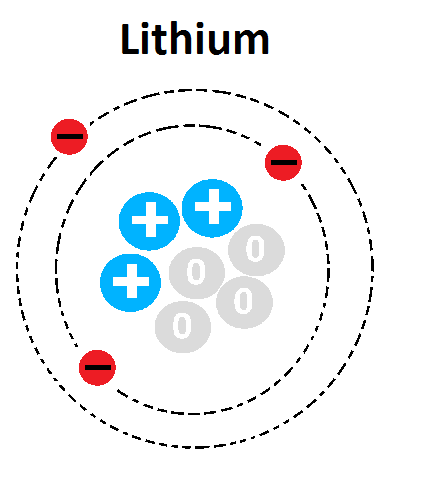
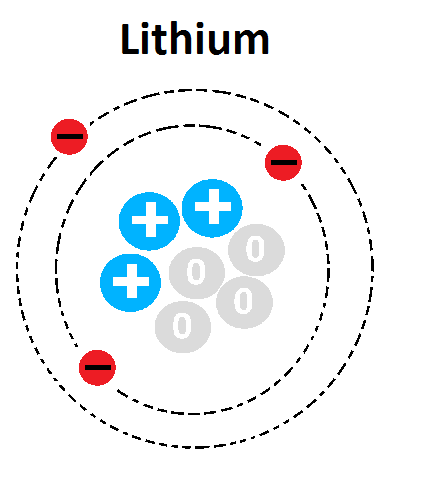
What is the atomic number of this atom?
a)
1
b)
3
c)
4
d)
7
23.

What is the mass number of this atom?

a)

1

b)

3

c)

4

d)

7

24.

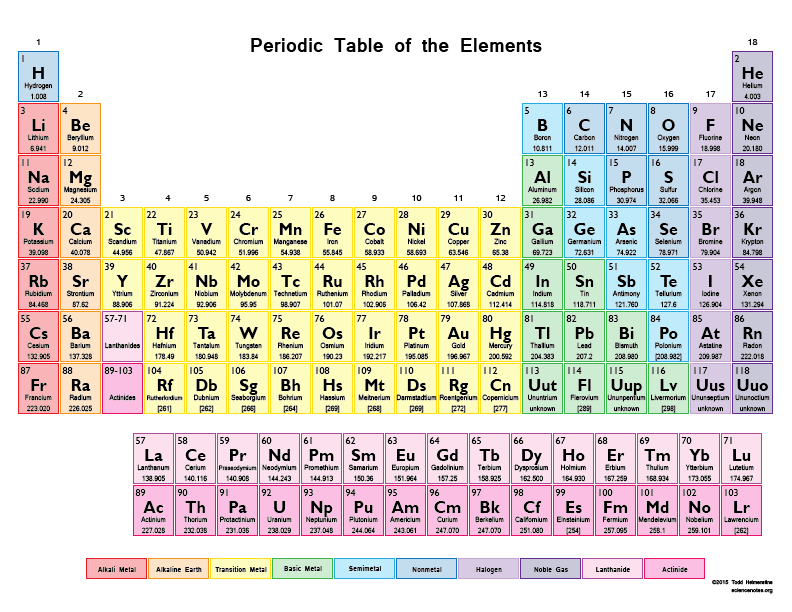
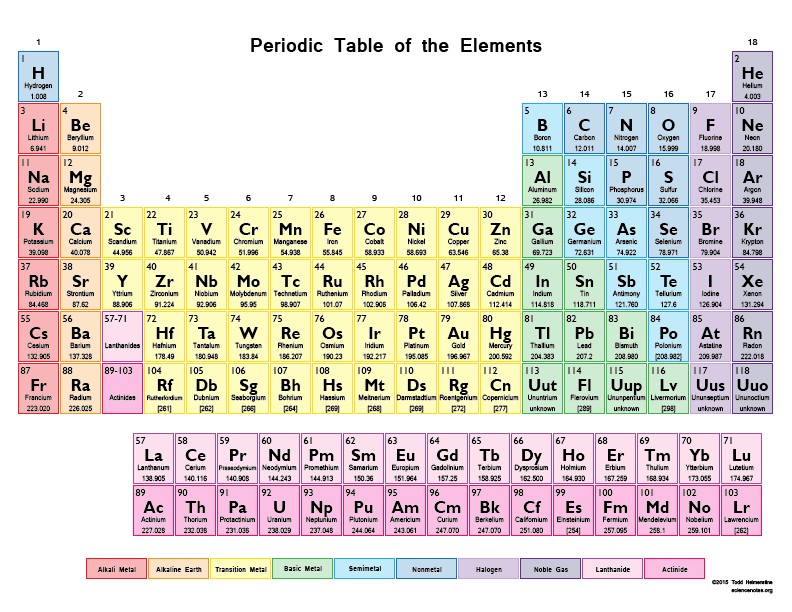
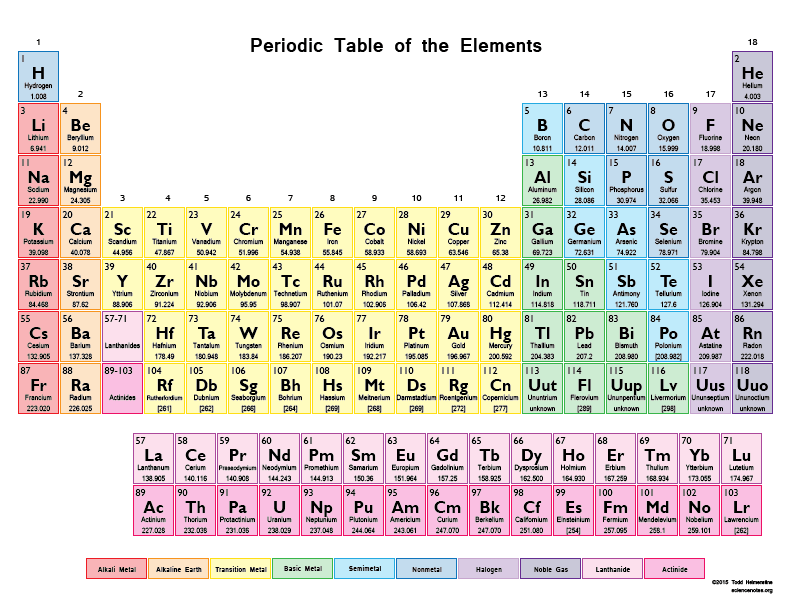
What is the atomic number of Barium, Ba? (enlarge the periodic table)

a)

20

b)

38

c)

56

d)

88

25.

What is the atomic number of Nickel? (enlarge the periodic table)

a)

110

b)

28

c)

46

d)

78

26.

How many protons are in a sodium atom, Na? (tap to enlarge the periodic table)

a)

Sodium has 1 proton.

b)

Sodium has 3 protons.

c)

Sodium has 11 protons

27.

An element has the mass number 12 and atomic number 6. The number of neutrons in it is:

a)

6

b)

10

c)

4

d)

8

28.

Atoms of the same element which have a different number of neutrons are called _________________.

a)

ions

b)

isotopes

c)

quarks

d)

molecules

29.

How many neutrons does C-14 [atomic #6] contain? (tap to enlarge the image)

a)

6

b)

7

c)

14

d)

8

30.

How many neutrons does an atom of the isotope Neon-22 have? (tap to enlarge the image)

a)

12

b)

10

c)

22

d)

20

31.

How many neutrons does an atom of Nitrogen-13 have? (tap to enlarge the image)

a)

6

b)

7

c)

13

d)

5

32.

The number in Kr-84 represents what about Krypton?

a)

The number of electrons

b)

The number of protons

c)

The mass number

33.

If an atom has 10 electrons, how many protons does it have?

a)

0

b)

1

c)

10

d)

5

34.

How many electrons are in an atom with an atomic number of 50?

a)

5

b)

8

c)

50

d)

2

35.
What is the mass number of this nucleus?
a)
1
b)
3
c)
4
d)
7
36.
What is the mass number of this atom?
a)
4
b)
5
c)
9
d)
none of the above
37.
What is the mass number of this atom?
a)
9
b)
10
c)
19
d)
27
38.
What is the mass number of this atom?
a)
2
b)
4
c)
6
d)
none of the above
39.
What is the mass number of this atom?
a)
1
b)
2
c)
3
d)
4
40.
What is the mass number of this atom?
a)
7
b)
14
c)
21
d)
none of the above
41.
What is the mass number of this atom?
a)
8
b)
16
c)
24
d)
none of the above
42.
Which particles make up the nucleus of an atom?
a)
protons and neutrons
b)
electrons and protons
c)
electrons, protons, and neutrons
d)
electrons and neutrons
43.

An element has the mass number 12 and atomic number 6. The number of neutrons in it is:

a)

6

b)

10

c)

4

d)

8

44.

An atom of silicon has 14 protons and 15 neutrons. What is the mass number of this atom of silicon?

a)

14

b)

15

c)

29

d)

28.085

45.

Which of the following matches the dot and cross diagram?

a)

ammonia

b)

methane

c)

water

d)

carbon dioxide

46.

Which of the following matches the dot and cross diagram?

a)

ammonia

b)

methane

c)

water

d)

hydrogen

47.

Which of the following matches the dot and cross diagram?

a)

ammonia

b)

methane

c)

oxygen

d)

hydrogen

48.

Which of the following is shown in the image?

a)

single covalent bond

b)

double covalent bond

c)

triple covalent bond

d)

quadruple covalent bond

49.

Which of the following matches the dot and cross diagram?

a)

ammonia

b)

methane

c)

water

d)

hydrogen

50.

Give the formula of calcium fluoride.

a)

CaF2

b)

CaF

c)

Ca2F

d)

Ca2F3

51.
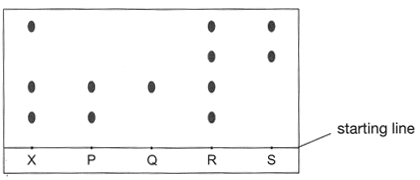
The diagram below shows a chromatogram obtained when a sample X was analysed together with four other known dyes P, Q, R and S. Dye Q was known to cause cancer. Which of the following dye(s) is/are safe for use?
a)
P only
b)
S only
c)
P and S
d)
P and X
52.
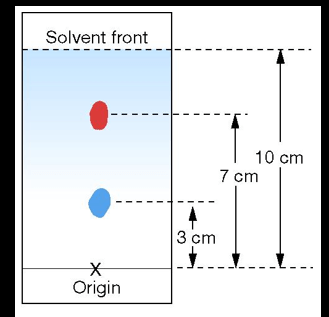
The Rvalue  for the blue component is 
a)
0.3
b)
0.7
c)
10
d)
3
53.
The Rvalue  for the red component is 
a)
0.3
b)
0.7
c)
10
d)
7
54.

In the image, which dye is the most soluble?

a)

Red

b)

Blue

c)

Purple

55.

In the image, which dye has the largest retention factor (Rf)?

a)

Red

b)

Blue

c)

Purple

56.

In the image, which dye has the smallest retention factor (Rf)?

a)

Red

b)

Blue

c)

Purple

57.

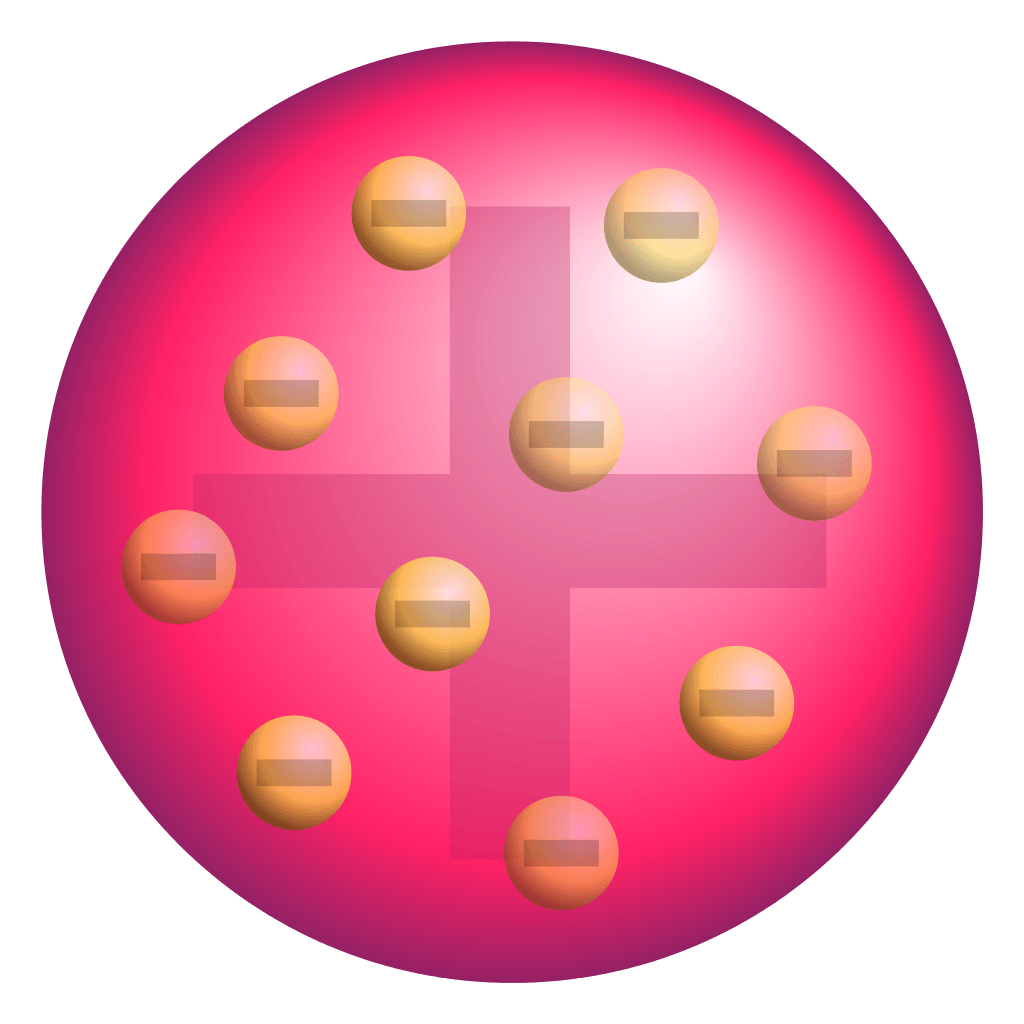
Which model of the atom is denoted as the "plum pudding" model?

a)

A

b)

B

c)

C

d)

D

e)

E

58.

What subatomic particle represents the "plums" in the "plum pudding" model?

a)

neutrons

b)

protons

c)

electrons

59.

Which of the following statements are true about the nucleus?

a)

It is neutrally charged

b)

It is positively charged

c)

It contains most of the mass of the atom

d)

It is almost empty space

60.
This model was developed after J.J. Thompson discovered electrons, a particle smaller than an atom. Is shows electrons floating freely in a positive space.
a)
The "Plum Pudding Model" of the atom
b)
The "Rutherford Model" of the atom
c)
Democritus's model of the atom
d)
The "Quantum Mechanical Model" of the atom
61.
Ernest Rutherford discovered that atoms were mostly _________________. 
a)
negatively charged
b)
positively charged
c)
electrons
d)
empty space. 
62.

What was the name of the model pictured behind this question?

a)

Oatmeal Model

b)

Rutherford Model

c)

Bohr Model

d)

Plum Pudding Model

63.
What did Ernest Rutherford discover when he shot particles at gold foil?
a)
Electrons
b)
Protons
c)
Neutrons
d)
A tiny, dense, positively charged nucleus 
64.
What particle was used in the gold foil experiment?
a)
Beta Particle
b)
Alpha particle
c)
Gamma ray 
65.
Most of the alpha particles went straight through the gold foil.  This suggested that....
a)
There is no interference between alpha and gold.
b)
Most of the atom is made up of empty space.
c)
The alpha particles were very tiny.
d)
None of the above
66.
Some of the alpha particles fired at the gold foil were deflected at angles.  This was due to...
a)
reflection of the alpha source when it it the fluorescent screen.
b)
The alpha particles hitting the gold nucleus.
c)
Repulsion forces between the positively charged nucleus and the positively charged alpha particles. 
d)
A mis-firing of the alpha source
67.
Rutherford’s gold foil scattering experiment indicated that 
a)
the nucleus of an atom occupies most of an atom’s volume
b)
positive charges are dispersed throughout the atom.
c)
positive charges are concentrated in a very small core at the atom’s center
d)
protons and neutrons are located in the nucleus.
68.
While making his model of an atom, what structure did Rutherford discover (containing protons and neutrons)?
a)
the Nucleus
b)
the Electron Cloud
c)
the quarks
d)
the atomic mass
69.
Explain why the electrolyte has to be a liquid.
a)
So the ions can move
b)
So the electrons can move
c)
So that it doesn't get too hot
d)
So the fish are ok
70.
Describe oxidation in terms of electrons
a)
oxidation is gain of electrons
b)
oxidation is loss of electrons
71.
Describe reduction in terms of electrons
a)
reduction is gain of electrons
b)
reduction is loss of electrons
72.
Why can ionic compounds not conduct electricity when they are solid?
a)
their electrons are not free to move
b)
their ions are free to move
c)
their ions are not free to move
d)
their electrons are free to move
73.
What type of charge does a metal ion have?
a)
+
b)
-
74.
The electrode connected to the positive terminal of a battery is __________.
a)
cathode
b)
anode
75.
The negatively charged ions migrate toward the ________.
a)
anode
b)
cathode
76.
Which statement correctly describes the 2 electrodes?
a)
The anode is negative and the cathode is positive
b)
The anode and cathode are both positive
c)
The anode is positive and the cathode is negative
d)
The anode and cathode are both negative.
77.
Positive ions (cations) will move towards the cathode (-) where they will discharge by....
a)
Breaking apart
b)
Losing electrons
c)
Clumping together.
d)
Gaining electrons
78.

What is the equation to show what happens to chloride ions at the anode.

a)

Cl- --> Cl + e-

b)

2Cl- --> Cl2 + 2e-

c)

Cl2 + 2e- 2Cl-

d)

Cl2 + 2e- --> 2Cl-

79.

Choose the half-equation that shows the discharge of aluminium ion.

a)

Al3+ - 3e- --> Al

b)

Al2+ + 3e- --> Al

c)

Al3+ + 3e- --> Al

d)

Al3+ --> Al + 3e-

80.

What are the ions present in molten Al2O3?

a)

Al2+ and O3-

b)

Al2- and O3+

c)

Al3+ and O2-

d)

Al3- and O2+

81.
Finish the statement...."Opposites..."
a)
repel
b)
attract
c)
do nothing
82.
Which series is used to predict the reactions of metals with carbon and other elements?
a)
reactionary series
b)
reaction series
c)
redox series
d)
reactivity series
83.
How could you extract sodium from molten sodium chloride?
a)
reduction by carbon
b)
electrolysis
c)
decomposition
d)
oxidation
84.

What is the ore of aluminium called?

a)

Baxite

b)

Bauxite

c)

Cryolite

d)

Malachite

85.

The electrodes in electrolysis of aluminium are made of

a)

Steel

b)

Anodes

c)

Graphite

d)

Plastic

86.

What do you add to aluminium ore to reduce its melting temperature?

a)

Dendrite

b)

Malachite

c)

Bauxite

d)

Cryolite