wayground logo

Free Printable Worksheets

Font size

S
M
L
XL
Worksheets

Biology SOL Review

Total questions: 209

Worksheet time: 17hrs 25mins

Name
Class
Date
1.
How do viruses reproduce?
a)
They copy their own genetic material inside a protein coat.
b)
They kill a cell and reproduce inside it.
c)
They invade a living cell and use the cell's functions to replicate their genetic material.
d)
They do not reproduce because they are not technically living things.
2.
What is the capsid of a virus?
a)
the disease it causes
b)
the receptors to which it binds
c)
the genetic material
d)
its protein coat
3.
Which cell part is present in eukaryotic cells, but not in prokaryotic cells?
a)
cell membrane
b)
cell wall
c)
cytoplasm
d)
nucleus
4.
Which of the following is a possible result of a disruption in the cell cycle?
a)
cancer
b)
photosynthesis
c)
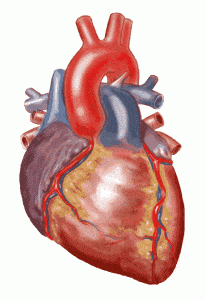
cellular respiration
d)
protein synthesis
5.
Which organic macromolecules are composed of chains of amino acids that join to form the structural components of organisms?
a)
carbohydrates
b)
nucleic acids
c)
proteins
d)
lipids
6.
This cell is undergoing mitosis.  What stage of mitosis is shown?
a)
prophase
b)
metaphase
c)
anaphase
d)
telophase
7.
The ability to taste a bitter chemical called PTC is a dominant trait in humans.  The Punnett square below shows a cross between two parents who are heterozygous for the ability to taste this chemical.  What is the probability, expressed as a percentage, that these parents will produce an offspring who is homozygous recessive for the tasting trait?
a)
0%
b)
25%
c)
50%
d)
75%
8.
Which of these substances stores and transmits the information that specifies the traits of an organism?
a)
DNA
b)
RNA
c)
enzymes
d)
carbohydrates
9.
A strand of DNA with the sequence A-C-T-T-G serves as a template to form a strand of mRNA with the sequence U-G-A-A-C.  During which process would this happen?
a)
replication
b)
transcription
c)
translation
d)
meiosis
10.
The diagram summarizes two stages in the production of the specialized cells used for sexual reproduction.
What happens in the stage labeled "process 2"?
a)
The chromosomes cross over.
b)
Th chromosomes number is reduced by half.
c)
The chromosomes move to opposite end of the cell.
d)
Four identical gametes form.
11.
Proteins are formed in the cytoplasm of cell using genetic instructions from DNA, which is located in the cells nucleus.  Which of the following best explains how the genetic information gets to the site of protein synthesis?
a)
DNA is divided during mitosis, and one strand travels outside the nucleus to bind with RNA and form a protein
b)
DNA is copied to make mRNA. The mRNA leaves the nucleus and goes to the ribosomes, where the information is used to guide protein synthesis.
c)
Genetic information travels from DNA in the nucleus along a strand of mRNA that is connected to ribosomes in the cytoplasm where proteins are made.
d)
The genetic code is transferred to ribosomes on tRNA molecules, which can pass through the nuclear membrane.
12.
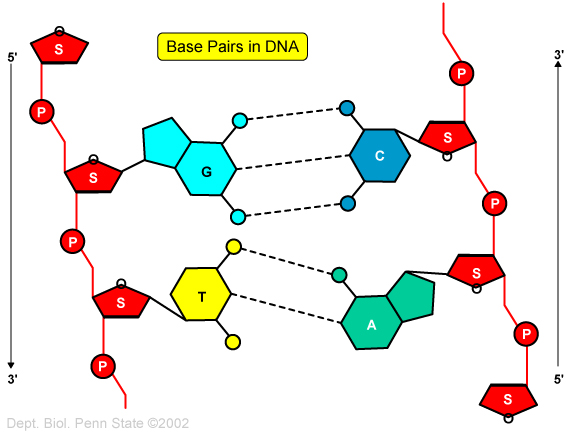
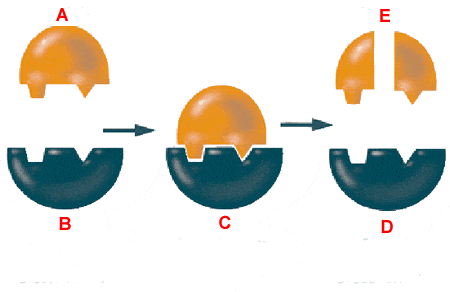
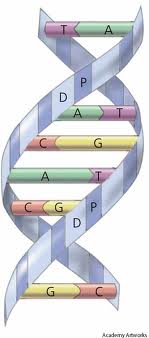
The diagram shows the base sequence of a strand of DNA.
From left to right, what is the sequence of the complementary strand of DNA in this molecule?
a)
T G A A C
b)
A C T  T G
c)
T G U U C
d)
U C T T G
13.
The table shows several DNA codons and their corresponding amino acids.
If a sequence of DNA reads AGTGGGTCT, for what sequence of amino acids does it code?
a)
arginine-glycine-serine
b)
serine-arginine-arginine
c)
serine-arginine-glycine
d)
serine-glycine-serine
14.
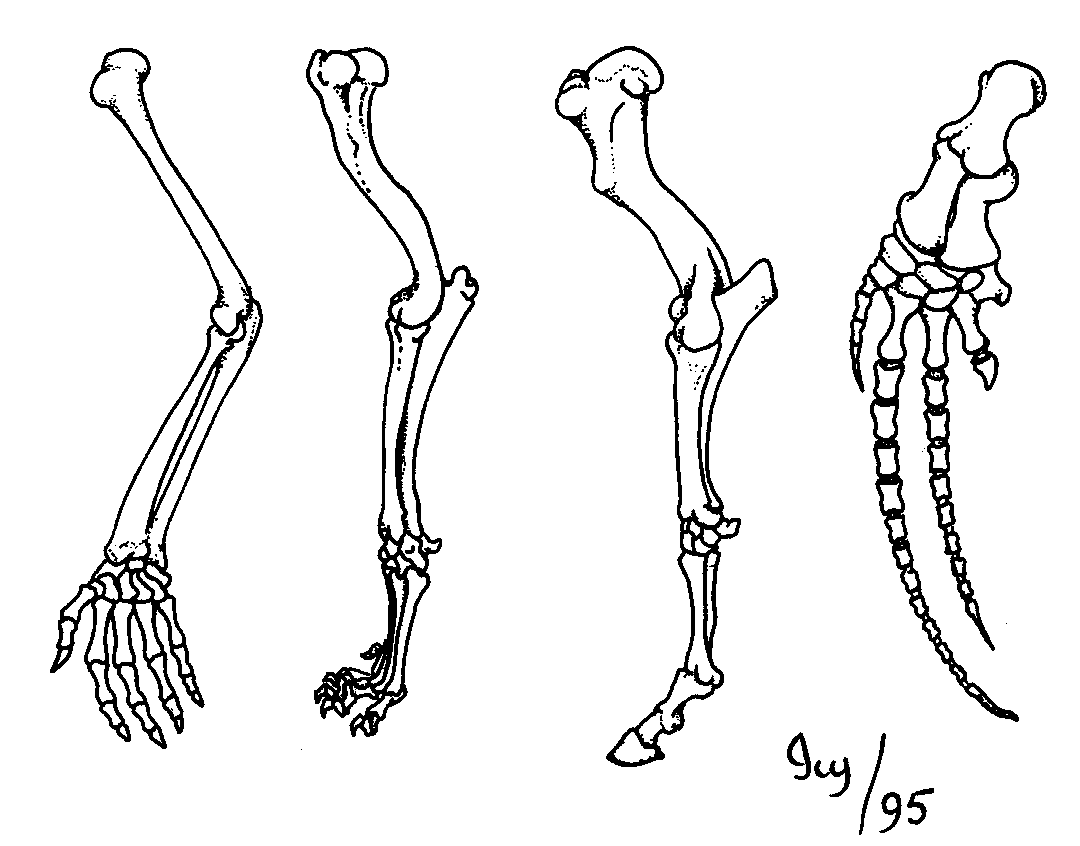
The legs of crocodiles and mice have similar bone structures and develop in a similar way.  What type of structures are the leg bones?
a)
homologous structures
b)
analogous structures
c)
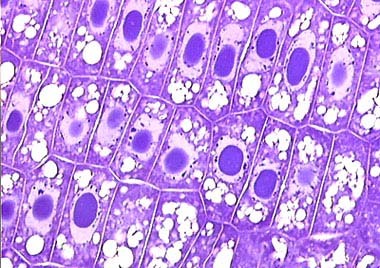
fossilized structures
d)
vestigial structures
15.
The standardized system for naming organism is known as binomial nomenclature.  What two pieces of information are used to name and identify organisms using this system?
a)
genus and species
b)
class and genus
c)
class and species
d)
domain and kingdom
16.

What is a producer?

a)

an organism that uses energy from the sun to create food

b)

an organism that obtains energy from other organisms

17.

What image is a producer?

a)
b)
c)
d)
18.

What image is a decomposer?

a)
b)
c)
d)
19.

What images represent consumers?

Choose all that are correct.

a)
b)
c)
d)
e)
20.

Complete the sentence with the correct word.


________________ is how many organisms an area can support for an extended period of time.

a)

Abiotic

b)

Limiting factors

c)

Biotic

d)

Carrying capacity

21.

Complete the sentence with the correct word.


________________ are the things that affect population size.

a)

Abiotic

b)

Limiting factors

c)

Biotic

d)

Carrying capacity

22.

What is "abiotic" ?

a)

living

b)

non-living

23.

What is "biotic" ?

a)

living

b)

non-living

24.

What images represent abiotic factors?

Choose all that are correct.

a)
b)
c)
d)
e)
25.

What images represent biotic factors?

Choose all that are correct.

a)
b)
c)
d)
e)
26.

What graph represents carrying capacity?

a)
b)
c)
d)
27.

An organism that obtains energy by eating other organisms is a ___________.

a)

Decomposer

b)

Consumer

c)

Producer

28.

_____________ break down dead and/or decaying matter.

a)

Producers

b)

Consumers

c)

Decomposers

29.
In a strand of DNA, if it contains 20% of Thymine, then how much Guanine would be present?
a)
30%
b)
20%
c)
80%
d)
10%
30.
Which of the following best describes a DNA molecule?
a)
double helix
b)
contains ribose
c)
made of amino acids
d)
contains Uracil
31.
Which of the following units are repeatedly joined together to form a strand of DNA?
a)
amino acids
b)
nucleotides
c)
fatty acids
d)
polysaccharides
32.
Guanine bonds with ______________.
a)
Adenine
b)
Guanine
c)
Cytosine
d)
Thymine
33.
In a molecule of double-stranded DNA, the amount of Adenine present is always equal to the amount of
a)
cytosine
b)
guanine
c)
thymine
d)
uracil
34.
Why is DNA important?
a)
it is very small and very complicated
b)
it's in everything
c)
it serves as the blueprint for traits of all living things
d)
because we eat it every day for energy
35.
Which 2 molecules form the sides (backbone) of the DNA ladder?
a)
deoxyribose sugar and adenine
b)
deoxyribose sugar and a hydrogen bond
c)
deoxyribose sugar and the nucleus
d)
deoxyribose sugar and phosphate
36.
What are the three components of a nucleotide?
a)
sugar, hydrogen, nitrogen base
b)
sugar, oxygen, nitrogen base
c)
sugar, phosphate, nitrogen base
d)
sugar, phosphate, protein
37.
Nitrogenous bases are joined by which type of bond?
a)
polar bonds
b)
ionic bonds
c)
covalent bonds
d)
hydrogen bonds
38.
DNA molecule segment is : TTACGCAAG
The mutated DNA segment is TTCGCAAG. This is an example of ___ mutation.
a)
Substitution
b)
Deletion
c)
Insertion
d)
Inversion
39.
What mutation has occurred here? 
T-G-A-C-C-A
T-G-A-G-C-A
a)
Substitution
b)
Deletion
c)
Insertion
d)
Frameshift 
40.
What are the building blocks of proteins ?
a)
monosaccharides
b)
nucleotides
c)
ribosomes
d)
Amino Acids
41.
21 nucleotides will provide how many codons?
a)
3 amino acids
b)
5 amino acids
c)
7 amino acids
d)
9 amino acids
42.
Three nucleotide bases on a strand of mRNA are a(n) ____.
a)
mutation
b)
chromosome
c)
codon
d)
anticodon
43.

What word describes a trait that helps an organism survive in its environment?

a)

natural selection

b)

mutation

c)

camouflage

d)

adaptation

44.
What word describes the process of having the advantageous traits that helps an organism survive  and reproduce?
a)
natural selection
b)
adaptation
c)
mutation
d)
genetic engineering
45.
All mutations and adaptations usually lead to what process?
a)
selective breeding
b)
behavioral
c)
natural selection
d)
genetic engineering
46.
Why do frogs and other organism reproduce so many eggs or offspring?
a)
so that their babies can have friends to play with
b)
the more offspring the more likely the offspring will survive
c)
the more offspring the less likely offspring will survive 
d)
the more offspring the less competition
47.
Which organisms are most likely to survive?
a)
the best adapted
b)
the fastest
c)
the strongest
d)
the most domesticated (tamed)
48.
Which of the following means "genetic change over time"
a)
natural selection
b)
speciation
c)
evolution
d)
fitness
49.
Do organisms "decide" to evolve and change?
a)
Yes, they know they need to change to survive 
b)
No, they change because of natural selection
50.
The basic unit of structure and function in the human body is the....
a)
organ
b)
organ system
c)
cell
d)
tissue
51.
This is a example of........ 
a)
organ system
b)
cells
c)
organ
d)
tissue
52.
This is a example of ........
a)
cell
b)
tissue
c)
organ 
d)
organ system
53.
This is a example of ........
a)
cell
b)
organ system
c)
organ
d)
tissue
54.
Which is an example of an organism?
a)
a beetle
b)
a lake
c)
a rock
d)
a shell
55.
What is the difference between a cell and a tissue?
a)
cell is basic unit of life; tissue is group of cells that work as one
b)
cell is group of tissues; tissue is basic unit of life
c)
cell is basic unit of life; tissue is groups of different cells
d)
cell is group of organs; tissue is group of different cells
56.
Which of the following is the correct order of organization in living things from most basic (simple) to most complex?
a)
a.  Organism, cell, tissue, organ, organ system
b)
a.  Organ system, organ, tissue, cell, organism
c)
a.  Cell, tissue, organ, organ system, organism
d)
a.  Cell, organ, tissue, organ, organism, organ system
57.
The cell is the building block of all living things.
a)
True
b)
False
58.
Which level of organization is the most complex?
a)
organism
b)
population
c)
community
d)
ecosystem
59.
Multiple organisms of the same species describes a
a)
organism
b)
population
c)
community
d)
ecosystem
60.
A forest full of many kinds of trees and grasses is an example of a
a)
group
b)
organism
c)
population
d)
community
61.
Which is an example of a population?
a)
different kinds of bacteria
b)
A group of fish and sharks
c)
deer, bear, and rabbits
d)
A herd of cattle
62.
which is the correct order of the levels of organization from simple to complex?
a)
organism, population, community, ecosystem
b)
ecosystem, community, population, organism
63.
Which is the definition of a community
a)
multiple organisms of the same species
b)
all the living and nonliving things in an area
c)
a living thing
d)
multiple organisms of different species
64.
According to the diagram, when did the common ancestor of giant pandas and spectacled bears exist? 
a)
5-10 mya
b)
10-15 mya
c)
15-20 mya
d)
20-25 mya
65.
Prokaryotes used to be classified as a single kingdom. New technology allowed them to be split into...
a)
Protista and Prokaryota
b)
Protista and Bacteria
c)
Eubacteria and Archaea
d)
Archaea and Eukarya
66.
Movement of materials down the concentration gradient through a protein channel is an example of 
a)
facilitated diffusion
b)
active transport
c)
respiration
d)
osmosis 
67.
Which list includes only structures that would be found in a prokaryotic cell? 
a)
Cell wall, plasma membrane, mitochondria
b)
Central vacuole, cell wall, lysosome
c)
Cell wall, plasma membrane, cytoplasm
d)
Plasma membrane, nucleus, mitochondria
68.
What structures do protists and paramecium use to remove waste?
a)
Cillia
b)
Flagella
c)
Psuedopods
d)
Contractile Vacuole 
69.
Humans are made up of different cells that preform different functions. From which cells do nerve cells develop? 
a)
Muscle cells
b)
Stem cell
c)
Sperm cells
d)
White blood cells 
70.
In a cell, what does a buffer help maintain?
a)
A constant temperature
b)
A low temperature 
c)
A constant pH
d)
A low pH
71.
Which of the following statements vest describes the cell cycle? 
a)
Interphase is the reproductive phase, mitosis is the growth phase
b)
Interphase is the growth phase, mitosis is the reproductive phase
c)
Cytokinesis is the growth phase, S-phase is the reproductive phase
d)
Cytokinesis is the reproductive phase, S-phase is the growth phase
72.
Which uses cilia for movement?
a)
Euglena
b)
Amoeaba
c)
Paramecium
d)
Volvox
73.
What is the function of this molecule in organisms? 
a)
Storage of genetic information
b)
Structure and support
c)
Short term energy storage
d)
Long term energy storage
74.
Which best describes the function of enzymes?
a)
to speed up chemical reactions in a cell
b)
to produce cellular energy
c)
to produce proteins
d)
to speed up cell division
75.
Which factor determines the shape and function of a protein?
a)
The density of ribosomes in the cell
b)
The peptide bonds between amino acids
c)
The order of the amino acids in the peptide chian
d)
The sequence of the phosphate molecules in the DNA chain. 
76.
What are the products of photosynthesis? 
a)
glucose and oxygen
b)
glucose and carbon dioxide
c)
glucose and water
d)
water, carbon dioxide, and energy
77.
Which process uses ATP to move materials across the plasma membrane against the concentration gradient?
a)
passive transport
b)
active transport 
c)
facilitated diffusion
d)
osmosis
78.
Which process of the carbon cycle removes carbon dioxide from the atmosphere? 
a)
photosynthesis
b)
cellular respiration
c)
combustion of fossil fuels 
d)
death and decomposing organisms 
79.
In very hot or dry conditions, land snails may enter a state of inactivity and low metabolism. What is the name of this adaptation? 
a)
Hibernation
b)
Estivation
c)
Imprinting
d)
Migration 
80.
Which statement best describes how the use of antibiotics on certain bacteria affects natural selection? 
a)
Natural Selection is altered because bacteria are killed
b)
The rate of selection is decreased because antibiotics kill only young bacteria
c)
Antibiotics alter natural selection by causing bacterial DNA to mutate 
d)
The rate of selection is increased because antibiotics do not kill bacteria that are naturally resistant to them. 
81.
What type of growth is shown by the human population? 
a)
Carrying capacity
b)
Logistical
c)
Exponential
d)
Stabilizing 
82.
Which method would be most helpful in preventing eutrophication of lakes and waterways?
a)
recycling aluminum
b)
conserving fossil fuels 
c)
reducing run-off from farms 
d)
using less pesticide 
83.
Which statement describes how complementary strands of DNA are linked?
a)
each sugar in one strand is paired with a complementary base in the other strand. 
b)
Each sugar in one strand is pained with a complementary phosphate in the other strand
c)
Each phosphate in one strand is paired with a complementary phosphate in the other
d)
Each base in one strand is paired with a complementary base in the other 
84.
Enzymes catalyze reactions by ___________ Activation Energy.
a)
Increasing
b)
Decreasing
85.
An experiment is performed on plants to see how different liquids affect plant growth. Each plant in the experiment is given a different liquid; water, apple juice, or milk. Each plant has the same amount of soil, sunlight, and listens to the same music. In this investigation, the independent variable is ...
a)
The type of plant
b)
The amount of sunlight
c)
The type of music
d)
The type of liquid
86.
The amount of energy that usually transfers from one trophic level to the next...
a)
10%
b)
20%
c)
80%
d)
50%
87.

Which of the following converts food into energy for the cell?

a)

vacuole

b)

mitochondria

c)

cytoplasm

d)

cell membrane

88.
What is something that prokaryotic and eukaryotic cells have in common?
a)
They have a nucleus. 
b)
They are multi-cellular. 
c)
They have DNA. 
d)
They have organelles that are membrane-bound.
89.
Active transport does not require energy.
a)
True 
b)
False 
90.
Which 2 molecules forms the sides (backbone) of the DNA ladder?
a)
deoxyribose and adenine
b)
deoxyribose and a hydrogen bond
c)
sugar and the nucleus
d)
deoxyribose (sugar) and phosphate
91.
These molecules represent which organic molecule?
a)
proteins
b)
lipids
c)
nucleic acids
d)
carbohydrates
92.

The light independent reactions (Calvin Cycle) of photosynthesis happen where?

a)

stroma of chloroplast

b)

mitochondrial matrix

c)

stem

d)

thylakoid membrane

93.
In this image, the cell is using which type of molecular transport?
a)
Osmosis
b)
Diffusion 
c)
Endocytosis
d)
Exocytosis 
94.
What are the two reactants of cellular respiration?
a)
C6H12O6 & 6CO2
b)
6 CO2 & 6H2O
c)
C6H12O& 6O2
d)
6CO2 & 6O2
95.
Name structure #5.
a)
rough ER
b)
nucleus
c)
vesicle
d)
cytoplasm
96.
How do enzymes increase the speed of chemical reactions?
a)
reducing the number of products   
b)
reducing the activation energy
c)
increasing the temperature of the cell
d)
increasing the concentration of reactants 
97.
Which of these is NOT true?
a)
Enzymes can denature (change shape) when the temperature gets too high.
b)
Enzymes can only be used once in a chemical reaction. 
c)
Extreme pH can denature enzymes.
d)
Enzymes speed up chemical reactions. 
98.
What molecule is this
a)
sucrose
b)
protein
c)
glucose
d)
cellulose
99.
What process is going on in this photo? 
a)
Transcription 
b)
Translation 
c)
Replication 
d)
All the above 
100.
This picture represents which type of cellular transport?
a)
passive transport
b)
endocytosis
c)
exocytosis
d)
osmosis
101.
The cell below is in a _________ solution.
a)
Hypotonic
b)
Hypertonic
c)
Isotonic
102.
Which of these is not a way in which biotechnology can benefit agriculture?
a)
increase crop population
b)
reducing the loss of crops to insects
c)
producing better-tasting fruits
d)
improving farm machinery
103.
What two products does a plant make during photosynthesis?
a)
Water and Glucose
b)
Oxygen and Glucose
c)
Oxygen and Water
d)
CO2 and Glucose
104.

What is the role of the pioneer species in Primary Succession?

a)

To kill any remaining organisms from before the disturbance

b)

To break down rock and rebuild soil

c)

To provide food for large animals

d)

To put fresh oxygen into the air

105.

What are some abiotic factors that could be limiting factors in the Iowa River ecosystem?

a)

Temperature, fertilizer runoff from fields, drought or flood

b)

Invasive species, floods

c)

Temperature, predators, droughts, floods, over fishing

106.
The diagram below represents a cell. Which organelle is the site where amino acids are synthesized into proteins? 
a)
1
b)
2
c)
3
d)
4
107.
An offspring will receive how many alleles from each parent to determine a specific trait?
a)
one
b)
two
c)
three
d)
five
108.
G = green, g = yellow
The genotype for a yellow plant is...
a)
GG
b)
Gg
c)
gg
d)
all of the choices result in yellow
109.

The cladogram shows the evolution of land plants as indicated by fossil records.

Which discovery would challenge the validity of this cladogram?

a)

A large aquatic vascular plant about 200 million years old

b)

A species of algae that has existed for less than one million years

c)

A moss species that has existed for less than 380 million years

d)

A fossil of a fern more than 425 million years old

110.

Scientists estimate that there are more than 20,000 species of ants. The species range in size from 1 mm long to 38 mm long and live in most environments. The diets of ants range from flowers and seeds to fluids from their own larvae. Ants have been able to successfully inhabit so many different environments because their populations have been able to --

a)

hybridize with other species of insects

b)

adapt to a variety of habitats and food sources

c)

fill niches usually occupied by mammals

d)

occupy habitats that have no other life-forms

111.

Two populations of mice living in the same forest are separated by a large water-filled ditch. After a rainstorm, flooding brings several mice from one population to the other population. When the mice from the first population reproduce with members of the second population, which of the following will likely occur?

a)

All of the offspring will die as a result of reproductive mutations.

b)

The offspring will be forced to leave the second population.

c)

The offspring will be genetically identical to their parent from the first population.

d)

The offspring in the second population will have greater genetic variety.

112.

The picture shows bean-shaped glands called nodes. The clusters of cells in the nodes include macrophages that break down viruses and other potentially harmful materials. Nodes also contain cells that produce protein particles capable of capturing harmful materials that flow in tissue fluid through the nodes. Different parts of the body are drained by nodes in different regions of the body.


Which body systems are directly responsible for regulating these nodes and protecting the body from harmful materials in tissue fluid?

a)

Immune and lymphatic systems

b)

Digestive and nervous systems

c)

Endocrine and digestive systems

d)

Circulatory and nervous systems

113.

Organisms are classified today using the Linnaean system, and the following table shows the taxonomic classification of two marine organisms living along the Pacific Coast.


Taxonomic classification is important to marine biologists because it provides a way to -

a)

prove that marine evolution occurs

b)

discover and name every marine organism on Earth

c)

designate Latin as the universal language of marine biology

d)

identify marine organisms and find evolutionary relationships between them

114.

When a person is suddenly cut by a sharp object, a nervous impulse is sent along a sensory neuron to the spinal cord. The impulse is immediately transmitted through motor neurons to produce a response. Which of the following correctly identifies and describes this response?

a)

It is a conditioned response that occurs only to prevent injury.

b)

It is a learned response that does not occur in infants and small children.

c)

It is a reflex response that causes various muscles to contract in order to move away from the object.

d)

It is a voluntary response that is initiated only after the impulse has been carried to the relevant area in the brain.

115.

A student conducted an investigation to study phototropism in grasses. The only difference between the control group and the experimental group was the light conditions. The control group was provided full light, while the experimental group was shaded on one side. The diagrams show the average heights and positions of blades of grass in the investigation. (View Image)


Which statement best explains why the grass tips of the experimental group bent toward the light?

a)

Water evaporated faster on the side of the plant having full light.

b)

Light sensors in the grass tips simulated a hormone in the shoot system.

c)

The xylem in the roots system absorbed more nutrients from the shaded side.

d)

The side facing the light has greater chance of absorbing carbon dioxide from the atmosphere.

116.

Part of an important cellular process involving a DNA strand is modeled in the image. (View image)


What is the purpose of this cellular process?

a)

Preserving genetic information for future generations

b)

Deleting the information in the sequence produced from the DNA template

c)

Transcribing information in the DNA sequence for use by the cell

d)

Producing more nucleotides for the DNA sequence

117.

The energy pyramid shows the energy made available by producers. (View Image)


Base on the energy flow between trophic levels in an energy pyramid, how much energy would be expected to be found at the secondary consumer level in this pyramid?

a)

100 joules

b)

500 joules

c)

1,000 joules

d)

50 joules

118.

Nitrogenous bases are located on both strands of the DNA double helix. What is the significance of the nitrogenous bases?

a)

The number of adenines and cytosines determines the type of RNA that will be produced.

b)

The order of nitrogenous bases determines the order of amino acids in the proteins synthesized.

c)

The amount of thymine and guanine in the DNA molecules determines the length of the genes.

d)

The type of hydrogen bonding between the nitrogenous bases determines which amino acid will be added to the peptide chain.

119.

Oncogenes are mutated forms of genes. Oncogenes can transform a cell into a tumor cell. Some tumor cells are benign, while others are malignant. How does the presence of an oncogene lead to the formation of a tumor?

a)

ATP Production is inhibited.

b)

Cell division is unregulated.

c)

Somatic cell growth is inhibited.

d)

Antibody Activity is unregulated.

120.

Some students used vinegar to dissolve away the shells of three eggs and used the eggs as models of human red blood cells. The students observed the changes in the eggs when they were placed in different solutions. (View Image)


Which statement best describes the role of the cell membrane in this model?

a)

The cell membrane is an impermeable barrier that prevents water from entering the cell.

b)

The cell membrane allows solutes to enter the cell, which causes the cell to shrink.

c)

The cell membrane allows water to enter and leave the cell.

d)

The cell membrane removes solutes from the environment.

121.

Viruses can be transmitted through air, water, food, insect bites, and direct skin contact. Once a virus gains entry to the body, it invades a host cell in order to --

a)

deactivate the host cell's defences

b)

synthesize antibodies for defence

c)

metabolize host proteins and grow

d)

access cellular processes for replication

122.

The diagram shows cells in different phases of mitosis. A student is trying to find a cell in a particular phase of mitosis. The student is looking for evidence that spindle fibers are separating the chromosomes to ensure that each new nucleus has one copy of each chromosome. (View Image)


Which cell is in the phase of mitosis that the student is searching for?

a)

Cell 1

b)

Cell 2

c)

Cell 3

d)

Cell 4

123.

Albinism is an autosomal recessive condition. Which circle graph shows the genotype probability when an albino female mates with a male that is heterozygous for the albinism trait? (View Image)

a)

F

b)

G

c)

H

d)

J

124.

The complex carbohydrates pictured (View Image) are made by linking molecules of glucose.


In all three complex carbohydrates, the subunits of glucose are bonded together differently. Because they have different structures, they most likely --

a)

contain different chemical elements

b)

form different proteins

c)

carry different nucleotides

d)

perform different functions

125.

Photosynthesis and cellular respiration both involve the use and release of gases. Which statement correctly identifies the role of gases in the two processes?

a)

Photosynthesis and cellular respiration both use carbon dioxide and release oxygen.

b)

Photosynthesis and cellular respiration both use oxygen and release carbon dioxide.

c)

Cellular respiration uses oxygen and releases carbon dioxide, while photosynthesis uses carbon dioxide and releases oxygen.

d)

Cellular respiration uses carbon dioxide and releases oxygen, while photosynthesis uses oxygen and releases carbon dioxide.

126.

The diagram represents one way an enzyme can be inhibited. (View Image)


Which statement explains the effect of an inhibitor on an enzyme?

a)

A substrate will be able to bond with the enzyme.

b)

The enzyme will likely be attacked by immune cells.

c)

The enzyme will be unable to produce more enzymes.

d)

A substrate will be unable to attach to the enzyme.

127.

Four common relationships between organisms are listed in the box. (View Image)


Which statements best describe these relationships?

a)

Relationships 1 and 4 are examples of mutualism.

Relationship 2 is an example of commensalism.

Relationship 3 is an example of parasitism.

b)

Relationships 1, 2, and 4 are examples of mutualism.

Relationship 3 is an example of parasitism.

128.
What property of water makes it the 'universal solvent'?
a)
it is a polar molecule
b)
it is an ionic compound
c)
it contains hydrogen bonds
d)
it steals electrons from other atoms
129.
Carbohydrates are made of... 
a)
C H O
b)
C H O N
c)
C H O N P
d)
C H O N S
130.
How many different amino acids are there?
a)
4
b)
20
c)
6
d)
46
131.
Glucose is a _____.
a)
carbohydrate
b)
lipid
c)
protein 
d)
nucleic acid
132.
Proteins are composed of what smaller building blocks?
a)
amino acids
b)
nucleic acids
c)
fatty acids
d)
nucleotides
133.
Which group of organic molecules serve as long-term energy storage and make the cell membrane is?
a)
proteins
b)
carbohydrates
c)
lipids
d)
nucleic acids
134.
The primary purpose the body uses monosaccharides for is?
a)
Building muscles
b)
Helping the Immune System
c)
Immediate Energy
d)
Generating Heat
135.
Which of the following is LEAST likely to dissolve in water?
a)
nonpolar fats and oils
b)
polar sugar molecules
c)
salt made of a positive sodium ion and a negative chloride ion
d)
all of the substances will dissolve easily in water
136.
Also known as simple sugars, these are the monomers of carbohydrates.
a)
lipids
b)
nucleotide
c)
monosaccharide
d)
monomer
137.
Attractions between water molecules are called
a)
Covalent bonds
b)
Ionic bonds
c)
Polar bonds
d)
Hydrogen bonds
138.
In red blood cells, a protein called ________ binds to oxygen.
a)
hemoglobin
b)
ATP
c)
RNA
d)
DNA
139.
The building blocks of nucleic acids are called ...
a)
amino acids
b)
nucleotides
c)
carbohydrates
d)
proteins
140.
ATP is...
a)
a unit of energy in the cell
b)
a type of lipid
c)
a molecule of DNA
141.
Phospholipids have a _________ head and a __________ tail.
a)
hydrophilic, hydrophobic
b)
hydrophobic, hydrophilic 
142.
Enzymes are _________ that __________ chemical reactions.
a)
proteins, slow down
b)
proteins, speed up
c)
lipids, slow down
d)
lipids, speed up
143.
The cell membrane is formed mostly by...
a)
carbohydrates
b)
proteins
c)
phospholipids
d)
nucleic acids
144.
Nucleotides are made up of three parts. The three parts are...
a)
DNA, RNA, and a sugar
b)
a lipid, a fat, and an oil
c)
a carbohydrate, a protein, and a fat
d)
a sugar, a phosphate, and a base
145.
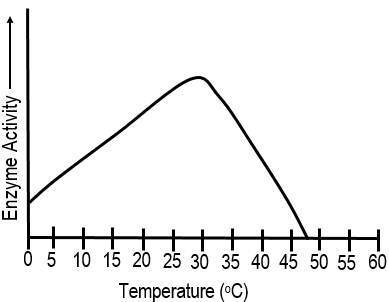
Based on the graph, what temperature does this enzyme work best? 
a)
15 C
b)
40 C
c)
30 C
146.
Which of the following binds to the active site of an enzyme? 
a)
substrate
b)
product
c)
codon
d)
none of the above
147.
What happens when enzymes are heated to a high temperature?
a)
The enzymes die.
b)
The shapes of the enzyme are altered or denatured
c)
The enzymes' amino acid sequence changes.
d)
The enzymes remain the same
148.

Enzymes _ activation energy

a)

raise

b)

lower

149.

NUCLEOTIDES ARE THE BUILDING BLOCKS OF...

a)

CARBOHYDRATES

b)

LIPIDS

c)

NUCLEIC ACIDS

d)

PROTEINS

150.

AMINO ACIDS ARE THE BUILDING BLOCKS OF...

a)

CARBHYDRATES

b)

LIPIDS

c)

NUCLEIC ACIDS

d)

PROTEINS

151.

FATTY ACIDS AND GLYCEROL ARE THE BUILDING BLOCKS OF..

a)

CARBOHYDRATES

b)

LIPIDS

c)

NUCLEIC ACIDS

d)

PROTEINS

152.

WHAT ELEMENTS DO ALL BIOMOLECULES (LIPIDS, PROTEINS, NUCLEIC ACIDS, CARBS) HAVE IN COMMON?

a)

CARBON, HYDROGEN, FLOURINE

b)

CARBON, HYDROGEN, CHLORINE

c)

CARBON, HYDROGEN, IODINE

d)

CARBON, HYDROGEN, OXYGEN

153.

WHICH BIOMOLECULES STORES LONG-TERM ENERGY?

a)

PROTEIN

b)

CARBS

c)

LIPIDS

d)

NUCLEIC ACIDS

154.

This cell is a -

a)

PROKARYOTIC

b)

PLANT

c)

ANIMAL

d)

PROTIST

155.

WHAT ELEMENT DO AMINO ACIDS AND NUCLEOTIDES HAVE THAT THE OTHERS DO NOT HAVE?

a)

PHOSPHATE

b)

NITROGEN

c)

CARBON

d)

OXYGEN

156.
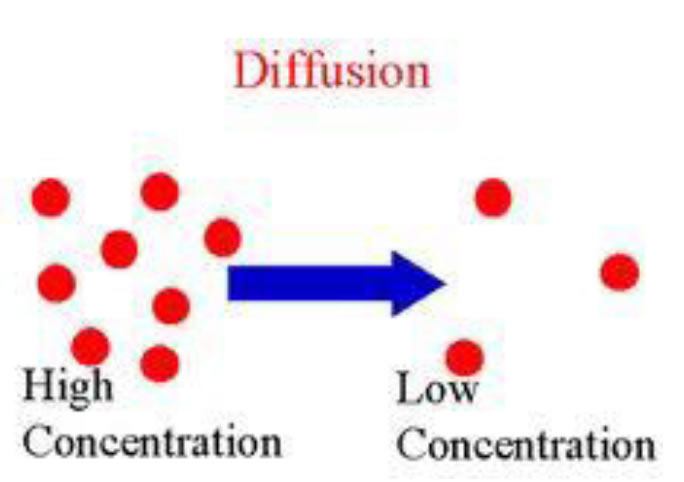
Movement of particles from high to low concentration. 
a)
Passive Transport
b)
Active Transport
157.
a)
Cytokinesis
b)
Interphase
c)
Anaphase
d)
Metaphase
158.
At high temperatures enzyme activity declines because of:
a)
Denaturation
b)
Decreased Kinetic Motion
c)
Increased H-Bonding
d)
Dissociation of Ionic Compounds
159.

What do viruses have in common with living cells? They both...

a)

store genetic information

b)

have chloroplasts

c)

use glucose for cellular respiration

d)

have endoplasmic reticulum

160.

Which viral life cycle kills its host cell by lysing (exploding)?

a)

lytic

b)

mitosis

c)

lysogenic

d)

S phase

161.
Which phase of which process does this picture show?
a)
Transcription
b)
Translation
c)
Replication
162.
How would the DNA sequence GCTATA be transcribed to mRNA?
a)
GCUAUA
b)
CGATAT
c)
CGAUAU
d)
GCUTUT
163.
Which of the following genotypes is homozygous dominant?
a)
A
b)
Aa
c)
AA
d)
aa
164.
When is DNA replicated during the cell cycle?
a)
During the G1 phase
b)
During the G2 phase 
c)
During the S phase
d)
 During the M phase
165.
What best describes the genetic material shown in photograph E.
a)
The chromosomes are in anaphase
b)
The chromosomes are in metaphase 
c)
DNA is possibly being replicated
d)
The genetic material is around the poles and cytokinesis is occurring 
166.
Which is a characteristic of cancer?
a)
rapid and uncontrolled cell growth
b)
 cell growth delayed at the G1 checkpoint. 
c)
cell growth delayed at the G2 checkpoint. 
d)
damage to a cell’s cytoplasm
167.
 Which sequence depicts the correct order of protein synthesis within a cell? 
a)
DNA → mRNA → amino acids → proteins
b)
DNA → amino acids → mRNA → proteins
c)
 DNA → mRNA → proteins → amino acids
d)
DNA → proteins → amino acids → mRNA
168.
Some peeled pieces of apple were placed in distilled water and some in very salty water. The cells in the apple pieces will…
a)
Lose water in both solutions
b)
Gain water in both solutions
c)
Lose water in the distilled water and gain water in the salty water
d)
Gain water in the distilled water and lose water in the salty water
169.
How do viruses reproduce?
a)
They copy their own genetic material inside a protein coat.
b)
They kill a cell and reproduce inside it.
c)
They invade a living cell and use the cell's functions to replicate their genetic material.
d)
They do not reproduce because they are not technically living things.
170.
Which statement describes the components that make up the genetic code of all organisms?
a)
The components are unique in every kind of organisms
b)
the components are the same for all organisms
c)
the components are the same only for unicellular organisms
d)
the components are unique in all kinds of organisms that reproduce sexually
171.
The diagram shows the base sequence of a strand of DNA.
From left to right, what is the sequence of the complementary strand of DNA in this molecule?
a)
T G A A C
b)
A C T  T G
c)
T G U U C
d)
U C T T G
172.
what are the reactants for cellular respiration?
a)
H2O and O2
b)
glucose and O2
c)
glucose and CO2
d)
H2O and CO2
173.
In Texas, longhorn cattle eat grass. People eat the cattle. What can you construct from this information?
a)
a community
b)
an ecosystem
c)
a food web
d)
a food chain
174.
The genetic variation that leads to evolution can occur when genes from one population are introduced into the gene pool of a different population.  This process is known as
a)
mutation
b)
crossing over
c)
natural selection
d)
gene flow
175.
The legs of crocodiles and mice have similar bone structures and develop in a similar way.  What type of structures are the leg bones?
a)
homologous structures
b)
analogous structures
c)
fossilized structures
d)
vestigial structures
176.
The food web shows the flow of energy through a sagebrush-steppe ecosystem.
Which of these organisms are in a trophic level that receives a larger percentage of the energy captures by the producers than the percentage received at the bats' trophic level?
a)
Mountain lions
b)
Snakes
c)
Hawks
d)
Ground squirrels
177.
According to this electrophoresis gel, which two bears are more closely related? 
a)
Black bear and the brown bear 
b)
Polar bear and the black bear 
c)
Brown bear and the polar bear 
d)
Cannot be determined from the data provided
178.
Which is the most closely related to the bumble bee, Bombus pennsylvanicus?
a)
Ammophila procera 
b)
Melissodes bimaculata 
c)
Bombus bimaculatus
d)
Ceratina calcerata
179.
Which of the following represents the levels of organization from least complex to most complex?   →
a)
Cellular → organ → tissue  →system
b)
System  →cellular → tissue  →organ 
c)
Cellular  →tissue → organ  →system 
d)
Tissue  →cellular → organ  →system
180.
A cross section of rock layers is shown below.   Which fossil is found in the oldest layer? 
a)
dinosaur
b)
fish
c)
shel
d)
leaf
181.
 Why do structural, physiological, and behavioral adaptations of individuals become more common each generation?  
a)
Individuals with those adaptations do not breed frequently
b)
More offspring with those adaptations survive and reproduce 
c)
Well-adapted individuals rarely survive
d)
The alleles responsible for those adaptations increase or decrease randomly 
182.
 Which statement about translation is correct?
a)
Amino acids are assembled into a protein on the ribosome
b)
Ribosomal RNA and transfer RNA form base pairs
c)
Messenger RNA is made from DNA
d)
Transfer RNA contains the genetic code copied from DNA
183.
 A scientist is trying to discover a new treatment to stop lung cancer cells from dividing. In the cancer cells, which of these processes will stop if the treatment is successful?
a)
mitosis
b)
meiosis
c)
binary fission
d)
genetic recombination
184.
 Specialized cells in the humans undergo a process that produces gametes. What is this process called?
a)
binary fission
b)
meiosis
c)
fertilization
d)
enzyme regulation
185.
Autotroph or heterotroph?
a)
Autotroph
b)
Heterotroph
186.
Autotroph or heterotroph?
a)
Autotroph
b)
Heterotroph
187.
The picture below is an example of _________________.
a)
osmosis
b)
isotonic
c)
diffusion
d)
active transport
188.
This picture represents which type of cellular transport?
a)
passive transport
b)
endocytosis
c)
exocytosis
d)
osmosis
189.
Which is true about active transport?
a)
It requires energy
b)
it does not require energy
c)
It moves substances down the concentration gradient
d)
it moves material from high to low concentration
190.
Osmosis is the movement of _____ across a membrane.
a)
food
b)
energy
c)
oxygen
d)
water
191.
Which amino acid sequence would be produced from the DNA segment TAC GAT?
a)
Methionine-Leucine
b)
Lysine-Glutamine
c)
Leucine-Leucine
d)
Isoleucine-Valine
192.
During DNA replication, a mutation occurred and changed the base sequence
ACT GCT TGA CGA
to
ACT GCT TAC GA
Which mutation most likely occurred? 
a)
deletion
b)
insertion
c)
inversion
d)
translocation
193.
Any variation that can help a species survive in a given environment is called...
a)
an adapatation
b)
a characteristic
c)
a homologous structure
d)
a vestigial structure
194.
The ability to survive and reproduce.
a)
Adaptation
b)
Trait
c)
Fitness
d)
Variation
195.
Polar bears swim across large expanses of ocean while hunting for seals, their main source of food. The bears use the ice as resting spots during long swims. However, the sea ice is rapidly melting as a result of global warming. Which statement describes what MOST LIKELY will happen as global warming continues?
a)
Polar bear and seal populations will decrease
b)
Polar bear population will decrease and seal population increase
c)
Polar bear population will increase and seal population will decrease
d)
Polar bear populations will decrease, seal populations will not change
196.
Which of these best describes mutualism?
a)
a relationship between two species where both benefit
b)
a relationship between two species where neither benefit
c)
a relationship between two species where one species benefits and the other is not affected
d)
a relationship between two species where one species benefits and the other species is harmed
197.
The differences in the species seen in the diagram are most likely a result of ____. 
a)
Length of mating season
b)
Population size 
c)
Color of feathers 
d)
Available food sources
198.
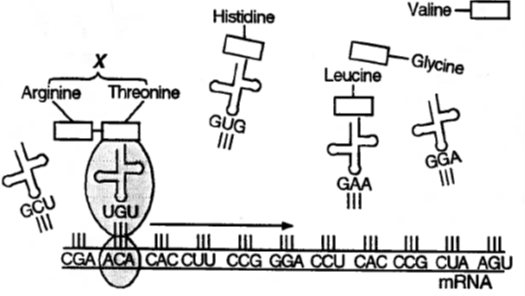
Which amino acid would be transferred to the position of codon CAC?
a)
Leucine
b)
Glycine
c)
Valine
d)
Histidine
199.
Which biomolecule is the key source of energy?
a)
Lipid
b)
Protein
c)
Carbohydrate
d)
Nucleic Acid
200.
What is the functions of lipids?
a)
Quick source of energy
b)
Builds muscles, skin, enzymes
c)
Stores genetic information
d)
Stores energy, insulation, protection
201.
The difference in the physical traits of an individual from those of other individuals in a group is called a(n)
a)
change
b)
adaption
c)
species
d)
variation
202.
a measure of how commonly a particular allele occurs in a population is known as the 
a)
gene pool
b)
allele frequency
c)
mutation rate
d)
phenotype
203.
According to the diagram, which bird has the most similar DNA to a large tree finch?
a)
small tree finch
b)
medium tree finch
c)
large ground finch 
d)
green warbler finch
204.
According to the cladogram, which organism is most distantly related to the human?
a)
crayfish
b)
rat
c)
perch
d)
frog
205.
Individuals that are well adapted to their environment will survive and produce:
a)
Fewer mutations
b)
Stronger genes
c)
More offspring
d)
Better traits
206.
Structures with the same parts have different functions; suggests that organisms share a common ancestry
a)
vestigial structures
b)
homologous structures
c)
adaptive radiation
d)
fossil
207.
Cattle egrets forage (feed) in fields among cattle. The egret gets easy access to flying insects stirred up by the cattle, and the cattle don't care if they are there or not.
a)
mutualism
b)
commensalism
c)
competition
d)
parasitism
208.
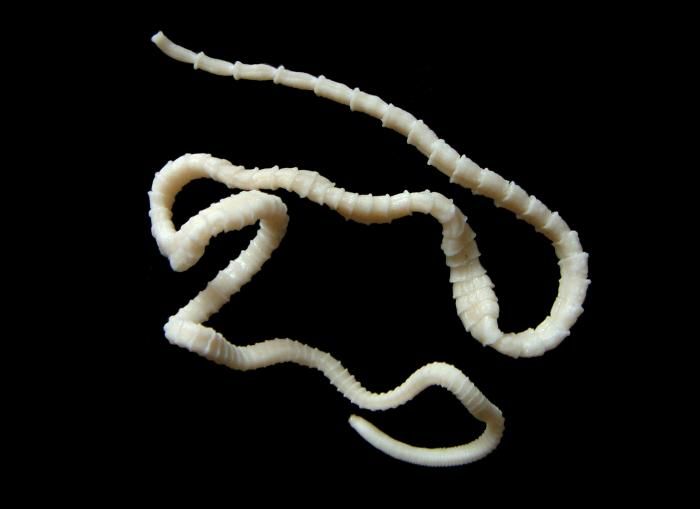
A tapeworm and a cat have this type of relationship.
a)
mutualism
b)
parasitism
c)
commensalism
d)
competition
209.
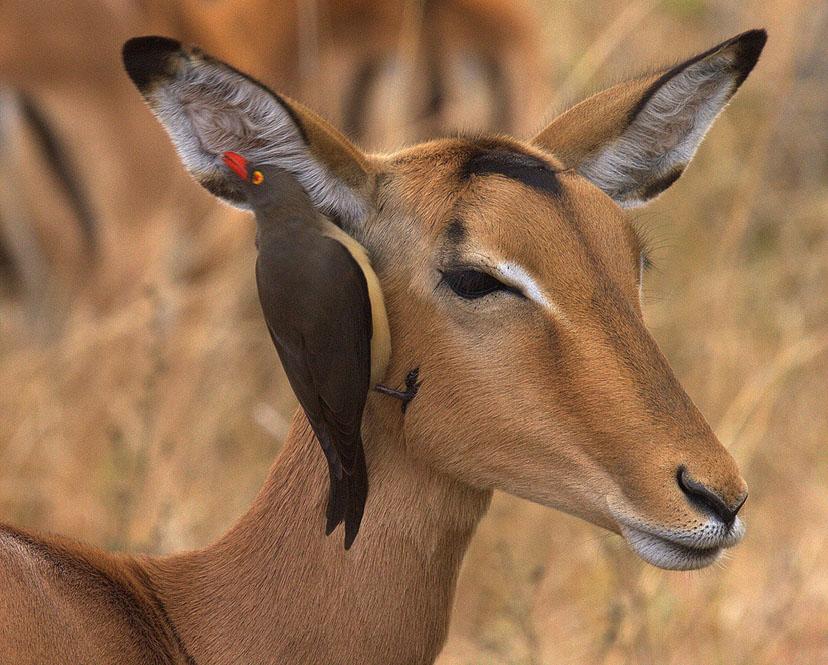
Red-billed oxpeckers are birds that often feed on parasites that infest impala.  This is an example of _______.
a)
commensalism
b)
mutualism
c)
neutralism
d)
competition