wayground logo

Free Printable Worksheets

Font size

S
M
L
XL
Worksheets

Biology Final Exam SMS2

Total questions: 100

Worksheet time: 2hrs 56mins

Name
Class
Date
1.
What did Erwin Chargaff conclude from his experiments?
a)
Nitrogen bases are held together by peptide bonds
b)
A and T, C and G always occur in equal amounts
c)
Proteins are the carriers of genetic information
d)
C and G rarely occur in eukaryotic organisms
2.
What was Watson and Crick's main scientific accomplishment?
a)
Building the first accurate model of DNA
b)
Isolating strains of pneumonia causing bacteria
c)
Determining base pairing rules
d)
Discovering the process of genetic transformation
3.
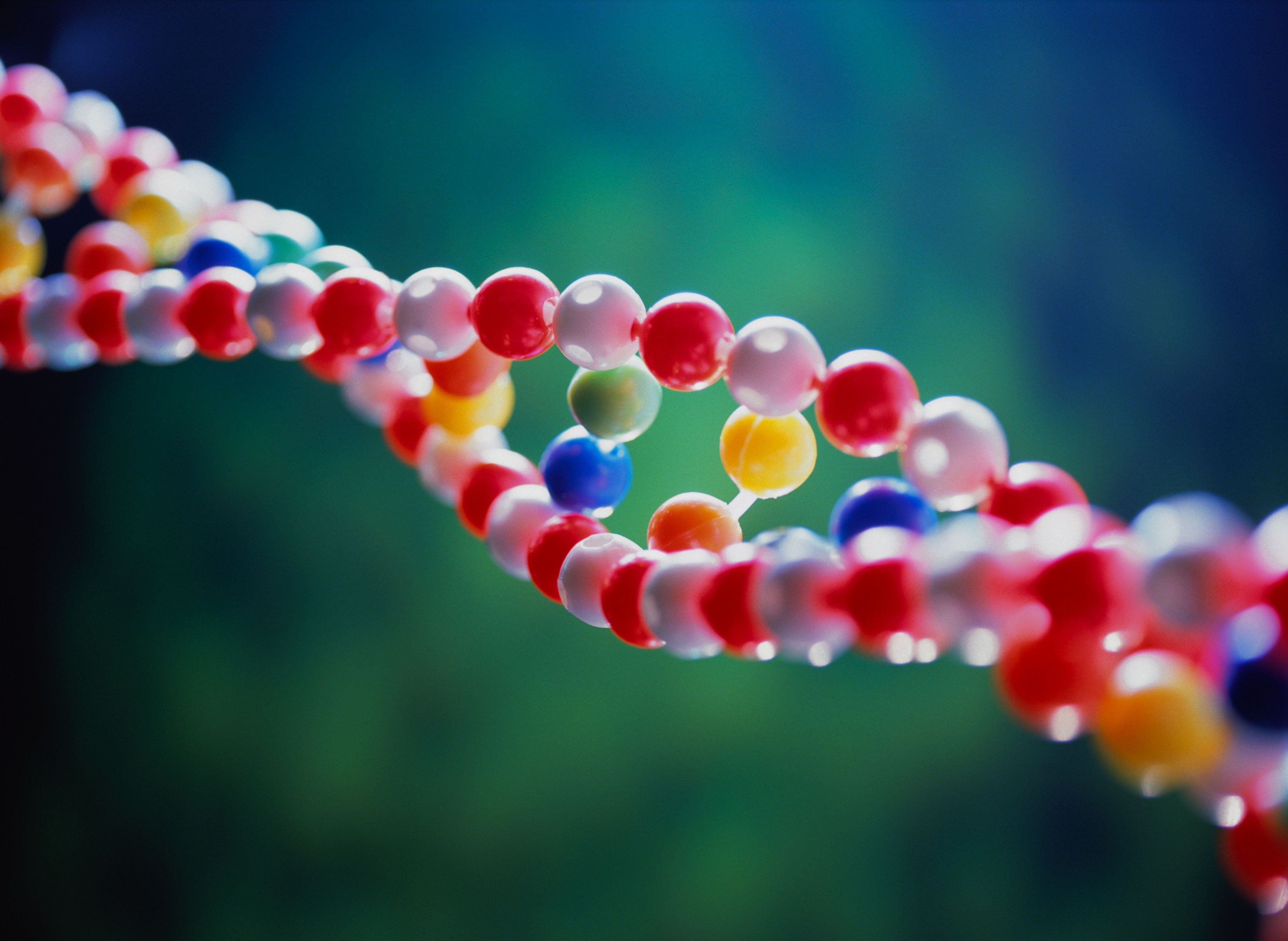
What does this image show?
a)
Double helical structure of DNA
b)
Triple Helical Structure of DNA
c)
Double helical structure of RNA
d)
Triple Helical Structure of RNA
4.
How did Rosalind Franklin's photo 51 affect the work of Watson and Crick?
a)
It was used to determine the physical structure of DNA
b)
It was used to identify the four bases that make up DNA
c)
It was used to determine the theory of independent assortment
d)
It was used to show DNA was the molecule of inheritance
5.
From his work with mice and pneumonia-causing bacteria, Frederick Griffith discovered what?
a)
Replication
b)
Transcription
c)
Transformation
d)
Translation
6.
Rosalind Franklin's "Photo 51" allowed Watson and Crick to determine the _______ of DNA.
a)
Shape
b)
Backbone
c)
Nitrogen bases
d)
Hydrogen bonds
7.
The work of scientists including Griffin, Avery, Hershey & Chase, and Franklin helped us to determine that _______ are responsible for carrying genetic material.
a)
Amino Acids
b)
Proteins
c)
Nucleic Acids
d)
Carbohydrates
8.
Who was responsible for the model shown?
a)
Oswald Avery
b)
Watson and Crick
c)
Erwin Chargaff
d)
Rosalind Franklin
9.
Who is responsible for producing this image?
a)
Francis Crick
b)
James Watson
c)
Rosalind Franklin
d)
Watson and Crick
10.
By using radioactive isotopes, Hershey and Chase were able to conclude that _____ is the carrier of genetic information.
a)
DNA
b)
Protein
c)
Carbohydrate
d)
Lipid
11.
The work of Erwin Chargaff allowed Watson and Crick to determine the rules of.......
a)
protein synthesis
b)
transcription
c)
hydrogen bonding
d)
nitrogen base pairing
12.
What does DNA stand for?
a)
Deoxyribonucleic acid
b)
Denitrogenous acid
c)
Deribonucleic acid
d)
Diribonucleic acid
13.
Which of the following best describes a DNA molecule?
a)
double helix
b)
contains ribose
c)
made of amino acids
d)
contains Uracil
14.
DNA is a polymer made of:
a)
Nucleotides
b)
Ribosomes
c)
Purines
d)
Pyrimidines
15.
Why is DNA important?
a)
it is very small and very complicated
b)
it's in everything
c)
it serves as the blueprint for traits of all living things
d)
because we eat it every day for energy
16.
In a molecule of double-stranded DNA, the amount of Adenine present is always equal to the amount of
a)
cytosine
b)
guanine
c)
thymine
d)
uracil
17.
Which organelle is DNA usually found in?
a)
cell membrane
b)
vacuole
c)
ribosome
d)
nucleus
18.
Which organelle is DNA usually found in?
a)
cell membrane
b)
vacuole
c)
ribosome
d)
nucleus
19.
Guanine bonds with ______________.
a)
Adenine
b)
Guanine
c)
Cytosine
d)
Thymine
20.
What will the matching sequence be on a strand that reads AAGCTAT?
a)
AACGATA
b)
TTCGTTA
c)
CCTGATA
d)
TTCGATA
21.
What are the three components of a nucleotide?
a)
sugar, hydrogen, nitrogen base
b)
sugar, oxygen, nitrogen base
c)
sugar, phosphate, nitrogen base
d)
sugar, phosphate, protein
22.
DNA codes for...
a)
bases
b)
proteins
c)
amino acids
d)
phosphates
23.

A change in a DNA sequence(order) that affects genetic information.

a)

Recessive trait

b)

Mutation

c)

Allele

24.
the process of making a copy of DNA
a)
transcription
b)
double helix
c)
DNA replication
d)
replication fork
25.
Which shows the correct complementary base pairing for DNA?
a)
C-A, T-G
b)
A-G, C-T
c)
C-G, U-A
d)
T-A, G-C
26.

What shape is DNA?

a)

a circle

b)

a triangle

c)

a double helix

27.

How many chromosomes are shown in a normal human karyotype?

a)

2

b)

23

c)

44

d)

46

28.

In humans, a male has

a)

one X chromosome only

b)

two X chromosomes

c)

one X chromosome and one Y chromosome

d)

two Y chromosomes

29.

Human females produce egg cells that have

a)

one X chromosome

b)

two X chromosomes

c)

one X or one Y chromosome

d)

one X and one Y chromosome

30.

Sex-linked genes are located on

a)

the autosomes

b)

the X chromosome only

c)

the Y chromosomes only

d)

both the X chromosome and Y chromosome

31.

Which chromosome contains more genes for sex-linked traits?

a)

X

b)

Y

c)

Neither, they both have the same amount

32.

The passing of traits from parent to child is known as _______________.

a)

heredity

b)

gene

c)

DNA

d)

RNA

33.

This trait is represented by a lower case letter and hidden whenever the dominant allele is present

a)

dominant allele

b)

codominance

c)

recessive allele

d)

Punnett Square

34.

This trait is represented by a capital letter and always shows up in an organism when the allele is present

a)

dominant allele

b)

codominance

c)

probability

d)

recessive allele

35.

Which of the following is homozygous recessive?

a)

RR

b)

Rr

c)

rR

d)

rr

36.

Which genotypes are heterozygous?

a)

EE

b)

tt

c)

Rr

d)

Both EE and tt

37.

Which genotypes are homozygous dominant?

a)

EE

b)

tt

c)

Rr

d)

Both EE and tt

38.

Which genotypes are homozygous?

a)

EE

b)

tt

c)

Rr

d)

Both EE and tt

39.

_____ is the genetic makeup of an organism.

a)

phenotype

b)

genotype

40.

A ____ is a region of DNA that controls a trait.

a)

gene

b)

phenotype

c)

chromatin

d)

genotype

41.

The ____ is the physical appearance of an organism.

a)

genotype

b)

phenotype

42.

The study of heredity is called

a)

Science

b)

DNA

c)

Dominant

d)

Genetics

43.
having two of the same genes for the trait (sometimes called purebred).
a)
homozygous
b)
hetrozygous
c)
protein
d)
chromosome
44.
having two different genes for a trait (sometimes called hybrid).
a)
protein
b)
homozygous
c)
heterozygous
d)
genotype
45.
Who is the father of genetics? 
a)
Charles Darwin 
b)
Gregor Mendel
c)
Dimitri Mendeleev 
d)
Hans Krebs 
46.

What is an inherited characteristic that helps organisms survive?

a)

Evolution

b)

Adaptation

c)

Natural Selection

d)

Extinction

47.

The most specific classification, a group that mates to produce offspring

a)

Genus

b)

Fossils

c)

Species

d)

Speciation

48.

Imprints or remains of once living organisms are called ....

a)

Evolution

b)

Vestigial Structures

c)

Homologous Structures

d)

Fossils

49.

Evolution is...

a)

changes over time in populations

b)

natural process that passes favorable traits

c)

historical timeline of fossils

d)

the process in which an animal dies out

50.

Layered fossils create a historical sequence (timeline) is known as ____________.

a)

Natural Selection

b)

Evolution

c)

Fossil Record

d)

Extinction

51.

A body, organ, or bone that is still present but no longer useful to the organism is ______________________.

a)

Homologous Structure

b)

Vestigial Structure

52.

A similar bone or organ within many different species of life is a ____________________.

a)

homologous structure

b)

vestigial structure

53.

Natural selection is the process that passes down ____________________ traits.

a)

Same

b)

Old

c)

Useless

d)

Favorable

54.

A mistake or change that occurs in the DNA sequence is called a ______________________.

a)

Extinction

b)

Speciation

c)

Mutation

d)

Genetic Variation

55.

When there is a difference in population based on genes, it is said to be a _______________.

a)

Mutation

b)

Speciation

c)

Extinction

d)

Genetic Variation

56.
What is the cause for all variation within a population?
a)
Natural Selection
b)
Adaptation
c)
Mutation
d)
Environmental Changes
57.
An organism's ability to survive and reproduce in its environment refers to its
a)
Fitness
b)
Variation
c)
Selection
d)
Mutation
58.
According to the diagram, who is most closely related to primates? 
a)
Amphibians
b)
Rodents & Rabbits
c)
Crocodiles
d)
Sharks
59.
The diagram shows that rodents and rabbits evolved from primates.
a)
True
b)
False
60.
According to the diagram, sharks are the least advanced organisms.
a)
True
b)
False
61.
Which of the following is true about antibiotic-resistant bacteria?
a)
Because there are antibiotics in the environment, they become immune
b)
They learn to fight the antibiotic
c)
A mutation results in antibiotic resistance
d)
All of these
62.
In natural selection, the selective agent is the
a)
humans
b)
mutations
c)
breeders
d)
environment
63.
Mutations are important because they bring about
a)
death of the organism in which they develop
b)
genetic variation needed for a population to evolve
c)
benefits for the individual, not for the population
d)
Hardey-Weinberg equilibrium within a population
64.
The five mechanisms of evolution are gene flow, genetic drift, mutation, natural selection and ....
a)
sexual selection
b)
controlled mating
c)
emigration
d)
immigration
65.
The disappearance of a species refers to
a)
Evolution
b)
Extinction
c)
Migration
d)
Mutation
66.
A chance occurrence that negatively affects a population because the population is small is 
a)
genetic drift
b)
mutation
c)
speciation
d)
migration
67.
What type of genetic drift occurs when the population size is greatly decreased due to a random event?
a)
Founder's Effect
b)
Bottleneck Effect
c)
Intrasexual Selection
d)
Intersexual Selection
68.
A flash flood carried a raft of Amazon ants away from their original population. There is enough distance between the two groups, that they will never meet in nature again. What type of reproductive barrier is this?
a)
behavioral isolation
b)
temporal isolation 
c)
gametic isolation
d)
geographic isolation 
69.
The genitalia of the male damselfly varies in shape. Certain males can only hold onto & mate with females whose genitalia fit.  What type of reproductive barrier is this?
a)
behavioral isolation
b)
temporal isolation 
c)
gametic isolation
d)
mechanical isolation 
70.
Some female peacocks prefer males with large, colorful tales while other female peacocks prefer males with no tail at all. Females are beginning to only mate with the type of males with the tail they prefer. What type of reproductive barrier is this?
a)
behavioral isolation
b)
hybrid sterility 
c)
temporal isolation
d)
mechanical isolation 
71.
The flowers of pink tulips open in the morning, while the flowers of lavender tulips open in the early afternoon. The bees that pollinate these tulips cannot carry pollen back & forth between the two types of tulips because of their flowers being closed at different times of day. What type of reproductive barrier is this?
a)
behavioral isolation
b)
hybrid sterility 
c)
temporal isolation
d)
mechanical isolation 
72.
The term for the formation of new and distinct species over the course of evolution is...
a)
speciation
b)
biological species concept
c)
reproductive barrier
d)
natural selection
73.
What is a species? 
a)
A group of organisms that can mate with each other and produce fertile offspring. 
b)
A group of organisms that can mate and produce offspring even if those offspring are infertile.
c)
A group of organisms that genetically are very different from each other. 
d)
Indivual organisms that live in the same environment. 
74.

A new river forms and splits two populations, causing ______________ speciation

a)

Sympatric

b)

Allopatric

c)

Extreme

d)

Convergent

75.

Orcas occur in the same habitat but some are avoiding each other and do not interbreed. They have different diets, vocal behavior, and social structures. What type of speciation is this?

a)

Allopatric

b)

Sympatric

c)

Complex

d)

Covergent

76.

The emergence of new rivers or streams is a type of ____________ isolation.

a)

Temporal

b)

Mechanical

c)

Behavioral

d)

Geographic

77.
the process in which populations change over time
a)
basketball
b)
natural selection
c)
evolution
d)
mutation
78.
I formed the theory of evolution by natural selection after my research of various species of finches on the Galápagos Islands. Who am I?
a)
Reginald Punnett
b)
Charles Darwin
c)
Mr. St. Louis
d)
Gregor Mendel
79.
Four present-day realities that some scientists use to support Darwin's theory of evolution?
a)
fossils
DNA
common bone structures
developmental similarities
b)
fossils
DNA
common bone structures
saliva
c)
fossils
common bone structures
plants
developmental similarities
d)
H2O
DNA
common bone structures
developmental similarities
80.
In both the past and the present, humans have selected plants or animals for breeding based on desirable traits. This process is known as...
a)
artificial selection
b)
natural selection
c)
farming
d)
cropping
81.
term used to describe small gradual changes within a certain kind of organism (speciation)
a)
micro-evolution
b)
adaptation
c)
macro-evolution
d)
extinction
82.

Imprints or remains of once living organisms are called ....

a)

Evolution

b)

Vestigial Structures

c)

Homologous Structures

d)

Fossils

83.

Natural selection is the process that passes down ____________________ traits.

a)

Same

b)

Old

c)

Useless

d)

Favorable

84.

A mistake or change that occurs in the DNA sequence is called a ______________________.

a)

Extinction

b)

Speciation

c)

Mutation

d)

Genetic Variation

85.

An organism's place in the biotic environment and its role in an ecosystem is

a)

Niche

b)

Epitope

c)

Habitat

d)

Habit

86.
Which of the following is another word for a plant?
a)
autotroph
b)
heterotroph
c)
consumer
87.
Which of the following is an organism that eats only meat?
a)
herbivore
b)
carnivore
c)
omnivore
88.
Which of the following terms describes an area where an organism lives?
a)
community
b)
habitat
c)
area
89.
Which is represented by all of the bullfrogs living around a pond?
a)
community
b)
habitat
c)
population
90.
In which type of relationship do both species benefit?
a)
parasitism
b)
mutualism
c)
commensalism
91.
Barnacles grow on whales.  Whales give the barnacles a place to live but the barnacles do not help or harm the whale.  Which type of relationship is this?
a)
commensalism
b)
mutualism
c)
parasitiesm
92.
An organism that needs to eat other organisms to obtain energy is known as a:
a)
Autotroph
b)
Producer
c)
Consumer
d)
Mutualist
93.
Consumer that eats plants
a)
heterotroph
b)
herbivore
c)
producer
d)
community
94.
The rabbit in this food web would be considered a:
a)
Decomposer
b)
Producer
c)
Secondary Consumer
d)
Primary Consumer
95.
What is the term for each step in the transfer of energy and matter within a biological community?
a)
energy path
b)
food web
c)
trophic level
d)
food pyramid
96.
The amount of energy that usually transfers from one trophic level to the next...
a)
10%
b)
20%
c)
80%
d)
50%
97.
An illustration that uses arrows to show the MANY possible directions in which matter and energy can pass through the organisms in an ecosystem.
a)
Food chain
b)
Food web
c)
Energy Pyramid
d)
Succession Map
98.
The nonliving aspects of an ecosystem.
a)
Abiotic factors
b)
Biotic factors
99.
The living portions of the ecosystem.
a)
Biotic factors
b)
Abiotic factors
100.
A collection of organisms that make up a community as well as all of the nonliving aspects of the environment.
a)
Population
b)
Community
c)
Habitat
d)
Ecosystem