wayground logo

Free Printable Worksheets

Font size

S
M
L
XL
Worksheets

Anatomy 1st Semester Review 2021

Total questions: 100

Worksheet time: 1hrs 14mins

Name
Class
Date
1.
The main purpose of the ____________ system is to break food particles into pieces that can be used.
a)
circulatory
b)
respiratory
c)
digestive
d)
skeletal
2.
What is responsible for delivering oxygen and removing carbon dioxide from the body?
a)
cell nucleus
b)
excretory system
c)
nervous tissue
d)
respiratory system
3.
When tissues come together, they form ___________.
a)
cells
b)
atoms
c)
organs
d)
systems
4.
Which of the following body systems work together for support, protection, and movement?
a)
respiratory and cardiovascular
b)
skeletal and muscular
c)
skeletal and integumentary
d)
digestive and respiratory
5.
Which of the following shows the levels of organization of an organism from LEAST to MOST complex.
a)
cells-tissues-systems-organs
b)
organs-cells-systems-tissues
c)
systems-organs-tissues-cells
d)
cells-tissues-organs-systems
6.
The brain and spinal cord belong to what system?
a)
Lymphatic System
b)
Circulatory System
c)
Nervous System
d)
Reproductive System
7.
Which of these is NOT a abdominal region?
a)
Left Upper
b)
Right Illiac
c)
Epigastric
d)
Left Lumbar
8.
What divides into front and back halves? 
a)
Dorsal/Posterior Plane
b)
Frontal/Coronal Plane
c)
Midsagittal/Median Plane
d)
Anterior/Ventral Plane
9.
Medial is the term used to refer to something towards the midline
a)
True
b)
False
10.
The knee is superior to the foot
a)
True
b)
False
11.
Which region is labeled 9
a)
Right Illiac
b)
Right Lumbar
c)
Left Illiac
d)
Left Lumbar
12.
Which abdominal region is labeled 2
a)

Epigastric

b)
Hypogastric
c)
Umbilical
d)
Hypergastric
13.
Which abdominal quadrant is labeled 3
a)
Right Upper Quadrant
b)
Right Lower Quadrant
c)
Left Upper Quadrant
d)
Left Lower Quadrant
14.
Which cavity is labeled C
a)
Cranial
b)
Spinal
c)
Thoracic
d)
Abdominal
15.
The rib cage is _____ to the heart.
a)
proximal
b)
medial
c)
lateral
d)
distal
16.

Buffer is defined as

a)

ability to resist pH change

b)

ability to prevent pH from decreasing

c)

ability to resist a pH increase

d)

ability to resist pH change when small amount of acid added

17.
Complete the sentence.
A substance that is more basic has a _____ pH than a substance that is acidic.
a)
lower
b)
higher
c)
the same
d)
none of the above
18.
This substance releases OH- into solution
a)
Acid
b)
Base
c)
Neutral
19.
What is the only substance with a neutral pH of 7?
a)
Milk
b)
Orange Juice
c)
Water
d)
Blood
20.
What is the average normal pH of blood?
a)
8.4
b)
7.8
c)
7.4
d)
4.7
21.
The layer of the epidermis that is constantly undergoing cell division is the:
a)
stratum granulosum
b)
stratum lucidum
c)
stratum basale
d)
stratum spinosum
22.
Which of the following epidermal layers is found on the palms of hands and soles of your feet?
a)
stratum granulosum
b)
stratum lucidum
c)
stratum basale
d)
stratum spinosum
23.
Melanocytes are found in the:
a)
stratum corneum
b)
stratum basale
c)
stratum granulosum
d)
stratum lucidum
24.
Burn that results in damage to the epidermis and upper dermis and blisters:
a)
1st degree
b)
2nd degree
c)
3rd degree
d)
4th degree
25.
Sebaceous glands are important for:
a)
body heat regulation
b)
production of sweat
c)
keeping skin and hair cells soft
d)
production of keratin
26.
Outer layer of skin about as thick as a sheet of paper.
a)
epidermis
b)
dermis
c)
hyperdermis
27.
flat and scale like - make up most of the cells in the outer layer of the skin, the passages of the respiratory and digestive tracts, and the linings of the hollow organs of the body.
a)
squamous
b)
cubiodal
c)
columnar
28.
cells that are boxlike- found in sweat glands, salivary glands, and mammary blands
a)
squamous
b)
cubodial
c)
columnar
29.
cells that are tall - line most digestive organs
a)
basal
b)
squamous
c)
columnar
30.
Simple squamous cells line the air sacs in your lungs. This allows for quick and easy gas exchange. Why are they called "simple?"
a)
they use osmosis
b)
they are one layer thick
c)
they have no brain function
31.
One of the unique things about the stratum basale layer of the epidermis is 
a)
that's where the melanin is.
b)
that is where the fat layer is.
c)
that is the first layer of the epidermis.
32.
One of the unique things about the stratum basale layer of the epidermis is 
a)
mitosis
b)
meiosis
c)
it's pink
33.
Squamous, cuboidal, and columnar refer to cell
a)
size - how big
b)
shape - square, cube, tall
c)
age- old or young
34.
These structures are considered part of the DERMIS LAYER - the middle layer of your skin.
a)
nerves, fat, blood vessels
b)
sweat glands and hair follicles
c)
protein layers and melanocytes
35.
Burns without blisters are most likely what degree of burn?
a)
1st
b)
2nd
c)
3rd
36.

Which two types of epithelial tissue contain goblet cells?

a)

Pseudostratified Columnar & Simple Columnar

b)

Simple cubodial & Stratified Cubodial

c)

Simple Squamous & Stratified Squamous

d)

Transitional & Glandular

37.

This tissue allows for distensibility and found in the bladder

a)

Transitional

b)

Glandular

c)

Pseudostratified columnar

d)

Simple squamous

38.

Which of the following diagrams represents pseudostraified columnar epithelium?

a)
b)
c)
d)
39.

Which of the following diagrams represents simple columnar?

a)
b)
c)
d)
40.
Which of the following is not one of the four tissue types? 
a)
Blood
b)
Connective
c)
Epithelial
d)
Nervous 
41.
Where is epithelial tissue found?
a)
glands
b)
covering body surfaces
c)
lines organs
d)
all of the above
42.
What type of epithelium is this:
a)
Simple Columnar
b)
Simple Squamous
c)
Stratified Squamous
d)
Pseudostratified Columnar 
43.
Which epithelium is this?
a)
Simple Squamous
b)
Simple Columnar
c)
Stratified Cuboidal
d)
Simple Cuboidal
44.
What type of connective tissue is found at the ends of bones to reduce friction?
a)
Cartilage
b)
Dense Connective Tissue
c)
Adipose Tissue
d)
Loose Connective Tissue
45.
What type of connective tissue has a fluid-like matrix?
a)
bone
b)
cartilage
c)
blood
d)
ligaments
46.
What type of connective tissue is this
a)
Bone
b)
Cartilage
c)
Blood
d)
Adipose
47.
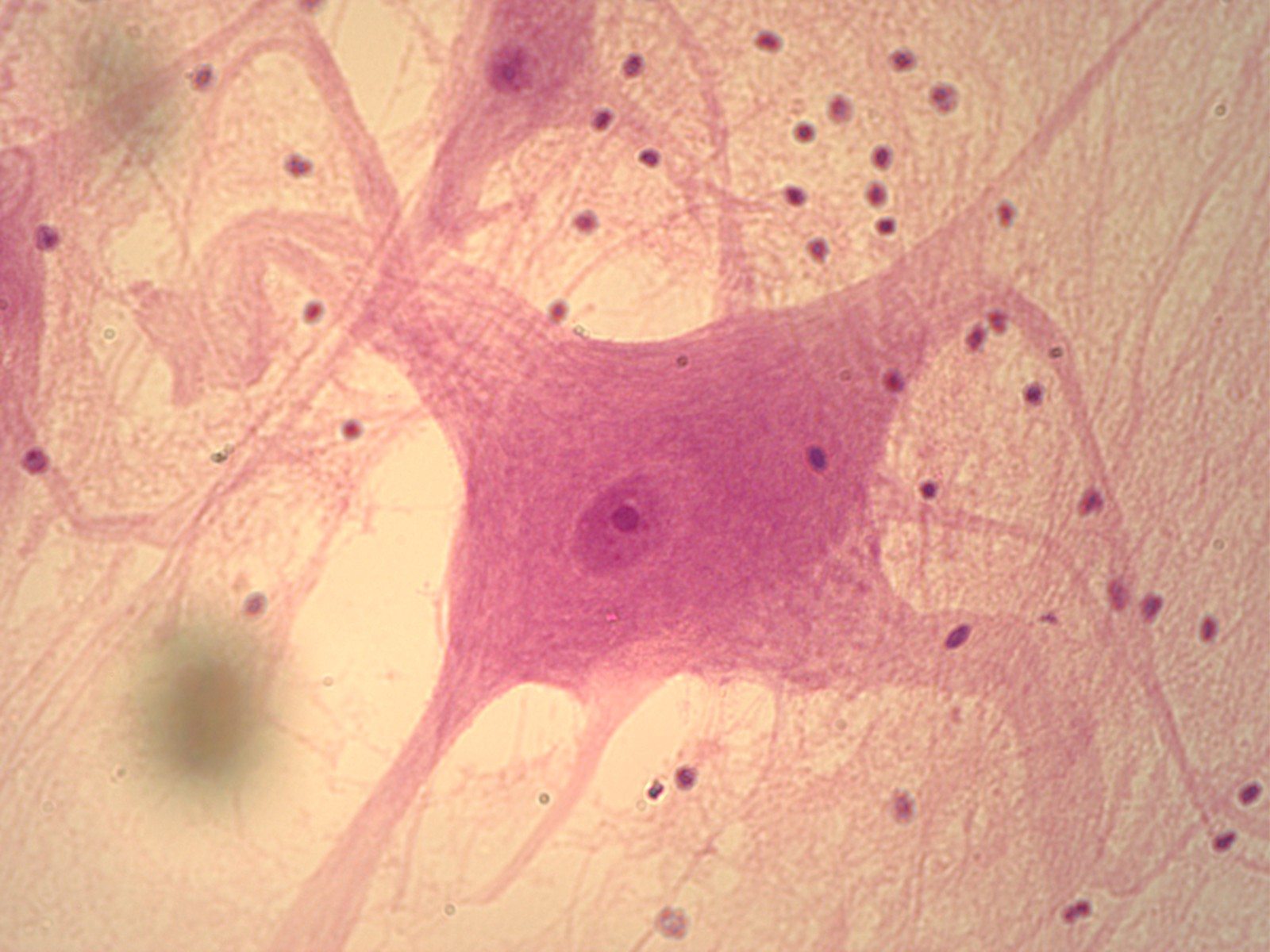
What tissue type is this?
a)
Nervous Tissue
b)
Connective Tissue
c)
Muscular Tissue
d)
Epithelial Tissue
48.
Identify the tissue
a)
Areolar
b)
Smooth Muscle
c)
Transitional
d)
Simple Squamous
49.
Name the tissue
a)
Cuboidal
b)
Pseudostratified
c)
simple squamous
d)
stratified
50.
Name this tissue.
a)
Blood
b)
Hyaline Cartilage
c)
Adipose
d)
Elastic Cartilage
51.
Which of the following represents the reason that cartilage repairs itself so slowly?
a)
it is never damaged
b)
it is vascular
c)
it is avascular
d)
hormones are present
52.

Layers or groups of similar cells with a common function

a)

Tissues

b)

Organs

c)

Organ systems

d)

Molecules

53.

Histology

a)

The study of cells

b)

The study of the human body

c)

The study of tissues

d)

The study of past events
54.
Skeleton includes the skull, spine, ribs and sternum.
a)
Axial
b)
Appendicular
c)
Plane
d)
Frontal
55.
The appendages of the body, which are the shoulders, arms, hips, and legs.
a)
Axial
b)
Appendicular
c)
Plane
d)
Frontal
56.
_________ bones include: wrist and ankles
a)
Irregular
b)
Flat
c)
Short
d)
Long
57.
___________ bones include:skull and sternum.  
a)
Irregular
b)
Flat
c)
Short
d)
Long
58.
_________ bones include the vertebra of the back.
a)
Irregular
b)
Flat
c)
Short
d)
Long
59.
________ bones include: humerus, femur, and fibula.
a)
Irregular
b)
Flat 
c)
Short
d)
Long
60.
Bone layer that covers the bone.
a)
Periosteum
b)
Marrow
c)
Compact
d)
Spongy
61.
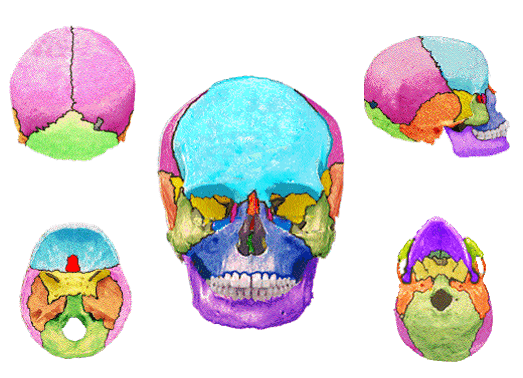
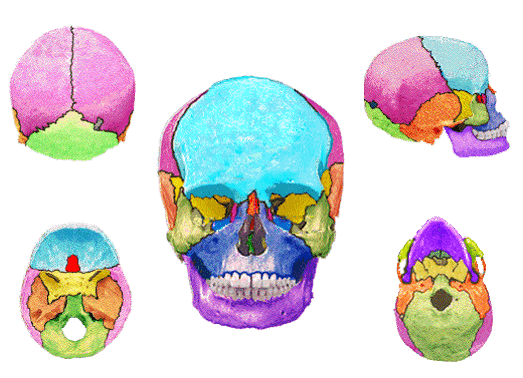
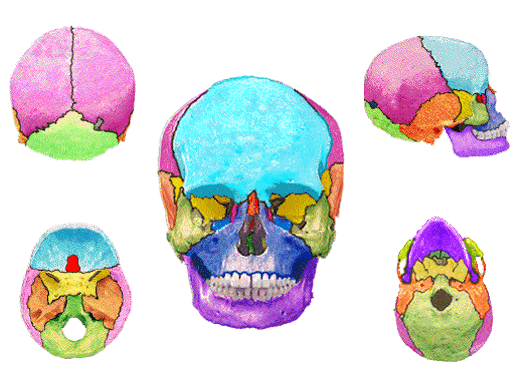
Identify the bone that is sea blue.
a)
Frontal
b)
Occipital
c)
Temporal
d)
Parietal
62.
Identify the fushia pink bone.
a)
Frontal
b)
Parietal
c)
Occipital
d)
Temporal
63.
Identify the green bone.
a)
Occipital
b)
Parietal
c)
Frontal
d)
Temporal
64.
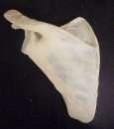
►The _______ is located on the back side of the ribcage and helps provide part of the shoulder joint and movement for the arms. Shoulder Blade
a)
Clavicle
b)
Sternum
c)
Scapula
d)
Rib
65.
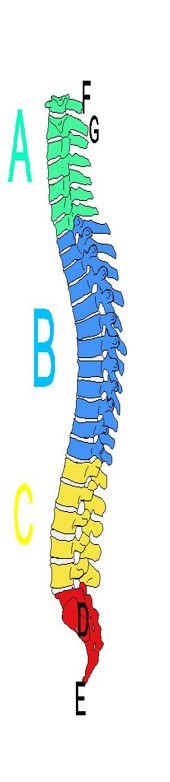
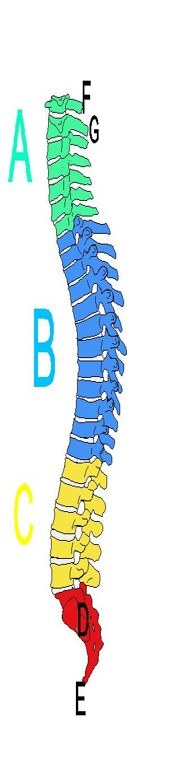
Bones of the vertebra often called neck bones or A from the illustration.
a)
Lumbar
b)
Thoracic
c)
Cervical
d)
Sacrum
66.
B from illustration.
a)
Cervical
b)
Lumbar
c)
Thoracic
d)
Sacrum
67.
Red bone in Illustration
a)
Cervical
b)
Thoracic
c)
Lumbar
d)
Sacrum
68.
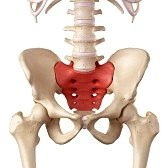
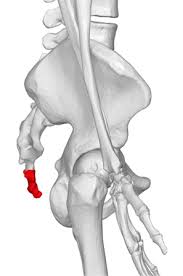
Identify the bone highlighted in red.
a)
Sacrum
b)
Coccyx
c)
Humerus
d)
Femur
69.
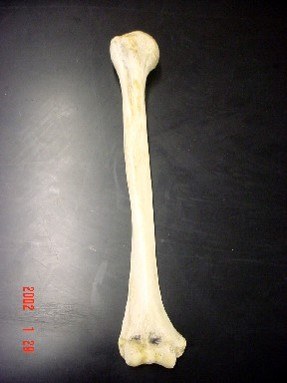
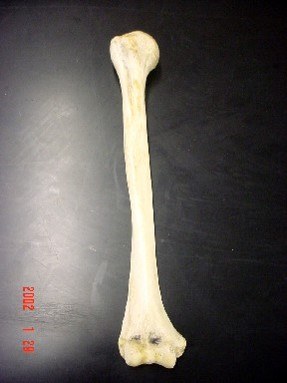
The upper arm bone and its not funny.
a)
Femur
b)
Coccyx
c)
Humerus
d)
Ulna
70.
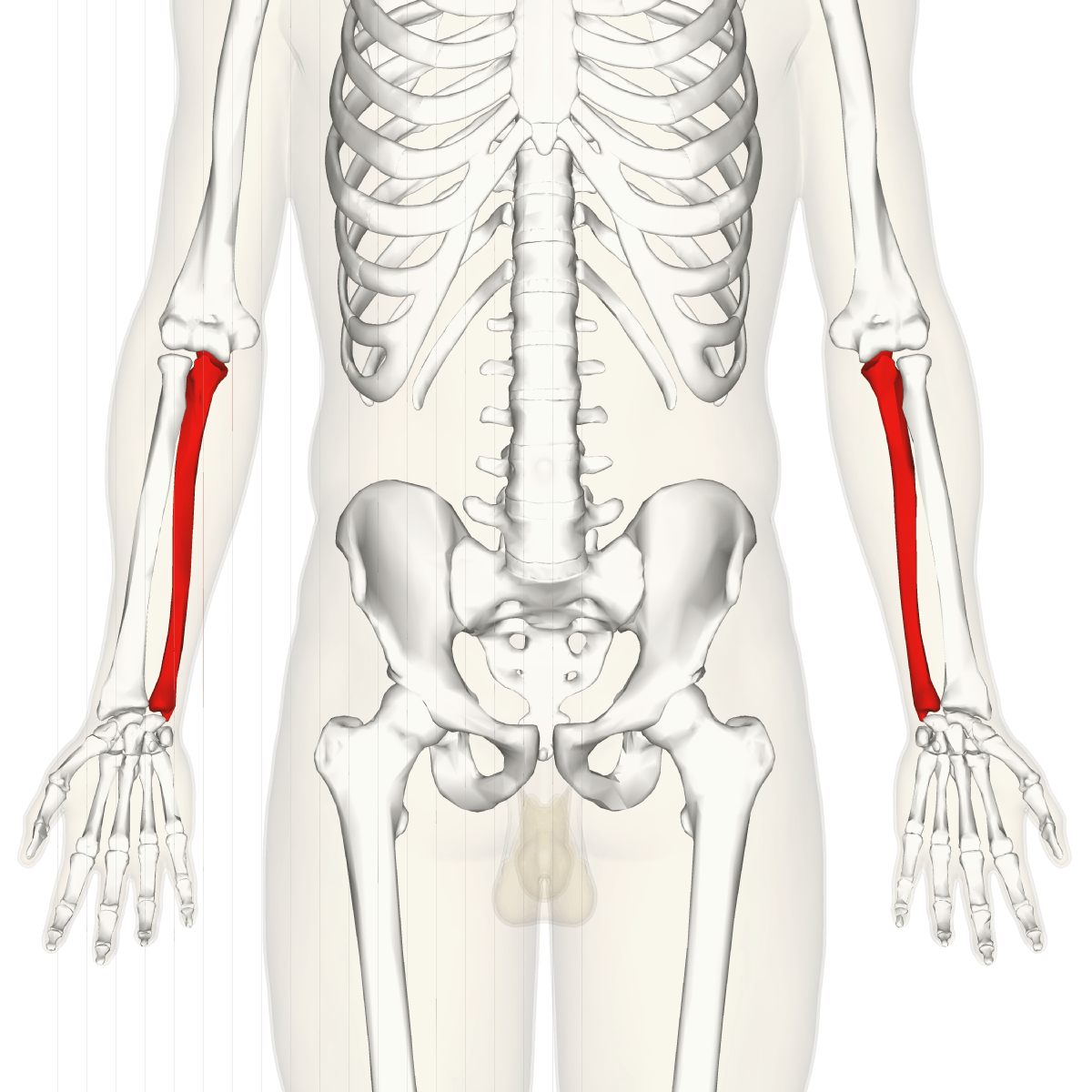
The top bone of the lower arm that rotates on the lower bone. White bone in illustration.
a)
Humerus
b)
Femur
c)
Ulna
d)
Radius
71.
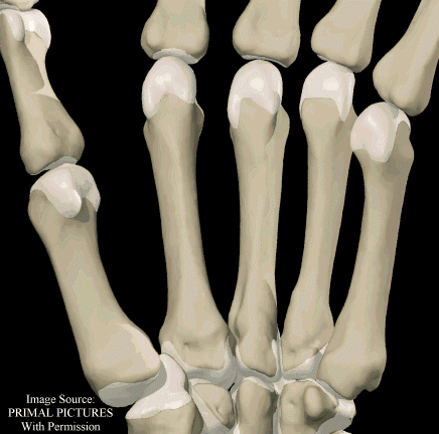
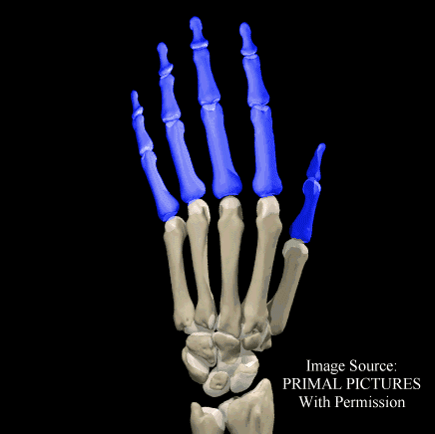
The bones of the hand as illustrated.
a)
Tarsals
b)
Phalanges
c)
Metacarpals
d)
Carpals
72.
Finger bones as illustrated in blue.
a)
Tarsals
b)
Phalanges
c)
Metacarpals
d)
Carpals
73.
The upper leg bone which is the longest bone in the body.
a)
Radius
b)
Humerus
c)
Tibia
d)
Femur
74.
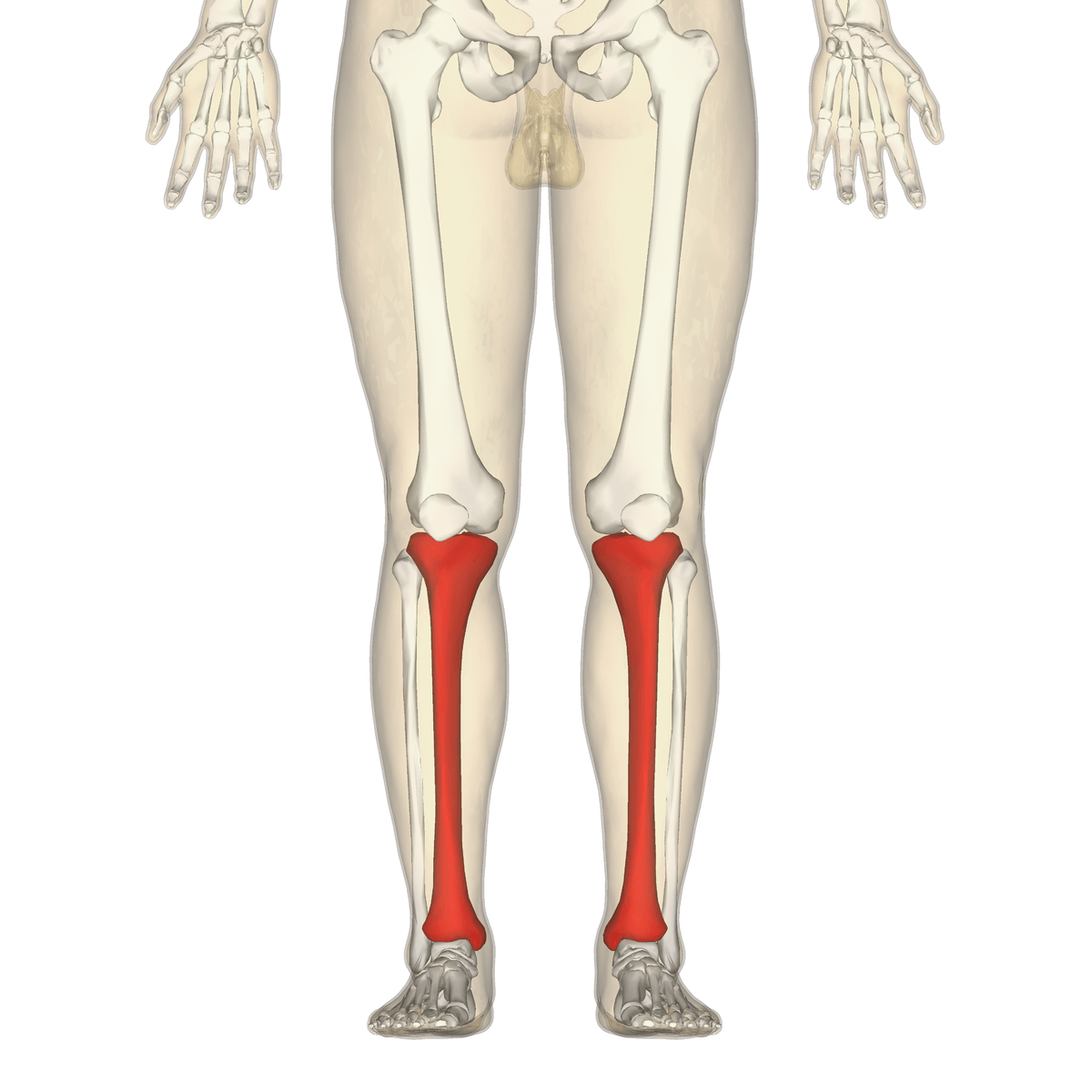
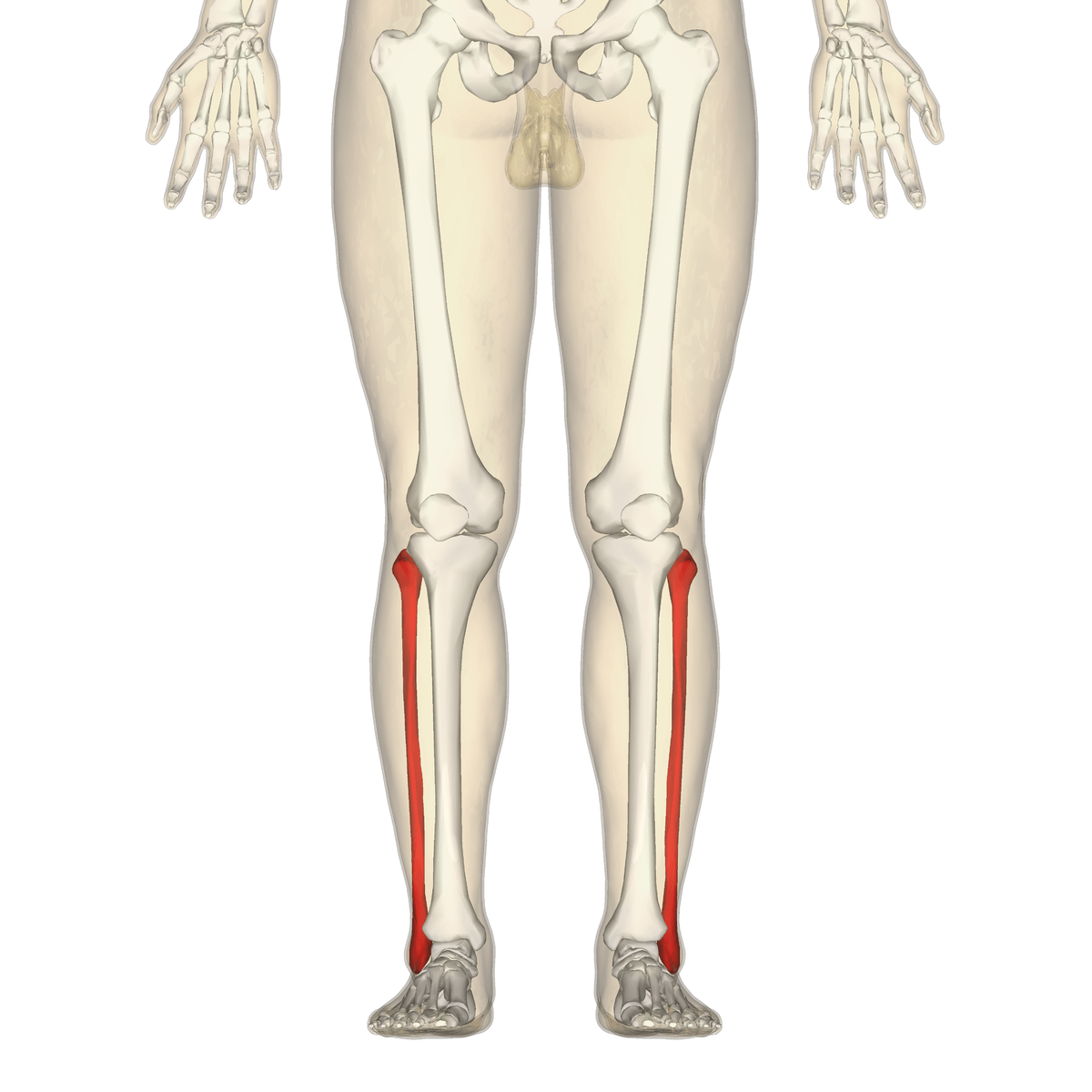
The shin bone as identified in the illustration in red.
a)
Tibia
b)
Fibula
c)
Femur
d)
Radius
75.
Bone of lower leg located to the outside in red from the illustration.
a)
Tibia
b)
Fibula
c)
Radius
d)
Humerus
76.
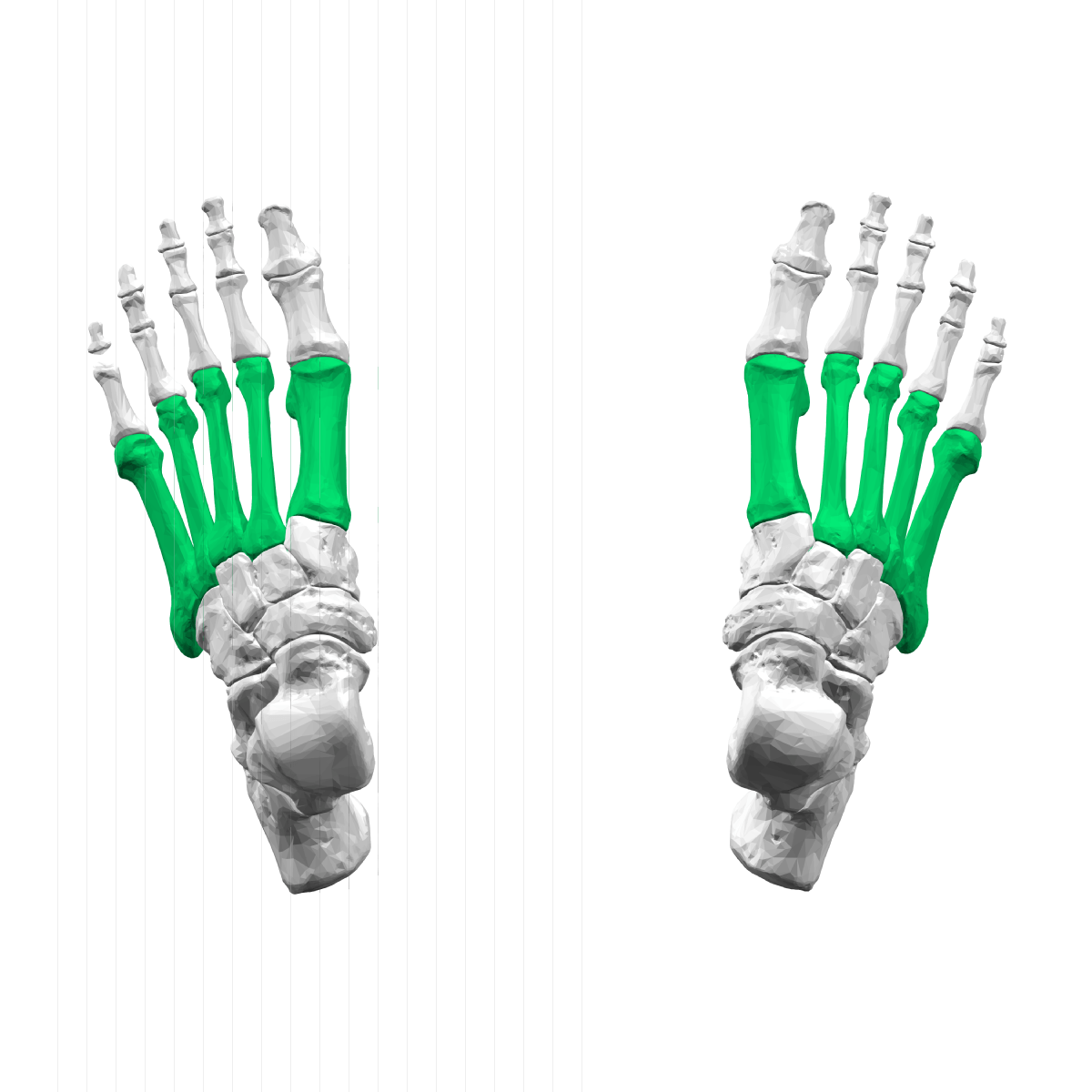
Bones of the feet as identified in green from the illustration.
a)
Tarsals
b)
Metatarsals
c)
Phalanges
d)
Fibula
77.
A flexible but inelastic cord of strong fibrous collagen tissue attaching a muscle to a bone.
a)
Tendon
b)
Ligament
c)
Cartilage
d)
Bone
78.
Which type of cell build bone?
a)
osteoclasts
b)
osteoblasts
c)
osteocytes
79.
Which type of cell holds is within the bone matrix? 
a)
osteoclasts
b)
osteoblasts
c)
osteocytes
80.
Which bone marrow contains fat cells?
a)
yellow
b)
red
c)
compact
d)
spongy
81.
Your skeleton begins as ____________ that is eventually turned into bone.
a)
Cartilage
b)
Fat
c)
Marrow
82.
Structure #5 is the 
a)
medullary cavity
b)
periosteum
c)
epiphysis
d)
diaphysis
83.
The epiphysis is 
a)
The shaft of a bone
b)
a bone cell
c)
the end of a long bone
d)
the covering of a bone
84.
Where are blood cells made? 
a)
Yellow marrow 
b)
Red marrow
c)
Spongy Bone 
d)
Periosteum
85.
The long, fiber like part of a neuron which the cell sends information to receiving neurons
a)
axon 
b)
dendrite
c)
axon terminal
d)
gene
86.
A nerve cell that is the basic working unit of the brain and nervous system which processes and transmits information
a)
axon
b)
neuron
c)
dendrite
d)
neurotransmitter
87.
This insulating material forms a layer, around the axon of a neuron.  It enables electrical signals to travel down the axon at higher speeds.
a)
neuron
b)
myelin sheath
c)
dendrite
d)
neurotransmitter
88.
Which is the following is represented by the letter A?
a)
Dendrite
b)
Cell Body 
c)
Nucleus
d)
Myelin Sheath
89.

Which is the following is represented by the letter B?

a)

cell body

b)

nucleus

c)

dendrite

d)

axon

90.

Which of the following is represented by letter C?

a)

Cell body

b)

nucleus

c)

axon

d)

dendrite

91.

Which is represented by the letter E?

a)

Axon

b)

Myelin sheath

c)

schwan cells

d)

terminal branches

92.

Which is represented by the letter G?

a)

axon

b)

myelin sheath

c)

schwan cell

d)

terminal branches

93.

Nerve fibers in the neuron that carries impulses toward the cell body:

a)

axon

b)

dendrite

c)

nucleus

d)

myelin sheath

94.

Type of neuron that carries messages from the body to the brain/spinal cord:

a)

Afferent/sensory

b)

Efferent/motor

95.

Type of neuron that carries messages from the brain/spinal cord to the body

a)

Afferent/Sensory

b)

Efferent/Motor

96.

What type of fracture penetrates through the skin?

a)

Closed (simple)

b)

Open (compound)

c)

Greenstick

d)

Transverse

97.

What is the name of the incomplete fracture usually seen in children?

a)

Linear

b)

Transverse

c)

Fibial

d)

Greenstick

98.

What type of fracture is this? (Hint: it's across the bone.)

a)

Dorsal

b)

Linear

c)

Closed

d)

Transverse

99.

_________ fractures are diagonal breaks in the bone.

a)

Incomplete

b)

Linear

c)

Closed

d)

Oblique

100.

If a fracture is comminuted, that means the bone is in _______ pieces.

a)

Multiple

b)

One