
 Worksheets
Full Year Cumulative Review
Total questions: 100
Worksheet time: 8hrs 20mins

The correct order for the organization of living things is
cell -> tissue -> organ -> organ system -> organism
cell -> atom -> organ system -> organism -> tissue
cell -> atom -> molecule -> organism -> organ system
tissue -> cell -> organism -> organ -> organ system
Which monomers make up the structure of all proteins?
glucose
amino acids
carbohydrates
fatty acids
What is the monomer of a nucleic acid?
nucleus
nucleotide
nucleoplasm
genes
Which one of our macromolecules would you consume in order to receive long-term energy?
Carbohydrates
Lipids
Proteins
Nucleic acids

Which macromolecule has this structure?
Carbohydrate
Lipids
Proteins
Nucleic acids
This part of the experiment serves as a basis of comparison; the group that does not receive the independent variable.
constant
control group
experimental group
hypothesis
Which of the following converts food into energy for the cell?
vacuole
mitochondria
cytoplasm
cell membrane
After mitosis, the cytoplasm and organelles are divided between the two new forming cells in a process called
centriole
chromatin
cytokinesis
centromere
This process is the programmed death of a cell
stem cell
regulation
apoptosis
cytocide

Letter B...
substrate
active site
enzyme
products
An enzyme speeds up a reaction by
raising the activation energy
lowering the activation energy
releasing energy
absorbing energy.
What happens when enzymes are heated to a high temperature?
The shape of the enzyme are changed and it denatures
The enzymes die
The enzymes' amino acid sequence changes
The enzymes remain the same
What is activation energy?
the energy from the sun
the energy produced by an enzyme
the energy needed to get a reaction going
none of these

In the energy pyramid, what is the bottom level composed of?
Producers
First-Level Consumers
Second-Level Consumers
Third-Level Consumers
When energy is passed in an ecosystem from one trophic level to the next, only ___ percent of the energy will be passed on.
1
10
100
50


AATCATGGA

What are the x-shaped objects called inside of the nucleus of a cell?
genes
DNA
chromosomes
cocodrilo peludo que sonríe
How many chromosomes do human cells have?
46
23
2
44
Which of the following describes the tertiary structure of a protein?
Polypeptide chain
Pleated sheets or Helices
3D folding
Two or more chains bonded together
How many daughter cells does meiosis produce?
1
2
3
4
Which part of meiosis produces diversity in gametes?
DNA replication
Prophase
Crossing-over
Cytokinesis
If an organism has 24 chromosomes in a body cell, how many will each daughter cell have at the end of meiosis?
6
12
23
24
The daughter cells produced by meiosis are also called __________.
somatic cells
stem cells
germ cells
gametes
What kind of cells does meiosis produce?
haploid
diploid

What is another term for body cells?
somatic cells
gamete
stem cell
neural cell
During transcription, this type of ribonucleic acid is responsible for copying the DNA and brining it out of the nucleus.
tRNA
mRNA
rRNA
dRNA
An organism's genetic makeup
phenotype
genotype
heterzygous
allele
An organism's appearance or other detectable characteristic
genotype
phenotype
genetics
heterozygous
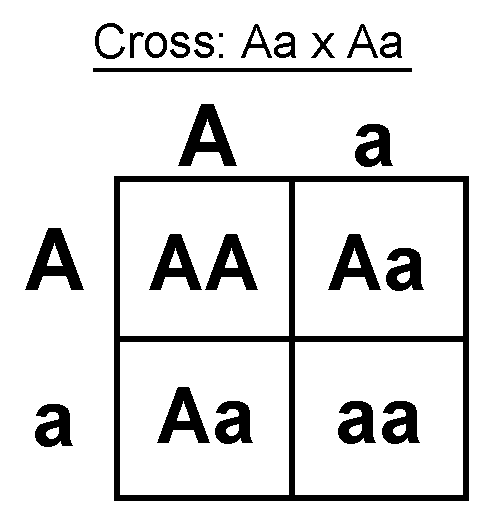
What is the genotypic ratio of the offspring?
3 AA : 1 aa
1 AA : 3 aa
1 AA : 2 Aa : 1 aa
2 AA : 2 aa

In the punnett square below, what belongs in the missing square

Different forms of a gene are called...
genotypes
alleles
hybrids
traits

What goes in box 15
aabb
AABB
aaBB
AAbb
What best describes homologous chromosomes?
All of the DNA in a cell
A section of just one chromosome that codes for a trait
A pair of chromosomes that have the same information
A packet of DNA that is condensed inside the nucleus
Which part of meiosis produces diversity in gametes?
DNA replication
Prophase
Crossing-over
Cytokinesis


The picture below shows the steps of DNA replication beginning with step one and ending with step three.
Because you are reusing the old, or parent, DNA strand DNA replication is said to be
Semi- Conservative
Semi-discontinuous
Continuous
Fully-Conserveative
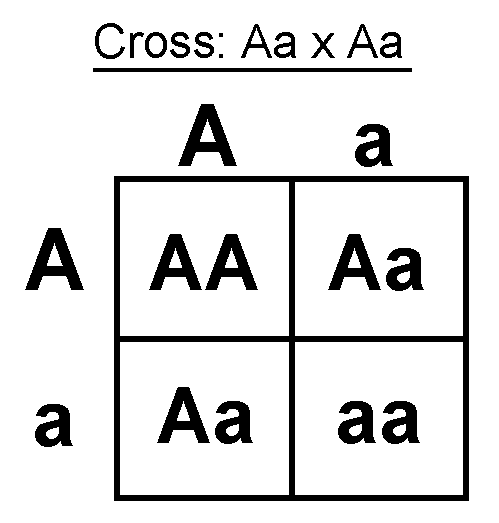
What are the phenotype percentages of the offspring?
(A-Brown fur color; a-white fur color)
50 % Brown fur and 50% White fur
25 % Brown fur and 75% White fur
75 % Brown fur and 25% White fur
0% Brown fur and 100% White fur
If your genotype is Bb, then you can only pass a B or b separately to your child but you can't pass both. This is known as the ________.
Law of Dominance
Law of Segregation
Law of Independent Assortment

What is the phenotypic ratio for the monohybrid cross between blue and brown eyes?
3:1
2:2
0:2:1
1:2:1

Based on the results in the monohybrid punnett square, what is the genotypic ratio?
1:2:1
0:2:2
0:0:4
none

This image is an example of a ________ cross.
Monohybrid
Dihybrid
Purebred
Heterozygous

On a pedigree, this symbol represents a ---
not affected female.
not affected male.
affected male.
affected female.

On a pedigree, this symbol represents a ----
not affected male.
not affected female.
affected male.
affected female.

The genotype XaY represents a ________
dominant male
recessive male
dominant female
recessive female

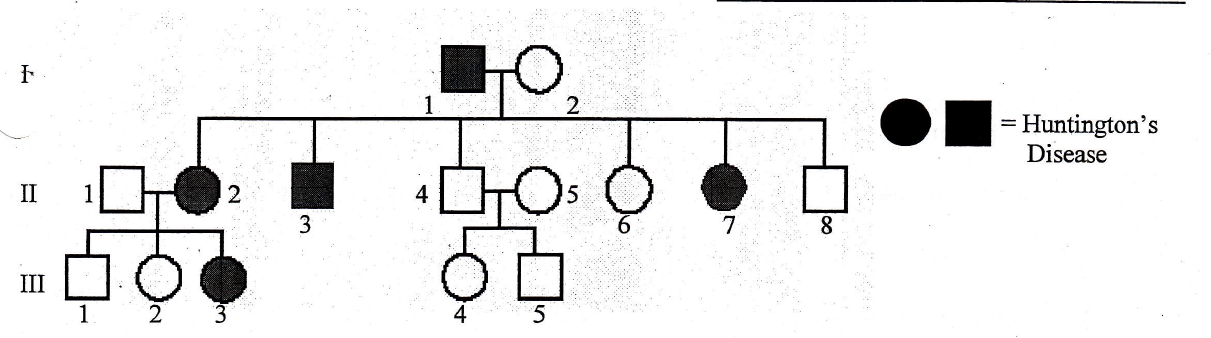
The trait this pedigree traces is recessive because it skips a generation and individuals can be carriers. What is the most likely genotype for person III-3?
GG
Gg
gg

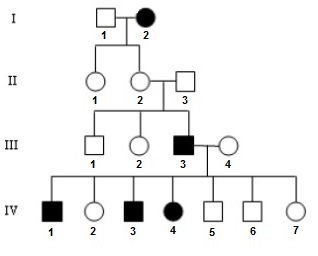
If this pedigree shows a recessive disorder, what MUST the genotype of individual 4 be?
HH
Hh
hh

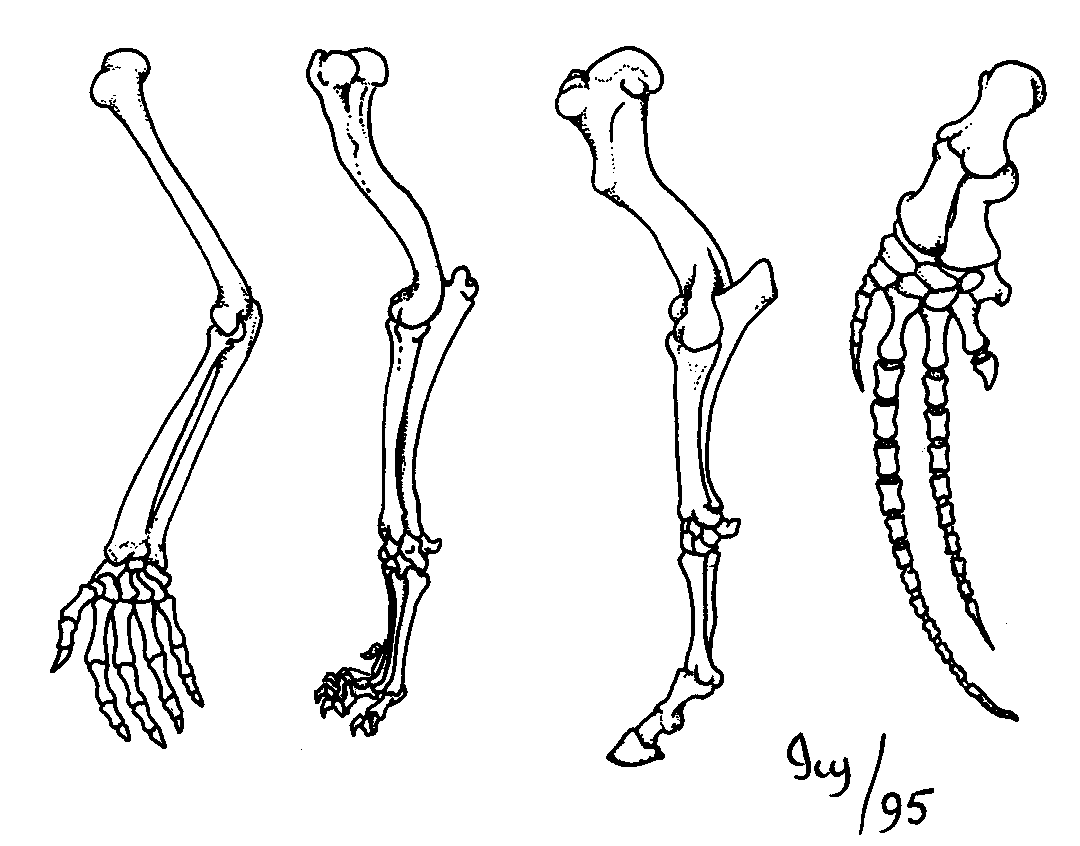
Whales are aquatic mammals that contain a pelvis (hip) bone. Even though it does not aid in its movement, the function must have been used by a common ancestor of the whale. Thus, the pelvis is referred to as a(n)
vestigial structure
analogous structure
homologous structure

Where do adaptations come from?
The individual organism decides to adapt
Mutations that give an organism an advantage in its environment
Genetic recombination during meiosis
Both mutations and genetic recombination are sources of adaptation
Mutations are important because they bring about
death of the organism in which they develop
genetic variation needed for a population to evolve
benefits for the individual, not for the population
changes in genotype, but not phenotype

Evolution occurring gradually and slowly over long periods of time
Homeostasis
Stasis
Punctuated Equilibrium
Gradualism
Punctuated equilibrium...
Involves bursts of change & periods of stability
Takes place slowly over long periods of time
Involves organisms evolving together
Involves organisms splitting from a common ancestor

Diversification of one ancestral species into many descendent species, usually adapted to a wide range of environments
gradualism
punctuated equilibrium
adaptive radiation
A change in gene frequency over time so more beneficial traits become more common in a population is called
Adaptation
Variation
Overproduction of Offspring
Descent with Modification
What happens when enzymes are heated to a high temperature?
The shape of the enzyme are changed and it denatures
The enzymes die
The enzymes' amino acid sequence changes
The enzymes remain the same
How is energy released from ATP?
add a phosphate
remove a phosphate
eat food
break off ribose
The cell membrane helps to maintain homeostasis by ...
regulating what enters and leaves the cell.
fighting foreign substances that enter the cell.
providing a rigid support system for the cell.
assisting the cell in movement
Lipids
Carbohydrates
Proteins
Nucleic acids
The main difference between passive transport and active transport is ...
passive transport requires energy
active transport moves substances "down" their concentration gradient
active transport requires energy
passive transport moves substances "up" their concentration gradient

In the cell pictured, which way would water move?
Into the cell, causing the cell to swell
Out of the cell, causing the cell to shrink
In and out of the cell equally, keeping the shape the same

In the cell pictured, where would water move?
Into the cell, causing it to swell
Out of the cell, causing it to shrink
In and out of the cell equally, causing the shape to stay the same
Which organelle is found in plant cells, but not in animal cells?
nucleus
ribosome
lysosome
chloroplast
True or False: Prokaryotes have a cell membrane.
True
False
The tough outer barrier of some cells, holds the shape and protects the cell
Mitochondria
Cell Wall
Nucleus
Ribosomes

Function of the cytoplasm
The function of the cytoplasm is to maintain the integrity of these genes.
The cytoplasm is help retain waste products.
The cytoplasm it is functions as a micro-machine for making proteins.
The cytoplasm is responsible for holding the components of the cell and protects them from damage.
Species not closely related evolve similar traits due to their similar environment
Convergent evolution
divergent evolution
parallel evolution
Species from the same ancestor accumulate differences over time
convergent evolution
divergent evolution
parallel evolution
Ants are the correct size and weight needed to open the flowers for the peony plant. The peony plant provides food for the ant and the ant fertilizes the peony’s flowers
Convergent
Divergent
Coevolution

