wayground logo

Free Printable Worksheets

Font size

S
M
L
XL
Worksheets

Heart Review

Total questions: 106

Worksheet time: 1hrs 2mins

Name
Class
Date
1.
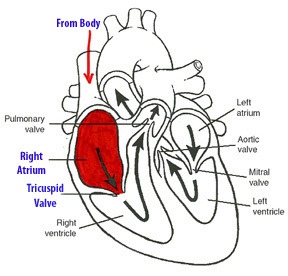
The arrow indicates the
a)
Right atrium
b)
Left ventricle
c)
Right ventricle
d)
Left atrium
2.
The arrow indicates the 
a)
Left ventricle
b)
Pulmonary artery
c)
Right atrium
d)
Pulmonary veins
3.
The arrow indicates the
a)
Right ventricle
b)
Aorta
c)
Right atrium
d)
Atrium
4.
The arrow indicates the
a)
Right ventricle
b)
Pulmonary artery
c)
Left ventricle
d)
Right atrium
5.
These structures carry blood away from the heart.
a)
Blood cells
b)
Veins
c)
Capillaries
d)
Arteries
6.
These structures carry deoxygenated blood to the heart.
a)
Arteries
b)
Veins
c)
Capillaries
d)
Vena Cava
7.
The arrow indicates the 
a)
Pulmonary vein
b)
Right atrium
c)
Aorta
d)
Pulmonary artery
8.
The arrow indicates the
a)
Left ventricle
b)
Vena cava
c)
Right atrium
d)
Right ventricle
9.
This chamber of the heart that RECEIVES blood returning from the body
a)
Right Atrium
b)
Right Ventricle
c)
Left Atrium
d)
Left Ventricle
10.
Deoxygenated blood
a)
travels through veins
b)
has little oxygen because the O2 was delivered to cells
c)
all of these are true
d)
is indicated by blue on anatomical diagrams
11.
The cells that carry oxygen to body cells are
a)
leukocytes
b)
lymphocytes
c)
erythrocytes
d)
monocytes
12.
The sac of tissue that protects the heart is the 
a)
mediastinum
b)
pericardium
c)
interventricular septum
d)
myocardium
13.
The number of valves in the heart is
a)
1
b)
2
c)
3
d)
4
14.
The major blood vessel that carries oxygenated blood out of the heart is the
a)
left atrium
b)
right atrium
c)
aorta
d)
vena cava
15.
Major veins that carry deoxygenated blood to the heart are
a)
superior and inferior vena cava
b)
left and right aorta
c)
brachiocephalic artery
d)
carotid artery
16.
Contraction of the heart is done by the 
a)
epipericardium
b)
visceral pericardium
c)
pericardium
d)
myocardium
17.
The purpose of heart valves is to 
a)
set the pace at which the heart beats
b)
prevent blood from flowing backward
c)
oxygenate the blood as it passes through the valve
d)
add minerals to the blood
18.

The valves between the atria and ventricles are known as the ________ valves.

a)

atrioventricular

b)

aortic

c)

semilunar

d)

pulmonary

19.
Pulmonary circulation involves blood flow to and from the heart and the _______.
a)
body
b)
digestive organs
c)
brain
d)
lungs
20.

Blood leaves the heart in two vessels, namely the:

a)

Aorta and pulmonary vein

b)

Pulmonary artery and aorta

c)

Aorta and venae cavae

d)

Pulmonary artery and pulmonary vein

21.

Which of the following is the smallest blood vessel?

a)

Venules

b)

Arterioles

c)

Veins

d)

Capillaries

22.
Where material exchange takes place between the cells and blood vessels:
a)
arteries
b)
veins
c)
venules
d)
capillaries
23.

With circulation, the heart provides your body with:

a)

Oxygen

b)

Nutrients

c)

Removal of Waste

d)

All of the above

24.

What is the arrow pointing to?

a)

vena cava

b)

mitral valve

c)

tricuspid valve

d)

aorta

25.

What is the arrow pointing to?

a)

vena cava

b)

mitral valve

c)

tricuspid valve

d)

aorta

26.

What is the arrow pointing to?

a)

right atrium

b)

left atrium

c)

right ventricle

d)

left ventricle

27.

What is the arrow pointing to?

a)

vena cava

b)

mitral valve

c)

tricuspid valve

d)

aorta

28.

The "LUBB" heart sound is made by the:

a)

Opening of the AV valves

b)

Closing of the AV Valves

c)

Opening of the SL valves

d)

Closing of the SL valves

29.

The "DUBB" heart sound is made by the:

a)

Opening of the AV valves

b)

Closing of the AV Valves

c)

Opening of the SL valves

d)

Closing of the SL valves

30.

Deoxygenated blood is pumped through the __________ side of the heart

a)

Right

b)

Left

31.

Blood leaving the ventricles is referred to as:

a)

Diastole

b)

Systole

32.
Which valve(s) prevents backflow from of blood into the ventricles?
a)
Semilunar Valves
b)
Cardiac Valve
c)
Mitral Valve
d)
Tricuspid Valve
33.
The arteries that feed the heart muscle
a)
Capillaries
b)
Coronary
c)
Chordae teindineae
d)
Coronary sinus
34.
The systemic circulation carries blood
a)
from the heart to the body cells and back to the heart
b)
to the lungs and back to the heart
35.
Which side of the heart pumps blood into the lungs?
a)
Right
b)
Left
36.

The serous membrane on the surface of the myocardium

a)

Endocardium

b)

Myocardium

c)

Epicardium

d)

Pericardium

37.

The middle layer of the heart wall; composed of cardiac muscle

a)

Endocardium

b)

Myocardium

c)

Epicardium

d)

Pericardium

38.

The heart’s primary pacemaker, where normal cardiac impulses arise

a)

AV Node

b)

SA Node

c)

Bundle of His

d)

Purkinje Fibers

39.

What term refers to the heart’s ability to initiate its own electrical impulse?

a)

Rhythmicity

b)

Automaticity

c)

Arrhythmia

d)

Ectopy

40.

Starting when deoxygenated blood is returned to the heart from the body, what is the correct progression of blood through the heart and lungs?

a)

Left atrium, left ventricle, lungs, right atrium, right ventricle

b)

Right atrium, right ventricle, lungs, left atrium, left ventricle

c)

Right ventricle, right atrium, lungs, left ventricle, left atrium

d)

Left ventricle, left atrium, lungs, right ventricle, right atrium

41.

Heart rate x Stroke Volume =

a)

Ejection Fraction

b)

Cardiac Output

c)

Blood Pressure

d)

Contractility

42.

The cardiac center is located in which portion of the brain?

a)

Pons

b)

Midbrain

c)

Medulla

d)

Hypothalamus

43.

The parasympathetic nervous system sends impulses to the heart via the vagus nerve, which:

a)

slows the heart rate

b)

increases the heart rate

c)

doesn’t affect the heart rate

d)

raises the blood pressure, which in turn lowers the heart rate

44.

The amount of blood pumped by the heart in 1 minute

a)

Tidal Volume

b)

Ejection Fraction

c)

Cardiac Output

d)

Stroke Volume

45.

This chamber receives oxygenated blood from the lungs via the pulmonary veins

a)

Left Ventricle

b)

Left Atrium

c)

Right Ventricle

d)

Right Atrium

46.

Which heart valve controls the flow of blood between the left atrium and the left ventricle?

a)

Pulmonary

b)

Aortic

c)

Mitral (bicuspid)

d)

Tricuspid

47.

The membrane that lines the chambers of the heart:

a)

Endocardium

b)

Myocardium

c)

Epicardium

d)

Pericardium

48.

Superior Vena Cava

a)
b)
c)
d)
49.

Right Pulmonary Artery

a)
b)
c)
d)
50.

Right Pulmonary Veins

a)
b)
c)
d)
51.

Right Atrium

a)
b)
c)
d)
52.

Triscuspid Valve

a)
b)
c)
d)
53.

Chordae Tendineae

a)
b)
c)
d)
54.

Inferior Vena Cava

a)
b)
c)
d)
55.

Aorta

a)
b)
c)
d)
56.

Left Pulmonary Artery

a)
b)
c)
d)
57.

Pulmonary Semilunar Valve

a)
b)
c)
d)
58.

Left Pulmonary Veins

a)
b)
c)
d)
59.

Left Atrium

a)
b)
c)
d)
60.

Mitral (Bicuspid) Valve

a)
b)
c)
d)
61.

Aortic Valve

a)
b)
c)
d)
62.

Left Ventricle

a)
b)
c)
d)
63.

Right Ventricle

a)
b)
c)
d)
64.
What part of the heart delivers unoxygenated blood to the lungs?
a)
Pulmonary artery
b)
Pulmonary vein
c)
Aorta
d)
Left ventricle
65.

True or False: The mitral valve is located on the left side of the heart.

a)

True

b)

False

66.
What part of the heart delivers richly oxygenated blood to the body?
a)
Aorta
b)
Superior vena cava
c)
Tricuspid valve
d)
Pulmonary artery
67.
True or False: Pulmonary veins take unoxygenated blood away from the heart.
a)
True
b)
False
68.
True or False: Blood flows in the following sequence in the heart: Superior vena cava/Inferior vena cava, right atrium, tricuspid valve, right ventricle, pulmonic valve, pulmonary artery, lungs, pulmonary veins, left atrium, bicuspid valve, left ventricle, aortic valve, aorta
a)
True
b)
False
69.
What part of the heart delivers oxygenated blood to the heart?
a)
Pulmonary artery
b)
Pulmonary vein
c)
Aorta
d)
Tricuspid valve
70.
On the right side of the heart, blood flows from the right ventricle to the _______.
a)
Pulmonic valve to the pulmonary artery
b)
Tricuspid valve to the pulmonary vein
c)
Tricuspid valve to pulmonary artery
d)
Inferior vena cava to the aorta
71.
True or False: The atriums are located below the ventricles.
a)
True
b)
False
72.
Blood is pumped through the systemic circulation by the ___________.
a)
right atrium
b)
right ventricle
c)
left atrium
d)
left ventricle
73.
In the cardiac cycle, systole is myocardial __________.
a)
contraction
b)
relaxation
74.
Blood is pumped through the pulmonary circulation by the _____________.
a)
right atrium
b)
right ventricle
c)
left atrium
d)
left ventricle
75.
Place the pathway of blood through the heart in the correct sequence.
a)
L-K-H-B-G-E-C-F-A-I-E-D
b)
I-J-D-C-F-A-H-B-G-E-K-L
c)
A-B-J-C-D-E-F-K-L-G-H-I
d)
I-J-E-D-C-F-A-B-G-H-K-L
76.
Semilunar valves are found in between the _____________.
a)
left atrium and left ventricle
b)
right atrium and right ventricle
c)
pulmonary artery and aorta
77.
In the cardiac cycle, diasystole is myocardial __________.
a)
contraction
b)
relaxation
78.
The tricuspid valve is found in between the _____________.
a)
left atrium and left ventricle
b)
right atrium and right ventricle
c)
pulmonary artery and aorta
79.
Which chamber does oxygenated blood enter the heart first?
a)
Left atrium
b)
Left ventricle
c)
Right atrium
d)
Right ventricle
80.
Which blood vessel carries blood from the heart to the lungs to receive oxygen?
a)
Aorta
b)
Vena cava
c)
Pulmonary artery
d)
Pulmonary vein
81.
The mitral (bicuspid) valve is found in between the _____________.
a)
left atrium and left ventricle
b)
right atrium and right ventricle
c)
pulmonary artery and aorta
82.

Which valve has 3 cusps and is in the right side?

a)

Tricuspid

b)

Bicuspid(Mitral)

83.
What are the two large veins that drain blood from the upper body and from the lower body and empty it into the right atrium of the heart?
a)
vena cava
b)
aorta
c)
pulmonary artery 
d)
pulmonary vein
84.
The two chambers of the heart with thin walls that collect blood from the major veins and empty it into the larger, more muscular chambers.
a)
aorta
b)
atria
c)
ventricles
d)
lungs
85.
What are the functions of the tricuspid and bicuspid valves?
a)
prevent blood from leaking back into the ventricles
b)
prevent blood from leaking back into the atria
c)
allow blood to flow into the atria
d)
allow blood to leave the ventricles
86.
Which of the following define diastole and systole
a)
systole is the contraction of the heart and diastole is the relaxation of the heart
b)
diastole is the contraction of the heart and systole is the relaxation of the heart
c)
diastole and systole are both contractions of the heart
d)
diastole and systole are both relaxation phases of the heart
87.
What is ECG?
a)
electrocardiogram
b)
a tool that collects electrical changes in the heart muscle
c)
will detect any abnormal rhythm of the heart
d)
all of the above
88.
The lining of the chambers of the heart is called the
a)
myocardium
b)
epicardium
c)
endocardium
d)
pericardium
89.
Freshly oxygenated blood is delivered to the _____________ and then it passes into the  __________ to be pumped to the entire body.
a)
right ventricle; right atrium
b)
left ventricle; left atrium
c)
left atrium; left ventricle
d)
right atrium; right ventricle
90.
The most muscular chamber of the heart is the 
a)
left ventricle
b)
left atrium
c)
right atrium
d)
right ventricle
91.
Into which chamber of the heart do the pulmonary veins deliver blood?
a)
left ventricle
b)
right atrium
c)
left atrium
d)
right ventricle
92.
Which of the following lists the valves in the order through which the blood flows from the vena cava through the heart?
a)
tricuspid, pulmonary, bicuspid, aortic
b)
mitral, pulmonary, bicuspid, aortic
c)
bicuspid, aortic, tricuspid, pulmonary
d)
aortic semilunar, pulmonary, tricuspid, bicuspid
93.
Choose the answer that will fill in the missing words in the correct order:vena cava, _________________, tricuspid valve, right ventricle, pulmonary valve, __________________, lungs, ___________________, left atrium, ____________________, left ventricle, aorta
a)
right atrium, pulmonary artery, pulmonary veins, bicuspid valve
b)
atrial valve, right atrium, right ventricle, body
c)
left ventricle, pulmonary artery, pulmonary veins, tricuspid valve
d)
right atrium, pulmonary veins, pulmonary artery, bicuspid valve
94.

The heart layer that keeps blood from sticking to the inside of the heart and forming potentially deadly blood clots is called

a)

endocardium

b)

pericardium

c)

myocardium

d)

epicardium

95.
The distal end of the heart
a)
pericardium
b)
epicardium
c)
apex
d)
myocardium
96.
inner layer of the pericardium
a)
parietal pericardium
b)
visceral pericardium
c)
myocardium
d)
endocardium
97.
The outer layer in the wall of the heart
a)
epicardium
b)
myocardium
c)
endocardium
d)
septum
98.
Encloses the heart
a)
myocardium
b)
pericardium
c)
endocardium
d)
epicardium
99.
space between the layers of the pericardium that contains fluid to reduce friction
a)
pericardial cavity
b)
epicardium
c)
endocardium
d)
myocardium
100.
The arteries that feed the heart muscle
a)
Capillaries
b)
Coronary
c)
Chordae teindineae
d)
Coronary sinus
101.
space between the layers of the pericardium that contains fluid to reduce friction
a)
pericardial cavity
b)
epicardium
c)
endocardium
d)
myocardium
102.
The fibrous chords that attach to the cusps of the valves
a)
Purkinje fibers
b)
chordae tendineae
c)
papillary muscles
d)
cusps
103.
The inner layer in the wall of the heart
a)
endocardium
b)
myocardium
c)
epicardium
d)
septum
104.
Aortic valve is closed, indicated by the lower number of the blood pressure reading
a)
Systole
b)
Diastole
c)
impulse
d)
depolarization
105.
The muscles that project inward from the walls of the ventricle
a)
skeletal muscles
b)
smooth muscles
c)
papillary muscles
d)
sphincters
106.
Aortic valve is open, indicated by the higher number on the blood pressure reading
a)
diastole
b)
systole
c)
impulse
d)
depolarization