
 Worksheets
Complex Cells
Total questions: 85
Worksheet time: 58mins
The cell part found only in plant cells that provides support and structure to the cell is
Cell membrane
Cell wall
Nucleus
Chloroplast
The organelle found only in plant cells that makes glucose during photosynthesis is:
Chloroplast
Mitochondria
Nucleus
Vacuole
The organelle that makes ATP or energy is all cells is
Mitochondria
Chloroplast
Nucleus
Vacuole
The control center of the cell. It contains the DNA
Vacuole
Chloroplast
Nucleus
Mitochondria
Organelle that is much larger in plant cells than animal cells. It stores liquid in the cell
Mitochondria
Chloroplast
Vacuole
Nucleus
Organelles found in both plant cells and animal cells. It filters what goes in and out of the cell
Cell wall
Chloroplast
Mitochondria
Cell membrane
Cell parts that build proteins according to the DNA code
Mitochondria
Chloroplast
Nucleus
Ribosomes
The cell membrane is selectively permeable. What does "selectively permeable" mean?
Anything can enter.
Nothing can enter.
Some things can enter, while other things can't enter.


The function of the rough ER is to:
Produce and folding lipids
Produce and folding proteins
Produce and folding carbohydrates
Produce and folding Nucleic acids
Organelles where photosynthesis occurs, uses the sunlight to make glucose (sugar).
Chloroplasts
Cell Wall
Cell Membrane
Cytoplasm
Saclike structures that store materials such as water, salts, proteins, and carbohydrates.
Nucleus
Ribosomes
Organelles
Vacuoles
The function of the rough ER is to:
Produce and folding lipids
Produce and folding proteins
Produce and folding carbohydrates
Produce and folding Nucleic acids
The function of the smooth ER is to:
Make proteins
Make lipids
Make carbohydrates
Make nucleic acids

What organelle uses glucose (sugar) to make ATP (Energy source for cells)
mitochondria
Lysosome
Cytoplasm
Golgi Apparatus
Where are the proteins made?
Ribosome
Endoplasmic Reticulum
Vacuole
Supports and protect the plant cell is the Cell Wall
True
False
Which plant organelle transforms light into glucose to use as food?
Nucleus
Vacuoles
Mitochondria
Chloroplasts
What are the small structures inside of cells that carry out specific functions called?
Tissues
Organelles
Organs
When an organism has cells with a nucleus, they are called _______.
Prokaryotes
Eukaryotes
Bacteria
Archaea
Where is DNA found in a Eukaryotic Cell?
No specific location (Scattered around the cell)
Inside of the Chloroplast
Inside of the cell membrane
Inside of the nucleus

This is a picture of:
Prokaryotic Cell
Eukaryotic Cell

In what organelle is the genetic material found inside?
Endoplasmic Reticulum
Golgi Complex
Nucleolus
Nucleus

I make proteins for the cell. What am I?
ribosome
mitochondria
chloroplast
lysosome


What is the function of the mitochondria?
Structure that manufactures ribosomes
Structures that converts nutrients to energy
Stack of membranes that packages chemicals
Structure that contains DNA and directs the cell

What is the name of the structure labeled 5?
cell membrane
mitochondria
cell wall
nucleus

Which number indicates the location of the mitochondria?
3
4
7
11
Which of the following structures would only be located in this type of cell?
11
12
14
7
Which number would represent the control center of the cell?
3
6
7
11
Which cell part would you NOT expect to find in this kind of cell?
centrioles
mitochondria
cell wall
nucleus
Which number is most likely to help maintain homeostasis in a cell by controlling what is able to go in and out?
1
6
11
5
Select ALL of the following organelles that are in BOTH plant and animal cells.
Ribosome
Nucleus
Chloroplast
Golgi Apparatus
What is the function of the Golgi Appartus?
Makes lipids and detoxifies harmful substances
Packages and delivers lipids and proteins
Stores genetic material
Makes protein

What type of cell is pictured?
Prokaryotic Cell
Eukaryotic Cell
Animal Cell
Plant Cell

Which statement best describes the role of the cell membrane?
The organelle responsible for making proteins for the cell
The organelle where photosynthesis takes place
A rigid layer that provides shape and structure for the cell
A semi-permeable layer that allows select materials to enter and leave the cell
Animal cell


Which organelle breaks down organelles that are no longer useful?
lysosome
Golgi body
mitochondria
smooth ER
a solution with a higher solute concentration on the outside of the cell and a lower solute concentration on the inside of the cell. Water will move out of the cell causing the cell to shrink and shrivel.
Hypertonic Solution
Hypotonic Solution
solution with lower solute concentration on outside of cell and higher solute concentration on inside of cell. Water will into the cell causing the cell to swell and eventually burst
Hypertonic Solution
Hypotonic Solution
a solution that has the SAME solute concentration on the outside and inside of the cell. There will be NO NET MOVEMENT of water into or out of the cell. Cell size will stay the SAME.
ISOTONIC
HYPOTONIC
the movement of molecules LIKE OXYGEN OR HYDROGEN from areas of higher concentration to areas of lower concentration.
DIFFUSION
OSMOSIS
molecules LIKE GLUCOSE AND SALT diffuse across the cell membrane with help from membrane PROTEINS, such as channel and carrier proteins.
FACILITATED DIFFUSION
OSMOSIS
type of membrane transport that does NOT require energy to move substances across cell membranes. This includes diffusion, osmosis, and facilitated diffusion.
PASSIVE TRANSPORT
ACTIVE TRANSPORT
a kind of cellular transport where substances move against a concentration gradient. This type of transport REQUIRES ENERGY from the cell. This includes endocytosis and exocytosis.
PASSIVE TRANSPORT
ACTIVE TRANSPORT
process that occurs when a cell moves large materials OUTSIDE of the cell through secretory vesicles. This type of transport is active and requires energy.
ENDOCYTOSIS
EXOCYTOSIS
a process by which cells absorb or take in external materials by engulfing it (taking in) with the cell membrane. Examples of this is pinocytosis and phagocytosis.
ENDOCYTOSIS
EXOCYTOSIS
The MOVEMENT OF WATER molecules from a solution with a high concentration of water molecules to a solution with a lower concentration of water molecules across a selectively permeable membrane.
OSMOSIS
DIFFUSION
a type of transport protein, acts like a pore in the membrane that lets water molecules or small ions through quickly
CHANNEL PROTEIN
PHOSPHOLIPID
a two-layered arrangement of phosphate and lipid molecules that form a cell membrane.
PHOSPHOLIPID BILAYER
CELL WALL
the cell membranes' ability to differentiate between different types of molecules, only allowing some molecules through while blocking others.
SELECTIVELY PERMEABLE
OSMOSIS

This image is a model of-
Flagella
Nucleus
Endoplasmic Reticulum
Cell Membrane
The function of the plasma membrane is....
Vesicle with enzymes to digest waste
Regulate what is transported into and out of the cell
Package materials
Make proteins
What does "bilayer" mean?
one layer
two layers
virus
antibiotic

______ and ________ are organelles that arose from the endosymbiotic theory
flagellum and chloroplast
mitochondria and chloroplasts
Smooth and Rough ER
mitochrondria and cell wall
The Theory of Endosymbiosis explains:
how bacteria live
the origin of Eukaryotes
Why cells rely on one another
how species develop
Which of the following is evidence to support the endosymbiotic theory?
Mitochondria and chloroplasts have their own DNA, which is similar to prokaryotic DNA.
Fossil evidence shows that the first forms of life were prokaryotic cells.
All eukaryotic cells have a double-layered membrane composed of phosplipids and proteins.
Prokaryotes have the same number and types of enzymes as eukaryotes.
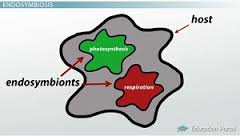
Eukaryotes are thought to have evolved by a prokaryote engulfing one heterotrophic bacteria and one photosynthetic bacterium.
false
true


In the cell pictured, which way would water move?
Into the cell, causing the cell to swell
Out of the cell, causing the cell to shrink
In and out of the cell equally, keeping the shape the same

In the cell pictured, where would water move?
Into the cell, causing it to swell
Out of the cell, causing it to shrink
In and out of the cell equally, causing the shape to stay the same

In the cell pictured, which way would water move?
Into the cell, causing the cell to swell
Out of the cell, causing the cell to shrink
In and out of the cell equally, keeping the shape the same

In the cell pictured, which way would water move?
Into the cell, causing the cell to swell
Out of the cell, causing the cell to shrink
In and out of the cell equally, keeping the shape the same
An animal cell placed in a hypertonic salt solution will
stay the same
shrink in size
swell in size
grow another brain
Ideally, your cells should be in a(n) _____ solution.
isotonic
hypertonic
hypotonic
hyperbaric
When cells move from a higher concentration to a lower concentration, it is called
isotonic
diffusion
osmosis
active transport
In a solution of salt water, salt is considered the ____.
Solvent
Solute
Solution
Diffusion
If you looked at red blood cells under a microscope and saw the blood cells exploded, what would you say happened?
The cells were placed in a hypotonic solution
The cells were placed in a hypertonic solution
The cells were placed in a isotonic solution
The cells were placed in an explosive


