Worksheets
Reporting Category 1: Cell Structure & Function
Total questions: 73
Worksheet time: 4hrs 39mins
Both mitochondria and chloroplasts ____
contain their own unique ribosomes that are different than the cells
contain their own unique DNA that are different than the cells
are specialized organelles that capture and release energy
are found in both in plants and animals
Encloses the cell, it acts like a gatekeeper, allowing some materials to pass through it but not others.
Chloroplasts
Cell Wall
Cell Membrane
Cytoplasm

Which of these correctly identifies the two cells described in the table?
Cell 1 is Eukaryotic, Cell 2 is Prokaryotic
Cell 1 is Prokaryotic, Cell 2 is Eukaryotic
Both cell 1 and cell 2 are Eukaryotic
Both cell 1 and cell 2 are Prokaryotic

The diagram illustrates the movement of molecules through a cell membrane.
What process is being used by the cell to move the molecules?
osmosis
endocytosis
active transport
facilitated diffusion
Which process moves an ion across a cell membrane against the concentration gradient?
diffusion
exocytosis
facilitated diffusion
active transport

A student used a microscope to observe Elodea submerged in a solution. The student observed the cell cytoplasm pull away from the cell wall and clump together in the center of the cell.
What statement best explains why this occurred?
The cell was submerged in a pure water solution
The cell was submerged in a solution with a higher water concentration than the inside of the cell.
The cell was submerged in a solution with an equal water concentration to the inside of the cell.
The cell was submerged in a solution with a lower water concentration than the inside of the cell.


Four different nucleotides are used as building blocks of DNA. Which of the following can be used to distinguish one nucleotide from another?
The nitrogenous base
The shape of the deoxyribose sugar
The length of the phosphate group
The type of fatty acid
Which of the following biomolecules typically contains both nitrogen and phosphate?
lipid
protein
nucleic acid
catbohydrate

Part of the cell cycle is shown in this model. This part of the cell cycle is best described as the process that-
duplicate the DNA
completes cell division
maintains genetic homeostasis
synthesizes new molecules
Both euglena and cyanobacteria are photosynthetic unicellular organisms found in pond water. The feature that distinguishes euglena from cyanobacteria is the_________
ability to maintain homeostasis
presence of ribosomes
ability to reproduce
presence of a nuclear membrane
The human immunodeficiency virus (HIV) often infects a destroys CD4 T cells. These CD4 T cells are one of many kinds of white blood cells that are an important part of the immune system. The most common danger related to the destruction of CD4 T cells is ______.
an increase in the risk of high blood pressure
an increase in the threat of diseases caused by microorganisms and viruses
a decrease in the flow of blood to vital organs
a decrease in the amount of oxygen being transported to tissues
Severe acute respiratory (SARS) is an illness caused by a coronavirus. Symptoms including a high fever, headaches, and body aches typically occur two to seven days after infection by the virus. SARS is more serious in elderly patients. This information suggests that the reproduction cycle of the SARS virus is ____________
lysogenic, because the virus is a coronavirus
lytic, because the virus causes respiratory illness
lysogenic, because the virus primarily affects older people
lytic, because of the quick onset of symptoms after infection
A person infected with the human immunodeficiency virus (HIV) may not have any symptoms for a period of time. During this period the virus affects the body by doing which of the following?
The virus produces toxins that weaken the immune cells and prevent them from reproducing
The virus damages immune cells while using their machinery to produce copies of itself.
The virus uses nutrients meant for immune cells to fuel its own respiration.
The virus changes the identity of the nucleotides of immune cells to prevent the immune system from functioning normally.

A photomicrograph of onion root tip cells during mitosis is shown below. Which phase of mitosis is occurring in the cells indicated by the arrow?
Prophase
Metaphase
Anaphase
Telophase

The diagram shows cells in different phases of mitosis. A student is trying to find a cell in a particular phase of mitosis. The student is looking for evidence that spindle fibers are separating the chromosomes to ensure that each new nucleus has one copy of each chromosome. Which cell is in the phase of mitosis that the student is searching for?
Cell 1
Cell 2
Cell 3
Cell 4
From a single fertilized ovum undergoing a series of rapid cell divisions, a human infant develops. The embryonic cells become specialized for a variety of functions. Which of these statements best describes how different cell types develop?
Each cell type contains only the active parts of the DNA needed for that cell type.
Each cell type has only one chromosome containing the DNA needed for the cell type.
Each cell has an identical copy of DNA with enzymes controlling the expression of specific genes, leading to a variety of cells.
Each cell has multiple copies of DNA that are affected in different ways by the environment to change the function of the cell at regular intervals

This diagram shows cellular activity across a cell membrane. Which two processes does this diagram most directly model?
Energy conversions and synthesis of new molecules
Synthesis of new molecules and homeostasis
Transport of molecules and energy conversions
Homeostasis and transport of molecules


Which figure shows the process of replication?

Fructose is a sugar found in fruit. What type of biomolecule is fructose?
Carbohydrate
Lipid
Nucleic Acid
Protein

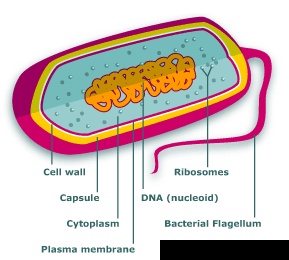
What is the most obvious way to determine if a cell is a prokaryotic cell?
It lacks a cell membrane.
It lacks DNA.
It contains mitochondria.
It lacks a nucleus.

Photosynthesis and cellular respiration both involve taking in and giving off gases. During photosynthesis, what gas is taken in? (reactant)
Carbon Dioxide
Glucose
Oxygen
Water
Photosynthesis and cellular respiration both involve taking in and giving off gases. During photosynthesis, what gas is released? (product)
Carbon Dioxide
Glucose
Oxygen
Water
Photosynthesis and cellular respiration both involve taking in and giving off gases. During cellular respiration, what gas is released? (product)
Carbon Dioxide
Glucose
Oxygen
Water
Photosynthesis and cellular respiration both involve taking in and giving off gases. During cellular respiration, what gas is taken in? (reactant)
Carbon Dioxide
Glucose
Oxygen
Water

The products of photosynthesis are the reactants in cellular respiration. What is the purpose of cellular respiration?
To create energy.
To create sunlight.
To create glucose.
To remove energy.

Photosynthesis requires different amounts of carbon dioxide at different levels of light intensities. At which point would cellular respiration be equal to the rate of photosynthesis?
W
X
Y
Z

Choose the correct statement.
Glucose is the main source of energy in cellular respiration.
Glucose is the main source of energy in photosynthesis.
Sunlight is the main source of energy in cellular respiration.
Water is the main source of energy in cellular respiration.

According to the graph, enzyme B will function best at what temperature and pH level?
Temperature of 75 and pH of 8
Temperature of 37 and pH of 2
Temperature of 75 and pH of 2
Temperature of 80 and pH of 7

Enzymes are specific to a substrate and the shape of the enzyme determines the enzyme's function.
True
False

Why is energy required for active transport?
The particle is being transported against the concentration gradient.
The particle is water, so it weighs more.
The particle is waste matter that will be digested by the cell membrane.
The distance is greater for this molecule so it requires energy.

If molecules move across the cell membrane to create homeostasis (equilibrium), what will change the most?
the shape of the molecules
the temperature of the molecules
the concentration of the molecules
the pH level of the molecules
Viruses are surrounded by a protein coat known as a
Capsid
Capsule
Enzyme
Nucleotide
Viruses are microscopic infectious agents that can only replicate inside a host cell
FALSE
TRUE
Viruses are living organisms
FALSE
TRUE
Viruses contain genetic material either DNA or RNA
FALSE
TRUE


The correct sequence of mitosis:
metaphase, anaphase, telophase, prophase
prophase, metaphase, anaphase, telophase
prophase, anaphase, metaphase, telophase
telophase, metaphase, prophase, anaphase
Identical halves of a chromosome are called?
Cousins
Chromatids
Centromere
Centrosome
Chromosomes are visible and spindle fibers start to appear
prophase
metaphase
telophase
anaphase
Sister Chromatids separate from each other
prophase
telophase
anaphase
metaphase
Chromosomes line along the center of the cell
anaphase
prophase
metaphase
telophase
After mitosis the number of chromosomes in the newly created cells will be:
Half the number of the original cell
The same number as the original cell
Twice as much as the original cell
The division of chromosomes is called?
anaphase
mitosis
cytokineses
G0
The division of the cytoplasm is called?
anaphase
mitosis
cytokineses
G0
Non dividing state of the cell cycle
Interphase
Mitosis
Telophase
Cytokinesis
Uncontrolled growth can result in:
G0 phase
S phase
Replication
Cancer