wayground logo

Free Printable Worksheets

Font size

S
M
L
XL
Worksheets

FSSA Review: Physical Science

Total questions: 86

Worksheet time: 2hrs 47mins

Name
Class
Date
1.

It is defined as a push or a pull.

a)

Elements

b)

Force

c)

Friction

d)

Fracture

2.

It is defined as forces that are equal in magnitude.

a)

Unbalanced Forces

b)

Forces

c)

Balanced Forces

d)

Net force

3.

It is defined as forces that are not equal in magnitude.

a)

Unbalanced Forces

b)

Forces

c)

Balanced Forces

d)

Friction

4.

If you apply an unbalanced force to an object at rest, what will happen to that object?

a)

the object will remain at rest.

b)

the object will move.

c)

The object will stay.

d)

None of the above.

5.
What force holds the planets in motion around the sun?
a)
Magnetic
b)
Electrical
c)
Gravitational
d)
Air Resistance
6.
What does the strength of gravity between two objects depend upon?
a)
Mass & distance
b)
Mass & weight
c)
Gravity & inertia
d)
Inertia & mass
7.
What force ultimately slows the roller coaster to a stop?
a)
Applied
b)
Normal
c)
Friction
d)
Magnetic
8.
The unit of force is
a)
m/s
b)
m/s^2
c)
newton
d)
kg
9.
What is it called when the force of gravity is acting on an object?
a)
Weight
b)
Sliding Friction
c)
Momentum
d)
Projectile Motion
10.

The strongest parts of the magnet are ...

a)

fronts

b)

backs

c)

poles

d)

middle

11.

The area around a magnet is called the .....

a)

attraction zone

b)

work area

c)

magnetic field

d)

hot zone

12.
A north pole and a south pole will attract.
a)
True
b)
False
13.
True or False: All metals stick to magnets.
a)
True
b)
False
14.

Which one represents the magnetic field lines of magnets repelling?

a)

A

b)

B

15.

Which law of motion says that you must push or pull objects harder if they have more mass?

a)

1st

b)

2nd

c)

3rd

d)

4th

16.

Letting go of a balloon full of air is demonstrating Newton's ______ _______ ________ _________ because the air comes out of the back and the balloon moves forward.

a)

1st law of motion

b)

2nd law of motion

c)

3rd law of motion

d)

13th law of motion

17.

What law is best described by inertia?

a)

1st

b)

2nd

c)

3rd

d)

law of conservation of mass

18.

What is Newton's First Law

a)

F=ma

b)

Every action has an equal and opposite reaction

c)

An object at rest stays at rest, an object in motion stays in motion.

d)

Friction

19.

Newton's third law states that any action will have a(n) _______ and ______ reaction

a)

Equal and similar

b)

Equal and opposite

c)

Equal and different

d)

Greater and opposite

20.

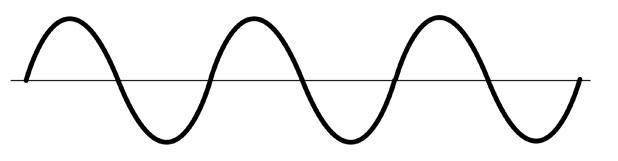
What is this graph representing?

a)

Constant Speed

b)

Acceleration (speeding up)

c)

Deceleration (slowing down)

d)

No motion

21.
Select the correct order of waves on the EMS from the longest wavelength to the shortest wavelength
a)
Radio, Micro, Infra, Visible, Ultra, X-ray, Gamma
b)
Gamma, X-ray, Ultra, Vis, Infra, Micro, Radio
c)
Vis, Micro, Infra, Ultra, X-ray, Gamma, Radio
d)
Micro, Radio, Vis, Infra, Ultra, X-ray, Gamma
22.
Which has the LONGEST wavelength and, therefore, the lowest frequency/energy
a)
Gamma Rays
b)
Radio Waves
c)
Visible Light
d)
Infrared rays
23.
Which has the SHORTEST wavelength and, therefore, the highest frequency/most energy
a)
Radio waves
b)
Ultraviolet Rays
c)
Gamma Rays
d)
X-rays
24.
Which section of the spectrum is the ONLY one we can see?
a)
X-rays
b)
Visible Light
c)
Gamma Rays
d)
Ultraviolet Rays
25.
How are electromagnetic waves different from other waves? 
a)
They have very short wavelengths 
b)
They transmit energy instead of matter 
c)
They can travel through empty space
d)
They can change direction by reflection 
26.
High frequency waves have _________ wavelengths.
a)
varying
b)
long
c)
the same
d)
short
27.
The distance between two crests or two troughs of a wave is called:
a)
frequency
b)
amplitud
c)
wavelength
d)
hertz
28.
The height of the wave from the rest position is known as the _____________.
a)
amplitude
b)
crest
c)
trough
d)
wavelength
29.
What are electromagnetic waves?
a)
sound waves
b)
electric & magnetic fields (energy) that travel through empty space very quickly
c)
Someone's name
d)
things like longitudinal waves
30.

Number of waves passing a given point in a certain amount of time, measured in Hertz (Hz)

a)

wavelength

b)

frequency

c)

amplitude

d)

wave speed

31.
__________ means to move back and forth quickly.
a)
Pitch
b)
Amplitude
c)
Vibration
d)
Echo
32.
Sound waves travel the FASTEST through _____________.
a)
gases
b)
liquids
c)
solids
33.
Sound is a form of? 
a)
energy
b)
pitch
c)
volume
34.

Sound does not travel in space because

a)

Distance is too far away.

b)

There is no matter in space.

c)

It is too dark.

d)

Space has planets.

35.
What is frequency?
a)
the number of vibrations per second
b)
how high or low a sound is
c)
the loudness or softness of a sound
d)
the back and forth movement of matter
36.

What is an example of kinetic energy?

a)

A bird sitting in a tree

b)

A bouncy ball on the table

c)

A car driving on the highway

d)

A book on shelf

37.

What is an example of potential energy?

a)

A bowling ball rolling down a lane

b)

A car parked in a lot

c)

An apple falling from a tree

d)

Sunlight heating up the atmosphere

38.

Energy cannot be created or destroyed.

a)

True

b)

False

39.

What is thermal energy?

a)

Energy due to electric current

b)

Energy that sound carries

c)

The sum of the potential and kinetic energy of the particles that make up an object.

d)

The energy that electromagnetic waves carry

40.

What is an example of sound energy?

a)

A thermometer heating up

b)

Solar panels generating electricity

c)

A guitar string being plucked

d)

A machine in an assembly line

41.

What is nuclear energy?

a)

Energy in the nucleus of an atom

b)

Energy in the particles of an object

c)

Energy that is carried by electromagnetic waves

d)

Energy in a system of objects

42.

What is the definition of friction?

a)

A force that resists the sliding of two objects that are touching

b)

A force that increases sliding between two objects

c)

The change from potential to kinetic energy

d)

A transformation from radiant to mechanical energy

43.

What transformation occurs in a toaster?

a)

Electrical to radiant

b)

Electrical to thermal

c)

Thermal to mechanical

d)

Solar to electrical

44.

What type of energy transformation occurs when a piece of wood burns?

a)

Electrical energy is released as radiant energy

b)

Stored chemical energy is released as thermal energy

c)

Mechanical energy is stored as chemical energy

d)

No transformation occurs

45.

Energy can be transformed into many different forms:

a)

True

b)

False

46.

Boiling Water

a)

Conduction

b)

Convection

c)

Radiation

47.

Curling Iron

a)

Conduction

b)

Convection

c)

Radiation

48.

Weather Patterns

a)

Conduction

b)

Convection

c)

Radiation

49.

Sun Bathing

a)

Conduction

b)

Convection

c)

Radiation

50.

Mantle

a)

Conduction

b)

Convection

c)

Radiation

51.

Microwaving Food

a)

Conduction

b)

Convection

c)

Radiation

52.

Heat Lamps

a)

Conduction

b)

Convection

c)

Radiation

53.
What is the transfer of heat by direct contact?
a)
Convection
b)
Electromagnetic waves
c)
Radiation
d)
Conduction
54.
What is the measurement of the average kinetic energy of a substance?
a)
Kinetic energy
b)
Temperature
c)
Thermal energy
d)
Potential energy
55.
The central region of an atom where its neutrons and protons are is its 
a)
nucleus 
b)
electron cloud
c)
core 
d)
center 
56.
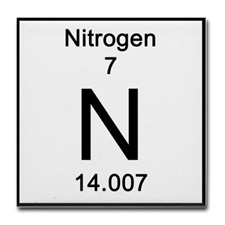
What is the number of protons that the element in this image contain?
a)
14
b)
7
c)
15
d)
18
57.
all matter is made of what 
a)
energy 
b)
atoms 
c)
electrons 
d)
compounds 
58.
electrons have this type of charge?
a)
negative
b)
positive
c)
neutral
59.
Most of the mass in an atom is concentrated in the...
a)
electrons
b)
nucleus
c)
protons
d)
empty space
60.
What does the nucleus consist of?
a)
Protons + Electrons
b)
Neutrons + Electrons
c)
Atoms
d)
Protons + Neutrons
61.
A part of the atom that has a negative charge is?
a)
Proton
b)
electron
c)
neutron
62.
The part of the atom that is moving around the nucleus is called?
a)
electron
b)
neutron
c)
proton
63.
Atoms are mostly filled with?
a)
electrons
b)
empty space
c)
protons
64.
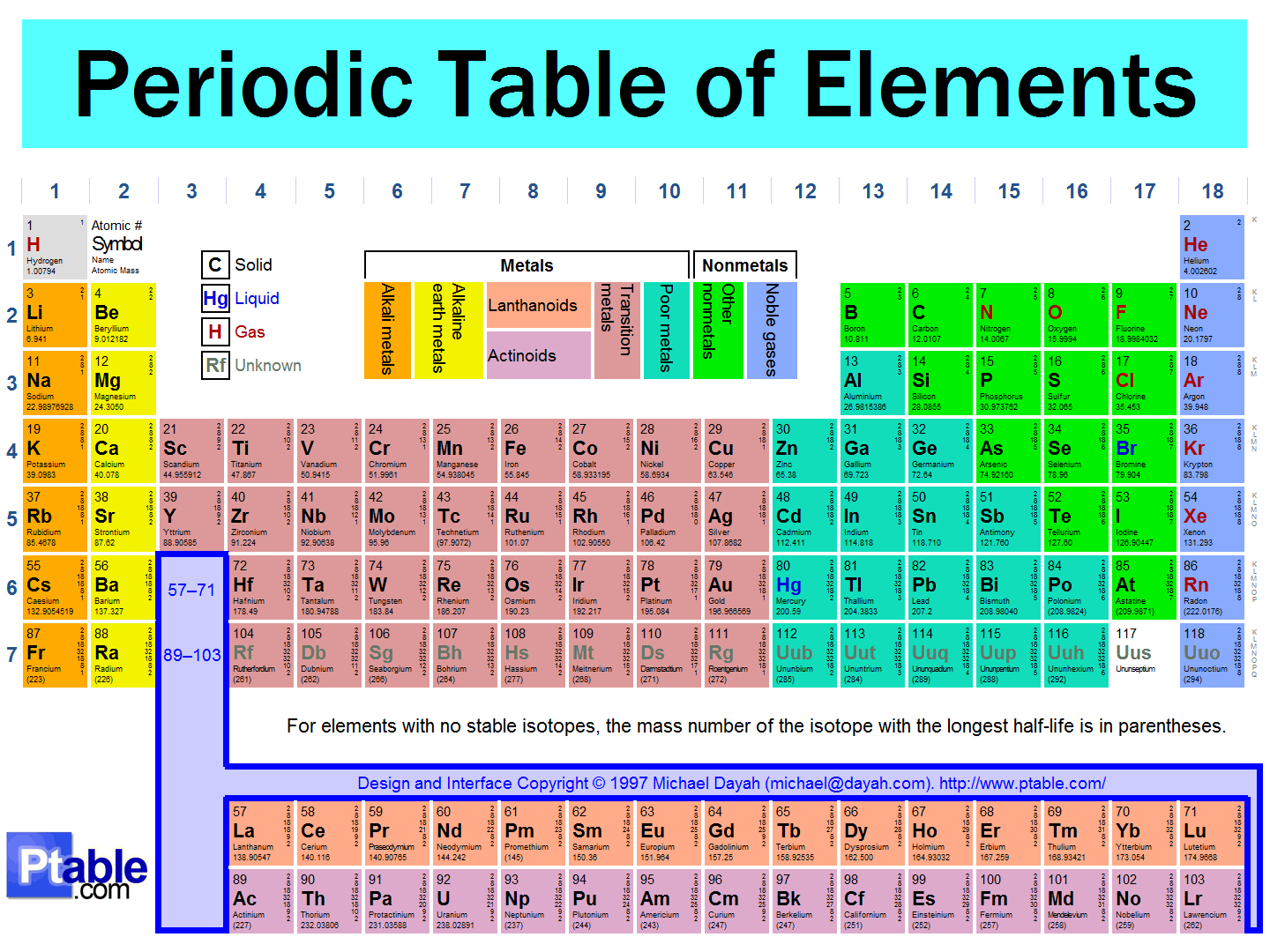
The horizontal row on the periodic table is called a
a)
group
b)
family
c)
period
d)
atomic number
65.
A vertical column is called...
a)
group
b)
tower
c)
period
d)
crew
66.
What is the chemical symbol for Lithium?
a)
H
b)
He
c)
Li
d)
N
67.
Most of the elements on the periodic table are classified as _____.
a)
Metals
b)
Nonmetals
c)
Metalloids
d)
Periods
68.
This class of elements are sometimes called "semiconductors."
a)
Metals
b)
Nonmetals
c)
Metalloids
d)
Groups
69.

A white tablet is dropped into water. The water becomes cloudy and bubbles are produced. What type of change has occurred?

a)

Physical change

b)

Chemical change

c)

No change

70.

Which observations prove a chemical change occurred

a)

Dissolving and expected color change

b)

Mixing and dissolving

c)

State of matter change and boiling water bubbles

d)

Unexpected color change and temperature change

71.

Which of the following is true?

a)

A physical change produces a new substance

b)

A chemical change does not produce a new substance

c)

A physical change can produce a precipitate

d)

A chemical change can produce a precipitate

72.

When iron is exposed to air over a long period of time, it forms rust. This is an example of what?

a)

A new substance forming

b)

Color change: no new substance

c)

Shape change: no new substance

d)

Burning: a new substance

73.

A physical change...

a)

changes the physical properties of an object, but does not create a new substance.

b)

creates a new substance and cannot be undone.

74.

A physical change...

a)

changes the physical properties of an object, but does not create a new substance.

b)

creates a new substance and cannot be undone.

75.

A chemical change

a)

changes the physical properties of an object, but does not create a new substance.

b)

creates a new substance and cannot be undone.

76.

Is this an example of a physical or chemical change?

a)

physical

b)

chemical

77.

Is this an example of a physical or chemical change?

a)

physical

b)

chemical

78.

Is this an example of a physical or chemical change?

a)

physical

b)

chemical

79.

Is this an example of a physical or chemical change?

a)

physical

b)

chemical

80.
Pure water has a pH of 7. Pure water _______.
a)
is a base
b)
is a neutral substance
c)
could be either an acid or a base
d)
is an acid
81.
Values from 0-14 that determine the acidity of a solution
a)
Punnett Square
b)
Matrix
c)
pH scale
d)
Math number line 
82.
Which is the stronger acid?
a)
pH 1
b)
pH 4
c)
pH 8
d)
pH 13
83.
Ammonia has a pH of 12.  Ammonia is __________.
a)
an acid
b)
a base
c)
an element
d)
a metal
84.
The pH of vinegar is 2.5.  Vinegar is a _____________.
a)
strong acid
b)
strong base
c)
weak base
d)
weak acid
85.
Which of the following is true about acids and bases?
a)
The lower the pH, the stronger the acid
b)
the higher the pH, the stronger the acid
c)
The lower the pH, the more neutral the acid
d)
The higher the pH, the weaker the base
86.
Which statement is true when acids and bases are mixed together?
a)
acids become stronger
b)
bases become stronger
c)
there is no change
d)
they neutralize each other