wayground logo

Free Printable Worksheets

NEW

Font size

S
M
L
XL
Worksheets

DNA unit Review

Total questions: 42

Worksheet time: 1hrs 17mins
Name
Class
Date
1.

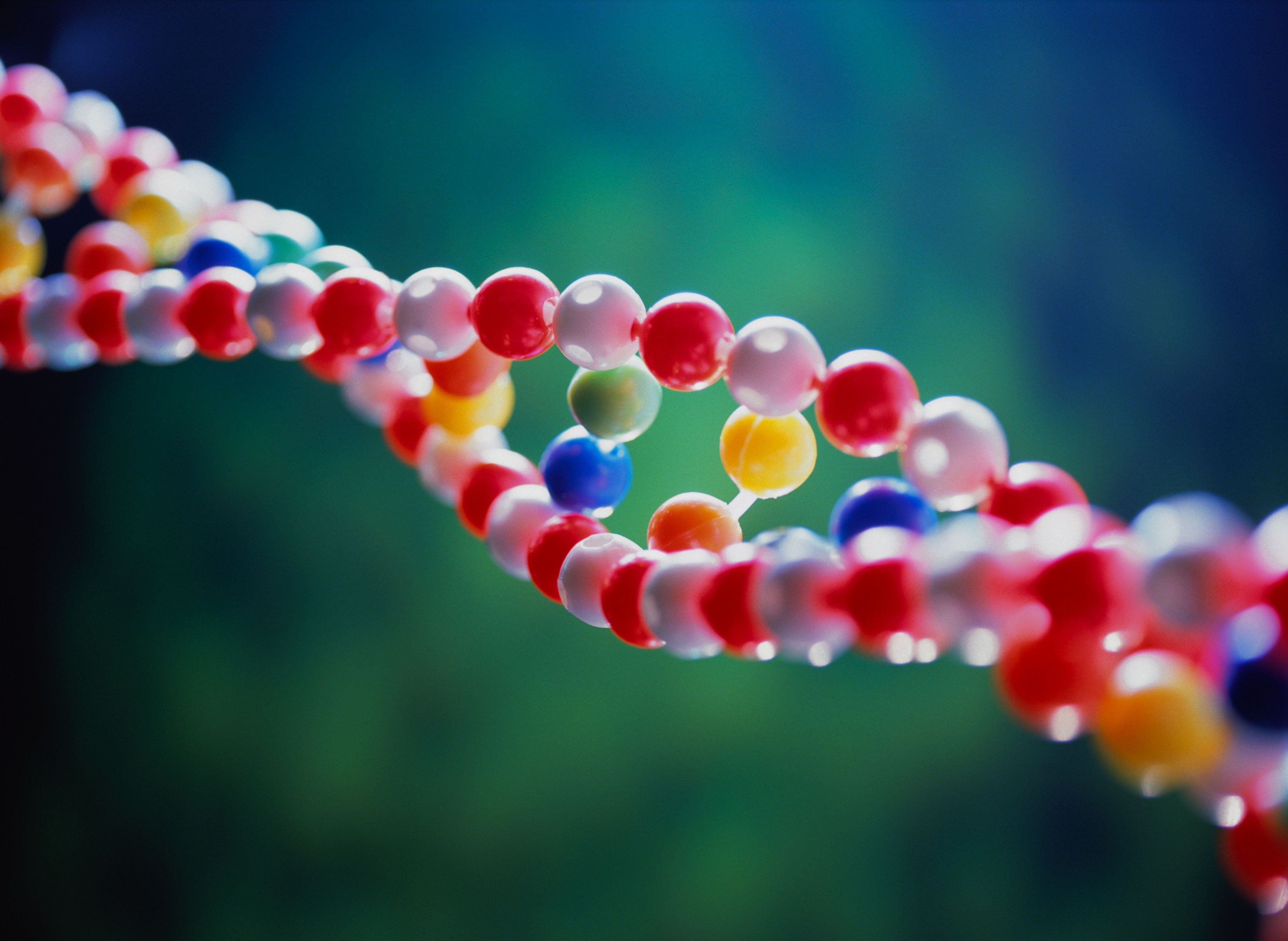
Which of the following describes the shape of a DNA molecule?

a)

double helix

b)

sphere

c)

pyramid

d)

rectangle

2.
What does DNA stand for?
a)
Deoxyribonucleic acid
b)
Denitrogenous acid
c)
Deribonucleic acid
d)
Diribonucleic acid
3.

Name this structure

a)

double helix

b)

nucelotide

c)

twisted ladder

d)

hydrogen bond

4.

The letters of the DNA alphabet are:

a)

A, C, G and T

b)

A, O, G, and T

c)

C, G, P and T

d)

C, G, T and D

5.

Why is DNA important?

a)

It gives each cell instructions on how to do its job.

b)

It is what the cell membrane is made of.

c)

It helps the cell use water.

d)

It is food for the cell.

6.

In the DNA alphabet, T always pairs with:

a)

A

b)

T

c)

G

d)

C

7.

In the DNA alphabet, C always pairs with:

a)

A

b)

C

c)

T

d)

G

8.

A group of three letters on DNA is called a:

a)

Helix

b)

Sugar

c)

Phosphate

d)

Codon

9.

A gene tells the cell how to make a __________.

a)

Sugar

b)

Phosphate

c)

Protein

d)

Ribosome

10.

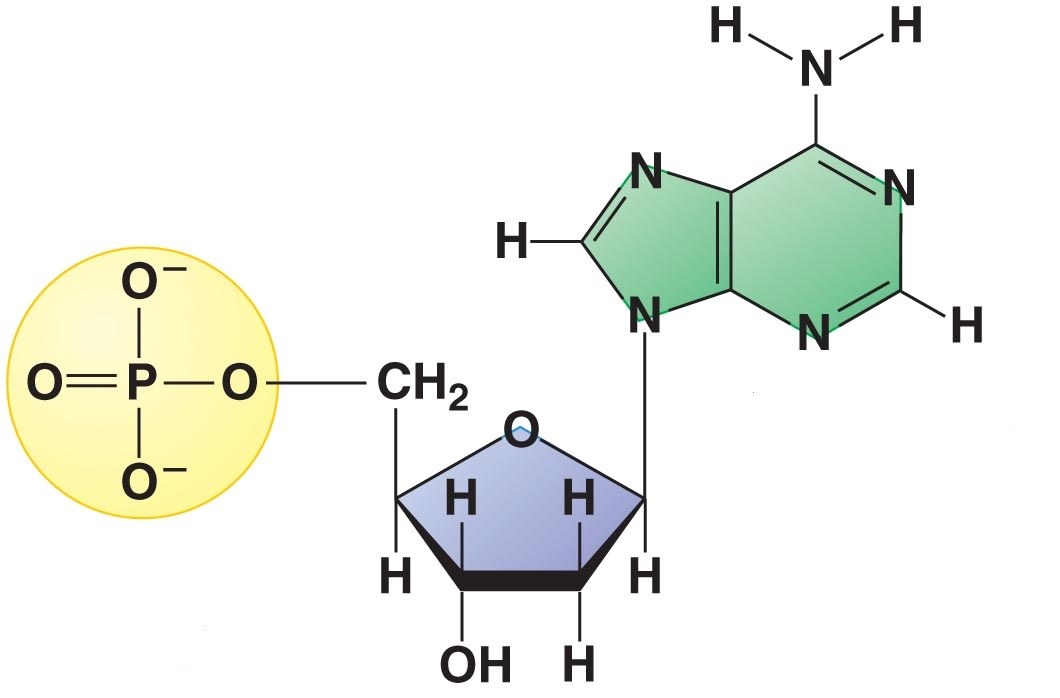
The three parts of a nucleotide are:

a)

Sugar, protein, letter from DNA alphabet

b)

Sugar, phosphate, letter from DNA alphabet

c)

Phosphate, protein, letter from DNA alphabet

d)

Phosphate, sulphur, letter from DNA alphabet

11.
DNA is a polymer made of:
a)
Nucleotides
b)
Ribosomes
c)
Purines
d)
Pyrimidines
12.
Why is DNA important?
a)
it is very small and very complicated
b)
it's in everything
c)
it serves as the blueprint for traits of all living things
d)
because we eat it every day for energy
13.
In a molecule of double-stranded DNA, the amount of Adenine present is always equal to the amount of
a)
cytosine
b)
guanine
c)
thymine
d)
uracil
14.
Which organelle is DNA usually found in?
a)
cell membrane
b)
vacuole
c)
ribosome
d)
nucleus
15.
DNA codes for...
a)
bases
b)
proteins
c)
amino acids
d)
phosphates
16.
Name this structure
a)
double helix
b)
nucelotide
c)
twisted ladder
d)
hydrogen bond
17.
Which two scientists are accredited with correctly deducing the double helix model of DNA?
a)
Watson and Crick
b)
Wilkins and Franklin
c)
Wilkins and Crick
d)
Watson and Franklin
18.
Which series is arranged in order from largest to smallest in size?
a)
gene, chromosome, nucleus, cell, DNA, nucleotide
b)
cell, nucleus, chromosome, DNA, gene, nucleotide
c)
nucleotide, chromosome, cell, DNA, nucleus
d)
cell, DNA, gene, nucleotide, nucleus, chromosome
19.

Genetic information usually flows in one specific direction. Which of the following best represents this flow?

a)

DNA ->protein -> RNA ->Ribosome

b)

Protein ->DNA

->RNA ->Ribosome

c)

RNA ->Ribosome ->Protein ->DNA

d)

DNA ->RNA ->Ribosome ->Protein

20.

If 30% of an individuals DNA is composed of C's, what percentage contains G's?

a)

30%

b)

70%

c)

35%

d)

40%

21.
Replicate the following strand of DNA: 
AATCATGGA
a)
AATCATGGA
b)
TTAGTACCT
c)
UUAGUACCU
d)
GGATAUCUA
22.
The enzyme that unzips the DNA to prepare for replication
a)
helicase
b)
replicase
c)
polymerase
d)
synthase
23.
T - tall and t = short
In the punnett square below, what belongs in the missing square
a)
tt
b)
Tt
c)
Bb
d)
TT
24.
B = brown fur  b = white fur
In the punnett square, what is the probability for white fur? 
a)
0%
b)
25%
c)
50%
d)
75%
25.
In the punnett square shown, what is the genotypes of the two parents?
a)
RW and RR
b)
RW and WW
c)
RR and WW
d)
RW and RR
26.
Dominant or recessive?
tt
a)
Dominant 
b)
Recessive
27.
Which of the following is a phenotype?
a)
Aa
b)
black hair
c)
heterozygous genes
d)
mutated DNA
28.

CROSSING OVER INCREASES

a)

LIFE SPAN

b)

GENETIC VARIATION

c)

THE NUMBER OF OFF-SPRING

d)

ALL ARE TRUE

29.
Which process and type of resulting cells are represented?
a)
mitosis, gametes
b)
mitosis, body cells
c)
meiosis, gametes
d)
meiosis, body cells
30.
A male shark has 40 chromosomes in each of its sex cells. How many would be present in its body cells?
a)
20
b)
40
c)
80
d)
160
31.
Which letter(s) in the diagram correspond to cells that are haploid? 
a)
A
b)
B
c)
C
d)
A and B
32.
Compared to the number of chromosomes contained in a body cell, how many chromosomes would normally be contained in a gamete?
a)
The same number
b)
One-fourth as many
c)
Twice as many
d)
Half as many
33.
Why are advantageous traits more likely to be passed onto offspring?
a)
Because they are more likely to survive and reproduce.
b)
Because they come from dominant alleles.
c)
Because they come from recessive alleles.
d)
Because the trait is an acquired phenotype.
34.

The diagram shows homologous chromosomes during prophase I of meiosis. Which of the following correctly describes the process being illustrated?

a)

Segregation of sister chromatids

b)

Mutation in which the DNA content of the gene is altered

c)

Crossing over in which alleles are exchanged

d)

Condensation and segregation of alleles

35.
What is the process that copies information from DNA into RNA?
a)
protein synthesis
b)
transcription
c)
translation
d)
DNA Polymerase
36.

Which organelle makes proteins?

a)

ribosome

b)

nucleus

c)

mitochondria

d)

chloroplast

37.

What is translation?

a)

the process in which DNA is copied to make another molecule of DNA

b)

the process in which DNA is coded into mRNA

c)

the process in which mRNA is decoded into a protein

d)

the process in which enzymes break down mRNA

38.

The DNA sequence ATC-AGC-GCT-GGC is part of a gene. how many amino acids are coded for by this message?

a)

4

b)

8

c)

3

d)

12

39.

In RNA _______ matches with Adenine

a)

Uracil

b)

Guanine

c)

Cytosine

d)

Thymine

40.

In DNA _______ matches with Adenine

a)

Uracil

b)

Guanine

c)

Cytosine

d)

Thymine

41.

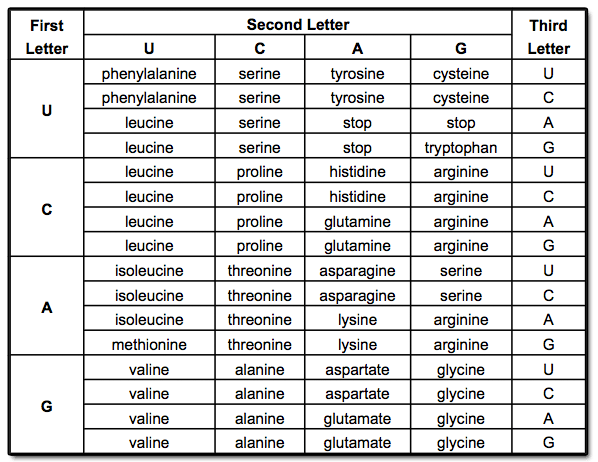
Which amino acid matches with the following codon:

GAU

a)

GLU

b)

SER

c)

ASP

d)

ILE

42.
What is the correct amino acid sequence for the mRNA code AUGCCAGUAUGA
a)
Met-Pro-Ala-Val
b)
Met-Pro-Val
c)
Tyr-Gly-His
d)
Tyr-Gly-Arg-His