wayground logo

Free Printable Worksheets

Font size

S
M
L
XL
Worksheets

Ecology Test Review

Total questions: 101

Worksheet time: 1hrs 23mins

Name
Class
Date
1.
What is the water cycle?
a)
the 3 forms of water
b)
the movement of water on, above, or below the surface of the Earth
c)
when water melts
d)
when clouds form
2.
What part of the water cycle does this picture show?
a)
condensation
b)
precipitation
c)
evaporation
3.
Snow, sleet, hail, and rain are all examples of  ________________. 
a)
evaporation
b)
condensation
c)
accumulation
d)
precipitation
4.
What is it called when plants give off water vapor as a waste product?
a)
condensation
b)
evaporation
c)
sublimation
d)
transpiration
5.
Precipitation happens when clouds of water droplets are too ______________.
a)
cold
b)
light
c)
heavy
d)
hot
6.
What does NOT produce carbon dioxide?
a)
Photosynthesis
b)
Burning Fossil Fuels
c)
Animal respiration
d)
Plants decaying
7.
Combustion is another word for __________.
a)
Transportation
b)
Respiration
c)
Fossil Fuels
d)
Burning
8.
Which of the following removes carbon from the atmosphere?
a)
Combustion
b)
Respiration
c)
Photosynthesis
d)
Death
9.
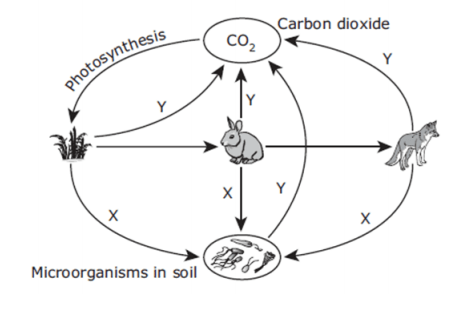
The diagram shows the flow of organic molecules through an ecosystem. What two processes are identified by the labels X and Y?
a)
X : Respiration
Y : Predation
b)
X : Adaptation
Y : Decomposition
c)
X : Fermentation
Y : Nitrogen Fixation
d)
X : Decomposition
Y : Respiration
10.

Which nitrogen cycle process is occurring when bacteria convert ammonium to nitrite and then into nitrate?

a)

nitrogen fixation

b)

nitrification

c)

denitrification

d)

ammonification

e)

assimilation

11.

What is the name of NH3?

a)

ammonia

b)

ammonium

c)

nitrate

d)

nitrite

e)

nitrous oxide

12.

Which of these nitrogen molecules would be present in the atmosphere?

a)

NH3

b)

NH4+

c)

NO3-

d)

N2

13.

Which of these nitrogen cycle processes converts atmospheric nitrogen to a soil form of nitrogen that is usable by plants?

a)

nitrogen fixation

b)

nitrification

c)

denitrification

d)

ammonification

e)

assimilation

14.
_____ brings phosphorous into our waterways. .
a)
precipitation
b)
runoff
c)
transpiration
d)
condensation
15.
Which of the following statements is true of the phosphorus cycle?
a)
Phosphorus enters the atmosphere as phosphates.
b)
The phosphorus cycle utilizes the processes of erosion, and weathering.
c)
Phosphates are used in carbohydrate and glucose storage.
d)
The phosphorus cycle utilizes bacteria to breakdown phosphates and make them available for plants.
16.
What role do decomposers play in the phosphorous cycle?
a)
absorb phosphorous 
b)
release phosphorous into atmosphere
c)
return phosphorous into the soil
d)
combustion
17.

What is the carrying capacity of the graph?

a)

1000

b)

8000

c)

800

d)

600

18.

What happens if a population grows past its carrying capacity?

a)

The population keeps growing

b)

The population starts to die off

c)

The entire species will go extinct

d)

The carrying capacity just increases

19.
Organisms that break down organic matter are
a)
autotrophs
b)

decomposers

c)
heterotrophs
d)
producers
20.
A trophic level is a 
a)
type of producer
b)
feeding level
c)
result of biomagnification
d)
term for energy lost in a food chain
21.
Organisms that make their own food are
a)
consumers
b)
detritovores
c)
heterotrophs
d)
producers
22.
The greenfly is the the
a)
decomposer
b)
primary consumer
c)
producer
d)
secondary consumer
23.
A trophic level is a 
a)
type of producer
b)
feeding level
c)
result of biomagnification
d)
term for energy lost in a food chain
24.
Organisms that make their own food are
a)
consumers
b)
detritovores
c)
heterotrophs
d)
producers
25.
The pigment used by plants to do photosynthesis is
a)
chloroplasts
b)
chlorophyll
c)
mitochondria
d)
glucose
26.
The cell part that makes energy in the form of ATP
a)
chlorophyll
b)
chloroplast
c)
mitochondria
d)
ribosome
27.
The greenfly is the the
a)
decomposer
b)
primary consumer
c)
producer
d)
secondary consumer
28.
Which organism is the tertiary consumer?
a)
greenfly
b)
ladybug
c)
robin
d)
hawk
29.
Omnivores consume
a)
consumers
b)
dead and decaying organisms
c)
producers
d)
consumers and producers
30.
What percent of the energy stored in an organism is lost to the next trophic level?
a)
10%
b)
25%
c)
50%
d)
90%
31.
What are the PRODUCTS of photosynthesis?
a)
CO2 + sugar
b)
CO2 + water
c)
CO2 + O2
d)
O2 + sugar
32.
What is brought in from the air during respiration?
a)
carbon dioxide
b)
oxygen
c)
glucose
d)
water
33.
The build up of toxins in the upper levels of a food chain is called
a)
autrophism
b)
biomagnification
c)
heterotrophy
d)
respiration
34.
Which organism is both a primary and secondary consumer?
a)
birds
b)
foxes
c)
owls
d)
grasshoppers
35.
If the rabbits are removed 
a)
foxes would increase
b)
carrots would increase
c)
mice would decrease
d)
birds would increase
36.
In the equation for photosynthesis is energy a reactant or a product?
a)
reactant
b)
product
37.
A detritovore is a
a)
autotroph
b)
decomposer
c)
heterotroph
d)
producer
38.
What percent of the energy stored in an organism is lost to the next trophic level?
a)
10%
b)
25%
c)
50%
d)
90%
39.
What are the PRODUCTS of photosynthesis?
a)
CO2 + sugar
b)
CO2 + water
c)
CO2 + O2
d)
O2 + sugar
40.
The build up of toxins in the upper levels of a food chain is called
a)
autrophism
b)
biomagnification
c)
heterotrophy
d)
respiration
41.
Which organism is both a primary and secondary consumer?
a)
birds
b)
foxes
c)
owls
d)
grasshoppers
42.
If the rabbits are removed 
a)
foxes would increase
b)
carrots would increase
c)
mice would decrease
d)
birds would increase
43.
Cattle egrets forage (feed) in fields among cattle. The egret gets easy access to flying insects stirred up by the cattle, and the cattle don't care if they are there or not.
a)
mutualism
b)
commensalism
c)
competition
d)
parasitism
44.
A relationship between two organisms in which one organism benefits and the other is unharmed...
a)
Mutualism 
b)
Competition
c)
Parasitsm 
d)
Commensalism 
45.

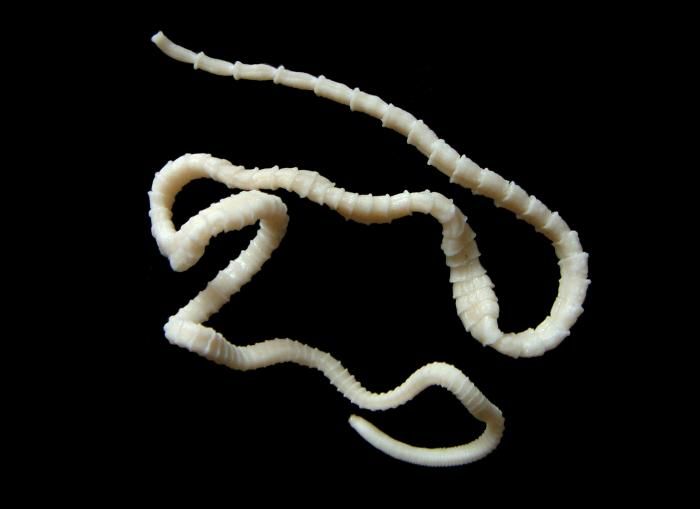
A tapeworm lives in the intestine of a cat absorbing nutrients through its skin. A tapeworm and a cat have this type of relationship.

a)

mutualism

b)

parasitism

c)

commensalism

d)

competition

46.
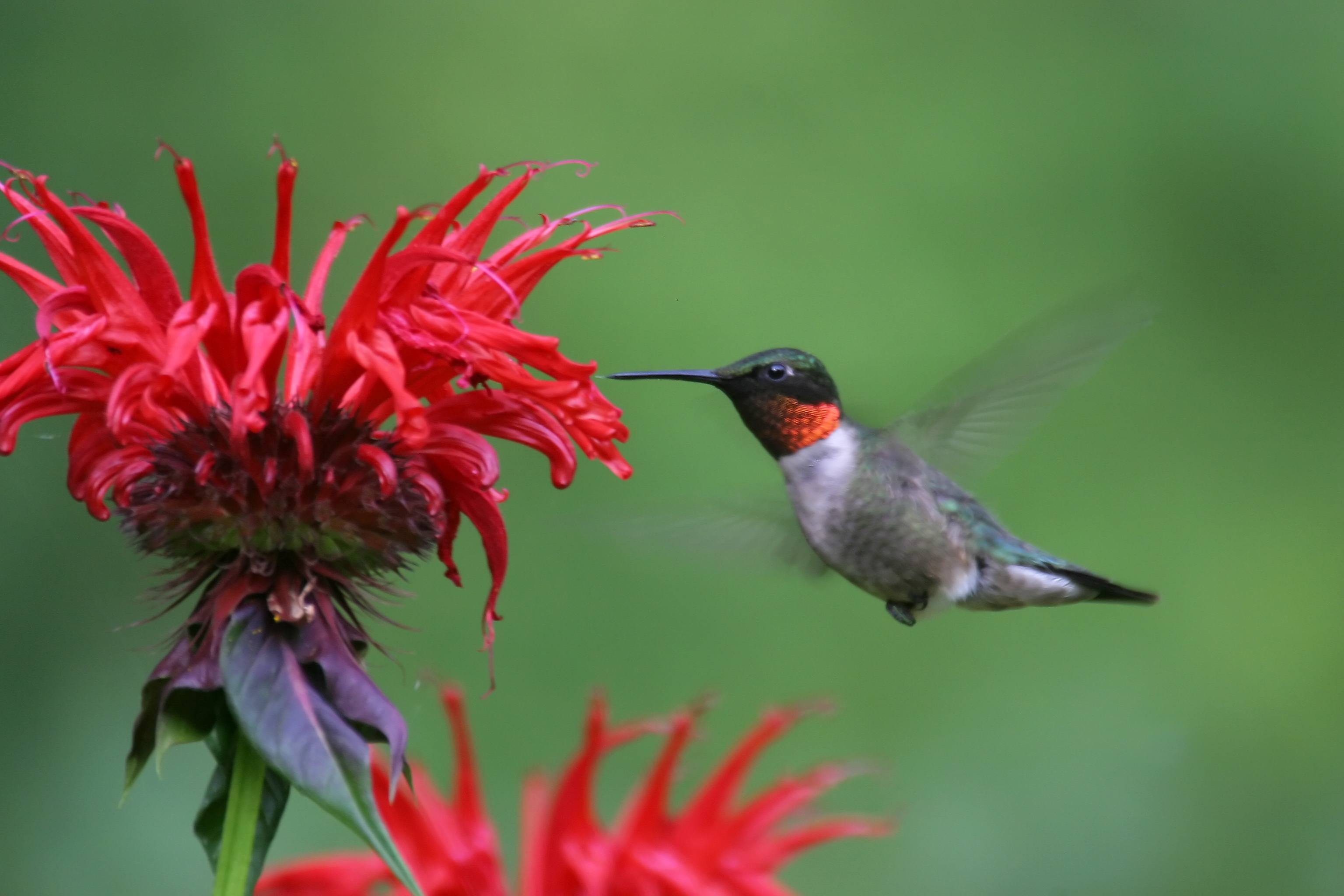
What type of symbiosis?  Hummingbirds feed on nectar from flowers.  The flowers are pollinated by hummingbirds as they move from flower to flower.
a)
commensalism
b)
mutualism
c)
parasitism
d)
predation
47.
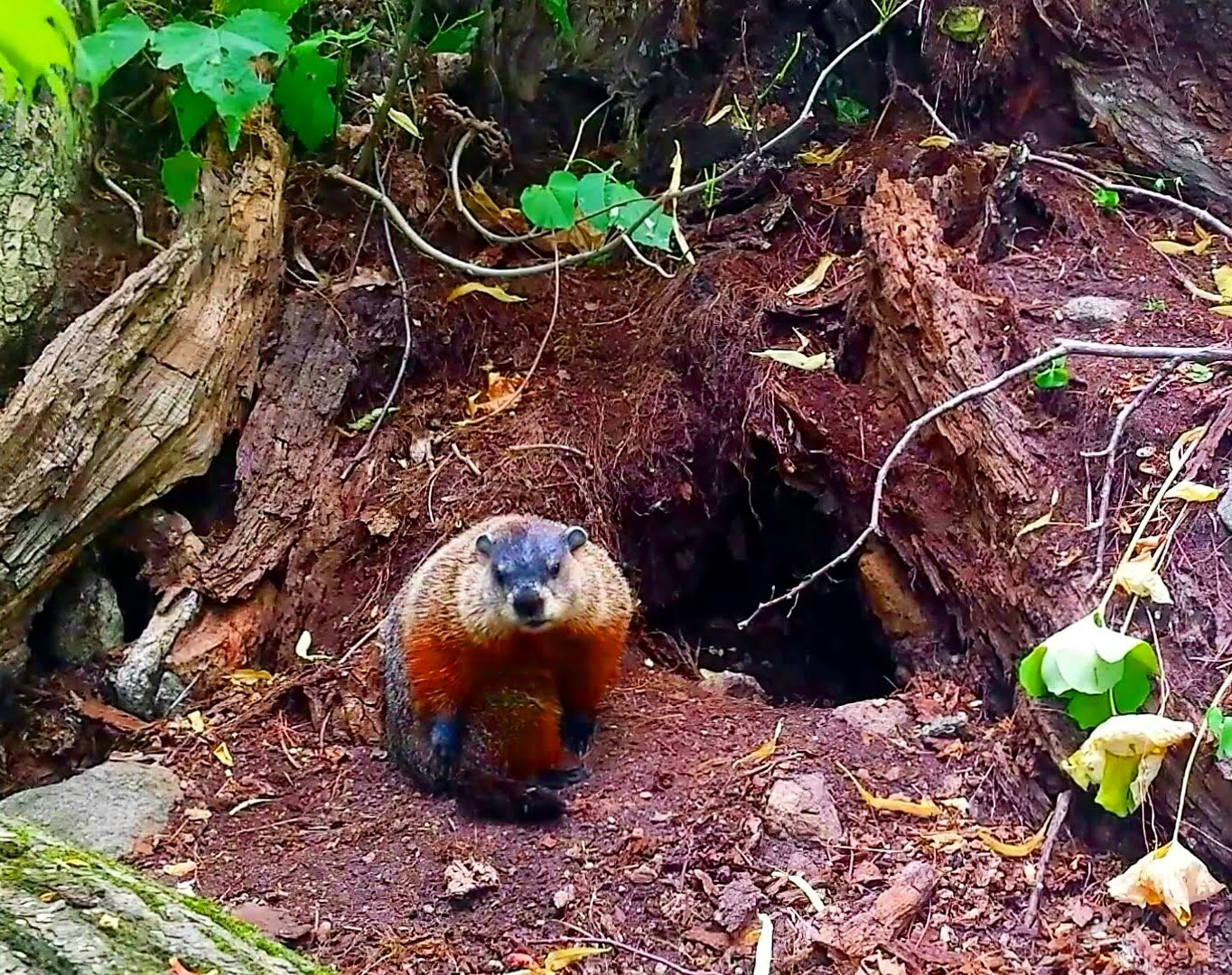
What type of symbiosis?  Skunks often live in burrows that have been dug and abandoned by woodchucks.  
a)
commensalism
b)
mutualism
c)
parasitism
d)
predation
48.
Which symbols best describe parasitism?
a)
+,+
b)
+,-
c)
+,0
d)
-,0
49.
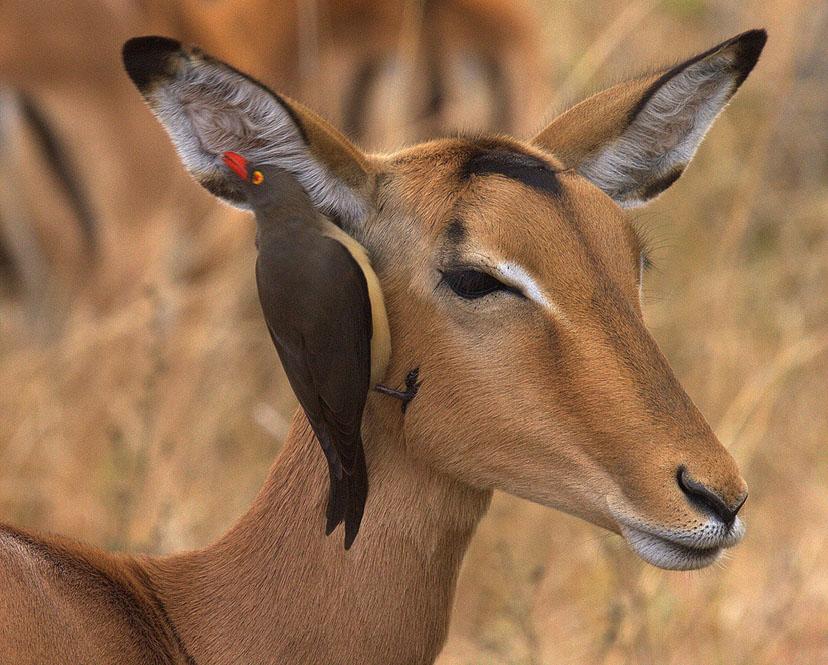
Red-billed oxpeckers are birds that often feed on parasites that infest impala.  This is an example of _______.
a)
commensalism
b)
mutualism
c)
neutralism
d)
competition
50.
A relationship between two organisms in which both organisms benefit. 
a)
Mutualism 
b)
Competition
c)
Parasitsm 
d)
Commensalism 
51.
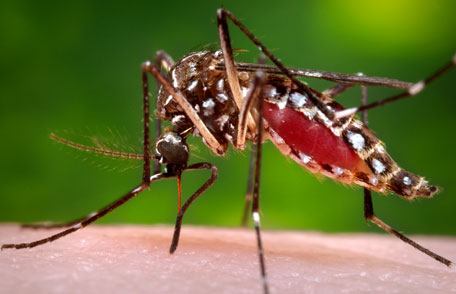
When a mosquito bites you, you are the __________ and the mosquito is the  ____________.
a)
host, hostess
b)
parasite, host
c)
host, parasite
d)
prey, predator
52.

Living, or produced by living things

a)

Environmental Factor

b)

Abiotic Factor

c)

Genetic Factor

d)

Biotic Factor

53.

More than one individual or population in an ecosystem that relies upon the same limited resource

a)

Limited Resource

b)

Competition

c)

Dependent Interaction

d)

Organism

54.

Something that is needed by organisms and is not infinite in its abundance in the environment; if it is exhausted, then the organisms that need it cannot survive

a)

Resources

b)

Limited Resources

c)

Competition

d)

Population

55.

A group of interacting individuals or the same species located in the same area

a)

Secondary Consumer

b)

Biotic Factor

c)

Primary Consumer

d)

Population

56.

When two or more individuals or population attempt to obtain a single resource

a)

Competitive Exclusion

b)

Environmental Interactions

c)

Ecosystem

d)

Limited Resources

57.

Not living, or produced by living

a)

Biotic Factor

b)

Environmental Factor

c)

Abiotic Factor

d)

Genetic Factor

58.
What is formed during primary succession that doesn't need to be formed during secondary succession?
a)
pioneer species
b)
soil
c)
climax community
d)
lichens
59.
What type of succession is shown going from figure A to figure B?
a)
primary succession
b)
eutrophication
c)
secondary succession
d)
intermediate
60.
After a forest fire, an ecosystem would start regrowth through -
a)
primary succession
b)
secondary succession
c)
climax community
d)
limiting factors
61.
Which catastrophic event will most likely have the effect of returning an ecosystem to primary succession?
a)
A tornado
b)
A volcanic eruption
c)
A flood
d)
A drought
62.

Which experiences the least change over time?

a)

Pioneer Species

b)

Primary Succession

c)

Aquatic Succession

d)

Climax Community

63.

What best describes the term succession?

a)

rapid changes that create an ecosystem overnight

b)

gradual changes over time to fully create or restore and ecosystem

c)

forest with the tallest trees

d)

the rate species produce offspring

64.

At what population was carrying capacity met?

a)

250

b)

1000

c)

400

d)

720

65.

Exponential population growth can be described as

a)

growth when resources are limited

b)

a j-shaped curve

c)

a s-shaped curve

d)

growth that reaches carrying capacity

66.

Logistic population growth can be described as

a)

growth when resources are limited

b)

a s-shaped curve

c)

reaching carrying capacity

d)

all of the above

67.

What limits Population Growth?

a)

birth rates increasing

b)

resources being used up

c)

natural selection taking place

d)

none of the above

68.

Which country will have the most rapid population growth?

a)

Sweeden

b)

United States

c)

Mexico

d)

None

69.

Density-independent limiting factors to population growth includes

a)

stress from overcrowding

b)

parasitism

c)

competition

d)

natural disasters

70.

As resources become less available the growth of a population

a)

slows or stops

b)

decreases or increases

c)

up or down

d)

in or out

71.

What is a condition that halts population growth?

a)

limiting factors

b)

renewable resources

c)

climate

d)

conservation

72.

What could cause exponential growth in population in a community?

a)

people lifting heavy stuff

b)

a community leaving

c)

someone spreading a plague

d)

people moving to the community/unlimited resources

73.

Three factors can affect population size

a)

births, deaths, immigration and emigration

b)

deaths, birth, buildings

c)

photosynthesis, weather, deaths

d)

houses, weather, heath

74.
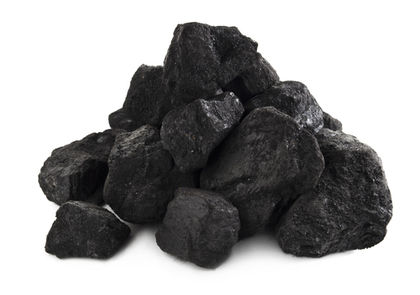
Coal is a __________ energy resource.
a)
Renewable
b)
Nonrenewable
75.
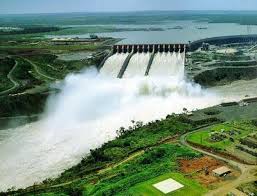
Hyrdo Power is a __________ energy resource.
a)
Renewable
b)
Nonrenewable
76.
Oil is a __________ energy resource.
a)
Renewable
b)
Nonrenewable
77.

What is a Natural Resource?

a)

Things we can get from nature.

b)

Goods made by people that are used to make other goods.

c)

The people who do the work or labor.

d)

The money that we use to buy things.

78.

Resources that cannot be replaced

a)

Conservation

b)

Renewable Resource

c)

Non-Renewable Resource

d)

Natural Resource

79.

Conservation is using resources without care.

a)

True

b)

False

80.

To convert used goods into reusable material

a)

Recycle

b)

Conservation

c)

Reduce

d)

Renewable Resource

81.
The presence of wastes, such as plastic bags and motor oil, in lakes and streams miles away from developed areas suggests that
a)
. ecosystems are interconnected and human action can alter ecosystem equilibrium.
b)
recycling programs have failed to conserve biotic resources.
c)
natural processes can alter ecosystem stability.
d)
 direct harvesting practices have led to irreversible destruction of ecosystems.
82.

Which of these is one cause of deforestation?

a)

Urbanization

b)

Buying a Christmas tree during the holidays

c)

Overbreeding birds in the wild

d)

Cutting down the tree in your backyard

83.

Which of the following is NOT a threat to biodiversity?

a)

Pollution

b)

Deforestation

c)

Invasive Species

d)

Ecological Succession

84.

The threat to biodiversity that occurs when the homes of different species are destroyed

a)

pollution

b)

habitat destruction

c)

overexploitation

d)

climate change

85.

When human-made chemicals and garbage find their way into nature and harm the air, soil, and water it is called

a)

pollution

b)

habitat destruction

c)

overexploitation

d)

climate change

86.

The largest threat to biodiversity is

a)

bacteria

b)

fungi

c)

humans

d)

plants

87.
Why are fossil fuels a nonrenewable resource? 
a)
they take millions of years to replace 
b)
they can be used over and over again
c)
they are used to heat and light homes 
d)
they cause air and water pollution 
88.
What is the major cause for air pollution? 
a)

Burning of fossil fuels

b)
cigarretes 
c)
deforestation
d)
oil spills
89.
Increased carbon dioxide may cause global warming by trapping more ____________ in the atmosphere.
a)
water
b)
gases
c)
heat
d)
water vapor
90.
Which of the following is the best conclusion that can be made from this graph?
a)
atmospheric carbon dioxide levels have been decreasing since 1960
b)
Hawaii has a lot of carbon dioxide
c)
humans have been working hard to decrease carbon dioxide levels
d)
atmospheric carbon dioxide levels have increased steadily since 1960
91.

The main human activity that releases greenhouse gases is

a)

riding bicycles

b)

burning fossil fuels

c)

texting on cellphones

d)

eating meat

92.

All living things on earth are part of the....

a)

Biosphere

b)

Lithosphere

c)

Hydrosphere

d)

Cryosphere

93.

How much of water on Earth is FRESH SURFACE water?

a)

0.3%

b)

3%

c)

97%

d)

30%

94.

Which of the following affects how freshwater is used?

a)

Age

b)

Population size

c)

Education

d)

GPA

95.

We can prevent water pollution by:

a)

Reduce the use of plastic.

b)

Properly dispose of chemicals.

c)

Clean up after your animals.

d)

All of the above

96.

What are the main sources of water pollution?

a)

Agriculture (farming) and industry

b)

Snails in water

97.

Eutrophication is

a)

too few nutrients in a body of water.

b)

too many nutrients in a body of water.

c)

high acid levels in a body of water.

d)

high alkalinity levels in a body of water.

98.

Pollution traced to a single point

a)

water shed

b)

permeable

c)

point source pollution

d)

non-point source pollution

99.

Pollution that cannot be traced to a single point because comes from many sources

a)

estuary

b)

water shed

c)

non point source pollution

d)

point source pollution

100.

Organisms that eat dead and decaying matter

a)

Herbivores

b)

Detritivores

c)

Carnivores

d)

Decomposers

101.

What is the difference between a detritivore and decomposer

a)

Decomposers eat dead things, detritivores break decaying things down

b)

Detritivores eat dead and decaying things, decomposers break decaying things down

c)

They're the same thing

d)

Decomposers recycle nutrients, detritivores is not a real word