
 Worksheets
Climate and Weather Review
Total questions: 47
Worksheet time: 33mins

The _____________ is the source of all energy on earth and powers the water cycle.
water
wind
rain
sun
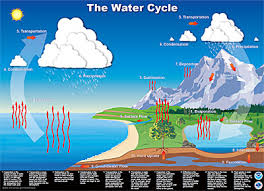
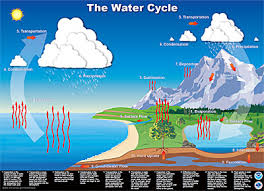
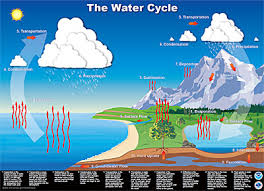
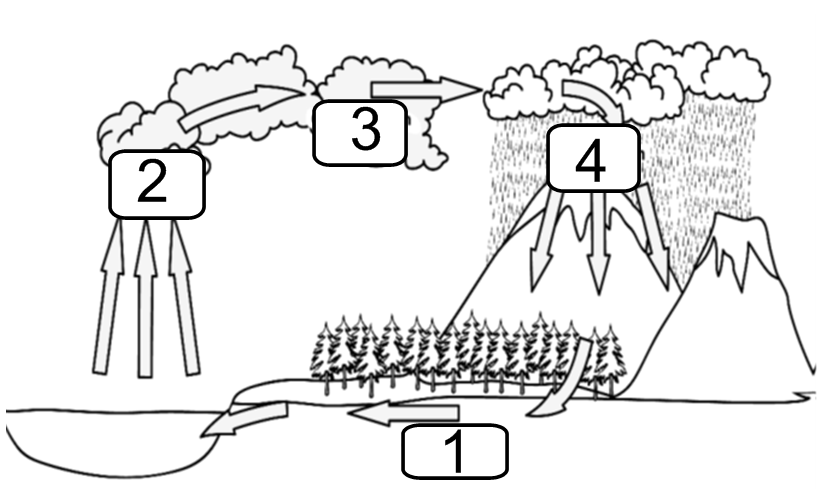
Which water cycle processes are directly related to cloud formation?
melting and freezing
precipitation and evaporation
evaporation and condensation
What is humidity?
Water, in liquid or solid form, that falls from the atmosphere.
The atmospheric conditions, along with short-term changes, of a certain place at a certain time.
The amount of water vapor in the air.
The force that a column of air applies on the air or a surface below it.
________________ is the pressure that a column of air exerts on the surface below it.
Air pressure
Dew point
Precipitation
Condensation
Which of the following is not a variable used to describe the weather?
Humidity
Temperature
Altitude
Wind speed
What happens to air pressure as altitude decreases?
It increases
It decreases
It goes away completely
It is transferred into precipitation
Which instrument is used to measure air pressure?
Thermometer
Anemometer
Graduated cylinder
Barometer
What is the difference between humidity and relative humidity?
Relative humidity compares the actual humidity to the amount of water vapor the air could hold at the given air pressure.
Humidity compares the relative humidity to the amount of water vapor the air could hold at the given air pressure.
Relative humidity compares the actual humidity to the amount of water vapor the air could hold at the given temperature.
Humidity compares the relative humidity to the amount of water vapor the air could hold at the given temperature.
What is the difference between snow and sleet?
Sleet solidifies as it falls and snow solidifies in the clouds.
Sleet is a liquid and snow is a solid.
Sleet is made of a different molecule than snow.
Sleet is a solid and snow is a liquid.
What is fog?
The series of natural processes by which water continually moves among oceans, land, and the atmosphere.
A suspension of water droplets or ice crystals close to or at Earth's surface.
Small droplets surrounded by thousands of other droplets that block and reflect light.
Water, in liquid or solid form, that falls from the atmosphere.
the name of the instrument used to measure wind speed
meter stick
anemometer
barometer
water in it's liquid or solid form, that falls from the atmosphere
rain
precipitation
air
clouds
What are the different types of precipitation?
rain, ice, ocean
sleet, rain, snow, hail
snow, thunderstorms, tornados
earthquake, hail, sleet
the series of natural processes by which water continually moves among oceans, land, and the atmosphere
fog
air pressure
the water cycle
wind
________________ are made of water vapor that condenses in the atmosphere.
dew
clouds
evaporation
transpiration



An area of low rainfall on the downwind slope of a mountain is called what?
climate
the Gulf stream
a microclimate
a rain shadow
What the area of the earth called which gets the most sun?
polar
equator
latitudes
earths peak
Whats the difference between a climate and a micro climate?
There are no differences
Climate is the whole region while microclimate is areas within a region
Microclimate is the whole region while climate is areas within a region
What does specific heat refer too?
The heat it takes to raise the temperature of a object.
The heat it takes to cool the remperature of a object.
How hot an object can get.
None of the above.
Which can influence the climate of an area?
latitude
large bodies of water
the Moon
mountains
buildings and concrete
Height above sea level:
latitude
longitude
altitude
attitude
What are four factors that affect climate?
latitude
proximity (closeness) to large body of water
earthquakes
ocean currents
elevation
Who divided the the world's climate in categories?
Wladimir Koppen
Marie curie
Albert Einstein
Greta Thumberg
Vladimir koppen
1. Some mountains located near the Earth's Equator have snow-covered peaks.
2. Icecaps exist at the Earth's poles.

How does latitude affect the climate of an area?
The higher the latitude, the warmer the temperature.
The higher the latitude, the lower the temperature.
The higher the latitude, the more precipitation.
The higher the latitude the less precipitation.

