
 Worksheets
Life Science Final Exam
Total questions: 35
Worksheet time: 31mins
4. What does multicellular means?
1. one cell
2. no cell
3. many cell
Homeostasis
allows for a wildly fluctuating internal environment
is impossible in vertebrates
is the maintenance of a relatively stable internal environment and often incorporates a form of feedback regulation
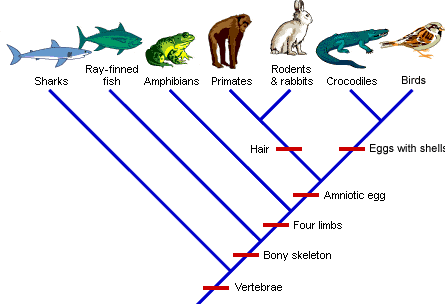
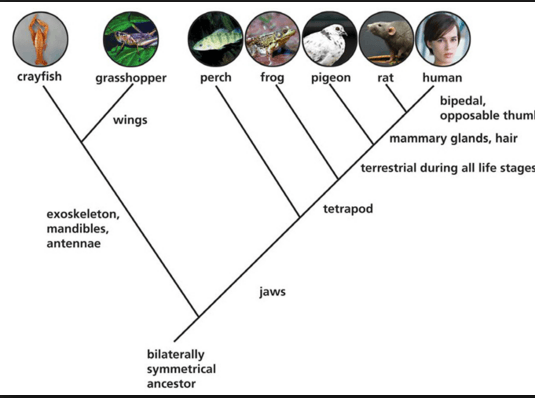
What are the 6 kingdoms of life?
(a)
_______ are the smallest units of life because they grow, reproduce, respond, and use energy.
atoms
elements
cells
all of the above
Prokaryotic cells are different than eukaryotic cells because they
have a nucleus
have mitochondria
lack a nucleus
get their energy from the sun
A cell wall...
is very soft and flexible
is very rigid, and supports the plant cell, giving it its shape
is the part that is inside the plant's nucleus
Passive Transport is the movement of particles across the membrane from an area of [ ___ ] to an area of [ ___ ]
high to low
low to high
low to low
high to high
_____________ is the free movement of particles across the membrane with the concentration gradient
diffusion
facilitated diffusion
active transport
fusion
Mitosis is the division of a cell’s ________ while a cell is dividing into 2 identical cells.
Nucleus
Mitochondria
Cell Membrane
Cytoplasm
What is a genotype?
Pair of alleles that determine a specific trait
Observable physical trait
A trait that is observed with only one copy of an allele
What is a phenotype?
Pair of alleles that determine a trait
Observable physical trait
Different forms of a gene
What is a dominant gene?
A trait that is observed when there are one OR two copies of the allele
A trait that is observed only when there are two copies of the allele
A trait that can be hidden in a generation
A person who is homozygous for a trait can have a genotype of....
AA, Aa
Aa, aa
AA, aa
aa
If a person is heterozygous for a trait, their genotype can be...
Aa
AA, aa
AA, Aa
AA

What is the missing pairing?
AA
Aa
aa

Based on the missing letter, what is the parent's genotype?
AA
Aa
aa

What is a variation?
a difference between individuals of the same species
the same trait between individuals
What is an adaptation?
A feature that helps only a plant grow.
A feature that helps a living thing survive.
A feature that helps a living thing walk.
A feature that that helps only animals survive.
Bacteria are....(select all that apply)
Single-celled organisms
Multi-cellular organisms
Eukaryotes
Prokaryotes

What shape are these bacteria?
cocci
bacili
spirilla
linguine

What shape are these bacteria?
cocci
bacilli
spirilla
fusilli

What shape are these bacteria?
cocci
bacilli
spirilla
tortellini
Type of medicine used to kill bacterial infections.
vaccine
antibiotics
pasteurization
vitamins
takes over the cell's functions.
Oh my
(a)

