wayground logo

Free Printable Worksheets

Font size

S
M
L
XL
Worksheets

Chemistry revision

Total questions: 98

Worksheet time: 3hrs 16mins

Name
Class
Date
1.

Cracking is defined as which one of the following?

a)

The thermal decomposition of alkAnes.

b)

The thermal decomposition of alkEnes.

c)

The separation of a mixture of alkAnes.

d)

The separation of a mixture of alkEnes.

2.

Fractional distillation is a separation technique. It is best described as which one of the following?

a)

A physical change

b)

A chemical change

3.

During cracking which of the following conditions are often required?

a)

High temperature

b)

A catalyst

c)

High pressure

d)

Low temperature

4.

In the fractional distillation of petroleum (crude oil), the term fraction refers to what?

a)

A group of compounds with a similar number of carbon atoms.

b)

A group of compounds with similar boiling points.

c)

A group of compounds with similar uses.

d)

A group of compounds with similar molecular masses.

5.

Which property of the molecules in the mixture does fractional distillation take advantage of?

a)

Boiling point

b)

Melting point

c)

Density

d)

Mass

6.

Why is cracking carried out in industry?

a)

Short chain alkanes are useful as fuels.

b)

Alkenes are useful for making plastics.

c)

Hydrogen formed can be used in the production of ammonia.

d)

All of the answers here.

7.

In which list are the fractions of petroleum shown in order of increasing number of carbon atoms?

a)

Refinery gas < Gasoline < Kerosene < Residue

b)

Refinery gas < Kerosene < Gasoline < Residue

c)

Gasoline < Refinery Gas < Kerosene < Residue

d)

Gasoline < Refinery Gas < Residue < Kerosene

8.

In catalytic cracking which of the following is the catalyst used?

a)

Silicon (IV) oxide

b)

Potassium manganate (VII)

c)

Finely divided iron

d)

Vanadium (V) oxide

9.
What subatomic particles would you find in the nucleus of an atom?
a)
Protons only
b)
Protons and Neutrons
c)
Neutrons and Electrons
d)
Protons and Electrons 
10.
What subatomic particle is electrically neutral (no charge)?
a)
Proton
b)
Ion
c)
Neutron
d)
Electron
11.
What is the mass of an atom if it has 11 protons, 12 neutrons, and 11 electrons?
a)
22
b)
11
c)
34
d)
23
12.
If an atom has 10 protons, 10 neutrons, and 10 electrons, what is the mass of the atom?
a)
10
b)
20
c)
30
13.
What subatomic particle(s) would be found orbiting the nucleus?
a)
Neutrons only
b)
Electrons only
c)
Protons and Neutrons
d)
Protons and Electrons
14.
Protons and Electrons balance the charge of an atom.
a)
True
b)
False
15.
Which subatomic particles contribute the most to the mass of an atom?
a)
Protons, Neutrons, Electrons
b)
Protons only
c)
Protons and Electrons
d)
Protons and Neutrons
16.
If an atom has 12 positively charged subatomic particles, which of the following must it also have to be considered a neutral atom?
a)
12 neutrons
b)
12 electrons
c)
12 protons
d)
24 protons and neutrons
17.
The smallest particle of any type of matter is known by which of the following terms?
a)
Element
b)
Compound
c)
Atom
d)
Chemical
18.
What particle uniquely identifies an element?
a)
Number of Valence Electrons
b)
Number of Protons
c)
Number of Electrons
d)
Atomic Mass
19.
What subatomic particle is positively charged and is located inside of the nucleus?
a)
Proton
b)
Neutron
c)
Electron
d)
Ion
20.
Which one of these is NOT located in the element square on the Periodic Table?
a)
Atomic Number
b)
Atomic Mass
c)
Room Temperature
d)
Chemical Symbol
21.
Where are electrons of an atom found?
a)
Nucleus
b)
Electron Cloud
c)
Some are in the nucleus and some in the electron cloud.
d)
They are moving everywhere.
22.
Electrons have this type of charge?
a)
negative
b)
positive
c)
neutral
23.
What is the atomic number for an element with three protons?
a)
2
b)
1
c)
3
d)
6
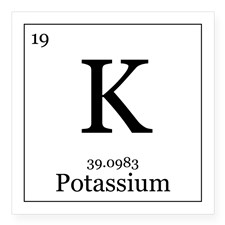
24.
How many neutron are in the atom "K"?
a)
7
b)
2
c)
39
d)
20
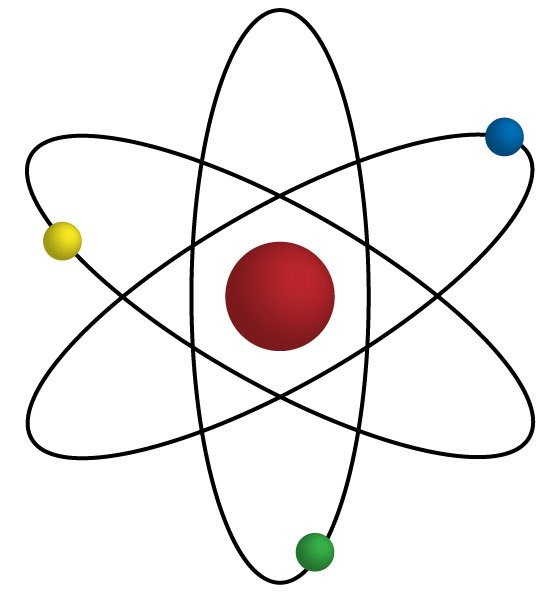
25.
What is the number of protons that the element in this image contain?
a)
14
b)
7
c)
15
d)
18
26.
What are the 3 particles that make-up the atom?
a)
protons, neutrons, and isotopes
b)
neutrons, isotopes, and electrons
c)
positives, negatives, and electrons
d)
protons, neutrons, and electrons
27.
The charge of a neutron in an atom.
a)
positive
b)
negative
c)
neutral
d)
+1
28.
This photos shows water molecules in which state of matter...
a)
Solid
b)
Liquid
c)
Gas
29.
What is the definition of the word "composition"?
a)
energy from the sun
b)
what something is made up of
c)
hydrogen and oxygen atoms bonded together
d)
the characteristics (or traits) of something
30.
Which of the following describes water molecules in the liquid state?
a)
Water molecules that are not moving at all.
b)
Water molecules that are moving at an extremely rapid rate.
c)
Water molecules that are broken apart a little bit and moving slightly.
d)
Water molecules that are made of hydrogen and oxygen.
31.
How does adding thermal energy to water in a liquid state affect the molecules?
a)
Adding thermal energy to a liquid causes the molecules to break apart form a crystal formation and begin to move.
b)
Adding thermal energy to a liquid causes the molecules to break apart even more and move at rapidly.
c)
Adding thermal energy to a liquid causes the molecules to slow down and begin to bond.
32.
What is the definition of the word "properties"?
a)
molecules that are bonded together
b)
heat energy applied to molecules
c)
atoms that are bonded together
d)
the characteristics (or traits) of something
33.
This photo shows water molecules in which state of matter?
a)
Gas
b)
Liquid
c)
Solid
34.
What is the definition of the term "thermal energy"?
a)
energy that comes from properties
b)
energy that comes from molecules
c)
energy that comes from heat
d)
energy that comes from hydrogen and oxygen
35.
How does removing thermal energy in a gaseous state affect the molecules?
a)
Removing thermal energy from a gas causes the molecules to slow down and bond in a crystal formation.
b)
Removing thermal energy from a gas causes the molecules to move very rapidly.
c)
Removing thermal energy from a gas causes the molecules to slow down and begin to bond with each other.
36.
Which of the following describes water molecules in the solid state?
a)
Water molecules that are moving at an extremely rapid rate.
b)
Water molecules that are made of hydrogen and oxygen.
c)
Water molecules that are not moving at all.
d)
Water molecules that are broken apart a little bit and moving slightly.
37.
Which atoms bond together to create a water molecule?
a)
Oxygen and Hydrogen
b)
Carbon and Oxygen
c)
Hydrogen and Helium
d)
Helium and Carbon
38.
What are water's unique properties?
a)
It is what humans drink.
b)
It is everywhere.
c)
It is clear.
d)
It can be all 3 states of matter.
39.
Which of the following describes water molecules in the gaseous state?
a)
Water molecules that are made of hydrogen and oxygen.
b)
Water molecules that are broken apart a little bit and moving slightly.
c)
Water molecules that are moving at an extremely rapid rate.
d)
Water molecules that are not moving at all.
40.
What is a water molecule composed of?
a)
1 Hydrogen atom and 2 Oxygen atoms
b)
2 Hydrogen atoms and 1 Oxygen atom
c)
3 Oxygen atoms
d)
2 Helium atoms and 1 Oxygen atom
41.
How does adding thermal energy to water in the solid state affect the molecules?
a)
Thermal energy begins to break the molecules apart and cause them to move.
b)
Thermal energy causes the molecules to stay solid and not move.
c)
Thermal energy causes the molecules to move at an extremely rapid rate.
42.
This photo shows water molecules in which state of matter?
a)
Liquid
b)
Solid
c)
Gas
43.
What is the definition of the word "molecule"?
a)
atoms bonded together
b)
molecules that are made up of hydrogen and oxygen
c)
what something is made of
d)
heat energy
44.
What type of bond forms when 2 or more electrons are SHARED?
a)
Covalent bond
b)
Incomplete bond
c)
Ionic bond
d)
Metallic bond
45.
What type of bond forms between two or more atoms that are charged (+/-)?
a)
Covalent bond
b)
Incomplete bond
c)
Ionic bond
d)
Metallic bond
46.
Which of the following is an example of an IONIC COMPOUND?
a)
NaCl
b)
H2O
c)
CO2
d)
NO
47.
Which of the following is an example of a COVALENT COMPOUND?
a)
H2S
b)
KI
c)
CaCl2
d)
MgO
48.
Name that Ion
Li+
a)
copper (III)
b)
lithium
c)
ladmium
d)
iodine
49.
Which category of elements have the property of being malleable and ductile?
a)
gases
b)
metals
c)
metalloids
d)
nonmetals
50.
Electrons that are free to move in a metal are referred to as...
a)
localized electrons
b)
delocalized electrons
c)
electrostatic electrons
d)
cations
51.
Which term means "can be shaped?"
a)
malleable 
b)
ductile 
c)
hard 
d)
soft
52.
Alloys include a "sea" of free moving _______. 
a)
electrons
b)
atoms 
c)
molecules 
d)
protons 
53.
Ionic bonds are between _______ and ________. 
a)
nonmetals and nonmetals 
b)
metals and metals 
c)
metals and nonmetals
d)
none
54.
How does a positively charged ion form?
a)
An atom loses an electron
b)
An atom gains an electron
c)
An atom gains a proton
d)
An ionic compound dissolves
55.
In covalent bonding, electrons are
a)
shared
b)
transferred
c)
wiped out
56.
Covalent bonds tend to happen between two
a)
metals
b)
nonmetals
c)
metal and nonmetal
57.
Outer shell electrons are called
a)
outer electrons
b)
valence electrons
c)
negatives
58.
Atoms want
a)
A full outer shell of electrons
b)
One electron short of a full shell
c)
kit kats
59.
This metal is very common. Which spelling is correct?
a)
iorn
b)
iren
c)
iron
60.
What do metals conduct?
a)
heat
b)
electricity
c)
both
d)
neither
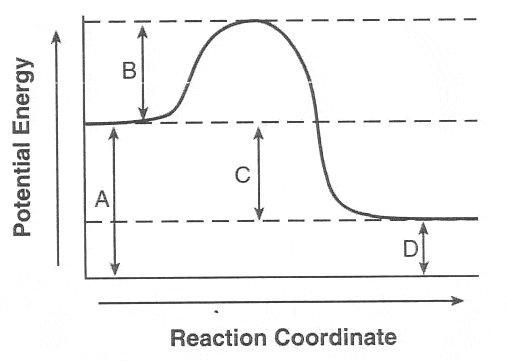
61.

The energy level diagram for the reaction between magnesium and hydrochloric acid is shown.

a)

Energy is given out during the reaction

b)

The products are at a lower energy level than the reactants

c)

The reaction is endothermic.

62.

Which reaction is endothermic?

a)

acid neutralising alkali causing a temperature increase

b)

adding magnesium to hydrochloric acid

c)

calcium carbonate decomposing when heated combustion of fossil fuels

63.

Which statements about exothermic and endothermic reactions are correct?

a)

During an exothermic reaction, heat is given out

b)

The temperature of an endothermic reaction goes up because heat is taken in

c)

Burning methane in the air is an exothermic reaction

64.

Which is an endothermic process?

a)

Burning hydrogen

b)

Distilling petroleum

c)

Reacting potassium with water

d)

Using petrol in a motor car engine

65.

A power station was designed to burn gaseous fuels only. Which two substances could be used?

a)

carbon dioxide and hydrogen

b)

carbon dioxide and 235U

c)

Hydrogen and Methane

66.

Which fuel does not produce carbon dioxide when it burns?

a)

Coal

b)

Hydrogen

c)

Methane

67.

Which substance is not a fossil fuel?

a)

coal

b)

kerosene

c)

wood

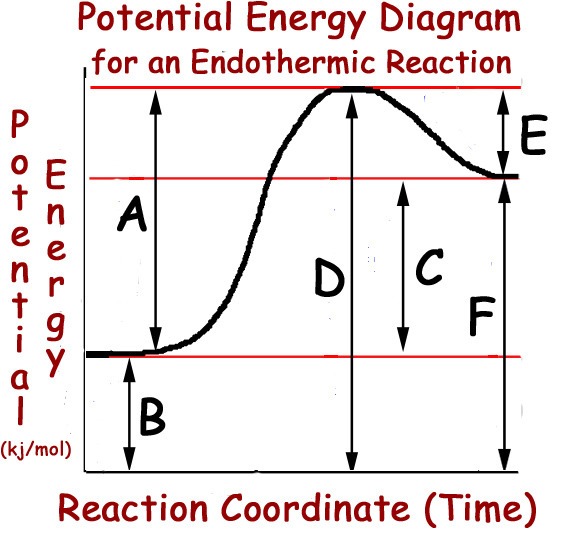
68.
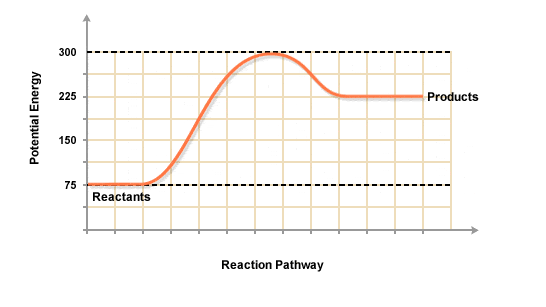
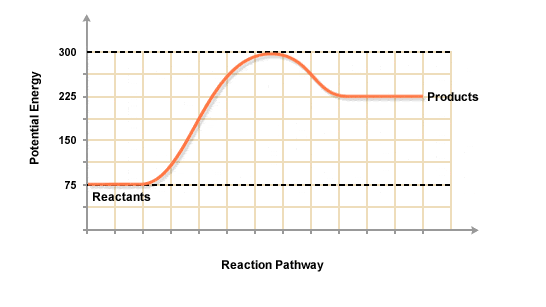
What type of reaction is this?
a)
Endothermic
b)
Exothermic
69.
What letter represents the activation energy?
a)
A
b)
B
c)
C
d)
D
70.
What is the energy of the activated complex?
a)
75 kJ
b)
225 kJ
c)
300 kJ
d)
225 kJ
71.
Activation energy is required to start a chemical reaction. What is activation energy?
a)
The energy needed for a reaction to occur
b)
The minimum amount of energy needed for a reaction to potentially occur
c)
The energy added by a catalyst
d)
The energy possessed by the products
72.
Increase in temperature of the reactants can do one of the following
a)
Slow collision frequency
b)
Allow less effective collision between the particles
c)
Cause particles to lose speed
d)
Increase collision between the particles thus increasing the rate.
73.
Grinding a seltzer tablet into powder increases the rate of reaction due to increased
a)
concentration
b)
surface area
c)
temperature
d)
reactants
74.
What is the activation energy of the reverse reaction?
a)
75 kJ
b)
300 kJ
c)
150 kJ
d)
225 kJ
75.
Which factors increase the rate of a reaction.
a)
increasing temperature
b)
increasing concentration
c)
increasing surface area
d)
all of these
76.
A ______________ is a substance that increases the rate of a reaction without being used up during the reaction. 
a)
catalyst
b)
product
c)
reactant
d)
solute
77.
Smaller particle size allows for a _________ surface area to be exposed for the reaction.
a)
larger
b)
smaller
78.
Exothermic reactions release heat to the surroundings.
a)
true
b)
false
79.
Increasing the concentration of the reactants will slow down the reaction.
a)
false 
b)
true
80.
In an endothermic reaction the products have 
a)
more energy than the reactants
b)
less energy than the reactants
c)
the same energy as the reactants
d)
no energy
81.
In an exothermic reaction the products have
a)
more energy than the reactants
b)
the same energy as the reactants
c)
less energy than the reactants
d)
no energy
82.
C represents
a)
energy absorbed
b)
energy released
c)
activation energy
83.
Why does a higher temperature increase the rate of a reaction?
a)
it increases both the frequency and energy of particle collisions
b)
it only increases the frequency of particle collisions
c)
it only increases the energy of particle collisions
d)
it reduces the activation energy of the reaction
84.
Why does a higher concentration increase the rate of reaction?
a)
it increases the amount of reactants
b)
it lowers the activation energy
c)
it increases the energy of particle collisions
d)
it increases the frequency of particle collisions because there are more collision sites
85.
Which of these will NOT speed up the rate of reaction between a strip of magnesium and hydrochloric acid?
a)
tightly coil up the strip of magnesium
b)
cut up the strip of magnesium
c)
increase the concentration of the hydrocholoric acid
d)
increase the temperature of the hydrocholoric acid
86.
Products will form faster if____________
a)
the particle size of the reactants are larger.
b)
temperature is decreased.
c)
concentration of the reactants are increased.
d)
the reaction is not stirred.
87.
Explosions can happen when there is a large amount of powdered substance because of a large
a)
temperature
b)
surface area
c)
concentration
d)
pressure
88.
Exothermic reactions...
a)
Absorb energy
b)
Release energy
c)
Release Color
d)
Absorb Color
89.

The Periodic Table is organized into _________ and __________.

a)

Atoms, things

b)

Groups, Periods

c)

Groups, metals

d)

Nonmetals, Periods

90.

Alkali Metals are in group # __.

a)

2

b)

15

c)

1

d)

19

91.

Alkaline Earth Metals are in group #___.

a)

1

b)

17

c)

12

d)

2

92.

This category of elements is kind of like a metal.

a)

Noble Gases

b)

Metalloids

c)

Non-metals

d)

Things

93.

This group does NOT react with anything ever, they are already happy.

a)

Metals

b)

Transition Metals

c)

Noble Gases

d)

Halogens

94.

This group is made of the MOST reactive metals.

a)

Transition metals

b)

Metalloids

c)

Alkali Metals

d)

Alkaline Earth Metals

95.

These elements are really bad at conducting heat/electricity.

a)

Non-metals

b)

Transition Metals

c)

Metals

d)

Metalloids

96.

These are normally gases at room temperature.

a)

Metals

b)

Alkali Metals

c)

Non-metals

d)

Transition Metals

97.

These are normally solid at room temperature.

a)

Metals

b)

Halogens

c)

Noble Gases

d)

Non-metals

98.

Elements that are in the same group have ______________.

a)

properties that are similar to each other and behave the same.

b)

nothing in common at all.

c)

the same number of protons.

d)

very different properties.