wayground logo

Free Printable Worksheets

Font size

S
M
L
XL
Worksheets

Science 8 Final Study Guide 1

Total questions: 70

Worksheet time: 2hrs 58mins

Name
Class
Date
1.

This variable is the one thing that changed on purpose...

a)

Dependent Variable

b)

Control

c)

Independent Variable

2.

What is the DEPENDENT variable (effect) in this experiment?


"Does eating breakfast improve test scores?"

a)

eating breakfast or not

b)

the grade you got on the test

c)

what time you get up in the morning

d)

how tasty the breakfast is

3.

You are testing how the amount you water a plant affects its growth. What would be the INDEPENDENT VARIABLE in this experiment.

a)

They type of pot you put the plants in.

b)

The amount you water each plant.

c)

The amount of sunlight the plants get.

d)

The amount the plant grows.

4.

A student wants to test the hypothesis of "If salt is added to water then the boiling point of water will decrease (go down)." What is the independent variable?

a)

Whether salt is added or not

b)

Boiling Point

c)

Amount of water

5.
When experimenting with the growth of a plant, a scientist uses three (of the same type of) plants, two different fertilizers, equal light, and equal water. What type of variable is the fertilizer?
a)
Dependent
b)
Independent
c)
Control
d)
Compound
6.
What is speed?
a)
how far you go
b)
how much distance is covered over a period of time
c)
how fast you accelerate
d)
the change in the location of a object
7.
What is velocity?
a)
the quickness of an object
b)
the location of an object
c)
acceleration
d)
speed in a specific direction
8.
65 miles per hour North is an example of an objects what?
a)
Speed
b)
Velocity
c)
Average Speed
d)
Constant Speed
9.
On a distance vs. time graph, the steeper the slope _____
a)
the slower the speed
b)
the faster the speed
c)
less acceleration
d)
greater acceleration
10.
Total distance divided by total time is
a)
average speed
b)
constant speed
c)
instantaneous speed
d)
acceleration
11.
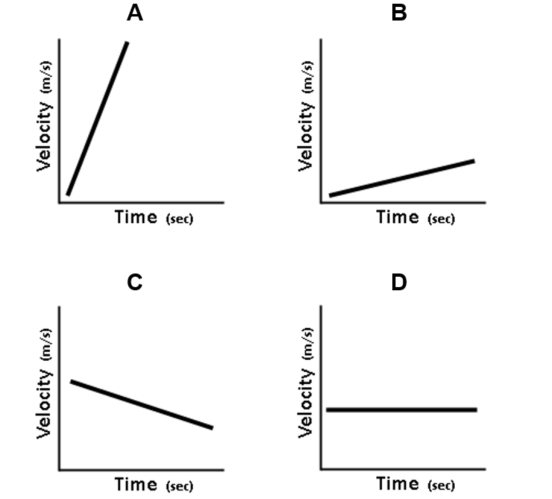
Which graph represents the greatest acceleration?
a)
A
b)
B
c)
C
d)
D
12.
Which graph represents zero acceleration (constant velocity)?
a)
A
b)
B
c)
C
d)
D
13.

What is happening at segment E?

a)

acceleration

b)

deceleration

c)

constant speed

d)

no motion/object at rest

14.

What is happening at segment A?

a)

acceleration

b)

deceleration

c)

constant speed

d)

no motion/object at rest

15.

What is happening at segment D?

a)

acceleration

b)

deceleration

c)

constant speed

d)

no motion/object at rest

16.
The force of gravity acting on an object is the object's ______.
a)
mass
b)
matter
c)
weight 
d)
friction 
17.
The amount of matter in an object is 
a)
pressure
b)
weight
c)
mass
d)
force
18.
A person would weigh less on on the Moon than on the Earth because . . .
a)
Moon has more mass, and therefore more gravity
b)
Moon has less mass, and therefore more gravity
c)
Moon has more mass, and therefore less gravity
d)
Moon has less mass and therefore less gravity
19.

A force that opposes motion between any surfaces that are in contact.

a)

gravity

b)

acceleration

c)

friction

d)

direction

20.

Which type of friction is shown in the picture?

a)

rolling

b)

fluid

c)

static

d)

sliding

21.

Which type of friction is shown in the picture?

a)

fluid

b)

static

c)

rolling

d)

sliding

22.

Which type of friction is shown in the picture?

a)

rolling

b)

static

c)

fluid

d)

sliding

23.

Adding oil will ________ friction on gear chains.

a)

increase

b)

decrease

24.

Which type of friction is shown in the picture?

a)

fluid

b)

static

c)

rolling

d)

sliding

25.
A magician pulls a tablecloth out from under dishes and glasses on a table without disturbing them.
a)
Newton's 1st Law
b)
Newton's 2nd Law
c)
Newton's 3rd Law
d)
None of them
26.
Rockets are launched into space using jet propulsion where exhaust accelerates out from the rocket and the rocket accelerates in an opposite direction.
a)
Newton's 1st Law
b)
Newton's 2nd Law
c)
Newton's 3rd Law
d)
None of them
27.

A person’s body is thrown outward as a car rounds a curve on a highway.

a)

Newton's 1st Law

b)

Newton's 2nd Law

c)

Newton's 3rd Law

d)

None of them

28.
Pushing a child on a swing is easier than pushing an adult on the same swing, because the adult has more inertia.
a)
Newton's 1st Law
b)
Newton's 2nd Law
c)
Newton's 3rd Law
d)
None of them
29.
A soccer ball accelerates more than a bowling ball when thrown with the same force.
a)
Newton's 1st Law
b)
Newton's 2nd Law
c)
Newton's 3rd Law
d)
None of them
30.
A student leaves a pencil on a desk and the pencil stays in the same spot until another student picks it up.
a)
Newton's 1st Law
b)
Newton's 2nd Law
c)
Newton's 3rd Law
d)
None of them
31.
For every action there is an equal and opposite reaction.
a)
Newton's 1st Law
b)
Newton's 2nd Law
c)
Newton's 3rd Law
d)
None of them
32.
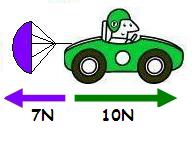
Calculate the net force of the object in the image shown.
a)
20N
b)
35N
c)
5N
d)
25N
33.

What is the net force?

a)

3 N

b)

3 N, right

c)

17 N, right

d)

3 N, left

34.

Force is a ______ or ______ applied on an object.

a)

push, pull

b)

position , location

c)

motion, rest

35.

In which scenario is work = 0 J ?

a)

Pushing a stationary wall

b)

Pulling a trolley car

c)

Pushing a book across the table

d)

Dropping a set of keys from a height, h.

36.

What is the S.I unit of work?

a)

N.m2

b)

(Kg.m2) / s2

c)

J/m

d)

J

37.

Work is done when a person is studying or working on a desk like this woman in the picture.

a)

True

b)

False

38.

Work is done on the ball after being hit by the tee.

a)

True

b)

False

39.
Name this simple machine.
a)
Lever
b)
Wedge
c)
Pulley
d)
Inclined Plane
40.
Name this simple machine. 
a)
Pulley
b)
Wheel and Axle
c)
Inclined Plane
d)
Lever
41.
Name this simple machine. 
a)
Inclined Plane
b)
Lever
c)
Pulley
d)
Wedge
42.
Which choice is an example of a lever?
a)
Axe
b)
Seesaw
c)
Bottle Cap
d)
Tunnel
43.
Which choice is an example of a pulley?
a)
Axe
b)
Seesaw
c)
Crane 
d)
Tunnel
44.

Which of these is an example of a wedge?

a)

Knife

b)

Stairs

c)

Skateboard

d)

Broom

45.
Mechanical Advantage:  To hold things together or to lift an object.
a)
Screw
b)
Pulley
c)
Wedge
d)
Wheel and Axle
46.
__________ is stored energy. 
a)
Potential
b)
Kinetic
c)
None of the above 
d)
All of the above 
47.
When you stretch a rubber band, you are storing __________ energy. 
a)
kinetic 
b)
potential
c)
none of the above
d)
all of the above 
48.
At which point is potential energy greatest?
a)
W
b)
X
c)
Y
d)
Z
49.
What kind of energy is in a rock at the edge of a cliff?
a)
Potential
b)
Kinetic
c)
Both potential and kinetic energy
d)
none of the above
50.
What kind of energy is in a moving skateboard?
a)
Potential
b)
Kinetic
c)
Both potential and kinetic energy
d)
none of the above
51.
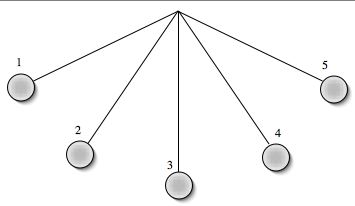
When a pendulum swings, at which point is kinetic energy highest?
a)
1
b)
2
c)
3
d)
4
52.
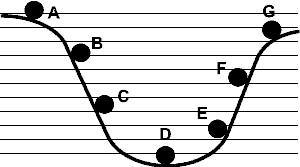
Which point has the most potential energy?
a)
G
b)
f
c)
b
d)
a
53.
T - tall and t = short
In the punnett square below, what belongs in the missing square
a)
tt
b)
Tt
c)
Bb
d)
TT
54.
What you see, or the physical appearance.
a)
Genotype
b)
Phenotype
c)
Homozygous
d)
Heterozygous
55.
What is the probability of heterozygous offspring?
a)
25%
b)
50%
c)
0%
d)
100%
56.
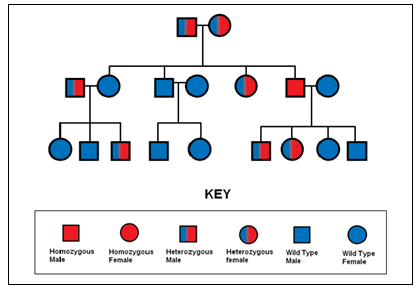
In a pedigree, what shape represents a male?
a)
circle
b)
square
c)
triangle
d)
diamond
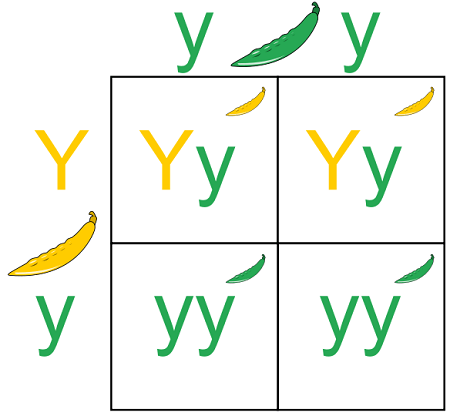
57.
Which choice best represents the genotype of this cross?
a)
1 Yy: 2 yy: 0 YY
b)
2 Yy: 2 yy: 0 YY
c)
3 Yy: 1 yy: 0 YY
d)
1 Yy: 3 yy: 0 YY
58.
Which of the following genotypes is homozygous dominant?
a)
A
b)
Aa
c)
AA
d)
aa
59.
Which of the following is homozygous recessive?
a)
Tt
b)
tt
c)
TT
d)
T
60.

Is melting butter for popcorn a chemical or physical change?

a)

chemical

b)

physical

61.
Is burning wood a chemical or physical change?
a)
chemical
b)
physical
62.

Which of the following is NOT an example of a physical change?

a)

crumpled paper

b)

dissolving sugar in water

c)

freezing water

d)

burning a marshmallow

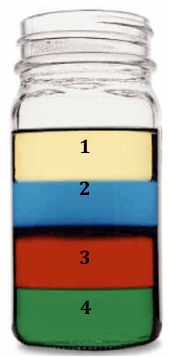
63.
Put the liquids in order from most dense to least dense?
a)
4, 3, 2, 1
b)
1, 2, 3, 4
c)
3, 4, 2, 1, 
d)
4, 3, 1, 2
64.

Subatomic particles with a negative charge

a)

Electrons

b)

Neutrons

c)

Protons

d)

Quarks

65.
Subatomic particles with a positive charge
a)
neutrons
b)
atomic mass
c)
protons
d)
isotopes
66.
Value representing the number of protons in an element
a)
Atomic Mass
b)
Mass Number
c)
Valence Electrons
d)
Atomic Number
67.
Subatomic particles that are neutral in charge
a)
Neutrons
b)
Protons
c)
Nucleus 
d)
Electrons
68.
A charged atom
a)
Ion
b)
Isotope
c)
Electron Cloud
d)
Quark
69.
Arrangement of elements organized by atomic number
a)
Electron Cloud 
b)
Periodic Table 
c)
Electron Configuration
d)
None of these
70.

What is the atomic number?

a)

35

b)

18

c)

17

d)

52