
 Worksheets
Chemistry Final Review
Total questions: 134
Worksheet time: 6hrs 0mins
1s22s22p63s23p64s23d10

This orbital diagram represents
Calcium
Scandium
Potassium
Yttrium

Which of the following is the correct Lewis Dot structure of Carbon?
I
II
III
IV
V
How many valence electrons should Magnesium have in its Lewis dot model?
1
2
3
4

Look at this picture of Argon off the periodic table. Which of the following is true for this element?
18 protons
40 protons
22 protons
21.9 protons
Where are electrons located in the atom?
Nucleus
Outside the nucleus in a cloud
Outside the nucleus in fixed rings
With the protons
What electron configuration matches an Neon atom?
What is the shorthand electron configuration of Iodine?
[Kr]5s24d105p6
[Kr]5s24d106p6
[Kr]5s25d106p6
None of the above
How is Lithium (Li) Classified based on its location on the periodic table?
nonmetal
an alkaline earth metal
a transition metal
an alkali metal
The following shows 3 different types of electron configurations:
Element 1 = 1s22s22p63s23p64s1
Element 2= 1s22s22p63s23p64s2
Element 3= 1s22s22p63s1
Which would be the correct electron configuration for Ca?
Element 1
Element 2
Element 3
Which atom has the largest atomic radius?
Be
Mg
Ca
Sr

Which element has a higher electronegativity value?
Niobium
Tin
Cadmium
Iodine
What is the name of the group that contains Ar and Kr?
Alkali Metals
Alkaline Earth Metals
Halogens
Noble Gases
What is the name of the group of elements that includes Mg and Ca
Alkali Metals
Alkaline Earth Metals
Halogens
Noble Gases
Which halogen is found in period 5?
Krypton (Kr)
Xenon (Xe)
Bromine (Br)
Iodine (I)
Which Lewis Dot Diagram would represent Phosphorous ?


What color of light does a hydrogen atom emit when an electron transitions from n=3 energy level to n=2 energy level?
Yellow
Orange
Green
Blue
Which of the following has the lowest metallic character?
Na
Ca
Ag
As
Which lists an alkaline earth metal, alkali metal, transition metal, and halogen in that order?
Calcium, Lithium, Iron, Chlorine
Magnesium, Titanium, Vanadium, Bromine
Sodium, Nickel, Fluorine, Gallium
Potassium, Calcium, Iron, Chlorine
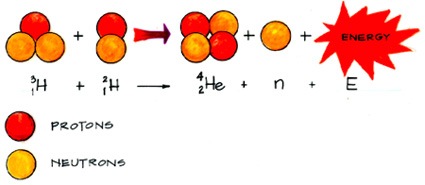

Which type of radiation can be stopped by clothing or paper?
alpha
beta
gamma
positron
Which type of radiation has the shortest wavelength and can penetrate through our bodies?
alpha
beta
gamma
positron
An element has two naturally occurring isotopes. One is 12 amu and is 19.9% abundant. The other is 13 amu and is 80.1% abundant. What is the average atomic mass?
12.79 amu
12.011 amu
6.941 amu
10.812 amu

20985At = ___ + 42He
Balance the following nuclear equation:
2658Fe + 201n ⟶ 27 60Co + ?
−1 0B
01n
11H
94238Am
Using the Bohr model of hydrogen in the reference packet, what color of light is given off by a hydrogen atom as its electron falls from n=5 to n=2 ?
Yellow
Red
Green
Blue
When an electron falls from n=6 to n=2, what region of the electromagnetic spectrum does that wavelength occupy?
radio
gamma
infrared
visible
How many valence electrons does Silicon (Si) have?
3
4
5
6
The shorthand electron configuration [Ne] 3s23p4 belongs to which element?
Gallium
Boron
Aluminum
Sulfur
If 25 g of iodine 131 is given to a patient, how much is left after 40 days? The half-life of iodine-131 is 8 days.
0.78g
25g
12.5g
The half-life of strontium-90 is 25 years. How much strontium-90 will remain after 75 years if the initial amount is 8.0 g?
2 g
4 g
1 g
The half life of radium 226 is 1602 years. If you have 200 grams of radium today how many grams would have been present 3204 years ago?
2
800
400
50
What is the name of the following compound: CuBr2
copper bromine
copper bromide
copper (I) bromide
copper (II) bromide
What is the name of the following compound: K2SO4
potassium sulfur
potassium sulfate
potassium (I) sulfate
potassium (II) sulfide

What shape would this have?
Trigonal planar
Pyramidal
Tetrahedral
Bent

What molecular geometry would PH3 have?
Trigonal Pyramidal
Trigonal Bipyramidal
Bent
Linear
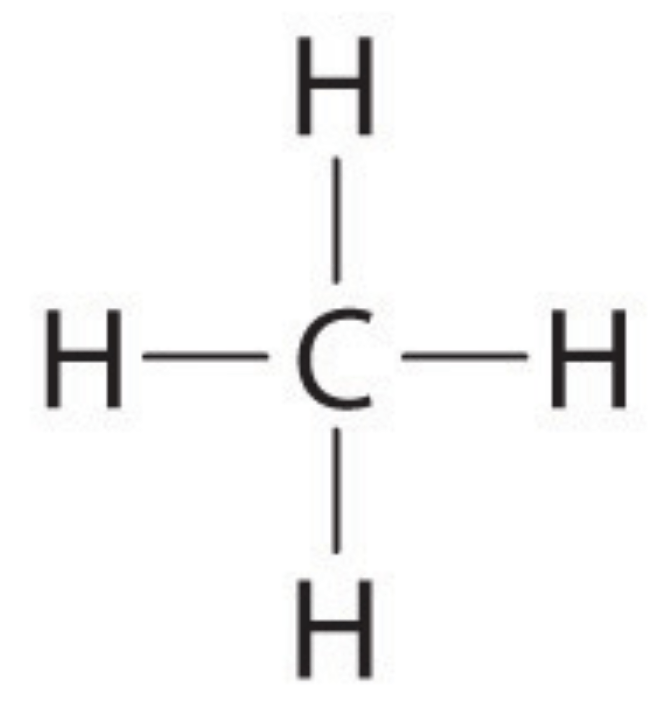
Classify the following molecule.
polar
nonpolar

Is the following molecule polar or nonpolar?
polar
nonpolar
Which of the following is polar?
H2O
CBr4
H2
O2
Which of the following has a Bent shape?
CF4
HBr
NH3
H2S
Which of the following is NONpolar?
H2O
CBr4
HBr
NH3
What are phases (solubility) of the products for the following reaction:
CuCl2(aq) + NaOH(aq) → Cu(OH)2(??) + NaCl(??)
Cu(OH)2(aq) + NaCl(aq)
Cu(OH)2(aq) + NaCl(s)
Cu(OH)2(s) + NaCl(aq)
Cu(OH)2(g) + NaCl(s)
PbCl2 + AgNO3 → Pb(NO3)2 + AgCl
Al(OH)3 → Al2O3 + H2O
_Cu + _H2O →_ CuO3 + _H2
_C4H10 + _O2 → _CO2 + _H2O
_Al +_HCl --> _H2 +_AlCl3
Predict the products for the this Double Replacement reaction:
AgNO3 + KCl →
AgCl + KNO3
AgK + ClNO3
KAg + NO3Cl
AgCl + 3 KNO
Predict the products for the this Single Replacement reaction: (Copper has a charge of 1+)
Mg + CuCl →
MgCl2 + Cu
Mg + Cu
MgCu + Cl2
MgCl + Cu2
What are the products of this reaction:
C2H4 + O2 →
C2O2 + H4
CO2 + H2 + O2
CO + H
CO2 + H2O
Convert 87L to mL (1L=1000mL)
87,000mL
0.087mL
0.000087mL
87,000,000mL
How many atoms are in 7.89 mol of magnesium? (1 mol = 6.022x10²³ atoms)
1.31 x 10²³ atoms
4.75 x 10²³ atoms
4.75 atoms
1.31 atoms
How many grams of sodium are in 8.93mol? (1 mol = 22.99g)
205 g
0.388 g
31.92 g
14.06 g
A bicycle has a speed of 6.00 m/s. What is its speed in km/h? (1km=1000m) (1h= 3600s)
21.6 km/h
16.67 km/h
2.16 km/h
1.67 km/h
Unit 9:Calculate the volume that a 0.323-mol sample of a gas will occupy at 265 K and a pressure of 0.900 atm.
Unit 9:Determine the Kelvin temperature required for 0.0470 mol of gas to fill a balloon to 1.20 L under .998 atm pressure.
310 K
Unit 9:What pressure, in atm, is exerted by 2.50 L of gas containing 1.35 mol at 320 K? PV=nRT
Unit 9:You have a gas that has a pressure of 2 atm and a volume of 10L. What would be the new volume if the pressure was changed to 1 atm? (temperature is constant)

Unit 9:A sample of gas with a volume of 30.0 mL at 25.0oC is heated to 50.0oC. What is the new volume of the gas?
Unit 9:A sample of oxygen at 28.0°C has 340.0 kPa. What will its temperature be at 150.0 kPa?
Unit 9:A mixture of H, Ne, & O has a pressure of 12.4 atm. If Hydrogen measures 5.6 atm and Oxygen measures 2.0 atm, what is the pressure of Neon?
7.6 L
4.8 L
5.4 L
12.0 L
Unit 7:
A compound consists of 72.2% magnesium(Mg) and 27.8% nitrogen(N) by mass. What is the empirical formula?
Unit 7:
You are given the following percentages: 40.05% S and 59.95% O. Find the empirical formula for these elements.
Unit 7:
What is the percent by mass of magnesium in MgO?
Unit 7:
What is the mass of 0.75 moles of (NH4)3PO4?
Unit 7:
What is the formula based off the following name:
Magnesium Carbonate pentahydrate
Unit 7:
Name the following hydrate: NaCl * 5H2O
Unit 7:
Find the percent composition of Cu2S?
Unit 8:
2 KClO3 → 2 KCl + 3 O2 How many moles of oxygen are produced when 6.7 moles of KClO3 decompose completely?
Unit 8:
CH4 + 2 O2 → CO2 + 2 H2O How many moles of carbon dioxide are produced from the combustion of 110 g of CH4?
Unit 8:
2Al + 3H2SO4 -> Al2(SO4)3 + 3H2
How many liters of aluminum sulfate would be formed if 25g H2SO4 completely reacted with aluminum?
1.9L
5. 00 L
5.7 L
10L
Unit 8:
2Fe2O3 + C → Fe + 3CO2
You add 28 grams of carbon. You find the experimental yield to be 181.2 grams of CO2. What is the percent yield of CO2? (Hint: calculate theoretical yield of CO2 first)
58.83%
308%
6435%
15.5
Unit 8:
P4 + 6Cl2 --> 4PCl3 The reaction of 75.0g P4 reacts with chlorine gas. This reaction produces an experimental yield of 110g PCl3 in lab. Find the theoretical yield and calculate percent yield for the reaction.
Unit 7
What is the molecular formula for a compound with the empirical formula: K2SO4 and a molecular mass of 696g.


What is point B?
Triple point
Liquid point
Critical Point
Solid point
The specific heat of platinum is 0.133 J/g°C. How much heat(Q) is released when a 10 g piece of platinum cools from 100°C to 50°C?
66.5 J
665 J
0.0266 J
0.665 J
2N2 + 3H2 --> 2NH3 + 46 kJ
How much energy would be produced if only 1 mol of nitrogen was reacted?

Where would you use the equation q = mcΔT ?
Between C and D
Between D and E
At C, D, or E
None of these
Where would you use the equation q = ΔHfm ?
Between C and D
Between D and E
At C, D, or E
None of these
What phase change occurs when you start at C and end at D?
Freezing
Melting
Condensing
Vaporization
Calculate the energy needed to completely boil away 30 g of water at 100 ⁰C .
67,800 J
2260 J
226,000 J
100 J
How many joules are required to boil 75 grams of water?
25050J
169500J
31350J
10000J

What type of reaction is this?
Exothermic
Endothermic
Energy Producing
No way to tell
What phase of matter exists in part C of the graph?
Gas
Liquid
Solid
Plasma
SO2 + O2 <=> SO3
If the concentration of SO2 is increased, the equilibrium position of the reaction will shift ___________.
What is the Keq expression for this reaction? 2 NO(g) + O2(g) ⇌ 2 NO2(g)
Keq = [NO2]2 / [NO]2 [O2]
Keq = [NO]2 [O2] / [NO2]2
Keq = [NO]2 [O2] [NO2]2
Keq = [NO2]2 / [NO]2 + [O2]

Fe3O4(s) + 4H2(g) <=> 3Fe(s) + 4H2O(g)
Kc =
What is the concentration equilibrium constant expression?
Keq = [NO2]2/[N2O4]
Keq = [N2O4]/[NO2]2
Keq = [N2O4]2/[NO2]
Keq = [NO2]/[N2O4]2
What is the value of the Keq/Kc of the reaction "CO(g)+2H2(g)<---> CH3OH(g)" if the equilibrium concentrations of the reactants and product are: CO=0.17M, H2=0.34M, and CH3OH= 0.17M?
0.085
8.7
0.12
2.9
SO2(g) + O2(g) <−> SO3(g)
If the equilibrium shifts to the right, the concentration of O2(g) will ___________.
energy + N2(g) + O2(g) <−> 2NO(g)
If O2(g) is removed, the concentration of N2 will _______.
N2 (g) + 3 H2 (g) <−> 2 NH3 (g)
If the pressure in the system is increased, the reaction will __________________.
If the Keq = 2.3 which statement is true?
The products are favored
The reactants are favored
Neither products or reactants are favored
If the Keq = 5.46 x 10⁻⁴ which statement is true?
The products are favored
The reactants are favored
Neither products or reactants are favored
Which of the following statements is true concerning acids and bases?
acids and bases don't react with each other
acids mixed with bases neutralize each other
acids mixed with bases make stronger bases
acids mixed with bases make stronger acids
Which is the correct set of acid properties:
sour taste, corrosive, change litmus from red to blue
sour taste, corrosive, change litmus from blue to red
sweet taste, slippery, change litmus from blue to red
sour taste, slippery, change litmus from blue to red
Neutral solutions have a pH of:
0
1
7
14

Vinegar, fruit juice, and cola are examples of:
salts
neutral substances
bases
acids
NaOH may be found in drain cleaners and as a component of soaps. Is NaOH an acid or a base?
Acid
Base
Neither (Neutral)

Is pure water acidic, basic, or neutral?
Acidic
Basic
Neutral
If the pH of a solution is 4.0, what is the pOH?
4.0
10.0
1.0 x 10 -4
cannot be determined from the information
If the [H3O+] of a solution is 1 x 10⁻³ M, the pH is
11
-3
3
1
The pH of a solution is 8.43. What is the [H3O+]concentration?
3.7 x 10 -9
1.0 x 10-8.43
2.7 x 10⁻⁶
1.0 x 10⁻¹⁴
If a solution has a pOH of 3.7 the [OH-] of the solution is
5.0 x 10⁻¹¹
2.0 x 10⁻⁴
10.3
14
Find the pH of a solution with [OH-] = 8.41 x 10⁻⁴.
3.08
10.92
9.88
11.23
What is the pOH of a solution with [H+] = 1.24 x 10 -2?
1.91
1.61
12.09
12.39
What is the pH of a solution that has a [H+] of 2.5 x 10⁻⁵?
4.60
2.5
5.0
7
What is the [OH-] if the [H+] is 1.0 x 10⁻³M?
1.0 x 10⁻³ M
1.0 x 10⁻¹⁴ M
6.02 x 10⁻²³ M
1.0 x 10⁻¹¹ M
What is the [OH-] if the pH is 4.9?
4.9 x 10⁻¹⁰ M
1.0 x 10⁻⁴ M
1.25 x 10⁻⁵ M
7.94 x 10⁻¹⁰ M
A solution of KOH is 2.5 x 10⁻⁵ M. What is the [H+] concentration? (Hint: Find pOH, then pH, then [H+].)
4.60
9.40
3.98 x 10⁻¹⁰
1.0 x 10-4.60
HClO4 + KOH → KClO4 + H2O
Suppose 100 mL of perchloric acid is neutralized by exactly 50,0 mL of 1.0 M of Potassium hydroxide. What is the concentration of the perchloric acid?
HCl + NH3 → NH4Cl
A student is titrating 100.0 mL of 0.10 M NH3 with 0.5 M HCl. How much hydrochloric acid must be added to react completely with the ammonia?
In the titration equation, M1V1 = M2V2, what is M?
Molarity
Concentration
Amount of solution
Mass of mixture
What is the purpose of indicator solutions?
To signal the end of a reaction
To colour the solution
To complete the reaction
To equivalent the reaction
In titration what is the long graduated piece of equipment called?

