
 Worksheets
Combined Science Semester Exam 2022
Total questions: 132
Worksheet time: 2hrs 14mins
What is the definition of a force?
Net force equal 0N and there is no change in the object's motion
the overall force acting on an object after all forces are combined
a push or a pull that acts on an object
The force does not equal 0N, the object accelerates
What is the definition of net force?
a push or a pull that acts on an object
Net force equal 0N and there is no change in the object's motion
the overall force acting on an object after all the forces are combined
The force does not equal 0N, the object accelerates
What do we call a force that has a net force of zero Newtons and the object does not change its motion?
balanced force
unbalanced force
acceleration force
net force
What do we call a force that causes an object to accelerate?
net force
moving force
acceleration force
unbalanced force

What is the magnitude and direction of the force in the free body diagram shown?
70 N right
70 N left
50 N right
50 N left

What is the magnitude and direction of the force in the free body diagram shown?
20 N, no change in motion
20 N right
20 N left
0 N , no change in motion

What is the magnitude and direction of the force in the free body diagram shown?
5 N down
0 N, no change in movement
15 N up
15 N down
An object in motion tends to stay in motion and an object at rest tends to stay at rest until acted on by an unbalanced force is which of Newton's laws?
1st
2nd
3rd
4th
The acceleration of an object is dependent upon the net force acting upon the object and the mass of the object is which of Newton's laws?
1st
2nd
3rd
4th

What is defined a push or pull?
force
net force
an unbalanced force
a balanced force

Calculate the net force
5
10
15
0

If you are pushing a 1200 kg car with an acceleration of 0.5 m/s2 , what is the force you have applied to the car?
600
2400
4.16
60

calculate the force applied to a 5 kg shopping cart if it accelerates at 3 m/s2
15
1.67
0.6
1.57

If you INCREASE the force applied to a 50 kg crate, what happens to the ACCELERATION of the crate
acceleration increases
acceleration decreases
force increases
this cannot be determined

Based on Newton's 2nd Law of Motion, which statement is true about the acceleration of wagon A and wagon B if both are being pulled with the same external force
wagon A will have a greater acceleration than wagon B
wagon B will have a greater acceleration than wagon A
wagon A and B will have the same accelerations
the wagons will both have and acceleration of zero

Based on Newton's 2nd Law of Motion, which statement is true about the force of the wagon with the kids if the mass of kids is identical but wagon A is moving TWICE the speed because it has more people pushing than that of wagon B
wagon A will have a greater force
wagon B will have a greater force
the force will be the same for both wagons
the force will be zero for both wagons


A runner races in the 100 meter dash. It takes her 10 seconds to finish. What is her average speed?
10 m/s
1000 m/s
100 seconds
10 seconds


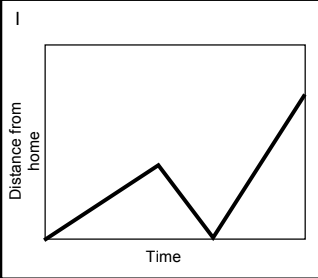
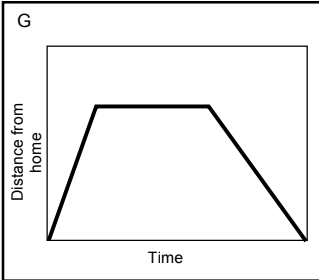
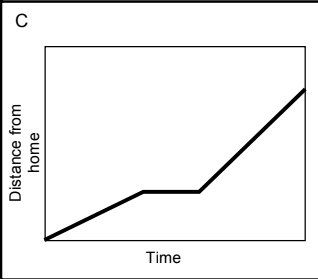
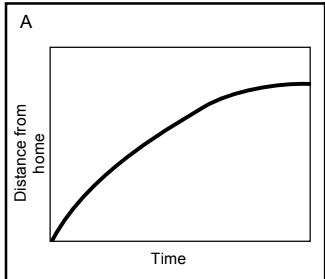


Where is the object stopped?
A
B
C
D
Where is the object moving back to the origin?
A
B
C
D
Where is the object moving away from the origin at the quickest speed?
A
B
C
D
What is the speed of the object during segment B?
0.5 m/s
1.3 m/s
2 m/s
2.5 m/s

Which graph shows the object moving at a constant speed away from the origin?
A
B
C
D
Which graph shows the object moving from fast to slow?
A
B
C
D
A student walks 50 meters in 100 seconds. Calculate the speed.
0.5
0.5 m/s
500 m/s
2 m/s

Which line shows the slower pace?
dashed line
solid line
How do you find the speed from a distance-time graph?
Find the area under the graph
Find the gradient of the line
Read the height of the graph

How long is the train stopped for in total?
5 minutes
7.5 minutes
10 minutes
2.5 minutes
Calculate the acceleration of the train at 2.5 minutes
1 km/m2
3.33 km/m2
0.3 km/m2
7.5 km/m2
How far does the train travel in the first 10 minutes?
1.5 km
11.25 km
3.75 km
7.5 km

What is the speed after 2 seconds?
40 m/s
20 m/s
10 m/s
40 m

What was McKenzie's average speed for the entire journey?
6.25 km/h
12.5 km/h
25 km/h
100 km/h
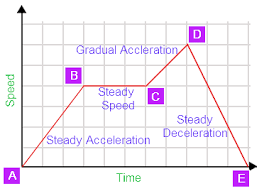
At what point is the speed the greatest?
C-D
B-C
A-B
D-E

What is happening during point C to D?
not moving
increasing speed at a constant rate
moving at a constant speed
moving at 0 m/s2 acceleration


How long did it take Charlie to finish the race?
A)14 meters
B)12 seconds
C)17 seconds
D)14 seconds
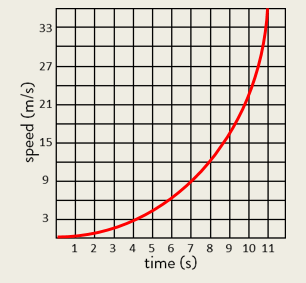
What is this graph showing?
Gradually slowing down
Gradually speeding up
Constant speed
Stopped

What is this graph showing?
Constant speed
Gradually speeding up
Gradually slowing down
At rest
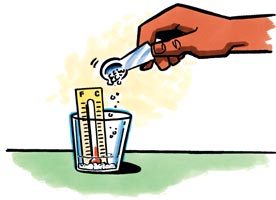


Fe + O2 -> Fe2O3
HgO --> Hg + O2
Fe + S --> FeS
In reactions, products must be equal to..
Products
Reactants
Starters
Enders
According to the law of conservation of mass, how does the amount of each element on the product side compare to each element on the reactant side?
The amount of atoms on each side is equal
The amount of atoms on the product side is greater
The amount of atoms on the reactant side is greater
Depends on the reaction
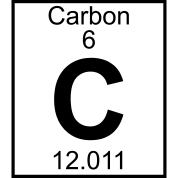
the basic structural unit of matter
atom
matter
element
nucleus
the positively charged subatomic particle contained in the nucleus of an atom
proton
neutron
electron
matter
a subatomic particle, contained in the nucleus of an atom, having the same mass as a proton but no electrical charge
proton
neutron
electron
matter
a negatively charged subatomic particle that orbits the nucleus of an atom
proton
neutron
electron
matter
a unique number for each element that equals the number of protons in an atom of that element
element name
element symbol
atomic number
atomic mass

where are the metaloids found
far left, vertical
stair step/diagonal
far right horizontal
at the bottom
A row on the Periodic Table of Elements
family
period
row
isotope
Metals (select all that apply)
are found on the right side of the periodic table.
are found on the left side of the periodic table.
are good conductors of heat and electricity.
are brittle.
are malleable and ductile.
Nonmetals (select all that apply)
are found on the right side of the periodic table.
are found on the left side of the periodic table.
are good conductors of heat and electricity.
are brittle.
can be solid, liquids, or gases at room temperature.

Coat color in a dog breed is determined by incomplete dominance where three colors are produced (Brown, tan and white), and the brown coat allele (B) has incomplete dominance over the white coat allele (b). Which offspring ratio would be expected from a cross between a brown dog and a white dog?
A. 2 BB: 2 Bb
B. 4 Bb
C. 1 BB: 2 Bb: 1 bb
D. 2 BB: 2 bb
How many pairs of chromosomes does each person have?
46
23
2
1,046,023
The trait that will always be expressed if at least one copy of an allele is present.
Recessive
Dominant
DNA
The trait that will be expressed only if two copies of the allele are present.
Recessive
Dominant
DNA
What is it called when a gene carries two different types of alleles?
Homozygous
Heterozygous
Monozygous
Trizygous
What is it called when a gene carries two of the same alleles?
Homozygous
Heterozygous
Monozygous
Mamazygous
Which of the following is heterozygous?
FF
Gg
tt
RR
Which of the following is homozygous recessive?
rr
TT
AA
Ff
Which of the following is heterozygous?
AA
Aa
aa
22
Brown eye color is dominant. Blue eye color is recessive. Select the combination of letters below that would represent a person being a purebred for brown eyes. In other words, which option represents a person having both alleles for brown eyes? (hint: think of capitalization of letters and what is used for dominant vs. recessive).
AA
Aa
aa
aA
Brown eye color is dominant. Blue eye color is recessive. Select the person that is a purebred for blue eyes.
AA
Aa
aA
aa
What is the definition of the phenotype?
The physical traits of an organism
The genetic makeup of an organism
The letters eg, Aa
How the genotype is expressed.
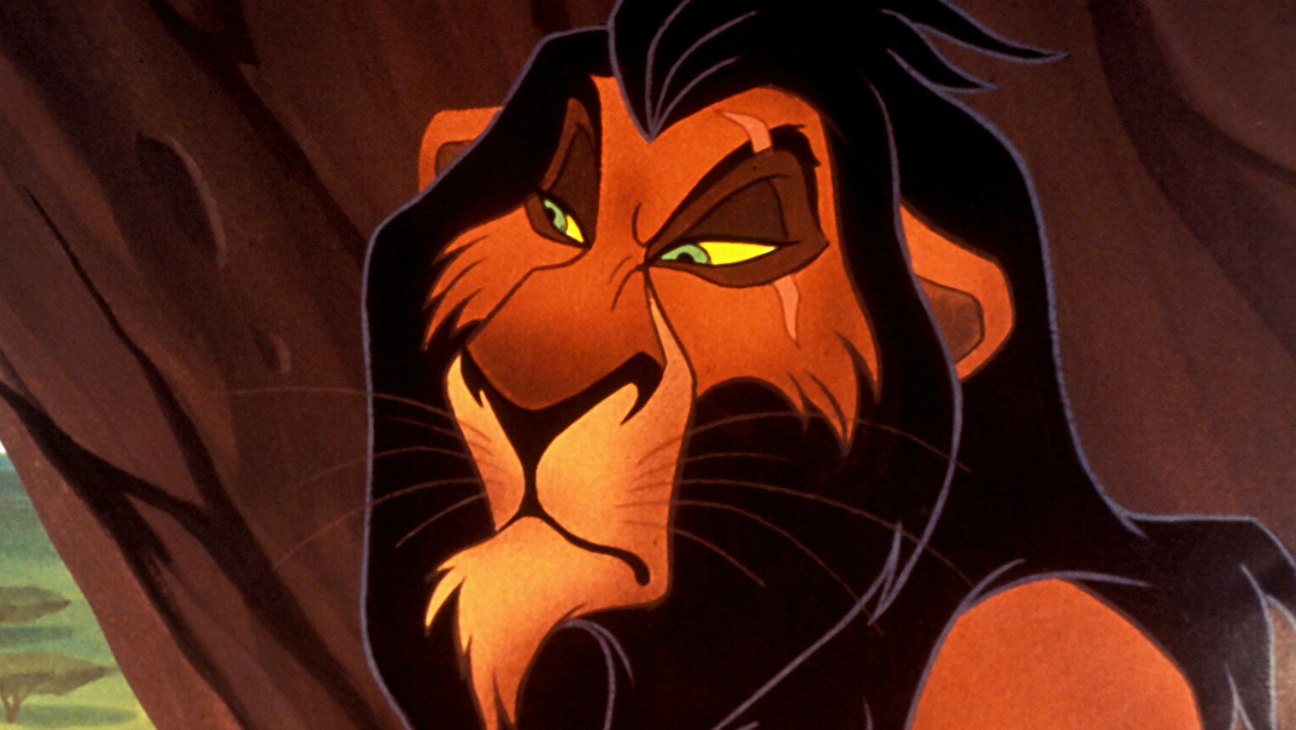
Why does Scar have a scar but his brother Mufasa does not?
Mufasa did not inherit it
The scar gene skipped a generation
The scar is an environmental trait
Mufasa is not his brother

The karyotype diagram below represents a human female with the genetic disorder known as Turner syndrome. Chromosomal analysis of this karyotype reveals the mutation is a result of
a missing X chromosome
a missing Y chromosome
an extra 21 chromosome
missing chromosome #9

The karyotype diagram below represents a human male. Chromosomal analysis of this karyotype reveals the abnormality in this karyotype is:
a missing X chromosome
a missing Y chromosome
an extra 21 chromosome
missing chromosome #9


SELECT ALL THAT APPLY:
Male
Female
No chromosomal abnormalities
Trisomy 18
In a pedigree chart, men are represented by
Circles
Diamonds
Squares
In a pedigree chart, women are represented by
Circles
Diamonds
Squares
In a pedigree, individuals that are unaffected are represented as shapes that are
Not shaded
Fully shaded
Half shaded
In a pedigree, individuals that are affected are represented as shapes that are
Not shaded
Fully shaded
Half shaded


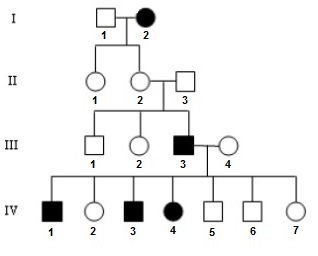


Objective #13
This is a pedigree that follows blue eyes which is a recessive trait. What is the genotype of the father (square) in generation 1?
Aa
AA
aa
A?

In this pedigree, the shading represents people in the family with dark hair while the unshaded represents blondes. Is dark hair controlled by a dominant or recessive allele?
Dominant
Recessive


