wayground logo

Free Printable Worksheets

Font size

S
M
L
XL
Worksheets

Earth Science Final Review

Total questions: 180

Worksheet time: 3hrs 44mins
Name
Class
Date
1.
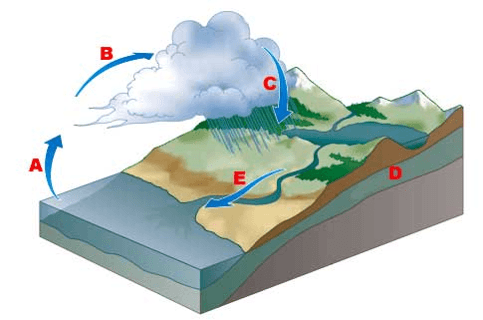
What is occurring at A in the diagram?
a)
runoff
b)
precipitation
c)
evaporation
d)
condensation
2.
What process is happening at C in the diagram?
a)
runoff
b)
precipitation
c)
condensation
d)
transpiration
3.

A rock

a)

Suspended load

b)

Dissolved load

c)

Bed load

d)

Stream load

4.

How water leaves plants is what?

a)

Persperation

b)

Evaporation

c)

Transpiration

d)

Evapotranspiration

5.

What happens when water evaporates into a gas?

a)

Energy is destroyed

b)

Energy is released

c)

Energy is absorbed

d)

Nothing happens

6.

A river system is made up of a river and its

a)

sediments

b)

divides

c)

runoff

d)

tributaries

7.

A system that consists of tributaries, watersheds and divides is called

a)

lake system

b)

ocean system

c)

river system

d)

pond system

8.

What is all of the land area whose water drains into a stream system?

a)

Runoff

b)

Watershed

c)

Divide

d)

Suspension

9.

What is the elevated land area that separates one watershed from another?

a)

Runoff

b)

Watershed

c)

Divide

d)

Suspension

10.

What is the method of transport for all particles small enough to be held up by the turbulence of a stream's moving water?

a)

Runoff

b)

Watershed

c)

Divide

d)

Suspension

11.

What best describes discharge?

a)

How fast water moves downstream in a channel.

b)

The volume of water per second moving through a channel.

c)

Water moving in a channel, like a river or stream.

d)

Water moving over the surface of the land down slope when it rains.

12.

What best describes the streams and rivers in the headwater region of the drainage system?

a)

Streams have fast flow, but very low volumes, in steep channels.

b)

Streams flow very slow, but in large volumes in wide channels.

c)

Streams flow fast, with moderate volumes, in deeper channels.

d)

None of the options are correct.

13.
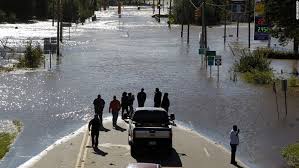
What part of the water cycle does this picture show?
a)
condensation
b)
precipitation
c)
evaporation
d)
transpiration
14.
What landform can you see in the picture?
a)
Floodplain
b)
Delta
c)
Waterfall
d)
Oxbow lake
15.

Which part of the image of rocks will hold more water?

a)

Right

b)

Left

c)

Center

16.

This is the flow of underground water when it reaches the surface.

a)

Groundwater

b)

Spring

c)

Geyser

d)

Well

17.

When rocks and soil become saturated, the ground water rises. This is called:

a)

Spring

b)

Geyser

c)

Cave

d)

Water Table

18.

What types of soil can hold a LOT of water? (select all that apply)

a)

Soil with few pores

b)

Soil with lots of pores

c)

Loosely packed soil

d)

Tightly packed soil

19.
_______________is a greenhouse gas that is increased by burning fossil fuels.
a)
carbon dioxide
b)
oxygen vapor
c)
nitrogen
d)
helium
20.

__________ is a very important component of air because it is the source of clouds and precipitation and like carbon dioxide, it absorbs heat.

a)

oxygen

b)

carbon

c)

water vapor

d)

nitrogen

21.

The molecules of three oxygen atoms that are important to life because of its ability to absorb ultraviolet radiation from the sun is

a)

oxygen

b)

ozone

c)

water vapor

d)

water

22.

The atmosphere is divided into four layers based upon the property of ____________.

a)

density

b)

color

c)

age

d)

temperature

23.
The temperature in the troposphere ____________with increasing altitude.
a)
doesn't change
b)
decreaeses
c)
increases
d)
does not vary
24.
Above the troposphere, the _______ exhibits warming because the ozone absorbs the UV radiation from the sun.
a)
mesosphere
b)
troposphere
c)
mesopause
d)
stratosphere
25.
In general air pressure __________ as you increase altitude.  This is why mountain climbers often need oxygen tanks to breathe.
a)
increases
b)
decreases
c)
stays the same
d)
does not vary
26.
In the troposphere air temperature is _______ near the surface because the air picks up heat as it blows over the warm ground.
a)
highest
b)
lowest
c)
the same
d)
does not vary
27.

What does the root word "meso" mean?

a)

middle

b)

top

c)

bottom

d)

turning

28.

What does the root word "atmos" mean?

a)

vapor

b)

air

c)

gas

d)

layer

29.

Which atmospheric layer contains the ionosphere?

a)

Troposphere

b)

Stratosphere

c)

Mesosphere

d)

Thermosphere

30.

Which EM wave is has the longest wavelength?

a)

gamma

b)

radio

c)

infrared

d)

ultraviolet

31.

Which EM wave is has the shortest wavelength?

a)

gamma

b)

radio

c)

infrared

d)

ultraviolet

32.

Which EM light wave is has the shortest wavelength?

a)

Red

b)

Green

c)

Yellow

d)

Blue

33.

What type of radiation do greenhouse gases absorb?

a)

short wave

b)

long wave

34.

How does carbon dioxide exit the atmosphere?

a)

photosynthesis

b)

cell respiration

c)

deforestation

d)

burning fossil fuels

35.

Which two layers decrease in temperature as altitude increases? Select TWO choices.

a)

Troposphere

b)

Mesosphere

c)

Thermosphere

d)

Stratosphere

36.
What has the highest albedo?
a)
the oceans
b)
 glacial ice
c)
the ground
d)
roads
37.
Albedo can best be described as...
a)
the temperature at the equator
b)
the amount of solar radiation absorbed
c)
the amount of solar radiation reflected
d)
the air pressure during El Nino
38.

What does the root word tropo mean?

a)

bottom

b)

turning

c)

heat

d)

cold

39.

Which is the correct order of the layers starting with at the ground?

a)

Troposphere, Mesosphere, Stratosphere, Thermosphere

b)

Thermosphere, Mesosphere, Stratosphere, Troposphere

c)

Troposphere, Stratosphere, Mesosphere, Thermosphere

d)

Stratosphere, Thermosphere, Mesosphere, Troposphere

40.
Low pressure will usually bring what kind of weather?
a)
Sunny
b)
Calm
c)
Stormy
41.
High pressure will usually bring what kind of weather?
a)
Good
b)
Bad
c)
Both Good and Bad
42.

What is the instrument called that measures air pressure?

a)

thermometer

b)

anemometer

c)

wind vane

d)

barometer

43.

Air is more and more thin as you go higher in altitude because there is ___________ at a high altitude.

a)

less air pressure

b)

more air pressure

c)

more gravity

d)

more water vapor

44.

Why is there a Coriolis effect?

a)

Because the earth does not rotate

b)

Because the earth tilts on its axis

c)

Because the earth is close to the sun

d)

Because the earth rotates

45.

Wind always moves from...

a)

High pressure to Low pressure

b)

Low pressure to High pressure

c)

East to west

d)

South to north

46.

Which way do the winds curve in the Northern Hemisphere due to the Coriolis Effect?

a)

Left

b)

Right

c)

The don't curve

d)

It's always changing

47.
Which types of winds cause weather in North Carolina?
a)
polar easterlies
b)
prevailing westerlies
c)
polar westerlies
d)
prevailing easterlies
48.
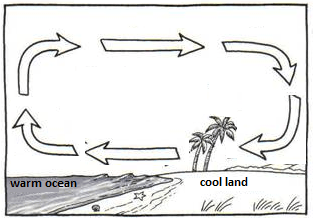
What kind of breeze is this & what time of day/night would it form?
a)
Land breeze - daytime
b)
Land breeze - nighttime
c)
Sea breeze - daytime
d)
Sea breeze - nighttime
49.
What kind of breeze is this and when would it form?
a)
Land breeze - daytime
b)
Land breeze - nighttime
c)
Sea breeze - daytime
d)
Sea breeze - nighttime
50.

Lines on a weather map that connect areas of equal pressure.

a)

warm front

b)

cold front

c)

isobar

d)

millibar

e)

barometer

51.

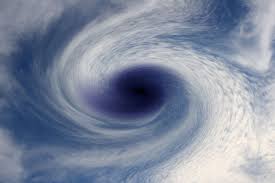
Is this showing a high pressure area or a low pressure area?

a)

high pressure

b)

low pressure

52.

Is this showing a high pressure area or a low pressure area?

a)

high pressure

b)

low pressure

53.

Where would you forecast gusty winds?

a)

Eastern Ohio

b)

Eastern Pennsylvania

c)

Southern Virginia

d)

The Great Lakes

54.
Which weather instrument is most useful in
measuring relative humidity?
a)
barometer
b)
anemometer
c)
psychrometer
d)
wind vane
55.
Which type of air has a relative humidity of 100%?
a)
space
b)
hot
c)
dry
d)
saturated
56.
The amount of water vapor in the atmosphere compared to how much it could hold.
a)
Saturation
b)
Vaporicity
c)
Humidity
d)
Relative Humidity
57.
Which is likely to occur after moist air is cooled below its dew point?
a)
Evaporation increases
b)
Ice crystals melt
c)
Water condenses
d)
Winds are generated
58.

If the dew point is 60°F, the air temperature is 50°F and the ground temperature is 51°F. What will form?

a)

Dew

b)

Frost

c)

Fog

d)

Fog & Dew

e)

Nothing

59.

If the dew point is 43°F, the air temperature is 44°F, and the ground temperature is 43°F. What will form?

a)

Dew

b)

Frost

c)

Fog

d)

Fog & Dew

e)

Nothing

60.

If the dew point is 23°F, the air temperature is 26°F, and the ground temperature is 30°F. What will form?

a)

Dew

b)

Frost

c)

Fog

d)

Fog & Dew

e)

Nothing

61.

Condensation will occur if the temperature is _____ dew point.

a)

warmer than the

b)

colder than the

c)

warmer or equal to the

d)

colder or equal to the

62.

What type of clouds are these?

a)

cumulonimbus

b)

cirrus

c)

stratus

63.

What type of cloud is this?

a)

stratus

b)

cumulus

c)

cirrus

d)

alto

64.

What is the root word for rain?

a)

nimbus

b)

cirro

c)

alto

d)

stratus

e)

cumulous

65.

What is the most common precipitation?

a)

sleet

b)

freezing rain

c)

snow

d)

rain

66.

Which type of cloud is this?

a)

Cirrus

b)

Stratus

c)

Cumulus

d)

Cumulonimbus

67.

Which type of cloud is this?

a)

Cirrus

b)

Stratus

c)

Cumulus

d)

Cumulonimbus

68.

What is the root word form sheet like?

a)

nimbus

b)

cirro

c)

alto

d)

stratus

e)

cumulous

69.

What is the root word form heap?

a)

nimbus

b)

cirro

c)

alto

d)

stratus

e)

cumulous

70.

What is the root word form high?

a)

nimbus

b)

cirro

c)

alto

d)

stratus

e)

cumulous

71.

What is the root word form wisp of hair?

a)

nimbus

b)

cirro

c)

alto

d)

stratus

e)

cumulous

72.

Rain drops get heavier by

a)

coalescing

b)

evaporation

c)

freezing

d)

condensation

73.
What is a large body of air with the same temperature and humidity?
a)
air mass
b)
front
c)
low pressure system
d)
storm
74.
Which term describes the boundary between two air masses?
a)
air mass
b)
front
c)
low pressure system
d)
storm
75.
The pressure system that brings fair weather, clear skies, and has winds that circulate in a clockwise direction are called what?
a)
low pressure system
b)
high pressure system 
76.
Name the pressure system that has clouds, wind, storms and that the wind circulates counterclockwise.
a)
low pressure system 
b)
high pressure system 
77.

The map of North America shows the source region of an air mass forming mostly over Mexico. This air mass originating over Mexico is classified as

a)

continental polar

b)

continental tropical

c)

maritime polar

d)

maritime tropical

78.

An air mass entering Alaska from the northern Pacific Ocean would most likely be labeled on a weather map as

a)

cT

b)

cP

c)

mT

d)

mP

79.

Which type of air mass usually contains the most moisture?

a)

mT

b)

mP

c)

cT

d)

cP

80.

Which type of air mass would most likely have low humidity and high air temperature?

a)

cT

b)

cP

c)

mT

d)

mP

81.

Where do MARITIME air masses form?

a)

Over water

b)

Over land

82.

Where do CONTINENTAL air masses form?

a)

Over water

b)

Over land

83.

Which type of air mass is HOT and DRY?

a)

Maritime Polar

b)

Maritime Tropical

c)

Continental Polar

d)

Continental Tropical

84.

Which type of air mass is HOT and HUMID?

a)

Maritime Polar

b)

Maritime Tropical

c)

Continental Polar

d)

Continental Tropical

85.

Which type of air mass is COLD and HUMID?

a)

Maritime Polar

b)

Maritime Tropical

c)

Continental Polar

d)

Continental Tropical

86.

Which type of air mass is COLD and DRY?

a)

Maritime Polar

b)

Maritime Tropical

c)

Continental Polar

d)

Continental Tropical

87.
This is the symbol for a... 
a)
Cold Front
b)
Warm Front
c)
Stationary Front
d)
Occluded Front 
88.
This is the symbol for a... 
a)
Occluded Front
b)
Stationary Front
c)
Warm Front
d)
Cold Front 
89.
This is the symbol for a... 
a)
Stationary Front
b)
Occluded Front
c)
Cold Front
d)
Warm Front
90.
This is the symbol for a... 
a)
Stationary Front
b)
Occluded Front
c)
Cold Front
d)
Warm Front 
91.
Identify the type of front that is shown in the image.
a)
Occluded Front
b)
Cold Front
c)
Stationary Front
d)
Warm Front
92.
Identify the type of front that is shown in the image.
a)
Occluded Front
b)
Cold Front
c)
Stationary Front
d)
Warm Front
93.

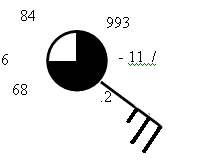
What is the amount of cloud cover for the following station model?

a)

25%

b)

50%

c)

75%

d)

100%

94.

What is the wind direction for the following station model?

a)

north

b)

east

c)

northwest

d)

northeast

95.

What is the air temperature?

a)

72°F

b)

75°F

c)

998°C

d)

0.2°F

96.

What is the dew point?

a)

72°F

b)

75°F

c)

998°C

d)

0.2°F

97.

What is the air pressure?

a)

72 mb

b)

75 mb

c)

998 mb

d)

0.2 mb

98.

What is the precipitation?

a)

72 in

b)

75 in

c)

998 in

d)

0.2 in

99.

What is the cloud cover?

a)

overcast

b)

clear

c)

partly cloudy

100.

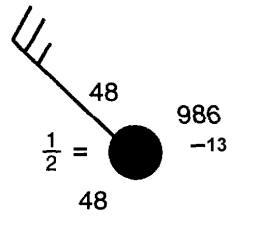
What is the wind direction?

a)

from the northeast

b)

from the southwest

c)

towards the northeast

d)

towards the southwest

101.

What is the wind speed?

a)

5 knots

b)

10 knots

c)

15 knots

d)

50 knots

102.
This extreme weather event forms over warm oceans and weakens when it hits land.
a)
Hurricane
b)
Tornado
103.

This extreme weather event has winds from 74mph - 180mph.

a)

Hurricane

b)

Tornado

104.
This extreme weather event has winds that can reach 300 mph.
a)
Hurricane
b)
Tornado
105.
Hurricane season goes from ______ 1st to _______ 30th
a)
June, October
b)
April, September
c)
June, November
d)
May, October
106.

What is the strongest category of hurricane?

a)

Category 0

b)

Category 1

c)

Category 5

d)

Category 10

107.
The pressure inside a hurricane is _______.
a)
High
b)
Low
108.
Tornadoes are measured using which type of scale?
a)
Richter scale
b)
Bathroom scale
c)
Fujita Scale
d)
Mercator Scale
109.

Which level of tornadoes causes the greatest damage?

a)

EF0

b)

EF1

c)

EF5

d)

EF10

110.

What is the calm area in the center of a hurricane called?

a)

Wall

b)

Eye

c)

Rain Band

d)

Hole

111.
Where are the strongest winds and heaviest rains in a hurricane located?
a)
In the eyewall
b)
In the outer bands
c)
On the leading edge
d)
On the lagging edge
112.
Most of the damage from hurricanes happens because of - 
a)
Storm surge (flooding)
b)
wind
c)
hail
d)
lightning
113.
What is weather over a long period of time?
a)
A tropical vacation
b)
Weather
c)
Climate
d)
Science
114.
How does latitude influence climate?
a)
The closer you are to the equator the higher the temp
b)
Winds bring rain to the coast from the seas
c)
The higher the altitude the colder the temperature
d)
Ocean Currents affect precipitation
115.

Cities near the ocean are ______ in the summer and _____ in the winter.

a)

cooler; warmer

b)

warmer; warmer

c)

warmer; cooler

d)

cooler; cooler

116.

Areas closer to the __________ receive more direct Sun.

a)

Prime Meridian

b)

Equator

c)

Poles

d)

Tropic of Capricorn

117.
As you go to the top of a mountain, what happens to temperature?
a)
Nothing
b)
It increases
c)
It decreases
d)
It goes up and down
118.
Two factors to determine climate are
a)
precipitation and temperature
b)
hurricanes and tornadoes
c)
humidity and pressure
119.

Describe the air on the leeward side of a mountain.

a)

cold

b)

warm

c)

dry

d)

moist

120.

The vegetation on the windward side could be

a)

thick forests

b)

grasslands

c)

deserts

d)

prairies

121.

The vegetation on the leeward side could be

a)

thick forests

b)

tall trees

c)

drought resistant

d)

lots of grass

122.

As air moves down the leeward side of a mountain it gets

a)

colder

b)

warmer

c)

moister

d)

thicker

123.

What is the windward side of a mountain?

a)

The wet side that is upwind of the mountain.

b)

The side of the mountain with the most people.

c)

The dry side that is downwind of the mountain.

d)

The side of the mountain with the rain shadow.

124.

As air rises, it expands. This expanding air also ______.

a)

warms and condenses

b)

cools and condenses

125.

Which number indicates the leeward side of the mountain?

a)

#1

b)

#2

126.

Because of its high _______________, Mount Everest has a cool climate all year.

a)

Elevation

b)

Latitude

c)

Water level

d)

level of snow

127.
Which location probably has the greatest annual rainfall?
a)
A
b)
F
c)
C
d)
D
128.

Which location probably has the greatest range in temperature during the year?

a)

A

b)

B

c)

H

d)

D

129.

E's climate would be:

a)

hot & humid

b)

hot & arid

c)

cold & humid

d)

cold & arid

e)

Temperate & humid

130.

C's climate would be:

a)

hot & humid

b)

hot & arid

c)

cold & humid

d)

cold & arid

e)

Temperate & humid

131.

Which latitudes will tend to be arid (dry)?

a)

0° & 90°

b)

30° & 60°

c)

30° & 90°

d)

0° & 60°

132.

Which latitudes tend to be cold?

a)

0-30°

b)

30-60°

c)

60-90°

133.
What are the characteristics of a desert climate?
a)
Cold & Dry
b)
Hot & Dry
c)
Dry
d)
Cactus filled
134.
Which climate zone is found at the blue X?
a)
Tropical
b)
Temperate
c)
Polar
135.
Which climate zone is found at the red star?
a)
Tropical
b)
Temperate
c)
Polar
136.

the climate zone we live in

a)

steppe

b)

humid continental

c)

humid subtropical

d)

mediterranean

137.
A nebula is:
a)
A cloud of ice
b)
A cloud of dust and gas
c)
A cloud of just gas
d)
A cloud of just dust
138.
A nebula starts to collapse because of:
a)
A nearby star shining it's light
b)
A passing spaceship
c)
A passing comet
d)
Gravity
139.

The closer a planet is to the sun, the ______ it moves.

a)

faster

b)

slower

140.
Planets orbit the Sun in a shape called a(n)
a)
circle
b)
ellipse
c)
focus
d)
perihelion
141.
The place where a planet is closest to the Sun as it orbits the Sun is called the
a)
perihelion
b)
aphelion
142.
The place where a planet is farthest away from the Sun in its orbit around the Sun is called the
a)
aphelion
b)
perihelion
143.
The path a planet travels around the sun is called its 
a)
orbit
b)
ellipse
c)
barycenter
d)
precession
144.

What root word means "sun"?

a)

maria

b)

helio

c)

aster

d)

nebul

145.

What root word means "cloud or fog"?

a)

maria

b)

helio

c)

aster

d)

nebula

146.

What root word means "star"?

a)

maria

b)

helio

c)

aster

d)

nebula

147.
What color of star is the coolest?
a)
Red
b)
Yellow
c)
Blue
d)
White
148.
The life cycles of stars are determined by their:
a)
mass (size)
b)
color
c)
distance from Earth
d)
luminosity
149.
Most stars are made of which gases?
a)
Hydrogen only
b)
Hydrogen and Lithium
c)
Hydrogen and Sodium
d)
Hydrogen and Helium
150.
Our sun is currently in what star stage?
a)
Protostar
b)
Nebula
c)
Main Sequence
d)
Red Giant
151.
After the main sequence, a low mass star becomes a
a)
black dwarf
b)
protostar
c)
red giant
d)
supergiant
152.

After the main sequence, a high mass star becomes a

a)

black dwarf

b)

protostar

c)

red giant

d)

supergiant

153.
Scientists use spectra from stars to determine...
a)
the temperature of a star.
b)
the composition of a star.
c)
the star's distance from Earth.
d)
the star's movement.
154.

What determines whether or not a star collapses into a Black Hole?

a)

The star's mass

b)

The star's location

c)

The star's volume

155.
Apparent magnitude compares star _____ based on what we see.
a)
sizes
b)
distances
c)
ages
d)
brightnesses
156.
Most stars are identified as ___________ on an H-R Diagram?
a)
Supergiants
b)
Giants
c)
Main Sequence
d)
White Dwarf
157.
Which star is the coldest?
a)
Yellow Star
b)
Red Star
c)
Orange Star
d)
Blue Star
158.
Which star has the lowest temperature?
a)
A
b)
B
c)
C
d)
D
159.

Which letter represents red giants?

a)

A

b)

B

c)

C

d)

D

160.

Which letter represents white dwarfs?

a)

A

b)

B

c)

C

d)

D

161.

Which letter represents main sequence stars?

a)

A

b)

B

c)

C

d)

D

162.

Which letter represents super giants?

a)

A

b)

B

c)

C

d)

D

163.
If a star is being observed from Earth and it's light has shifted towards the blue side of the electromagnetic spectrum it would be...
a)
Moving towards the Earth
b)
Moving away from the Earth
c)
This is a trick question that cannot be answered
d)
It isn't a star, it is a very large blueberry.
164.
The vast majority of galaxies in our universe are moving away from us.  We know this because we observe __________ in the galaxies absorption spectra.
a)
Redshift
b)
Blueshift
c)
Turbulance
d)
Superposition
165.
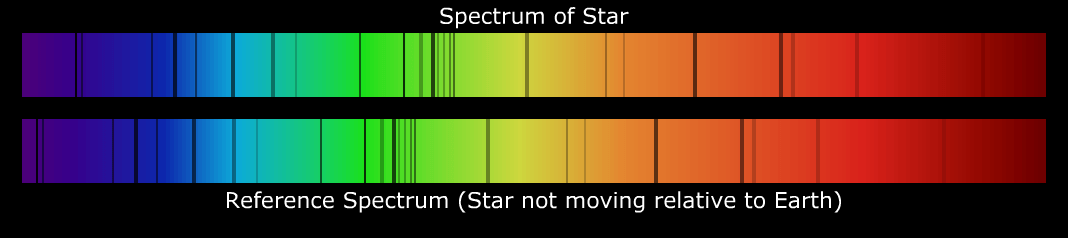
Use the image to identify the motion of the object relative to Earth.  Compare the absorption spectra of the star to what the star would look like if it were not moving at all relative to Earth.
a)
It is not moving
b)
It is moving away from Earth (Redshift)
c)
It is moving towards Earth (Blueshift)
d)
It is moving towards Earth (Redshift)
166.
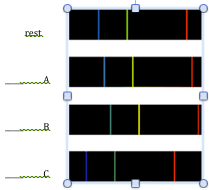
Based on  Doppler effect, which of the galaxies is moving away from Earth?
a)
A
b)
c)
C
d)
A and B
167.

Most scientists believe the Big Bang Theory explains which of the following questions?

a)

How our planets and moons formed

b)

How our universe began

c)

How the sun turns hydrogen into helium

d)

How fast light travels through space

168.

Which statement is true?

a)

The galaxies are moving toward us.

b)

The galaxies are moving away from us.

c)

The universe remains static or unchanged in motion.

d)

None of the above

169.
How old do scientists think the Universe is?
a)
13.8 billion years old
b)
4.5 billion years old
c)
24,000 years old
d)
5 years old
170.
What were the original two elements in our universe?
a)
Lithium and Carbon
b)
Hydrogen and Neon
c)
Helium and Chlorine
d)
Hydrogen and Helium
171.

The "afterglow" of the energy from the origin of the universe that we see today.

a)

Cosmic microwave radiation

b)

sunlight

c)

Doppler effect

d)

Cosmic explosions

172.
What is the CMBR
a)
The shape of the universe
b)
The first primordial elements
c)
Red shifted galaxies
d)
Leftover heat from the Big Bang 
173.

Light emitted from a star or galaxy can be separated into a band of colors, called a ________.

a)

Red Shift

b)

Wave Length

c)

Spectrum

d)

Microwave

174.
What type of galaxy is this?
a)
Spiral
b)
Elliptical
c)
Irregular 
d)
Irrational
175.
What type of galaxy is this?
a)
Spiral
b)
Elliptical
c)
Irregular
d)
Irrational
176.
What type of galaxy is this?
a)
Spiral
b)
Elliptical
c)
Irregular
d)
Irrational
177.
How are galaxies held together.
a)
gas
b)
dust
c)
stars
d)
gravitational attraction
178.

A light year is the measurement of ________ light travels in one year.

a)

time

b)

distance

179.

A scientist that studies stars, planets, and other objects in space.

a)

astrologist

b)

zoologist

c)

astronomer

d)

plantologist

180.

The milky way is the ______ galaxy in which we live in.

a)

irregular

b)

spiral

c)

elliptical