wayground logo

Free Printable Worksheets

Font size

S
M
L
XL
Worksheets

Life Science Final Review

Total questions: 92

Worksheet time: 1hrs 8mins

Name
Class
Date
1.

Mendel controlled the pollination of the pea plants through ____________________ fertilization.

a)

self

b)

cross

c)

asexual

d)

meiotic

2.

Which of the following scientist gave the principles of inheritance?

a)

(a) Mendel

b)

(b) Griffin

c)

(c) Johanssen

d)

(d) Watson and Crick

3.

AA pair of alleles

a)

Genotype

b)

Phenotype

4.

Blue eyes

a)

Genotype

b)

Phenotype

5.

Which of the following is heterozygous/hybrid

a)
FF
b)
tt
c)
Gg
d)
RR
6.
Which of the following is homozygous recessive?
a)
rr
b)
AA
c)
TT
d)
Ff
7.
The physical appearance of a trait is known as the-
a)
genotype
b)
phenotype
c)
characteristics
d)
intelligence
8.
Alternative forms of a gene are called
a)
Alleles
b)
Homozygous
c)
DNA
d)
Genetics
9.

This trait will always be expressed if present because it will mask the expression of others (Capital letter)

a)
stem cells
b)
heterozygous
c)
dominant
d)
recessive
10.
A trait is :
a)
a removal
b)
a characteristic
c)
 a change
d)
a sequence
11.
the passing of genetic traits from parent to offspring.
a)
heredity
b)
trait
c)
gene
d)
allele
12.
having two of the same genes for the trait (sometimes called purebred).
a)
homozygous
b)
hetrozygous
c)
protein
d)
chromosome
13.
having two different genes for a trait (sometimes called hybrid).
a)
protein
b)
homozygous
c)
heterozygous
d)
genotype
14.
A single piece of coiled DNA found in the cells; contains genes that encode traits.
a)
gene
b)
chromosome
c)
trait
d)
DNA
15.
Complex molecule that carries genetic information that defines an organism's traits. It is stored in the nucleus.
a)
DNA
b)
protein
c)
RNA
d)
glucose nucleic acid (GNA)
16.

a number that describes how likely it is that an event will occur

a)

ratio

b)

probability

17.

What is shaped like a double helix?

a)

chromosome

b)

DNA

c)

genes

d)

heredity

18.

Mitosis makes sure that all daughter cells are _____.

a)

genetically identical, diploid

b)

genetically identical, haploid

c)

genetically diverse, diploid

d)

genetically diverse, haploid

19.
A human usually has ______ chromosomes in their body cells.
a)
6
b)
22
c)
4
d)
46
20.
Which of the following is the correct order of organization in living things from most basic (simple) to most complex?
a)
a.  Organism, cell, tissue, organ, organ system
b)
a.  Organ system, organ, tissue, cell, organism
c)
a.  Cell, tissue, organ, organ system, organism
d)
a.  Cell, organ, tissue, organ, organism, organ system
21.
A group of similar cells that come together to perform a specific function is a/an
a)
organ
b)
organism
c)
organ system
d)
tissue
22.
The smallest level of organization of life in an organism
a)
tissue
b)
cell
c)
organ
d)
organ system
23.
The cell is the building block of all living things.
a)
True
b)
False
24.

Animals that have backbones.

a)

vertebrates

b)

invertebrates

c)

insects

d)

jellyfish

25.

Which animal is NOT cold-blooded?

a)

a fish

b)

a mammal

c)

a reptile

d)

an amphibian

26.

Cold-blooded animals body temperature changes, whereas warm-blooded animals body temperature stays constant.

a)

True

b)

False

27.

Which animal is a bird? Animal 1: backbone/feathers/warm-blooded/hollow bones for flight Animal

2: backbone/scales/gills/cold-blooded Animal

3: cold-blooded Animal

4: backbone/hair/ mammary glands

a)
Animal 1
b)
Animal 2
c)
Animal 3
d)
Animal 4
28.
What type of animal has fur and feeds its young with milk?
a)
birds
b)
reptiles
c)
amphibians
d)
mammals
29.
What classification of animals are  vertebrae (have a backbone)?
a)
birds only
b)
reptiles only
c)
reptiles and birds but not mammals and fish
d)
mammals, fish, reptiles, amphibians, and birds
30.

What does invertebrate mean?

a)

Animals without a backbone

b)

Animals that change their form

c)

Animals with a backbone

d)

Animals that lay eggs

31.
I have a soft-body, a hard shell, and live on land and water.  What am I?
a)
Mollusk
b)
Arthropod
c)
Echinoderm
d)
Cnidarian
32.

These structures resemble long suction cups, and are part of the water vascular system.

a)

madreporite

b)

radial canals

c)

tube feet

d)

ampullae

33.

__________,____________, and __________are all types of worms.(Choose 3)

a)

squareworms

b)

roundworms

c)

tapeworm

d)

segmented worms

34.

Arthropods are the largest group of animals

a)

True

b)

False

35.

What is the hard, outer covering called that covers, supports, and protects the internal body?

a)

Endoskeleton

b)

Molting

c)

Exoskeleton

d)

Appendages

36.

Endotherms...

a)

Heat their own bodies internally.

b)

Depend on their surroundings to control their temperature.

c)

Have a very high natural body heat.

d)

Have a very low natural body heat.

37.

A fish uses its ___ to move up or down in water.

a)

mammary glands

b)

metamorphosis

c)

swim bladder

38.

Animals with ___ have body parts arranged like spokes on a wheel.

a)

radical symmetry

b)

bilateral symmetry

c)

vertebrates

39.

Female bears produce milk from their ___.

a)

metamorphosis

b)

swim bladder

c)

mammary glands

40.

Sponges, cnidarians, and mollusks are all ___.

a)

invertebrates

b)

vertebrates

c)

mammary glands

41.

In the classificiation system of organisms, the level of ___ is between phylum and order.

a)

kingdom

b)

class

c)

genus

d)

species

42.

___ is a group of organs and tissues that act as transfer stations carrying needed materials to cells and removing their waste products.

a)

circulatory system

b)

respiratory system

c)

nervous system

43.
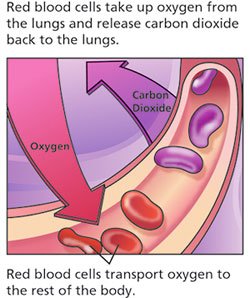
These cells, in the blood, carry oxygen and give the blood its color.
a)
white blood cells
b)
plasma
c)
platelets
d)
red blood cells
44.
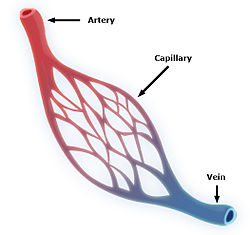
This type of vessel carries blood TO the heart:
a)
vein
b)
nerve
c)
muscle
d)
artery
45.
When oxygen-rich blood is carried AWAY from the heart, it travels through an...
a)
artery
b)
neuron
c)
vein
d)
straw
46.
The smallest type of blood vessel is the:
a)
nerve
b)
vein
c)
capillary
d)
artery
47.
How many chambers does the heart have ? 
a)
4
b)
6
c)
3
d)
1
48.

The bottom chambers of the heart are called

a)

ventricles

b)

atria

c)

vena cava

d)

valves

49.

The top chambers of the heart are called

a)

ventricles

b)

atria

c)

vena cava

d)

valves

50.

What gas do we breath when we exhale?

a)

oxygen

b)

helium

c)

carbon dioxide

d)

hydrogen

51.

This is a gas our cells need to survive.

a)

helium

b)

carbon dioxide

c)

oxygen

d)

nitrogen

52.

What organ does oxygen begin to enter the blood stream?

a)

nasal cavity

b)

lungs

c)

bronchioles

d)

alveoli

53.
The breathing muscle is called:
a)
Epiglottis
b)
Bronchiole
c)
Diaphragm
54.
How many bones are in the adult human body?
a)
200
b)
206
c)
205
d)
204
55.

What are the main functions of the skeleton?

a)

Protection

b)

Body Shape

c)

Movement

d)

All Of These

56.

Which system is responsible for creating red blood cells?

a)

skeletal

b)

muscular

c)

respiratory

d)

nervous

57.

What do we call the place where two bones meet?

a)

skeleton

b)

joint

c)

muscle

d)

rib

58.

Which type of tissue connects bone to bone?

a)

tendons

b)

ligaments

c)

skeletal mucscles

d)

smooth muscles

59.

Which of the following describes the joints in the skull and ribs?

a)

movable

b)

hinge

c)

pivot

d)

immovable

60.

What kind of joint is found at your elbow?

a)

pivot

b)

hinge

c)

gliding

d)

ball and socket

61.

Which bone disease causes bones to become weak and brittle?

a)

artereosclerosis

b)

arthritis

c)

fracture

d)

osteoporosis

62.

Which type of joint is found at your shoulder and hip and allows for the greatest range of motion?

a)

ball and socket

b)

gliding

c)

hinge

d)

pivot

63.

Where are red blood cells produced?

a)

compact bone

b)

red bone marrow

c)

spongy bone

d)

yellow bone marrow

64.

A ___ is observed and describes in the natural world what appears to always be true.

a)

hypothesis

b)

theory

c)

law

65.
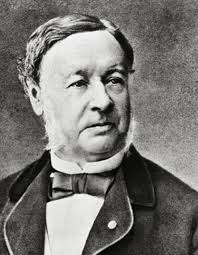
Which of the following scientists contributed to the cell theory?
a)
Rudolf Virchow, Robert Hooke, Anton van Leuwenhoek
b)
Matthais Schleiden, Theodor Schwann, Rudolf Virchow
c)
Robert Hooke, Theodor Schwann, Anton von Leuwenhoek
d)
Theodor Schwann, Matthais Schleiden, Robert HookeOption 4 (optional)
66.
Which of the following scientists concluded that all animals are made of cells?
a)
Rudolf Virchow
b)
Matthais Schleiden
c)
Robert Hooke
d)
Theodor Schwann
67.
Which of the following statements is not part of the cell theory?
a)
Cells are the basic unit of structure and function in all living things.
b)
All cells are produced from other cells.
c)
Only animal cells are composed of cells.
d)
All living things are composed of cells.
68.
What is one way in which all living things on Earth are alike?
a)
All living things have hair.
b)
All living things are made of cells and come from other cells.
c)
The cells of all living things have chloroplast.
d)
All living things can move. 
69.
What tool do you use to view the cells?
a)
metric ruler
b)
centrifuge
c)
microscope
d)
pipette
70.

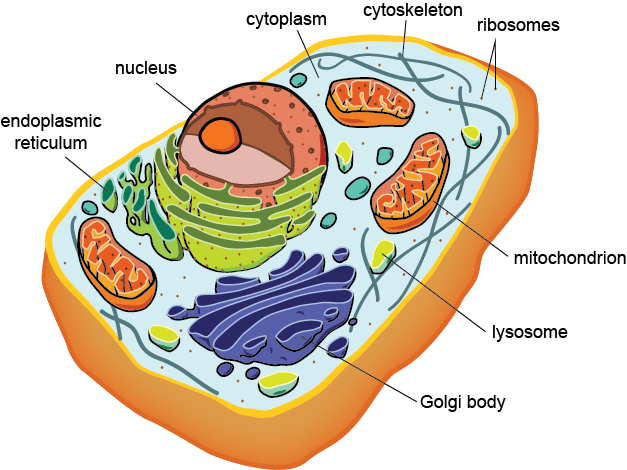
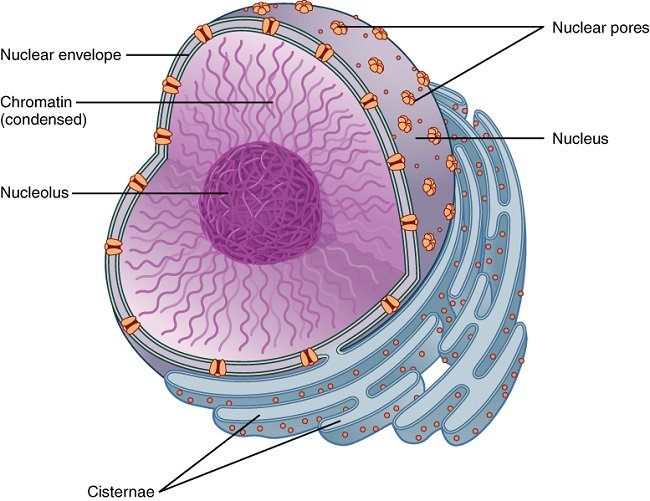
The control center of the cell.

a)

cytoplasm

b)

nucleus

c)

nucleoplasm

d)

chromatin

71.

Which of the following statements is NOT part of the cell theory?

a)

Cells are the basic unit of structure and function in all living things.

b)

All cells are produced from other cells.

c)

Cells are the basic unit of structure and function in all matter.

d)

All living things are composed of cells.

72.

Cell organelles work together to maintain

a)

homeostasis

b)

eukarya

c)

prokarya

d)

organisms

73.

What are the three parts of the cell theory?

a)

All cells come from pre-existing cells.

b)

Cells are the basic unit of structure and organization in all living things.

c)

Cells are the basic unit of structure and organization in all matter.

d)

All organisms are made of one or more cell.s

74.

What is the process of cell division that forms two nuclei?

a)

homologous chromosomes

b)

mitosis

c)

cell cycle

d)

chromosomes

75.

What is the structure in which DNA, hereditary material that controls cell activities, can be found.

a)

chromatids

b)

centromere

c)

chromosome

d)

mitosis

76.

A cell produces more cells by first copying its...

a)

centioles

b)

DNA

c)

chromatids

d)

cell membranes

77.
Which part of the cell cycle is the longest? 
a)
Cytokinesis 
b)
Mitosis 
c)
Interphase
d)
Prophase
78.
What is the correct order of the stages of mitosis? 
a)
Metaphase, prophase, telophase, anaphase 
b)
Telophase, prophase,  anaphase metaphase, 
c)
Prophase, metaphase, anaphase, telophase
d)
Anaphase,  telophase, metaphase, prophase
79.

What are the 3 reactants of photosynthesis? The reactants are the things needed for photosynthesis to occur.

a)

oxygen, glucose, sunlight

b)

sunlight, oxygen, water

c)

water, oxygen, carbon dioxide

d)

carbon dioxide, sunlight, water

80.

What are the 2 products of photosynthesis? The products are the things made in the process of photosynthesis.

a)

water, sunlight

b)

glucose, carbon dioxide

c)

oxygen, glucose

d)

sunlight, oxygen

81.

What is the chemical equation for cellular respiration?

a)

Glucose + Oxygen -> Carbon dioxide + Water + Energy

b)

Oxygen + Carbon dioxide + Energy -> Glucose + Water

c)

Carbon dioxide + Glucose -> Oxygen + Water + Energy

d)

Water + Carbon dioxide + Energy -> Oxygen + Glucose

82.
The main source of energy for all life comes from ____.
a)
the Earth
b)
the moon
c)
the sun
d)
the food we eat/make
83.
Which electromagnetic waves have the highest frequencies and the shortest wavelengths?
a)
microwaves
b)
visible light
c)
gamma rays
84.
Which electromagnetic waves are used in ovens and cell phone communications?
a)
Infrared rays
b)
ultraviolet rays
c)
microwaves
85.
For waves in any medium, as the wavelength decreases, what happens to the frequency?
a)
It also decrease
b)
It stays the same
c)
It increases
86.
Which of the following has wavelengths longer than microwaves?
a)
Infrared waves
b)
Radio waves
c)
Visible light
87.
How are electromagnetic waves different from other waves? 
a)
They have very short wavelengths 
b)
They transmit energy instead of matter 
c)
They can travel through empty space
d)
They can change direction by reflection 
88.
Law of reflection state that - The angle of incidence is .................. to the angle of reflection.
a)
equal
b)
double
c)
half
89.

the function of the placenta is to

a)

increase the volume of the chest cavity during breathing

b)

store urine until it is eliminated

c)

store and process newly swallowed plant food

d)

exchange materials between an embryo and its mother

90.

an endotherm is an animal that

a)

stores large amounts of food in its stomach

b)

has a low rate of metabolism

c)

can see color very well

d)

can generate its own body heat

91.

egg-laying mammals are called

a)

marsupials

b)

placental animals

c)

insectovores

d)

monotremes

92.

The _______ is the organ that provides food and oxygen to and removes waste from developing young.

a)

amnion

b)

embryo

c)

egg

d)

placenta