
 Worksheets
Chem final practice
Total questions: 66
Worksheet time: 1hrs 26mins
The positive particles of an atom are
electrons
positrons
neutrons
protons
Where are an atom's neutrons and protons located?
nucleus
electron cloud
core
center
An atom with atomic number 6 would have how many protons?
6
12
3
Not enough information

In this image, what does 1.00794 stand for?
Hydrogen
atomic number
atomic mass
atomic explosion
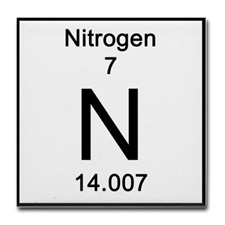
What is the number of protons that the element in this image contains?
14
7
15
18

Which state of matter does this picture best represent?
Solid
Liquid
Gas

Which state of matter does this picture best represent?
Solid
Liquid
Gas
When heating up a substance, the particles begin to ________________________ and _______________________.
expand; slow down
spread apart; move faster
contract; speed up
come closer together; move slower
You compress a closed syringe and then let it go. Why does the plunger return to its original position?
More air particles rush into the syringe and push the plunger up.
The air particles outside the syringe pull the plunger back.
The air particles inside the syringe push the plunger back.
The air inside tried to get out.
Heat flows from _______ to ______ objects.
cooler; warmer
warmer; warmer
warmer; cooler
cooler; cooler
Energy is ___________ in endothermic reactions.
released
ended
absorbed
Energy is _________ in exothermic reactions.
released
absorbed
unchanged
What is the relationship between degrees Celsius and Kelvin?
Kelvin + 273.15 = Degrees Celsius
Degrees Celsius + 273.15 = Kelvin
Degrees Celsius multiplied by 273.15 = Kelvin
Kelvin divided by 273.15 = Degrees Celsius
An atom's overall charge on the periodic table is
positive
depends on its mood
neutral
negative
If the number of protons in an atom equals the number of _______, the atom will have no charge.
protons
neutrons
electrons
nucleus
Two atoms of the same element but with different mass numbers are ________.
relatives
isotopes
variables
unstable
What is true of molecules of gas that are exposed to heat in a fixed volume container?
They move faster and they cause the pressure to increase
They move slower and pressure will decrease
The volume increases and pressure increases
The volume decreases and the pressure decreases.
What about gasses can be measured?
Pressure and Volume
Temperature, Volume, and Pressure
Volume and Temperature
Pressure, Temperature, Volume, and Number of Particles
You have a gas that has a pressure of 2 atm and a volume of 10 L. What would be the new volume if the pressure was decreased to 1 atm?
5 L
20 L
It would stay at 10L
1 L
What law combines all 3 factors (pressure, temperature, and volume)
Combined Gas Law
Charles's Law
Boyle's Law
Guy-Lussac's Law

Beakers are used
to measure volume with high accuracy and precision
to hold small amounts of dry chemicals
to recover dissolved solids
to measure approximate volumes and observe reactions

Identify the equipment shown here:
beaker
Erlenmeyer flask
Florence flask
volumetric flask
What is special about graduated cylinders?
They hold large quantities of liquid safely. We use them to store chemicals.
They measure small amounts very accurately. We use them when precision is important.
They are easily heated. We use them to heat liquids.

How is an atom's net charge determined?
sum of protons and neutrons
difference between protons and electrons
number of electrons
number of neutrons
Which of the following best describes pressure?
a measure of the speed (average kinetic energy) of particles in a sample of matter
the number of collisions between particles and the walls of a container
a measure of energy related to the speed and mass of particles in a sample of matter
How are pressure and temperature related?
Directly
Indirectly
They aren't related
How are volume and temperature related?
Directly
Indirectly
They aren't related
You are performing an experiment in class to explore how mass of a substance affects heat transfer in a reaction. You perform 3 trials with different masses of a chemical in a beaker with 50 mL of water. After each trial, you measure the change in temperature of the water. What is your independent (manipulated) variable?
volume of water
mass of chemical
container
change in temperature
You are performing an experiment in class to explore how mass of a substance affects heat transfer in a reaction. You perform 3 trials with different masses of a chemical in a beaker with 50 mL of water. After each trial, you measure the change in temperature of the water. What is your dependent (responding) variable?
volume of water
mass of chemical
container
change in temperature
If 55.6 grams of calcium carbonate react in excess sodium hydroxide, how many grams of Na2CO3 are made?
Reaction: CaCO3 + NaOH → Ca(OH)2 + Na2CO3
147.34 gram
52.45 gram
55.9 gram
194.24 gram
In the equation 2Al2O3 → 4Al + 3O2, what is the mole ratio of aluminum to oxygen?
10:6
3:4
4:3
2:3
___KNO3 → ___KNO2 + ___O2
What coefficients are needed to balance the reaction?
2, 2, 1
2, 3, 2
1, 2, 2
1, 3, 1

SO2 + O2 <=> SO3
If the concentration of SO2 is increased, the equilibrium position of the reaction will shift ___________.
2 NO(g) + O2(g) ⇌ 2 NO2(g)
If a (dynamic) equilibrium is disturbed by changing the conditions, the position of equilibrium................
SO2 (g) + NO2 (g) <=> SO3 (g) + NO (g)
had reached a state of equilibrium, was found to contain
0.40 mol L-1 SO3 , and 0.30 mol L-1 NO,
0.15 mol L-1NO2 , and 0.20 mol L-1 SO2.
Calculate the equilibrium constant for this reaction.
pH+pOH=???
(at 25℃)
(a)
Calculate the pH of a 0.5M solution of H2PO4^-
(please answer in 〇.〇〇)
(a)
What is the pH of an acidic solution of 0.0025M HCl
4.60
5.0
2.6
7
The lower the pH, the greater the concentration of :
OH-
H+

Cl-

What does the equation in the image correspond to?
pKa
Ka
pH
[H+]
Acids dissociate in water. Which equation below shows the correct dissociation for hydrochloric acid?
HCl (aq) --> H (aq) + Cl (aq)
HCl (aq) --> H+ (aq) + Cl+ (aq)
HCl (l) --> H+ (aq) + Cl- (aq)
HCl (aq) --> H+ (aq) + Cl- (aq)
Write the formulas for and balance the following equation:
magnesium carbonate decomposes into magnesium oxide and carbon dioxide

Calculate the Keq for the following reaction given the following concentrations: PCl5=
0.200M; PCl3=0.040M; Cl2=0.080M
PCl5 <==> PCl3 + Cl2
Show your work for credit
In the Haber process, nitrogen and hydrogen are put under 200atm of pressure and heated to 723.15K to produce ammonia. If the process is started with 325L of nitrogen gas, how many liters of ammonia can be produced if there's an excess of hydrogen gas? (ammonia is NH3). Make sure you include a balanced chemical equation and remember both nitrogen and hydrogen are diatomic.
0.60mol of Br2 and 0.60mol of Cl2 are placed in a 1.00L flask and are allowed to react and reach equilibrium. (There is no BrCl at first). After reaching equilibrium the flask is found to contain 0.28 mol of BrCl. What are the equilibrium concentrations of Br2 and Cl2 and what is the Keq? Show all of your work for credit.
A 1.00M solution of formic acid (CHO2H) is found to have a pH of 2.38 at 250C. Calculate the Ka for formic acid.

