
 Worksheets
Biology Final exam review Part 1
Total questions: 74
Worksheet time: 55mins
How many variables should be changed in a controlled experiment
1
at least 2
As many as needed
Between 1 and 100


Tyler is pulling this block of wood up a ramp. What would be the dependent (or responding) variable that he is measuring?
the weight of the wood block that is being pulled up the ramp by the spring scale in TYlers hand
the number of books stacked under the ramp that changes the angle and the height it travels
the amount of force needed to pull the wood block up the ramp that is measured by the spring scale
the friction of the wood against the ramp pushing against the wood block

A students was doing an experiment using the scientific method. Every three days the student plans to count the green leaves. Which would be a good hypothesis for this experiment?
If plants are placed in direct sunlight, then they will grow larger
Plants placed in bright light will grow more green leaves than in dim light.
If plants are place in clay pots, then they will grow more green leaves than plastic pots.
Plants in warmer temperatures, will grow more green leaves.

According to the diagram, which question is being tested?
How does color of light affect plant growth?
How does the amount of fertilizer added to plants affect growth?
How will different amounts of water affect plant growth?
How does the type of soil affect plant growth?
Which statement is a hypothesis?
Sample X has a greater mass than sample Y.
There are more than 100 elements in the periodic table.
We have found that bean seeds sprout faster than corn seeds.
Bean seeds that receive 10 mL of water a day will sprout faster than bean seeds that receive 5 mL of water a day

A scientist hypothesizes the the temperature at which an alligator's egg is incubated will determine whether the alligator will be male or female. The independent variable is
the male alligators
the gender of the alligator
the temperature
the incubator

A scientist hypothesizes the the temperature at which an alligator's egg is incubated will determine whether the alligator will be male or female. The dependent variable is
the temperature
the size of the baby alligators
the incubator
the gender of the baby alligators

In an experiment, the one variable that is changed is called the
dependent variable
independent variable
experimental variable
controlled variable
In an experiment, the factor that we measure is called the
independent variable
dependent variable
conclusion
controlled variable
Which of the following hypotheses is written correctly?
If I freeze a tennis ball, then it will not bounce as high.
If a tennis ball is frozen, it won't bounce as high as one that is not frozen.
Frozen tennis balls will not bounce as high.
If I heat up a tennis ball it will bounce high

There are two types of data. Which type of data involves numbers that are obtained by counting or measuring?
Quantitative
Qualitative
There are two types of data. Which type of data involves descriptions/photographs/illustrations that cannot be counted or measured?
Qualitative
Quantitative
What term means a state of stability or equilibrium?
Taxis
Cell Transport
Diffusion
Homeostasis
Fats, oils and cholesterol are all types of what?
cell membranes
hormones
lipids
fatty acids
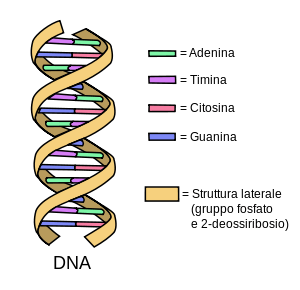
RNA and DNA are which type of macromolecules?
Carbohydrate
lipid
nucleic acid
protein
Which molecules are joined together to make proteins?
fatty acids
nucleic acids
amino acids
acetic acids
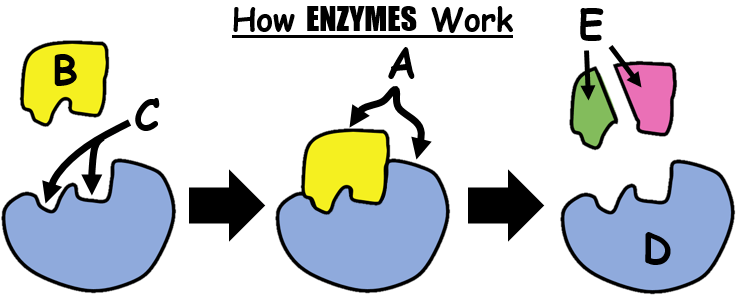
The enzyme lactase will break down the sugar lactose into which of the following components?
monosaccharides
nucleic acids
amino acids
phospholipids
What will most likely happen if an appropriate enzyme is added to a chemical reaction?
The reaction rate will increase.
The equilibrium of the reaction will be maintained.
The reaction rate will decrease.
The reaction will stop.


Which cell structure is responsible for maintaining homeostasis by allowing materials in and out of the cell?
Nucleus
Ribosomes
Cell Membrane
Cell Wall
The cell membrane is comprised of what two structures?
Phospholipids
Starches
Cellulose
Proteins
Which cell structure is responsible for producing ATP energy?
Mitochondria
Ribosomes
Nucleus
Golgi apparatus
Cell membrane
In which cell structure would you find DNA?
Mitochondria
Ribosomes
Cell membrane
Golgi apparatus
Nucleus
Which cell structure is responsible for protein synthesis?
Ribosomes
Mitochondria
Nucleus
Plasma membrane
Endoplasmic reticulum
Which cell structure produces spindle fibers and aids in cell division?
Mitochondria
Nucleus
Centrioles
Cytoplasm
Ribosomes

What is this cell structure?
Mitochondria
Ribosome
Chloroplast
Nucleus
Vacuole

What is this cell structure?
Chloroplast
Cytoplasm
Chlorophyll
Centriole

Beaker A represents a ______________ solution.
Hypertonic
Hypotonic
Isotonic

Beaker B demonstrates a ______________ solution.
Hypertonic
Hypotonic
Isotonic
If there are more solutes inside a cell in a solution, the solution is said to be:
Hypertonic
Hypotonic
Isotonic
If a cell shrinks in a solution, the solution is said to be:
Hypertonic
Hypotonic
Isotonic
Osmosis is specifically the diffusion of:
Water
Gas
Solids
Any particles
Diffusion is the movement of:
Water
Gas
Solids
Any particles
Diffusion that is aided by proteins in the cell membrane is called:
Osmosis
Active Transport
Diffusion
Facilitated Diffusion
Diffusion that is aided by proteins in the cell membrane is called:
Osmosis
Active Transport
Diffusion
Facilitated Diffusion
Passive transport moves materials along the concentration gradient from:
High to low concentration
Low to high concentration
What are the 2 types of cell transport?
Active
Passive
Osmosis
Diffusion
Convert 51 g to Kg
0.0051 Kg
0.051 kg
5,100 kg
51,000 kg
The smallest living unit is a(n)
atom
DNA
cell
organism
What is the chemical formula for a monosaccharide? (glucose, fructose or galactose)
C6H12O6
C12H22O11
CH3(CH2)n
C5H5N5

Students are studying the result of of photosynthesis, so they design an experiment to test whether or not plants produce oxygen. Using elodea (a water plant) and snails (an animal that requires oxygen to live), the class creates the setup below.
a plant begins to grow in test tube a
There is more CO2 in test tube B than test tube C
the snail in test tube D has died
There is more oxygen in test tube B than test tube C


