wayground logo

Free Printable Worksheets

NEW

Font size

S
M
L
XL
Worksheets

9.4 Ch.6-7 Cells & Genetics

Total questions: 75

Worksheet time: 54mins

Name
Class
Date
1.
What is the first phase of Mitosis?
a)
Prophase
b)
Metaphase
c)
Anaphase
d)
Telophase
2.
What phase of mitosis is occuring in the picture?
a)
Prophase
b)
Metaphase
c)
Cytokinesis
d)
Telophase
3.
In which phase does the cell spend most of it's life?
a)
Interphase
b)
Nuclear Division
c)
Telophase
d)
Mitosis
4.
What phase of mitosis is pictured?
a)
Metaphase
b)
Telophase
c)
Prophase
d)
Anaphase
5.
Why would it be important to replicate DNA before a cell divides in mitosis or meiosis?
a)
In order for genetic information to be transferred into daughter cells.
b)
In order for the cell to be able to increase in size.
c)
In order for the DNA to be contained in the nucleus.
d)
In order for the cell to re-order the DNA sequencing in the new cells.
6.
How many chromosomes do humans have?
a)
46
b)
21
c)
10
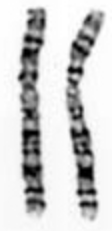
7.
Structure A refers to the _____.
a)
chromatid
b)
chromosome
c)
centromere
8.
Fruit fly body cells have 8 chromosomes. After mitosis, you would expect a resulting fruit fly daughter cell to have -
a)
16 chromosomes.
b)
46 chromosomes.
c)
8 chromosomes.
d)
4 chromosomes.
9.
Before cells can divide, what must be copied?
a)
mitochondria
b)
cytoplasm
c)
DNA
d)
Cell Wall
10.
Name the phase:
a)
Prophase
b)
Metaphase
c)
Anaphase
d)
Telophase
11.
What process does a multi-cellular organism use to replace its damaged body cells?
a)
mitosis
b)
meiosis
c)
replication
d)
transcription
12.
Before a cell can divide, what must happen?
a)
Nothing, it is always ready to divide
b)
The number of chromosomes must be cut in half
c)
The number of chromosomes must double
d)
The number of chromosomes must triple.
13.
Why don't cells just stretch when you grow, instead of making copies of themselves?
a)
The muscles in the cells can't stretch that far.
b)
The cell won't be able to bring in food fast enough or get waste out fast enough.
c)
The cell membrane doesn't like the feeling of stretching.
d)
The lysosomes don't want to work so hard.
14.
In which type of cells will mitosis occur?
a)
egg cells
b)
sperm cells
c)
jail cells
d)
Body cells except the sperm and egg cells
15.
When you start with 1 cell, at the end of mitosis, how many identical cells will you have?
a)
1
b)
2
c)
3
d)
4
16.
Name the phase:
a)
Prophase
b)
Metaphase
c)
Anaphase
d)
Telophase
17.

Name the phase:

Hint: Chromosomes are moving apart.

a)

Anaphase

b)

Telophase

c)

Metaphase

d)

Prophase

18.
Name the phase:
a)
Prophase
b)
Metaphase
c)
Anaphase
d)
Telophase
19.
Name the phase:
a)
Prophase
b)
Metaphase
c)
Anaphase
d)
Telophase
20.
The stages of mitosis in order
a)
Metaphase, Anaphase, Prophase, Telophase
b)
Prophase, Anaphase, Metaphase, Telophase
c)
Prophase, Metaphase, Anaphase, Telophase
d)
Anaphase, Prophase, Telophase, Metaphase
21.
Which is telophase?
a)
A
b)
E
c)
B
d)
F
22.
a)
Anaphase
b)
Cytonkinesis
c)
Interphase
d)
Prophase
23.

This picture shows which process? (IPMAT)

a)

mitosis

b)

meiosis

c)

the cell cycle

24.
The cells produced via meiosis are called:
a)
sex cells
b)
somatic cells
c)
body cells
d)
skin cells
25.
A human usually has xx amount of chromosomes.
a)
6
b)
22
c)
4
d)
46
26.
What is it called when a sperm and egg meet?
a)
meiosis
b)
fertilization
c)
cell division
d)
mitosis
27.
Meiosis makes sperm and egg cells. In humans, sperm and egg cells each have _____ chromosomes. Therefore a fertilized human egg cell (sperm and egg cell combined) would create a cell with _____ chromosomes.
a)
23, 46
b)
46, 23
c)
2, 4
d)
50, 100
28.
Unlike mitosis, meiosis in male mammals results in the formation of
a)
one haploid gamete
b)
three diploid gametes
c)
four diploid gametes
d)
four haploid gametes
29.
What kind of cells are made in MEIOSIS?
a)
Haploid Gametes
b)
Diploid Somatic Cells
c)
Skin Cells
d)
Liver Cells
30.
Goes through P.M.A.T two rounds 
a)
Mitosis
b)
Meiosis
c)
Osmosis
d)
Transcription
31.
Which process and type of resulting cells are represented?
a)
mitosis, gametes
b)
mitosis, body cells
c)
meiosis, gametes
d)
meiosis, body cells
32.
If a somatic cell in a butterfly contains 24 chromosomes, a butterfly egg would contain
a)
3
b)
6
c)
12
d)
24
33.
The process of crossing over occurs in what phase of meiosis?
a)
anaphase 1
b)
prophase 1
c)
prophase 2
d)
telophase 1
34.
Which of these cells would be produced through meiosis?
a)
skin cells
b)
liver cells
c)
brain cells
d)
sperm cells
35.
The chromosomes that pair up during meiosis, are called __________ chromosomes.  
a)
homozygous 
b)
asexual
c)
homologous
d)
genes
36.
Crossing over helps promote 
a)
male genotype
b)
genetic variation
c)
DNA replication
d)
mitosis
37.
A male shark has 40 chromosomes in each of its sex cells. How many would be present in its body cells?
a)
20
b)
40
c)
80
d)
160
38.
What is another reason we need meiosis?
a)
So the offspring has genes from both parents
b)
So the offspring has genes from one parent
c)
So the offspring has genes from neither parents
d)
So the offspring makes its own genes
39.
Chromosomes exchange genetic material during 
a)
crossing over
b)
replication
c)
synthesis
d)
translation
40.
A human zygote should have _____ chromosomes inside.
a)
46
b)
23
c)
92
d)
64
41.
Unlike mitosis, meiosis in male mammals results in the formation of
a)
one haploid gamete
b)
three diploid gametes
c)
four diploid gametes
d)
four haploid gametes
42.
Human eggs and sperm are _____, and each has ____ chromosomes.
a)
diploid, 23
b)
diploid, 46
c)
haploid, 23
d)
haploid, 46
43.

a)

prophase 1

b)

metaphase 1

c)

anaphase 1

d)

telophase 1

e)

prophase 2

44.

a)

metaphase 1

b)

anaphase 1

c)

metaphase 2

d)

anaphase 2

e)

prophase 1

45.

a)

anaphase 1

b)

metaphase 1

c)

anaphase 2

d)

metaphase 2

e)

telophase 2

46.

a)

prophase 1

b)

telophase 1

c)

anaphase 1

d)

prophase 2

e)

anaphase 2

47.

a)

prophase 1

b)

metaphase 1

c)

telophase 1

d)

telophase 2

e)

prophase 2

48.

a)

metaphase 2

b)

anaphase 1

c)

anaphase 2

d)

telophase 1

e)

prophase 2

49.

a)

anaphase 2

b)

anaphase 1

c)

metaphase 2

d)

prophase 1

e)

telophase 2

50.

a)

prophase 1

b)

prophase 2

c)

anaphase 1

d)

telophase 1

e)

telophase 2

51.
Whether a human will be a male or a female is determined by
a)
sex chromosomes in the egg cell.
b)
sex chromosomes in the sperm cell.
c)
autosomes in the egg cell.
d)
autosomes in the sperm cell.
52.
A chromosome that is not a sex chromosome is known as a(an)
a)
autosome.
b)
karyotype.
c)
pedigree.
d)
chromatid.
53.
The X and Y chromosomes are called the
a)
extra chromosomes.
b)
phenotypes.
c)
sex chromosomes.
d)
All of the answers are correct.
54.
What is the gender of the individual whose karyotype is seen in the image?
a)
Male
b)
Female
55.
What is a genome?
a)
The complete haploid amount of genetic material present in a cell or organism
b)
A garden ornament 
c)
The sum of all human material.
d)
A totally unique set of genetic material not shared with anything else
56.
The main goal of the Human Genome Project (HGP) was to:
a)
Identify the unique parts of each person's DNA.
b)
Identify genes responsible for human diseases.
c)
Identify genes responsible for human behavior.
d)
Determine the entire sequence of human DNA.
57.
Which best describes the impact that the Human Genome Project (HGP) has had on society?
a)
It has helped scientists determine that certain genes can cause diseases 
b)
It has led to discrimination against genetically flawed individuals
c)
It has led to the appearance of new diseases
d)
It has cost society billions of dollars without any major benefits
58.
The genomes of two unrelated humans are ___% the same.
a)
90.0
b)
0.1%
c)
78%
d)
99.9%
59.

A segment of DNA that codes for a trait

a)

gene

b)

centromere

c)

chromosome

d)

chromatid

60.

an observable characteristic

a)

trait

b)

personality

c)

cell

d)

DNA

61.

Genetic traits are determined by one or more

a)

genes

b)

organelles

c)

random chances

d)

cells

62.

A version or variation of a gene

a)

trait

b)

gene

c)

allele

d)

DNA

63.

The alleles that an organism has/inherits are its

a)

genotype

b)

phenotype

c)

chromosome

d)

recessive

64.

The observable expression of a trait is its

a)

phenotype

b)

genotype

c)

chromosome

d)

allele

65.

Long strands of DNA are wrapped into

a)

DNA

b)

Chromosome

c)

Alleles

d)

Phenotype

66.
Chromosomes are made of
a)
DNA
b)
RNT
c)
WWE
d)
DMA
67.
Is this Karyotype human?
a)
Yes
b)
No
c)
Impossible to Determine
68.
A pair of identical chromosomes shown in a karyotype, one inherited from mom, and one inherited from dad are called
a)
sister chromotids
b)
centromeres
c)
homologous chromosomes
d)
autosomes
69.
Which would be considered a somatic cell?
a)
Sperm cell
b)
Egg Cell
c)
Skin Cell
d)
All of these
70.
Which of the following would be considered a Gamete cell?
a)
Egg Cell
b)
Sperm Cell
c)
Both of these
d)
None of these
71.

The diagram below represents a change that occurred in a pair of chromosomes during the formation of an egg cell. The alteration that occurred will most likely be passed on to every cell that develops from the egg cell. Why would this type of alteration result in offspring with combinations of traits that differ from those found in either parent?

a)

It converts sex cells into body cells.

b)

It results in the formation of diploid gametes.

c)

. It results in new combinations of genes on each chromosome.

d)

It changes the chromosome number of the body cells that develop from the egg cell.

72.

The process of "crossing over" occurs in what phase of meiosis?

a)

anaphase 1

b)

prophase 1

c)

prophase 2

d)

telophase 2

73.
Why is the gene for a disease or disorder more likely to be found on the X chromosome than Y?
a)
The X chromosome has many more genes
b)
The Y chromosome has many more genes
74.
Males are more likely to suffer from a sex-linked disease or disorder because
a)
males are the weaker sex
b)
males have less DNA
c)
males have 1 X chromosome, so the disorder is more likely to be expressed
75.
Histones are 
a)
proteins wound up in DNA
b)
critical to maintaining the shape of chromosomes
c)
aid in the tight packing of DNA
d)
all of these