
Font size
 Worksheets
LC5 Y9 SEP ASSESSMENT BIO
Total questions: 89
Worksheet time: 57mins
Salmonella is caused by...
Bacteria
Virus
Fungus
Protist
Viruses
to allow more light to enter the eye
Where does the lens focus light ?
on the retina
on the cornea
on the pupil
on the iris

Which part is cerebrum?
A
B
C
What is the role of auxin that causes a plant to bend towards light?
The concentration of auxin in the plant increases when there is light.
Auxin causes uniform growth on every stem.
Auxin causes cells that are on the dark side to grow faster.
Auxin causes the increase in the number of plant cells.

What is the reaction that is shown by the plant in the figure above?
Positive hydrotropism.
Negative phototropism.
Positive thigmotropism.
Negative geotropism.

The higher rate of blood flow to the muscles during exercise removed larger amounts of waste products made by the muscles. Which two substances need to be removed from the muscles in larger amounts during vigorous exercise?
Amino acids
Carbon dioxide
Glycogen
Lactic acid
How much more blood (in cm3 per minute) flowed to the muscles during vigorous exercise than when resting?
(a)
During the recovery period breathing rate remains high, this is to help repay oxygen (a) .
Which of these statement(s) is true.
Breathing rate increases during exercise.
Heart rate increases during exercise.
Breathing rate remains higher than normal right after exercise.
Heart rate increases when someone is at rest.
Breathing rate increases when you are sleeping.
Which of these statements are incorrect for anaerobic respiration? (Select 2)
Oxygen is required
It is more efficient
Lactic acid can be produced
The process is used in brewing beer and making bread.
Choose the correct, balanced equation for aerobic respiration.
6CO2 + 6H2O --> C6H12O6 + 6O2
C6H12O6 + 6CO2 --> 6H2O + 6O2
C6H12O6 + 6O2 --> 6CO2 + 6H2O
C6H12O6 + O2 --> CO2 + H2O
Respiration takes place in
the cells
the lungs
the heart
the brain
Respiration is a process which provides cells with (a) .
Which of the following are true for malignant tumours? (Select 2)
They divide more slowly
They are more likely to spread to other parts of the body
They are not considered to be cancerous
Chemotherapy is usually required along with surgery to cure the tumour
Smoking interferes with the lungs' ability to provide what to the rest of the body?
Oxygen
Ammonia
Water
Carbon dioxide
What is emphysema?
When there is too much mucus in the lungs
When the alveolar walls have broken down, reducing surface area
A type of lung cancer
Damage to the cilia
A colorless, odorless and poisonous gas found in tobacco smoke is what?
carbon monoxide
tar
nicotine
stimulant
Coronary heart disease can be treated using stents, statins and bypass surgery. Which of the following describes statins?
A drug that is taken to lower cholesterol in the blood, reducing the rate of plaque build up.
A metal mesh that is used to hold open a blocked artery to increase blood flow.
A surgical method using a vein (often from the leg) to create another pathway for blood to flow around a clot.
A drug that is used to strengthen the heart beat to increase blood flow.
The higher rate of blood flow to the muscles during exercise removed larger amounts of waste products made by the muscles. Which two substances need to be removed from the muscles in larger amounts during vigorous exercise?
Amino acids
Carbon dioxide
Glycogen
Lactic acid
How much more blood (in cm3 per minute) flowed to the muscles during vigorous exercise than when resting?
(a)
During the recovery period breathing rate remains high, this is to help repay oxygen (a) .
Which of these statement(s) is true.
Breathing rate increases during exercise.
Heart rate increases during exercise.
Breathing rate remains higher than normal right after exercise.
Heart rate increases when someone is at rest.
Breathing rate increases when you are sleeping.
Which of these statements are incorrect for anaerobic respiration? (Select 2)
Oxygen is required
It is more efficient
Lactic acid can be produced
The process is used in brewing beer and making bread.
Choose the correct, balanced equation for aerobic respiration.
6CO2 + 6H2O --> C6H12O6 + 6O2
C6H12O6 + 6CO2 --> 6H2O + 6O2
C6H12O6 + 6O2 --> 6CO2 + 6H2O
C6H12O6 + O2 --> CO2 + H2O
Respiration takes place in
the cells
the lungs
the heart
the brain
Respiration is a process which provides cells with (a) .
Which of the following are true for malignant tumours? (Select 2)
They divide more slowly
They are more likely to spread to other parts of the body
They are not considered to be cancerous
Chemotherapy is usually required along with surgery to cure the tumour

The graph shows data for people diagnosed with cancer in 1961 and 2001. 78% of people diagnosed with breast cancer in 2001 were alive 10 years later.
Which type of cancer diagnosed in 1961 had the highest survival rate?
Breast
Prostate
Skin
Testicular
The graph shows data for people diagnosed with cancer in 1961 and 2001. 78% of people diagnosed with breast cancer in 2001 were alive 10 years later.
Which type of cancer shows the biggest improvement in the percentage of people alive after 10 years?
Breast
Prostate
Skin
Testicular
Why is mucus produced in the lungs?
To help you cough
To trap microbes to reduce the chance of infection
To help the air move in and out
Smoking interferes with the lungs' ability to provide what to the rest of the body?
Oxygen
Ammonia
Water
Carbon dioxide
What is emphysema?
When there is too much mucus in the lungs
When the alveolar walls have broken down, reducing surface area
A type of lung cancer
Damage to the cilia
Suggest the effect of long term smoking on the amount of oxygen transported in someone's blood?
Decreased
Increased
A colorless, odorless and poisonous gas found in tobacco smoke is what?
carbon monoxide
tar
nicotine
stimulant
What are cigarettes NOT linked to?
lung disease
cancer
better physical fitness
heart disease
Coronary heart disease can be treated using stents, statins and bypass surgery. Which of the following describes statins?
A drug that is taken to lower cholesterol in the blood, reducing the rate of plaque build up.
A metal mesh that is used to hold open a blocked artery to increase blood flow.
A surgical method using a vein (often from the leg) to create another pathway for blood to flow around a clot.
A drug that is used to strengthen the heart beat to increase blood flow.

Name the treatment shown in Diagram 2.
Stent
Statin
Bypass
Artificial valves
Which of the following is coronary heart disease?
Coronary artery is blocked
Coronary artery gets infected with bacteria
The heart gets infected with bacteria
The heart is blocked
What is coronary artery?
Blood vessel that carry blood towards the heart muscle
Blood vessel that carry blood away from the heart muscle
Blood vessel that carry blood towards the lungs
Blood vessel that carry blood away from the lungs
What is the meaning of atherosclerosis?
The buildup of fats, cholesterol in artery walls (plaque), which can restrict blood flow
The buildup of blood accumulated out of sudden in the artery
The name of the damaged hole of the septum in heart
The equipment used in the bypass surgery
What happens when the blood could not supply to the heart as there is a blockage in the coronary arteries?
(You can choose multiple answers)
The muscle cell at the heart will die
The person will probably get a stroke
Can cause a heart attack
The person does not feel anything
A procedure of uses blood vessels taken from another area of the body known as
(a)
Non communicable diseases are mainly caused due to
improper hygiene
an improper lifestyle
entry of pathogens in our body
all of the above
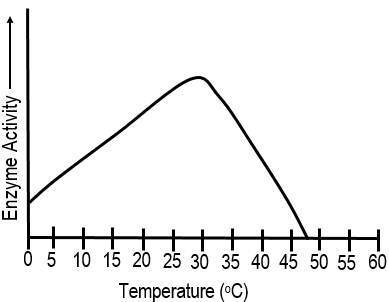
The enzymes become denatured if the temperature is _______ compared to its optimum temperature.
too high or too low
too low
too high
What temperature do you think our enzymes will work the best at?
room temperature, 25 degrees
0 degree
50 degrees
37 degrees
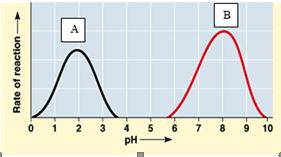
What is the optimal pH of enzyme A?
8
2
5.7-10
10
Carbohydrates
Proteins
Nucleic Acids
Lipase breaks down lipids (fats0 into which of the following products:
Fatty acids
Simple sugars
Amino acids
Glycerol
Carboxylic acid
In an experiment to investigate the effect of pH on the activity of amylase what is the independent variable?
pH
Temperature
Time taken for starch to be digested
Concentration of enzyme
State the word the describes the best pH at which an enzyme works
(a)
Which of the following should be controlled in an experiment to investigate the effect of pH on the digestion of starch?
Concentration of starch solution
pH
Time taken for the starch to be digested
Light intensity
What colour does iodine solution become if starch is present in a food sample?
Orange
Cloudy
Brick red
Blue/Black
Which of the following tests for protein?
Iodine
Benedicts
Biuret
Emulsion

This photo represents a
negative test for glucose
negative test for protein
positive test for starch
positive test for glucose
What is the function of the stomach? (Select all that apply)
Contains acid to kill bacteria present in food.
Churns food through muscular contractions to mechanically break down food
Contains enzymes to chemically break down food
Reabsorbs water from food in the digestive system
How do the particles move in diffusion?
From a region of low concentration to a region of high concentration
From a region of high concentration to a region of low concentration
From a region of low concentration to a region of low concentration
From a region of high concentration to a region of high concentration
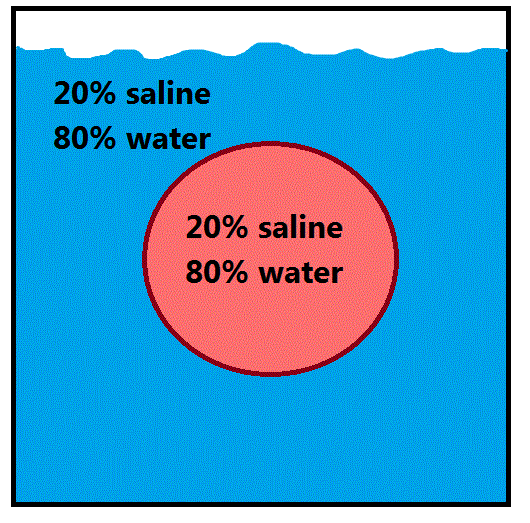
A blood cell is placed into the jar, as seen. Where will the water go?
Into the cell
Out of the cell
Equally in & out - it's isotonic
The water is a lie
Which one is the definition of active transport?
movement of particles through the cell membrane from a region of lower concentration to a region of higher concentration using energy in the form of ATP.
passage of water molecules from a region of their higher concentration to a region of their lower concentration through a partially permeable membrane
net movement of molecule from a region of higher concentration to region of lower concentration. Molecule down a concentration gradient
net movement of molecule from a region of lower concentration to region of higher concentration. Molecule down a concentration gradient


Recall the main function of a xylem cell.
To transport nutrients (mainly sucrose) to different parts of a plant.
To make energy for the plant via photosynthesis.
To transport carbon dioxide to the leaves for photosynthessis.
To transport water to different parts of plant.
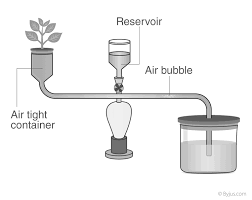
What happens to the movement of air bubble if apparatus is kept in front of a fan
Air bubble does not move
Air bubble moves very little
Air bubble does not change its position
Air bubble moves very fast

Which number is labelling the stomata? (write answer as a number not in words e.g. 3)
(a)

Calculate the number of stomata per mm2 for the leaf shown in Figure 1.
(a)

Plant stem cells, found at the tips of roots and shoots are called __________________.
Meristem
Xylem
Phloem
Mesophyll
Which of the following statements are true for adult stem cells?
Undifferentiated cells
Taken from bone marrow
Taken from human embryos
Can differentiate into all cell types
Can differentiate into some cell types

Name part (i).
nucleus
chromosome
gene
cytoplasm
Why do muscle cells need to divide by mitosis more often than most other cells?
To contract the muscles
To repair the muscles
To supply more oxygen to the muscles
To transmit nerve impulses
What is coronary artery?
Blood vessel that carry blood towards the heart muscle
Blood vessel that carry blood away from the heart muscle
Blood vessel that carry blood towards the lungs
Blood vessel that carry blood away from the lungs
What happens when the blood could not supply to the heart as there is a blockage in the coronary arteries?
(You can choose multiple answers)
The muscle cell at the heart will die
The person will probably get a stroke
Can cause a heart attack
The person does not feel anything
A procedure of uses blood vessels taken from another area of the body known as
(a)

