wayground logo

Free Printable Worksheets

Font size

S
M
L
XL
Worksheets

Molecule and maters

Total questions: 70

Worksheet time: 38mins

Name
Class
Date
1.
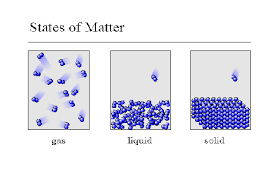
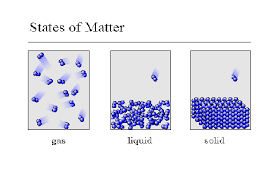
Particles in this state of matter are moving the fastest.
a)
solid
b)
liquid
c)
gas
2.
Particles in this state of matter are moving the slowest.
a)
solid
b)
gas
c)
liquid
3.

This state of matter takes ONLY the shape of its container.

a)

liquid

b)

gas

c)

solid

4.
This state of matter keeps its shape and volume.
a)
gas
b)
solid
c)
liquid
5.
This state of matter takes both the shape and volume of it container.
a)
gas
b)
solid
c)
liquid
6.
In this state of matter, there is a strong attraction between molecules and they cannot break away from each other. 
a)
solid
b)
liquid
c)
gas
7.
In this state of matter, the molecules can move around each other, but cannot break the force of attraction between them.
a)
liquid
b)
gas
c)
solid
8.

In this state of matter, the molecules have enough energy to completely separate from each other.

a)

gas

b)

solid

c)

liquid

9.
When water beads on the outside of a cold glass of water.
a)
vaperization
b)
condensation
c)
melting
d)
freezing 
10.
When boiling water creates steam.
a)
condensation
b)
melting 
c)
freezing
d)
vaporization
11.
When dripping water turns into icicles. 
a)
melting
b)
freezing
c)
vaporization
d)
condensation 
12.
When a scoop of ice cream drips down the side of the cone.
a)
freezing 
b)
vaporization
c)
melting
d)
condensation
13.
Solute
a)
the substance that dissolves in another substance
b)
the substance in which another substance dissolves
14.
Solvent
a)
the substance that dissolves in another substance
b)
the substance in which another substance dissolves
15.
The state of matter in which the atoms are locked and vibrate in place. 
a)
solid
b)
liquid
c)
gas
16.
Changes in a materials state of matter 
a)
physical property
b)
chemical property
17.

Cornstarch was the ____ in the Oobleck Lab.

a)

solvent

b)

solute

18.

Water was the _____ in the Oobleck Lab.

a)

solute

b)

solvent

19.

When a solid changes straight to a gas.

a)

condensation

b)

sublimation

c)

deposition

d)

freezing

20.

When a gas turns straight to solid.

a)

sublimation

b)

melting

c)

deposition

d)

evaporation

21.
What are the states of matter?
a)
solid, liquid, and juice
b)
solid and liquid
c)
solid and gas
d)
solid, liquid, and gas
22.
Matter that has its own shape and takes up space.
a)
solid
b)
liquid
c)
gas
23.
Matter that always fills the shape in a container, such as air.
a)
solid
b)
liquid
c)
gas
24.
Milk takes the shape of its container because it is a:
a)
solid
b)
liquid
c)
gas
25.
Molecules are closest together in a 
a)
Solid
b)
Liquid
c)
Gas
d)
plasma
26.
What term describes a liquid changing to a solid?
a)
Deposition
b)
Sublimation
c)
Evaporation
d)
Freezing
27.
At higher temperatures
a)
particles in an object have less energy
b)
particles in an object move faster
c)
a gas contracts
28.
A gas
a)
has a definite shape but no definite volume
b)
has a definite volume but no definite shape
c)
has fast-moving particles
29.
Boiling
a)
liquid to gas
b)
gas to solid
c)
gas to liquid
d)
solid to liquid
30.
Which state of matter has tightly packed molecules?
a)
solid
b)
liquid
c)
gas
31.
a)

It is a liquid because the volume is fixed, and the shape changes.

b)

It is a liquid because the substance retains its mass and volume.

c)

It is a solid because the substance retains its mass and volume.

d)

It is a solid because the length of the substance cannot be measured, and the shape changes.

32.
a)

Figure 1; the particles are tightly packed.

b)

Figure 2; the particles are tightly packed.

c)

Figure 1; the particles are filling the entire container.

d)

Figure 2; the particles are far apart.

33.
a)

The student is correct because only a solid has mass and occupies space.

b)

The student is incorrect because a solid does not retain its mass and volume.

c)

The student is correct because a solid has a fixed shape and volume.

d)

The student is incorrect because a solid takes the shape of the container it is placed in.

34.
a)

Observation 1

b)

Observation 3

c)

Observations 1 and 3

d)

Observations 2 and 3

35.
a)

The mass of the water in Beaker 4 is greater and the temperature is cooler than the water in Beaker 1.

b)

The mass of the water in Beaker 1 is less and the temperature is warmer than the water in Beaker 3.

c)

The mass of the water in Beaker 3 is less and the temperature is cooler than the water in Beaker 4.

d)

The mass of the water in Beaker 2 is greater and the temperature is warmer than the water in Beaker 3.

36.
a)

The substance is a liquid because the volume of the substance is retained.

b)

The substance is a solid because the shape of the substance is retained.

c)

The substance is a solid because the mass of the substance does not change.

d)

The substance is a gas because the volume of the substance does not change.

37.
a)

Substance 1 should be classified as a solid, and Substance 3 should be classified as a liquid because a solid does not have a fixed shape.

b)

Substance 1 should be classified as a solid, and Substance 2 should be classified as a liquid because the volume of a liquid does not change.

c)

Substance 2 should be classified as a gas, and Substance 3 should be classified as a solid because the particles of a solid have small spaces between them.

d)

Substance 1 should be classified as a gas, and Substance 3 should be classified as a liquid because the volume of a liquid is fixed.

38.
a)

The substance is a liquid because it is clear, and its particles are spaced far apart.

b)

The substance is a liquid because its shape and volume are indefinite.

c)

The substance is a gas because its shape and volume are indefinite.

d)

The substance is a gas because it is clear, and its particles are spaced far apart.

39.
a)

The water in Glass W is warmer than the water in Glass Z.

b)

The water in Glass X is warmer than the water in Glass W.

c)

The water in Glass Y is colder than the water in Glass Z.

d)

The water in Glass Z is colder than the water in Glass X.

40.
a)

increased condensation and decreased evaporation

b)

increased evaporation and decreased precipitation

c)

increased transpiration and decreased condensation

d)

increased precipitation and decreased transpiration

41.

Select ALL of the items that are made of atoms:

a)

Desk

b)

Pencil

c)

Plants

d)

People

42.

A molecule is _______________________.

a)

always blue.

b)

made of 200 or more atoms combined.

c)

made of 3 or more atoms combined.

d)

made of 2 or more atoms combined.

43.

How many atoms make up this water molecule?

a)

0

b)

1

c)

2

d)

3

44.

What element or elements are present in the molecule: CO2 ? (use the periodic table in your folders to check)

a)

Cobalt

b)

Carbon and Oxygen

c)

Oxygen

d)

Chlorine

45.

Matter is something that has ___________ and _____________.

a)

mass and is always hungry.

b)

heat and is using up energy.

c)

mass and takes up space.

d)

heat and does not use energy.

46.

True or False: It is possible to see an atom with the naked eye.

a)

True

b)

False

47.

Which of the following is not a molecule:

a)
b)
c)
48.

Which of the following are molecules:

a)
b)
c)
49.

What elements make up the following molecule: H2O (Check your periodic table)

a)

Helium and Oxygen

b)

Hydrogen

c)

Oxygen

d)

Oxygen and Hydrogen

50.

What is the number of total atoms in the molecule: C6H12O6 ?

a)

12

b)

3

c)

24

d)

18

51.

How many total atoms make up the molecule NaCl ?

a)

1

b)

2

c)

3

d)

5

52.

How many Nitrogen atoms are in the molecule NH3 ?

a)

1

b)

2

c)

3

d)

4

53.
Something that takes up space and has mass.
a)
volume
b)
matter
c)
mass
d)
density
54.
The amount of space something takes up
a)
density
b)
volume
c)
mass
d)
matter
55.
What are the three states of matter?
a)
solid, volume, mass
b)
density, volume, mass
c)
solid, liquid, gas
d)
density, gas, volume
56.
__________ are the building blocks of life.
a)
solids
b)
gases
c)
atoms
d)
nutrients
57.
Gasoline is a ________________.
a)
liquid
b)
solid
c)
gas
58.
Sand is a ___________________.
a)
liquid
b)
solid
c)
gas
59.
Helium is a ____________.
a)
liquid
b)
solid
c)
gas
60.
I am the smallest whole particle of matter. 
a)
atom
b)
compound
c)
molecule
d)
mixture
61.
I am two or more atoms chemically bonded.
a)
atom
b)
compound
c)
molecule
d)
mixture
62.
I am 2 or more elements chemically bonded.
a)
atom
b)
molecule
c)
compound
d)
mixture
63.
Which 2 kinds of particles make up the nucleus of an atom?
a)
electrons and neutrons
b)
electrons and nuclei
c)
protons and neutrons
d)
protons and kryptons
64.
Which particle carries a negative charge?
a)
protons
b)
neutrons
c)
electrons
65.
A pure substance that cannot be broken down into any other substance by chemical or physical means. There are about 100 of us shown in the Periodic Table
a)
compound
b)
mixture
c)
molecule
d)
element
66.
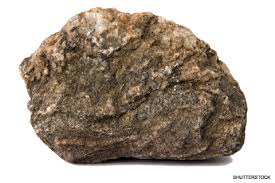
How can you describe this picture?
a)
liquid
b)
solid
c)
gas
67.
What is an example of gas?
a)
crayons
b)
paper
c)
soda
d)
air
68.
Type of matter made of two or more elements...
a)
element
b)
mixture
c)
compound
69.
What kind of charge do protons have?
a)
positive
b)
negative
c)
neutral
70.
Neutrons have a ________ charge.
a)
positive
b)
negative
c)
neutral