
 Worksheets
electrical engg 2
Total questions: 75
Worksheet time: 51mins
The Function of a Conservator in a Transformer is ??
To project against internal fault.
To reduce core loss and copper loss
To take care of the expansion and contraction of transformer oil due to the variation of temperature of surroundings.
To cool the transformer oil.
Buchholz's relay gives warning and protection against
Electrical fault inside the transformer itself
Electrical fault outside the transformer in outgoing feeder
For both outside and inside faults.
Non of the above
What is the function of the fins or radiator fins in the transformer
For Cooling transformer
For lighting protection
For earthing protection
For over voltage protection
Which of the following does not change in a Transformer ??
Current
Voltage
Frequency
All of these
A transformer core is laminated to
Reduce hysteresis loss
Reduce eddy current losses
Reduce copper losses
All of these.
The Chemical used in Breather is
Asbestos Fiber.
Silica Sand.
Sodium Chloride.
Silica Gel
A transformer Oil must be Free from ?
Water
Sludge
Moisture
Ordor
If dc voltage is applied to the primary of a transformer it may:
Work
Burn the winding
Give lower voltage on the secondary side
Give higher voltage on the secondary side
Transformer ratings are usually expressed in terms of :
Voltage
KVA
kWh
KW
A common method of cooling a power transformer is ..............
natural air cooling
air blast cooling
oil cooling
any of the above
Tick all of the following that apply to delta connection:
VL = Vp
VL = 3 x Vp
IL = Ip
IL = 3 x Ip
Tick all that apply for a star connection of 3 phase transformers.
VL = Vp
VL = 3 x Vp
IL = Ip
IL = 3 x Ip
In which configuration do we use Vp = 3VL to find the phase voltage?
star
delta
HOW WILL YOU REDUCE CORE LOSS IN THE TRANSFORMER?
By using silicon steel
By reducing the size of winding
By increasing the size of the winding
WHICH IS VARIABLE LOSS IN THE TRANSFORMER?
CORE LOSS
COPPER LOSS
STARY LOSS
HOW WILL YOU REDUCE THE HYSTERESIS LOSS?
By increasing the size of the winding
By reducing the size of the winding
By using thin silicon steel
CORE LOSS IS A COMBINATION OF ------- AND ------ LOSSES OF TRANSFORMER.
EDDY CURRENT LOSS
HYSTERESIS LOSS
COPPER LOSS
DIELECTRIC LOSS
DIFFERENCE BETWEEN INPUT POWER TO OUTPUT POWER IS KNOWN AS ---------------
GAIN
LOSS
CORE LOSS
COPPER LOSS
The transformer which is more feasible to use in the distribution ends should be ___________
star-delta
delta-star
scott
delta-delta

Which coil has the maximum flux in it?
A
B
C
All are equal
Magnetic flux is measured in
teslas
coulombs
webers
farads

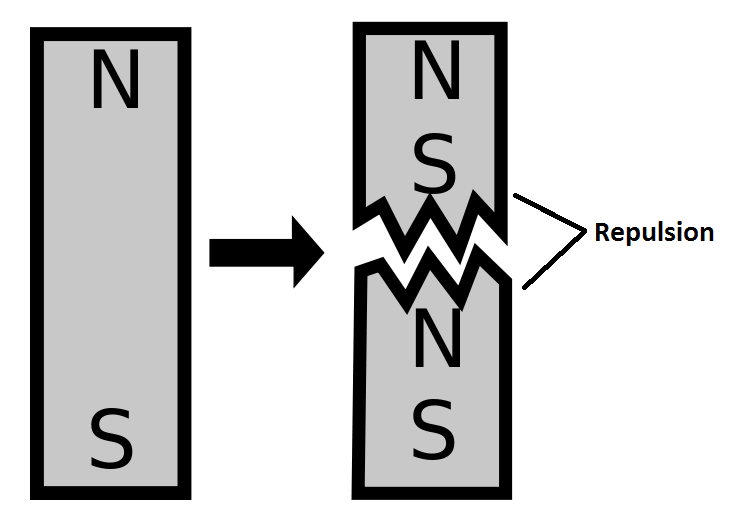
If you break a bar magnet in half, each half...
contains one magnetic pole.
becomes a bar magnet with two poles.
becomes unmagnetized.
is only temporarily magnetized.
Example for dia-magnetic materials
(a) super conductors
(b) alkali metals
(c) transition metals
(d) Ferrites
If a transformer reduces voltage, it is called a....................... transformer.
step left
step right
step up
step down
Why transformers work with A.C. current but not D.C.
A.C current produces changing magnetic field.
D.C current produces changing magnetic field.
D.C current is weak
A.C current is powerful
Which of the following does not change in a transformer?
Voltage
Current
Power
Frequency
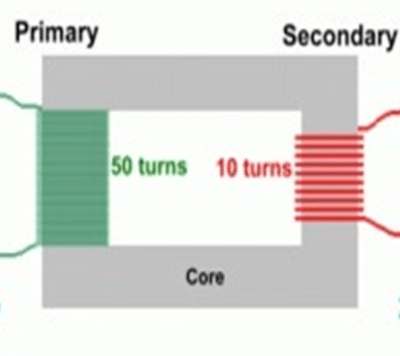
This picture is an example of a ________________.
Motor
Generator
Step-up transformer
Step-down transformer
A transformer has 100 turns in the primary coil and 25 turns in the secondary coil. When a 120 V is applied to the primary coil, what is the voltage in the secondary coil?
480V
30V
20V
450V
Transformer works on which of the following principle
Lenz’s Law
Ampere's Law
Faraday's Law of Electromagenetic Induction
Fleming's Law
What is the meaning of transformer?
Optimus Prime
A device that transfers electrical energy from one circuit to another
Autobots
Megatron
If a transformer increases voltage, it is called a ......... transformer.
step right
step left
step up
step down
The winding of wire around a core which is connected to a source of energy is called the ....... coil.
primary
secondary
tertiary
Electrical symbol of a TRANSFORMER


Which activity will produce the highest current?
Move the magnet bar into the coil while the coil remains stationery
Move the coil into the magnet bar while the magnet remains stationery
Move the coil and magnet towards each other
Move the coil and magnet away from each other

Which action will increase the deflection of the galvanometer pointer?
The magnetic pole is reversed
The number of turns of coils is increased
The coil is made from insulated wire
The magnet is slowly pushed into the coil


The production of electric current by a changing magnetic field is called ____________________________________.
induced current
electromotive force
electromagnetic induction
internal resistance
Faraday’s Law states that the magnitude of the induced e.m.f. is _________________ to the rate of change of magnetic flux linkage with the solenoid.
equal
inversely proportional
directly proportional

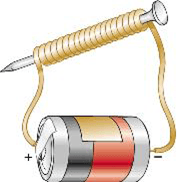

What type of current is used?
Direct
Alternating
An (a) is a type of magnet in which the magnetic field is produced by an electric current
Non Magnetic Material is ____________________
Cobalt
Nickel
Iron
Aluminum
If you cut a bar magnet in half, it forms ______ poles
2 poles
4 poles
8 poles
6 poles
The North end of the freely suspended magnet points towards?
Geographical West
Geographical East
Geographical North
Geographical South
Like poles _____________each other, while unlike poles_______ each other.
(a)
(a) magnets retain their properties only for a short period of time.

The area around a magnet is called the .....
attraction zone
work area
magnetic field
hot zone


The earth is like a magnet because:
It has a magnetic field due to its core
it has a magnetic field do to its crust
There is a magnetic pole in the earth's core
Gravity generates a magnetic field

You can increase the strength of an electromagnet by:
Decreasing the battery charge
Decreasing the amount of loops in the solenoid
Winding the coils more closely
Winding the coils more loosely
DC MOTOR CONVERTS ------- ENERGY INTO ----------ENERGY
MECHANICAL, ELECTRICAL
ELECTRICAL, MECHANICAL
KINETIC, POTENTIAL
WHICH DEVICE IS CONSTRUCTION-WISE THE SAME AS DC MOTOR?
DC GENERATOR
TRANSFORMER
INDUCTOR
AS PER FLEMING'S LEFT-HAND RULE THUMB FINGER SHOWS THE
DIRECTION OF MAGNETIC FIELD
DIRECTION OF CURRENT
DIRECTION OF FORCE
AS PER FLEMING'S LEFT-HAND RULE INDEX FINGER SHOWS THE
DIRECTION OF FORCE
DIRECTION OF MAGNETIC FIELD
DIRECTION OF CURRENT
AS PER FLEMING'S LEFT-HAND RULE MIDDLE FINGER SHOWS THE---------
DIRECTION OF FORCE
DIRECTION OF MAGNETIC FIELD
DIRECTION OF CURRENT
WHAT IS TORQUE?
TWISTING FORCE
KINETIC FORCE
MAGNETIC FORCE
GENERATOR CONVERTS ------ ENERGY INTO ----- ENERGY
MECHANICAL, ELECTRICAL
ELECTRICAL, MECHANICAL
POTENTIAL,KINETIC
The part of an electric motor that doesn't spin is called the...
armature
commutator
stator
bearings

In the image shown, the dark grey shapes are called:
Brushes
Armatures
Commutators
Windings
Operating principle of DC motor formula.
F=V/R
F=VR
F=IV
F=BiL
The rotor is the name of the part that is
the rotating coil inside the stator's field
the stationary magnets around the rotating coil
the spring loaded parts that contact the commutator
the split ring that carries electricity to the coil
The brushes in an electric motor
the split rings that rotate in a motor
the coil that create the electromagnetic field
Are spring loaded connectors that carry electricity to the rotor by brushing against the commutator as it rotates
the magnets surrounding the rotor
The AC motor consists of two main parts:
the rotor and the stator.
fan blades and wiring cover
cylinder and piston
center differential and cardan shaft
The difference between the synchronous speed and actual motor (Rotor) speed is called ………..?
A- Skew angle.
A- Phase Shifting.
A- Slip.
A- Speed switch.
The centrifugal switch connects with ………...
Run windings.
Start windings.
Both start and run windings.
Capacitor unit.
WHAT IS BACK EMF?
THE VOLTAGE OPPOSES THE SUPPLY VOLTAGE
THE VOLTAGE DOES NOT OPPOSE THE SUPPLY VOLTAGE
SUPPLY VOLTAGE
BACK EMF OF DC MOTOR IS----------
Eb = PΦNZ / 60A
EB = PΦN / 60AZ
EB = PΦZ / 120AN
Speed of d.c. shunt motors are controlled by
a. Flux control method
b. Rheostatic control method
c. Voltage control method
d. All of these
How does a Stepper Motor move ?
A. Electrical Pulse
B. Continuous Applied Voltage
C. Alternates from A and B
Two of the following are the general types of DC generators. (Check two)
Asynchronous
Self Excited
Separately Excited
Synchronous
Differential Compound
It is the component of the generator that has the voltage (EMF) induced into it.
commutator
armature
prime mover
rotor

