wayground logo

Free Printable Worksheets

Font size

S
M
L
XL
Worksheets

IB - The Cell Theory and Ultrastructures of Cell

Total questions: 100

Worksheet time: 5hrs 48mins

Name
Class
Date
1.
Which structures are found in ALL cells?
a)
cell membrane and cytoplasm
b)
chloroplasts and mitochondria
c)
a cell wall and nucleus
d)
chloroplasts and cell wall
2.
Which cell structure is found in plant and animals cells and controls what can come into or leave a cell?
a)
cell membrane
b)
cytoplasm
c)
nucleus
d)
vacuole
3.
Chloroplasts in plant cells allow the plant to perform a function that animal cells cannot do.  What is the main function of the chloroplasts found in plant cells?
a)
to absorb light energy and manufacture food
b)
to remove waste materials by active transport
c)
to manufacture chemical energy from food
d)
to control the shape of the cell
4.
All cells need energy to function.  Which cell organelle is responsible for producing energy in the cell?
a)
chloroplasts
b)
mitochondria
c)
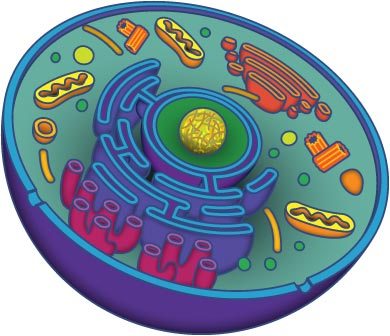
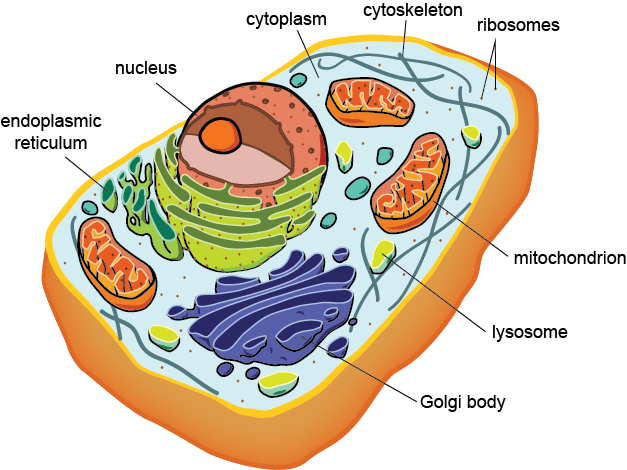
nucleus
d)
vacuoles
5.
What is the function of a cell wall?
a)
to protect and support the cell
b)
to perform different functions in each cell
c)
to prevent water from passing through it
d)
to prevent oxygen from entering the cell
6.
Which organelle acts as the sorting/packaging centre of the cell?
a)
Nucleus
b)
Golgi Apparatus
c)
Chloroplasts
d)
Vacuoles
7.
 What is the difference between the cell wall and the cell membrane?
a)
There is no difference
b)
The cell membrane is found ONLY in animal cells, whilst the cell wall is found ONLY in plant cells 
c)
The Cell wall is found ONLY in plant cells
d)
The cell wall is found ONLY in animal cells
8.
Which of the following is NOT part of the CELL THEORY?
a)
Cells must contain DNA 
b)
All living things are made from cells
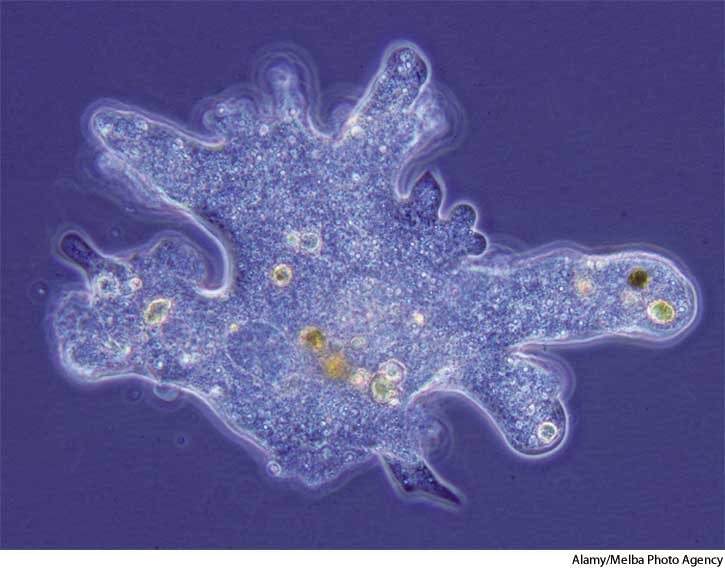
c)
Cells can only come from other cells
d)
Cells are the basic unit of life
9.

What is the basic unit of all living things?

(a)  
10.
Where are proteins made?
a)
Golgi body
b)
Mitoichondria
c)
Chromosomes
d)
Ribosomes
11.
What is the gel-like substance inside of cells called?

a)
photoplasm
b)
photosynthesis
c)
cytoskeleton
d)
cytoplasm
12.
Plant and animal cells are both_________
a)
eukaryotes
b)
prokaryotes
13.

What is the name of the genetic material that is inside the nucleus?

(a)  

14.

What does it mean to be unicellular?

a)

no cells

b)

more than 1 cell

c)

only 1 cell

15.

What does it mean to be multicellular?

a)

no cells

b)

more than 1 cells

c)

only 1 cell

16.

What are the products of photosynthesis?

a)

Glucose

b)

Water

c)

Glucose & Oxygen

d)

Oxygen & Water

17.

What are the reactants of photosynthesis?

a)

Glucose & Energy

b)

Sunlight, Water, and Oxygen

c)

Sunlight, Water, and Carbon Dioxide

d)

Sunlight & Oxygen

18.
All living things are made up of...
a)
cells
b)
cell tissues
c)
organ
d)
organ systems
19.
Which type of cell has no nucleus?
a)
Eukaryote
b)
Prokaryote
c)
Animal
d)
Plant
20.
Bacteria has what type of cell?
a)
prokaryotic
b)
eukaryotic
c)
same as plants
d)
same as humans
21.
In multicellular eukaryotic organisms, what are cells organized into?
a)
Tissues
b)
Muscles
c)
Organs
d)
Blood
22.
A larger cell is more efficient at meeting its own needs than a smaller cell.
a)
True
b)
False
23.

Which letter represents the cell membrane?

a)

F

b)

G

c)

H

d)

I

24.

Produces the energy a cell needs to carry out its functions

a)

mitochondria

b)

ER

c)

Golgi bodies

d)

vacuoles

25.

Receives proteins and materials from the ER, packages them and distributes them

a)

Golgi bodies

b)

ribosomes

c)

cell wall

d)

nucleus

26.
An unspecialized cell that can develop into many different cell types is called a/an _____.
a)
tissue
b)
organ
c)
stem cell
d)
organ system
27.
What is the correct order of organization
a)
tissues-cells-organs-organ systems-organism
b)
cell-tissue-organs-organ systems-organism
c)
organism-cells-tissues-organ systems-organism
d)
tissues-cells-organs-organ sytems-organism
28.

When cells are damaged, new cells are created by cell a process called cell division. How does the cell theory support this fact?

a)

It states that all cells have a nucleus which divides.

b)

It states that all living things are made up of one or more cells.

c)

It states that cells come from previously existing cells.

d)

It states that the basic units of structure and function are cells.

29.
Which of the following is NOT a cell theory.
a)
All non-living things are made of cells
b)
All cells come from pre-existing cells
c)
Cells are the basic unit of structure and function of all living things
30.
What is the difference between embryonic stem cells and adult stem cells?
a)
Embryonic stem cells can differentiate into more cell types than adult stem cells
b)
Adult stem cells are pluripotent, just like embryonic stem cells
c)
Adult stem cells can differentiate into more cell types than embryonic stem cells
d)
Adult stem cells grow bigger than embryonic stem cells
31.
This type of cell sends messages throughout the body in the form of electrical impulse.
a)
nerve cell
b)
sperm cell
c)
muscle cell
d)
skin cell
32.
This type of cell carries oxygen throughout the body.
a)
gamete
b)
platelet
c)
white blood cell
d)
red blood cell
33.
Compared to the eukaryotic cell, prokaryotic cells are 
a)
More complex
b)
Less complex
c)
Full of membrane-bound organelles
d)
Very large
34.

Which of these pictures most likely shows a plant magnified under a microscope?

a)
b)
c)
d)
35.
If the image measures 100 mm and the scale bar is is 50 µm, what is the magnification?
a)
2,000 x
b)
150 x
c)
5,000 x
d)
20 x
36.
If a scale bar measures 32 mm and it states it's length is 100 µm, what is the magnification?
a)
320 x
b)
3,200 x
c)
0.32 x
d)
32,000 x
37.
If a bacteria image measures 450 mm and the magnification is 15,000x, what is the actual size of the bacteria?
a)
30 µm
b)
0.3 µm
c)
300 µm
d)
3,000 µm
38.

Josie measured the scale bar image to be 80 mm. What is the magnification of this electron micrograph?

a)

160X

b)

0.00625 X

c)

0.16X

d)

25,000X

39.

Serena measured the image of one of the bacterial cells to be 32 mm. If the magnification of the image is 8,000X, what is the actual size of the bacterial cell?

a)

4 μm

b)

0.004 μm

c)

256,000 μm

d)

0.25 μm

40.

What steps should Burt use follow to calculate the actual size of each bacterial cell?

a)

Step 1: Calculate the magnification by measuring the scale bar image ÷ actual size

Step 2: Measure image of bacterial cell ÷ magnification

b)

Step 1: Calculate the magnification by measuring the scale bar image x actual size

Step 2: Measure image of bacterial cell ÷ magnification

c)

Step 1: Measure the image of the bacterial cell

Step 2: Divide the image size by the scale bar size

d)

He can't, it is impossible to calculate

41.
If each division is 100 µm, what is the size of this organism?
a)
4 µm
b)
400 µm
c)
4,000 µm
d)
400 mm
42.
What will be the total magnification if the ocular lens is 10X and the objective lens is 40X?
a)
40X
b)
10X
c)
100X
d)
400X
43.
An ant measures 2 mm in length.  If it is observed at 20x magnification, what length should the scale bar be drawn at?
a)
40 mm
b)
10 mm
c)
4 mm
d)
0.1 mm
44.

Stem cells are ____________________.

a)

cells that grow uncontrollably

b)

undifferentiated cells that can turn into other types of cells

c)

the first cells of a new living organism (fertilized egg)

d)

specialized cells that do one job

45.
Which of the following cells is UNdifferentiated or UNspecialized?
a)
cardiac muscle cell
b)
nerve cell
c)
liver cell
d)
stem cell
46.
Which is true about embryonic stem cells?
a)
They no longer divide; their cell type is set and cannot change.
b)
They can develop into only one type of cell.
c)
They can become any cell type in the body.
d)
They are found in adults.
47.

What is true of induced pluripotent stem cells?

a)

They can be turned/forced into other types of cells in a lab.

b)

They can't be turned into other types of cells.

c)

They can be turned back into their original type of cell.

d)

all of the above

48.

Stem cells are found in multiple locations in the body like skin, liver, muscles, intestines, and bones. True or False?

a)

True

b)

False

49.

Which is something that can stem cells can repair/cure?

a)

sports injuries

b)

certain diseases like Parkinson's disease, multiple sclerosis, and diabetes

c)

bone marrow in cancer patients

d)

all of the above

50.
What is the difference between embryonic stem cells and adult stem cells?
a)
Embryonic can differentiate into more cell types than adult
b)
Adult only turn into blood, while embryonic turn into many things.
c)
Adult can differentiate into more cell types than embryonic
d)
Adult grow bigger than embryonic
51.

Identify the structure

a)

Golgi apparatus

b)

Nucleus

c)

Rough endoplasmic reticulum

d)

Chloroplast

52.

Identify the structure

a)

Golgi apparatus

b)

Mitochondrion

c)

Nucleus

d)

Chloroplast

53.

State the process that takes place in this organelle

(a)  

54.

Identify the organelle

(a)  

55.

Identify the organelle

(a)  

56.

Identify the thin structure

a)

Flagellum

b)

Lysosome

c)

Cell membrane

d)

70S ribosome

57.

Identify the structure whose role is protein synthesis and transport

a)

Golgi apparatus

b)

Nucleus

c)

Chloroplast

d)

Rough endoplasmic reticulum

58.

Identify the structures that allow bacteria to attach to each other

a)

Villi

b)

Cilia

c)

Pili

d)

Alveoli

59.

Identify the structure that controls what can enter and leave the cell

a)

Cell wall

b)

Lysosomes

c)

Golgi apparatus

d)

Cell membrane

60.

What is NOT a part of cell theory:

a)

all cells come from existing cells

b)

all cells have a nucleus

c)

all living things are made of cells

d)

cells are basic unit of structure and function in living things

61.

Plasma membrane is best described as....

a)

A phospholipid bilayer that surrounds the cell

b)

Organelles made of protein and RNA that direct protein synthesis.

c)

A rigid non­cellulose structure that surrounds cells of bacteria

d)

A dense region of DNA in a prokaryotic cell.

62.

A single-celled organism without a nucleus or membrane-bound organelles.

a)

pili

b)

ribosomes

c)

flagella

d)

prokaryote

63.

What is this organelle?

a)

Golgi apparatus

b)

Chloroplast

c)

Ribosome

d)

Mitochondria

64.

What is this organelle?

a)

Ribosome

b)

Mitochondria

c)

Chloroplast

d)

Centriole

65.

A cell that contains a lot of mitochondria is specialized for what function?

a)

Protein production

b)

Photosynthesis

c)

Conducting electrical impulses

d)

ATP production

66.
Plants and animal cells are examples of ___ cells 
a)
prokaryotic cells 
b)
eukaryotic cells 
67.

What is G?

a)

chloroplast

b)

endoplasmic reticulum

c)

ribosomes

d)

DNA

68.

What is K?

a)

protist

b)

cell wall

c)

cilia

d)

mitochondria

69.

What is L?

a)

chloroplast

b)

Golgi complex

c)

ribosome

d)

mitochondria

70.

What is E?

a)

nucleus

b)

lysosome

c)

cell membrane

d)

DNA

71.

What is A?

a)

cytoplasm

b)

nucleus

c)

DNA

d)

vacuole

72.

E.Coli is a bacteria, therefore, it is this type of cell...

a)

Prokaryotic

b)

Eukaryotic

c)

Animal

d)

Plant

73.
Makes protein for the cell: 
a)
Nucleus
b)
Ribosomes
c)
Cytoplasm
d)
Cell Membrane
74.

"Post office" of the cell that packages proteins and fats in vesicles to be transported to the cell membrane:

a)

Rough ER

b)

Smooth ER

c)

Golgi Apparatus

d)

Lysosome

75.

Which is the organelle which is the jelly like substance that holds the parts of the cell organelles

a)

cell wall

b)

cell membrane

c)

cytoplasm

d)

lysosomes

76.

This is found only in plant cells, and it protects the cell and gives it shape.

(a)  

77.

What is the function of the rough endoplasmic reticulum (9)

a)

To synthesise proteins

b)

To synthesise hormones

c)

To package, modify and process proteins

d)

To make ribosome subunits

78.

What is the function of structure 10?

a)

To synthesise proteins

b)

To synthesise hormones

c)

To package, modify and process proteins

d)

To make ribosome subunits

79.

What is the role of structure F?

a)

Where photosynthesis occurs

b)

To make proteins

c)

To release energy from glucose

d)

To support the cell

80.

What substance is a PLANT cell wall made of (B)?

a)

Glucose

b)

Peptidoglycan

c)

Glycogen

d)

Cellulose

81.

What is structure C?

(a)  

82.

What is the function of this organelle?

a)

Transport

b)

Controlling the movement of molecules

c)

Protein synthesis and transport

d)

Storage of proteins

83.

What is the function of this organelle?

a)

Protein synthesis and transport

b)

Transport

c)

Synthesis and storage of lipids

d)

Storage of proteins

84.

the image below shows three structures as seen in an electron microscope.

Which of the structurs are prokaryote cells?

a)

C only

b)

A and B

c)

A. B and C

d)

A and C

85.

the electron microscope image below shows a cell.

What are the organelles shown by the labels A and C?

a)

cell wall and nucleus

b)

plasma membrane and mitochondrion

c)

chloroplast and mitochondrion

d)

plasma membrane and chloroplast

86.

This is an SEM image of an animal cell nucleus (coloured red). The yellow coloured structure below the nucleus is ....

a)

a vacuole

b)

endoplasmic reticulum

c)

a mitochondrion

d)

a lysosome

87.

Identify structures A, B, C and D in this electronmicrograph of a liver cell

4 lines
88.

This photograph shows an organelle found in some plant cells. Identify the organelle and state one structure visible in the photograph which enabled you to identify it.

4 lines
89.

which of the following structures are present in both plant and animal cells?

A. cell wall

B. chloroplast

C. mitochondrion

a)

A only

b)

A and B only

c)

A and C only

d)

C only

90.
An Amoeba is a unicellular, animal-like protist that lives in ponds and streams. According to cell theory, where did this cell come from?
a)
another pre-existing amoeba cell.
b)
energy from sun that allowed the protist to reproduce.
c)
a multicellular organism.
d)
the nonliving environment.
91.
Which of the following is NOT a cell theory.
a)
All non-living things are made of cells
b)
All cells come from pre-existing cells
c)
Cells are the basic unit of structure and function of all living things
92.
Which of the following statements is not part of the cell theory?
a)
Cells are the basic unit of structure and function in all living things.
b)
All cells are produced from other cells.
c)
Only animal cells are composed of cells.
d)
All living things are composed of cells.
93.
When cells are damaged, new cells are created by cell division. How does the cell theory support this fact?
a)
It states that all cells have a nucleus which divides.
b)
It states that all living things are made up of one or more cells.
c)
It states that cells come from previously existing cells.
d)
 It states that the basic units of structure and function are cells.
94.

Which of the following controls movement of materials in and out of a cell? 

(a)  

95.
Which organelle is the protein factory? 
a)
Ribosomes
b)

Mitochondria

c)
Centriole
d)
Lysosomes
96.

Serena measured the image of one of the bacterial cells to be 32 mm. If the magnification of the image is 8,000X, what is the actual size of the bacterial cell?

a)

4 μm

b)

0.004 μm

c)

256,000 μm

d)

0.25 μm

97.
If a bacteria image measures 450 mm and the magnification is 15,000x, what is the actual size of the bacteria?
a)
30 µm
b)
0.3 µm
c)
300 µm
d)
3,000 µm
98.

The scale bar of measures 3 mm but its actual size is 50 nm. What is the magnification of this image?

Remember: 1 mm = 1,000,000 nm

a)

60,000X

b)

60X

c)

600X

d)

6,000X

99.

The scale bar on a micrograph reads 32um and measures 16mm in length. What is the magnification of the micrograph?

Write your answer as ###X. No commas or spaces!

(a)  

100.

A student measures the length of the scale bar in the micrograph and gets 5mm. What is the magnification of the image?

Write your answer as ##X. No spaces or commas!

(a)