wayground logo

Free Printable Worksheets

NEW

Font size

S
M
L
XL
Worksheets

Geography Study Guide 1

Total questions: 80

Worksheet time: 1hrs 1mins

Name
Class
Date
1.
The natural chemical or physical processes that breaks down rock on Earth's surface.
a)
weathering
b)
erosion
c)
deposition
d)
jackhammering
2.
The process by which water, ice, wind or gravity moves weathered rock and soil from one place to another.
a)
weathering
b)
erosion
c)
deposition
d)
dumptruck
3.
This type of weathering occurs when rock is physically broken down into smaller pieces of rock.
a)
mechanical weathering
b)
chemical weathering
c)
erosion weathering
d)
deposition
4.
This type of weathering occurs when rocks weaken then break down due to chemical changes in the composition of the rock.
a)
mechanical weathering
b)
chemical weathering
c)
erosion weathering
d)
deposition
5.
These rocks were broken apart from the continuous freeze/thaw of water in the cracks of the rocks. This is an example of:
a)
ice wedging
b)
acid rain
c)
permeability
d)
abrasion
6.
How might a weathered mountain appear different than an unweathered mountain?
a)
Weathered mountain would be taller.
b)
Weathered mountain would be rounder and less jagged.
c)
Weathered mountain would be more jagged and less rounded.
d)
Weathered mountain would have no trees.
7.
Which type of weathering occurs when natural forces, such as wind, water and temperature change mechanically crumbles or breaks down rock into smaller pieces?
a)
Chemical
b)
Physical
c)
Biological
8.
Which type of weathering occurs when rocks are chemically broken down or dissolved by substances in the environment?
a)
Physical
b)
Biological
c)
Chemical
9.
Which process of biological weathering has plants grow roots into crevices of rock and cause the rock to break apart?
a)
carbonation
b)
root wedging
c)
hydratoin
d)
oxidation
10.
Which process of chemical weathering has oxygen react with minerals, especially those that contain iron, and cause them to break down?
**Rust is an example of this process.**
a)
Oxidation
b)
Carbonation
c)
Hydation
d)
Hydrolysis
11.
Which process of chemical weathering has carbon from the air or in the soil dissolve in water to make a weak acid that can dissolve rock?
a)
Hydration
b)
Hydrolysis
c)
Oxidation
d)
Carbonation
12.
What is the process of movement of soil and/or sediment from one location to another?
a)
Erosion
b)
Weathering
c)
Deposition
13.
What is the driving force of erosion?
a)
Water
b)
Wind
c)
Ice
d)
Gravity
14.
Which of these factors makes the rate of erosion go faster?
a)
Climate
b)
Vegetation growth
c)
Topography
d)
All of the above.
15.
What is the geological process by which sediment and soil builds up in an area?
a)
Erosion
b)
Weathering
c)
Deposition
16.

Which will deposit first, smaller particles of sediment or larger particles?

a)

smaller particles

b)

larger particles

17.
Flood water pounding against a canyon wall and wearing it down
a)
Weathering
b)
Erosion
c)
Deposition
18.
Rain washing away soil from a hillside
a)
Weathering
b)
Erosion
c)
Deposition
19.
Glaciers dropping rock and sand to form moraines (deposition of debris)
a)
Weathering
b)
Erosion
c)
Deposition
20.
Waves dropping sand on the beach
a)
Weathering 
b)
Erosion
c)
Deposition
21.
Water getting into cracks, freezing, and breaking the rocks or pavement apart
a)
Weathering
b)
Erosion
c)
Deposition
22.
Wind blowing sand from one location to another
a)
Weathering
b)
Erosion
c)
Deposition
23.
Muddy water being carried away by a fast-moving river
a)
Weathering
b)
Erosion
c)
Deposition 
24.
Flood waters moving soil from one location to another
a)
Weathering
b)
Erosion
c)
Deposition
25.
The process of breaking up rocks on Earth's surface is called...
a)
sediment
b)
erosion
c)
weathering
d)
deposition 
26.
The process by which small pieces of rocks and soil are carried away to new locations is called...
a)
deposition
b)
erosion
c)
weathering
d)
faults
27.
How does freezing water cause the weathering of rocks?  The freezing water—
a)
keeps the rocks in place
b)
makes the rocks last longer
c)
expands cracks and breaks rocks
d)
causes rocks to fall in landslides
28.
The diagrams  shows a natural process that weathers rock.
 Which statement best explains why this process results in weathering?
a)
frozen water acts as a solute
b)
water expands when it freezes
c)
the mass of water increases when it freezes
d)
frozen water dissolves most types of rock
29.
Rust that forms on rocks or metal because of extended exposure to oxygen is what example of chemical weathering?
a)
carbon dioxide (carbonic acid)
b)
acid rain
c)
oxidation
d)
lichens
30.
Which of the following is the most important agent of chemical weathering to form this cave?
a)
Water - It can carry acid and dissolve rock
b)
Erosion - Moves the rocks from one place to another
c)
Wind - It displaces rocks
d)
Exfoliation - New cracks give chemical reactions the chance to operate
31.
The formation of stalactites and stalagmites in a cave as water mixed with carbon dioxide creates carbonic acid, which dissolves away the limestone, is an example of:
a)
mechanical weathering
b)
chemical weathering
32.
Potholes forming in the road after a cold winter is an example of:
a)
mechanical weathering
b)
chemical weathering
33.
How is mechanical weathering different from chemical weathering?
a)
Chemical weathering happens over much shorter time frame than mechanical weathering.
b)
Chemical weathering changes the chemical composition of rocks; mechanical weathering does not.
c)
Chemical weathering occurs only in tropical climates; mechanical weathering occurs only in cool climates.
d)
Chemical weathering occurs only in the mountains; mechanical weathering occurs only on flat land.
34.

Freshwater smoothing out rock in a river.

a)

Mechanical Weathering

b)

Chemical Weathering

35.

Another mineral absorbing the water and turning it into a new substance.

a)

Mechanical Weathering

b)

Chemical Weathering

36.

What determines how fast a rock weathers?

a)

The age of the rock.

b)

The oxygen present in the rock.

c)

The minerals that makeup the rock.

37.
How do plants weather rocks?
a)
during photosynthesis
b)
when roots grow into cracks of rocks and expand the rock
c)
when the plant moves water from the roots to the leaves
38.

________ can cause weathering by blowing particles against rock surfaces, wearing them down over time.

a)

Wind

b)

Animals

c)

Plants

d)

Water

39.

__________ can cause weathering as their roots grow and develop, breaking up rocks.

a)

Wind

b)

Animals

c)

Plants

d)

Water

40.

____________ can cause weathering by digging and burrowing in the ground, turning up rock materials and exposing new ones to other elements.

a)

Wind

b)

Animals

c)

Plants

d)

Water

41.

Animals can also break down rock with their biological activities of nesting, scratching, and trying to hide food. Is this a chemical or mechanical example of weathering?

a)

Mechanical / Phsical

b)

Chemical

42.

Over time wind has carved out this rock feature. What type of weathering and specific example best describes this process?

a)

Chemical, Dissolving

b)

Mechanical, Pressure Release

c)

Mechanical, Abrasion

d)

Chemical, Abrasion

43.

Rusting happens to metal but can also occur on rocks and is caused by exposure to oxygen. Is this type of weathering mechanical or chemical, and what is the scientific name for this type of weathering?

a)

Clay formation, which is mechanical

b)

Hydrolosis, which is chemical

c)

Oxidation, which is chemical

d)

Oxidation, which is mechanical

44.

Rainwater mixing with carbon dioxide in the atmosphere creates weak carbonic acid which sinks into the ground and dissolves limestone, creating sink holes and caves. What type of weathering and specific example is described?

a)

Chemical Weathering, Dissolving

b)

Mechanical Weathering, Dissolving

c)

Chemical Weathering, Oxidation

d)

Mechanical Weathering, Oxidation

45.

what has heads and tails but no body.

a)

coin

b)

snake

c)

coloring pencil

d)

pen

e)

phone

46.

I am a 5 letter word. Take away the first letter and I am a place's name. Take away the first two letters and I become the opposite of the 5 letter word. Who am I?

a)

dad

b)

woman

c)

apple

d)

bye

e)

children

47.

Samuel was out for a walk when it started to rain. He did not have an umbrella and he wasn't wearing a hat. His clothes were soaked, yet not a single hair on his head got wet. How could this happened?

a)

This man is weird

b)

This man didn't go out

c)

This man use umbrella

d)

This man is bald

48.
How many continents are there in the world?
a)
4
b)
5
c)
6
d)
7
49.
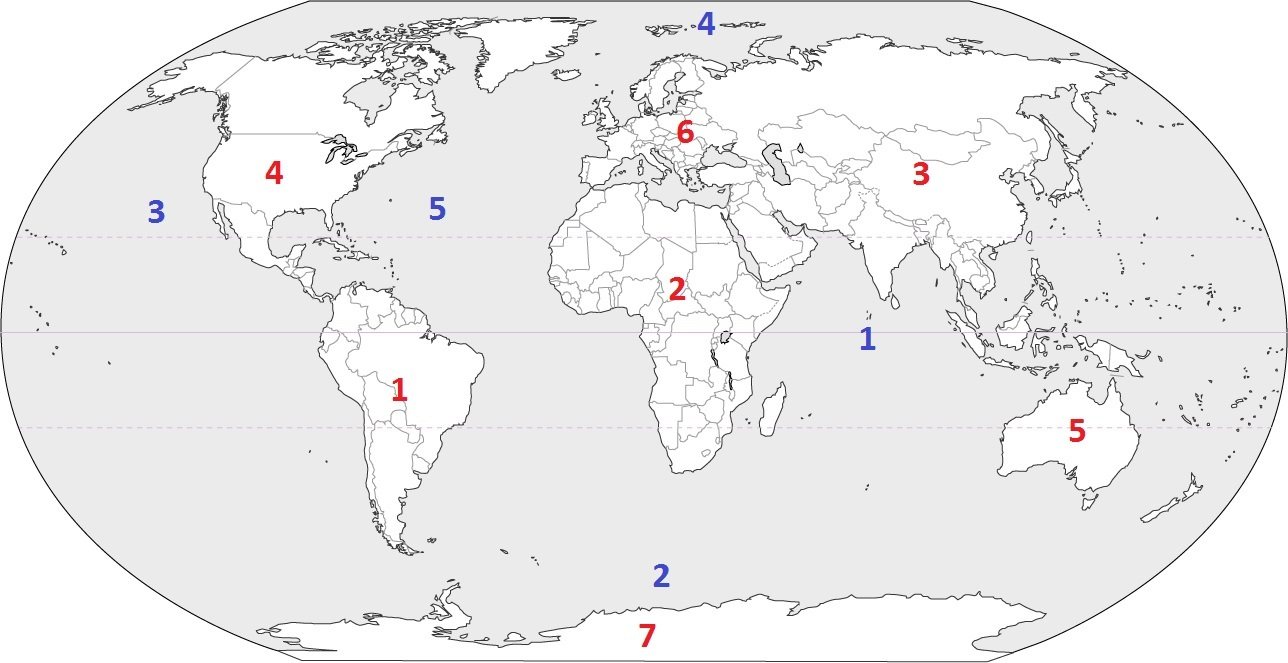
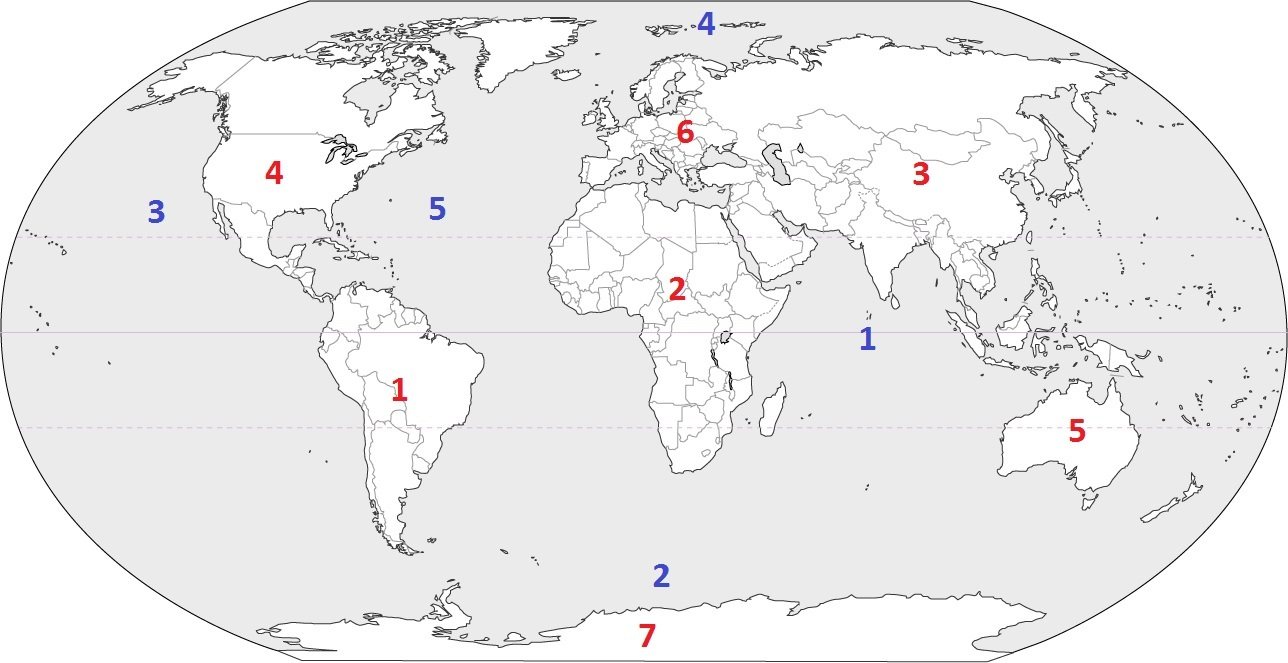
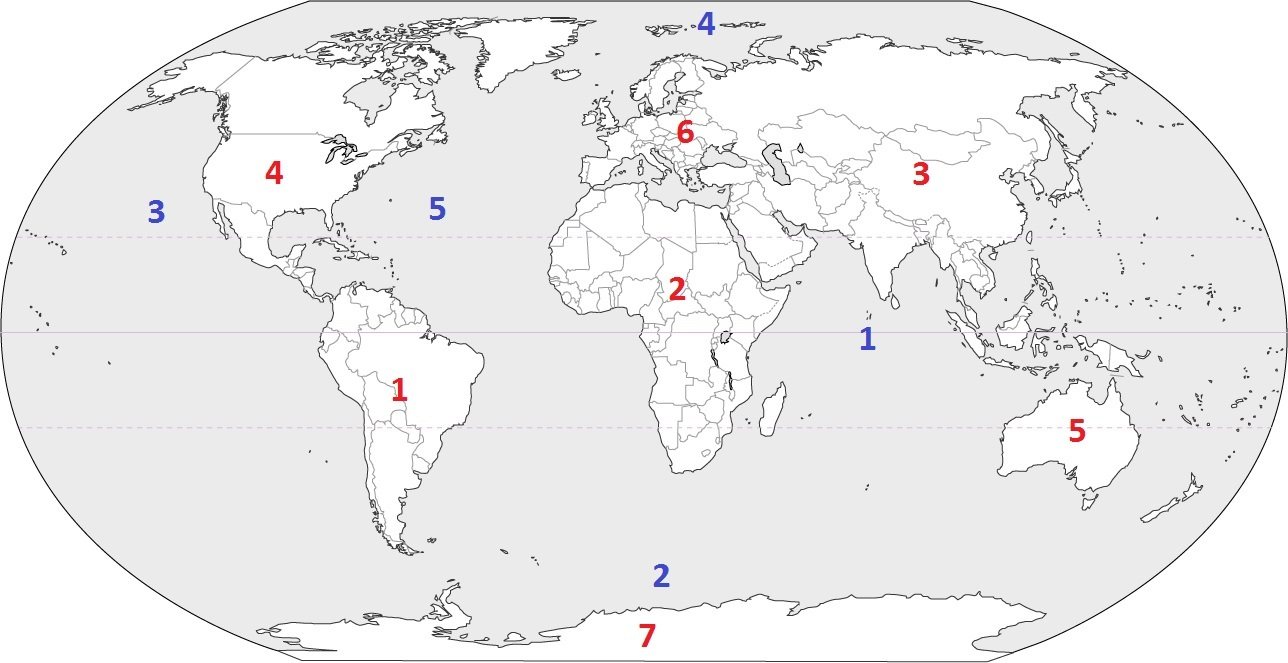
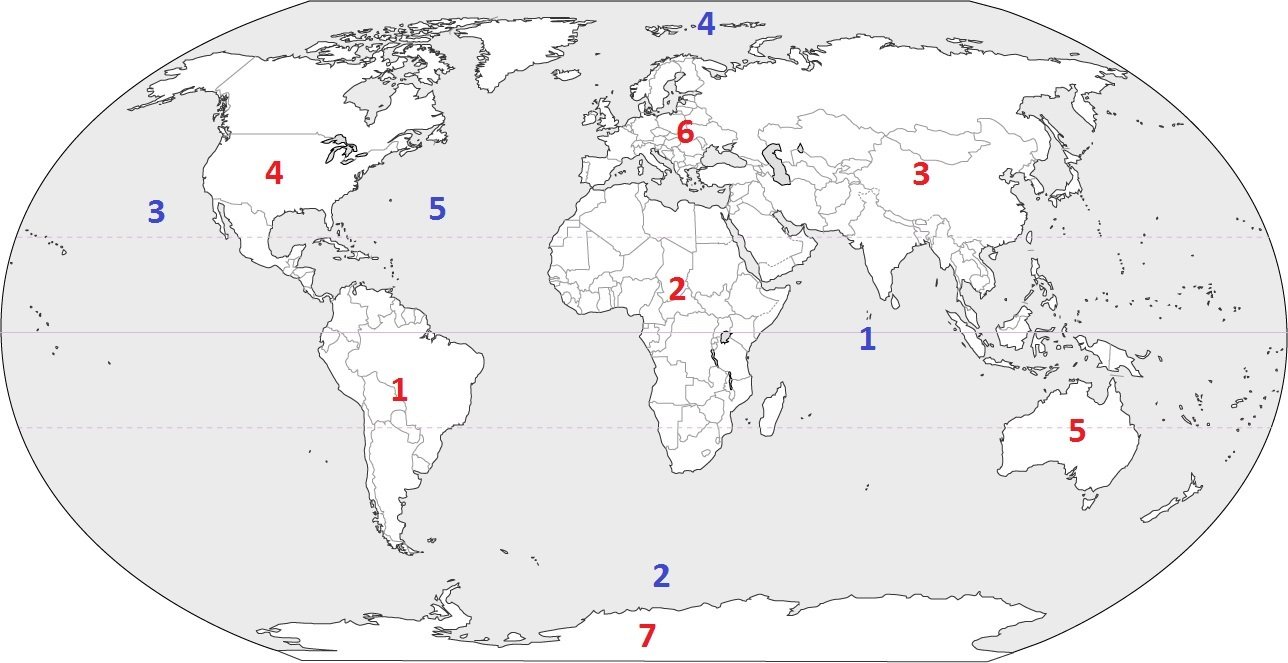
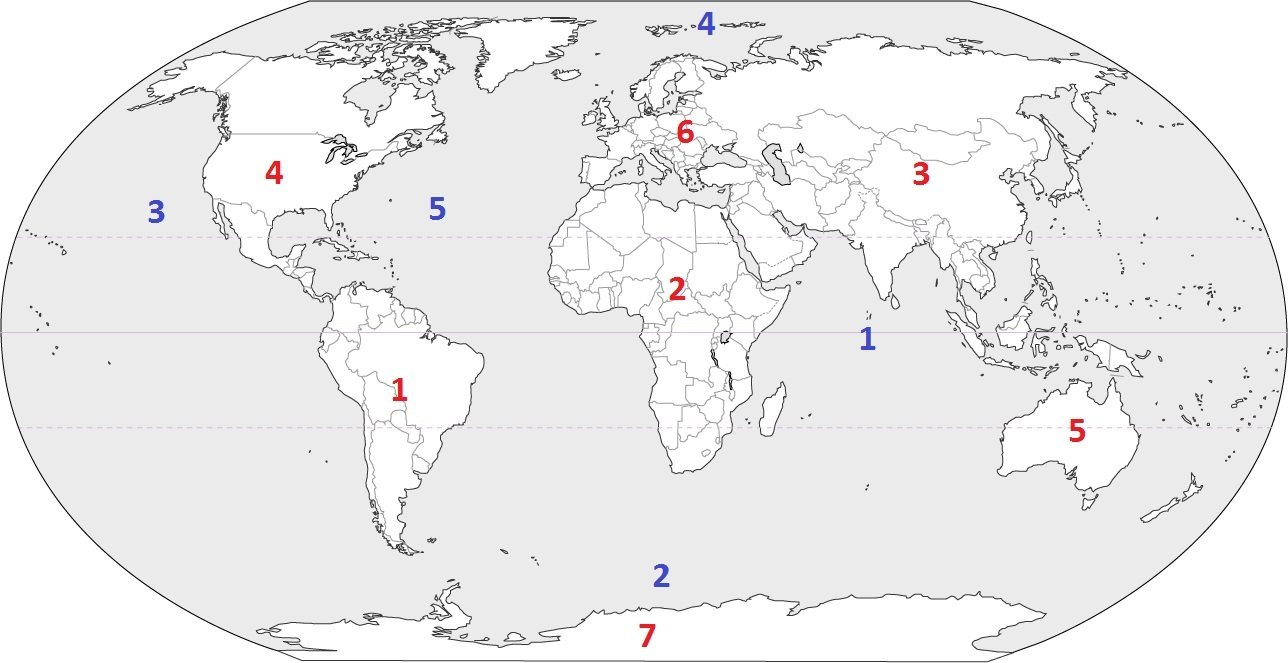
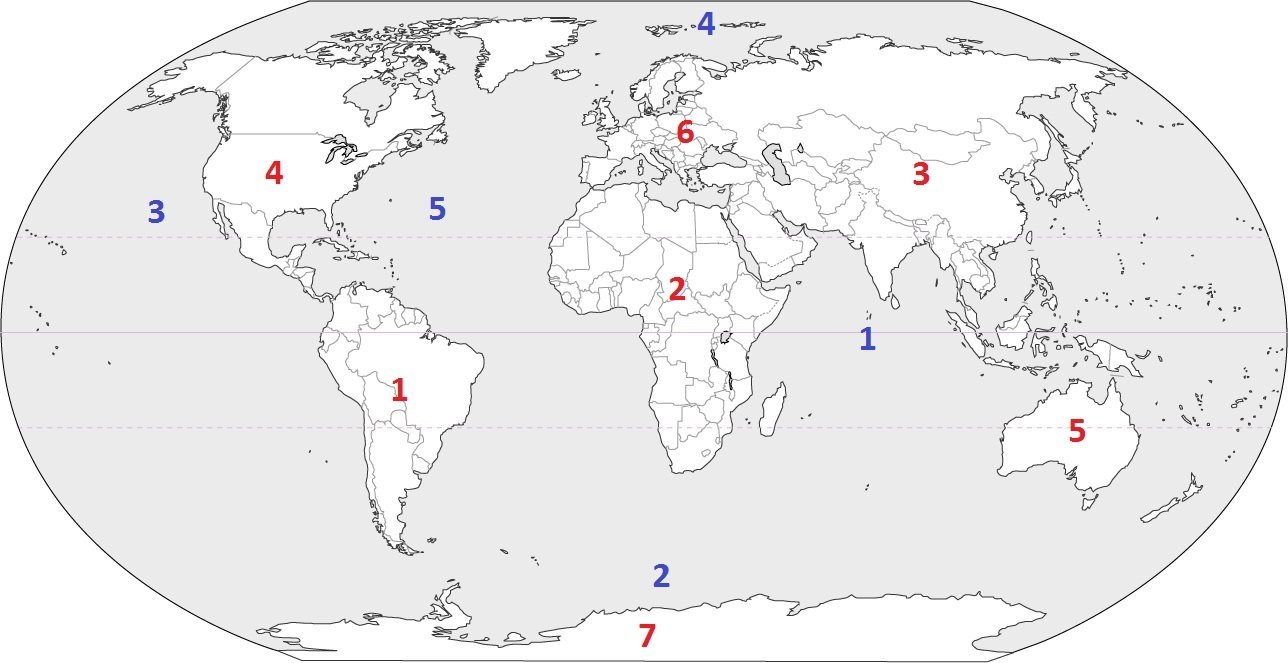
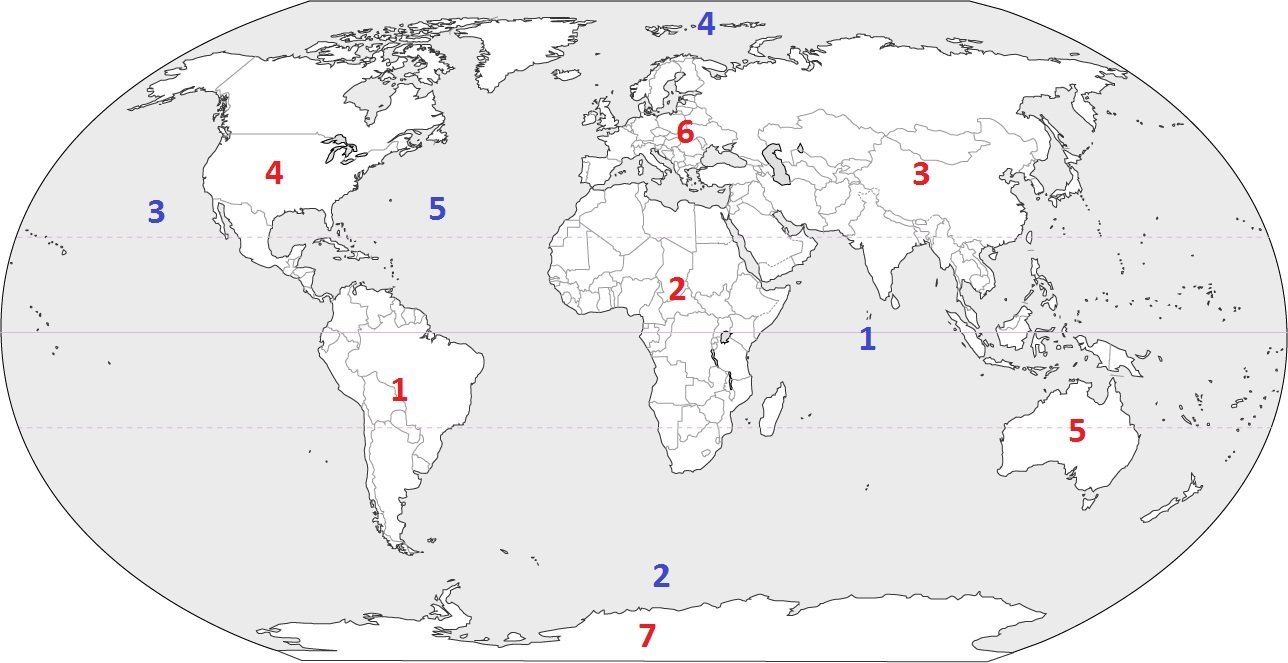
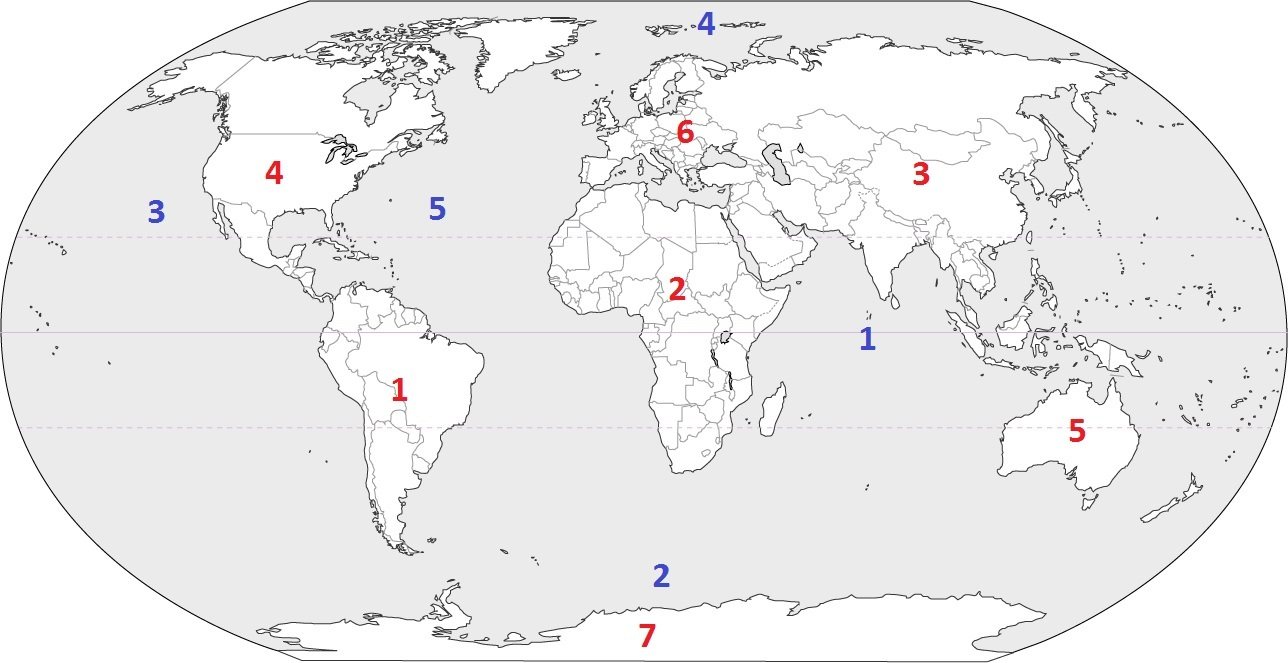
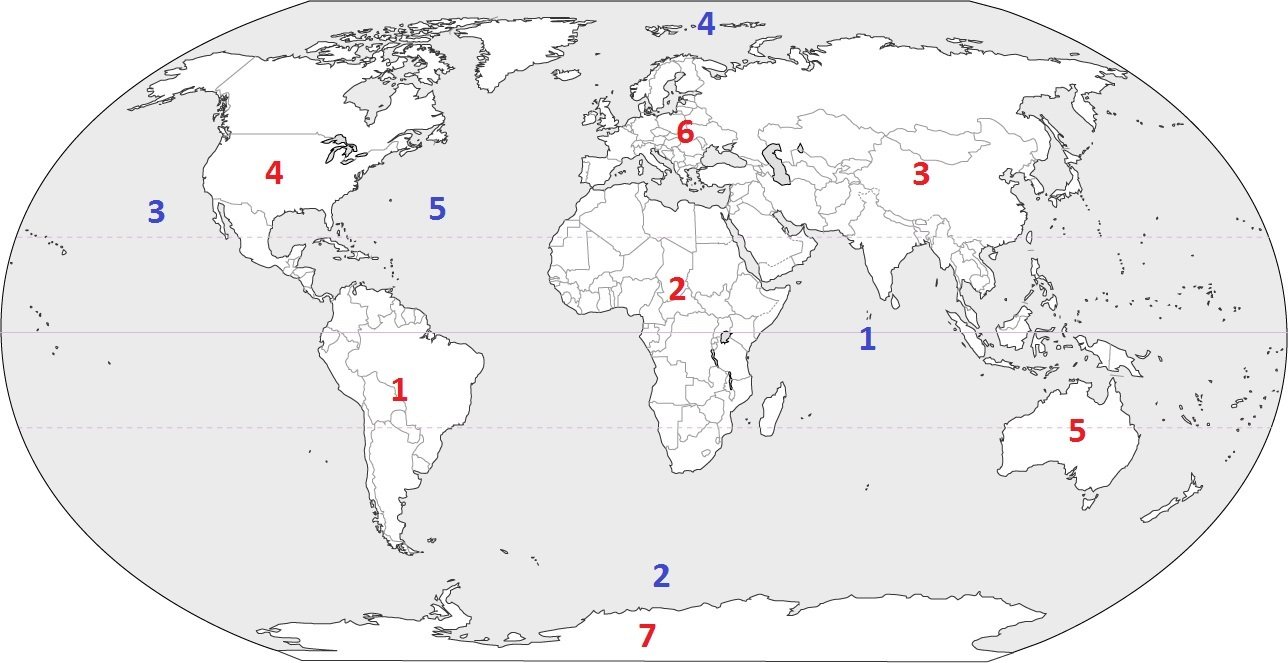
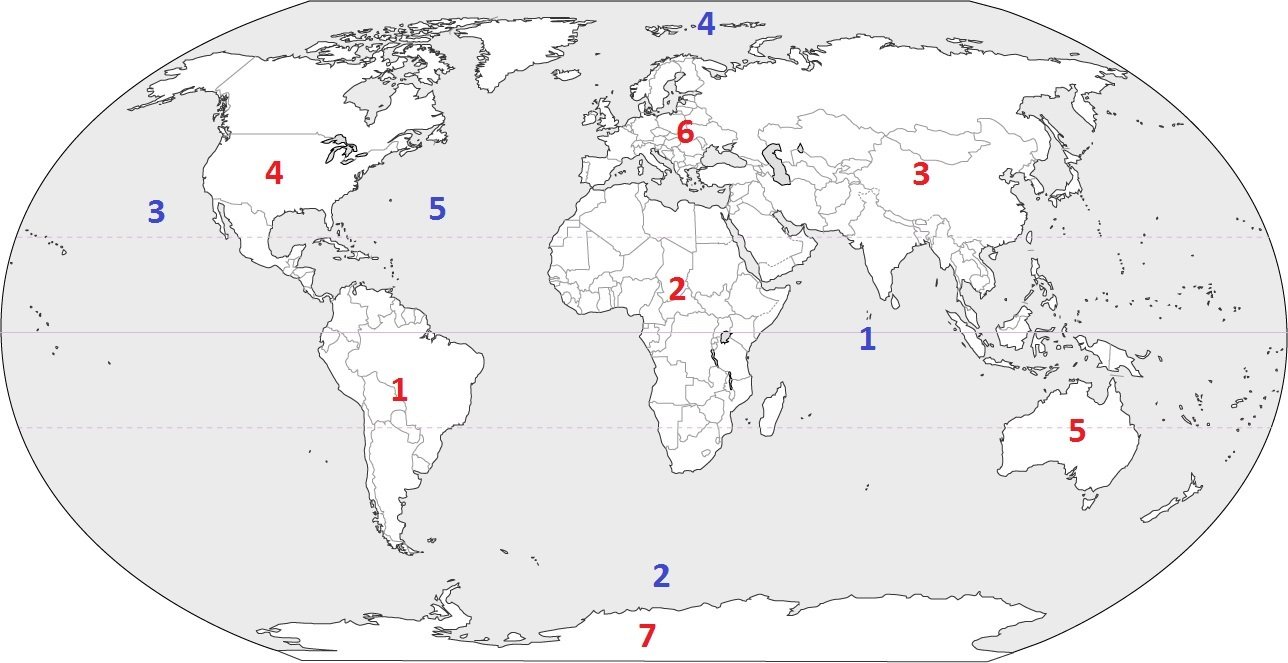
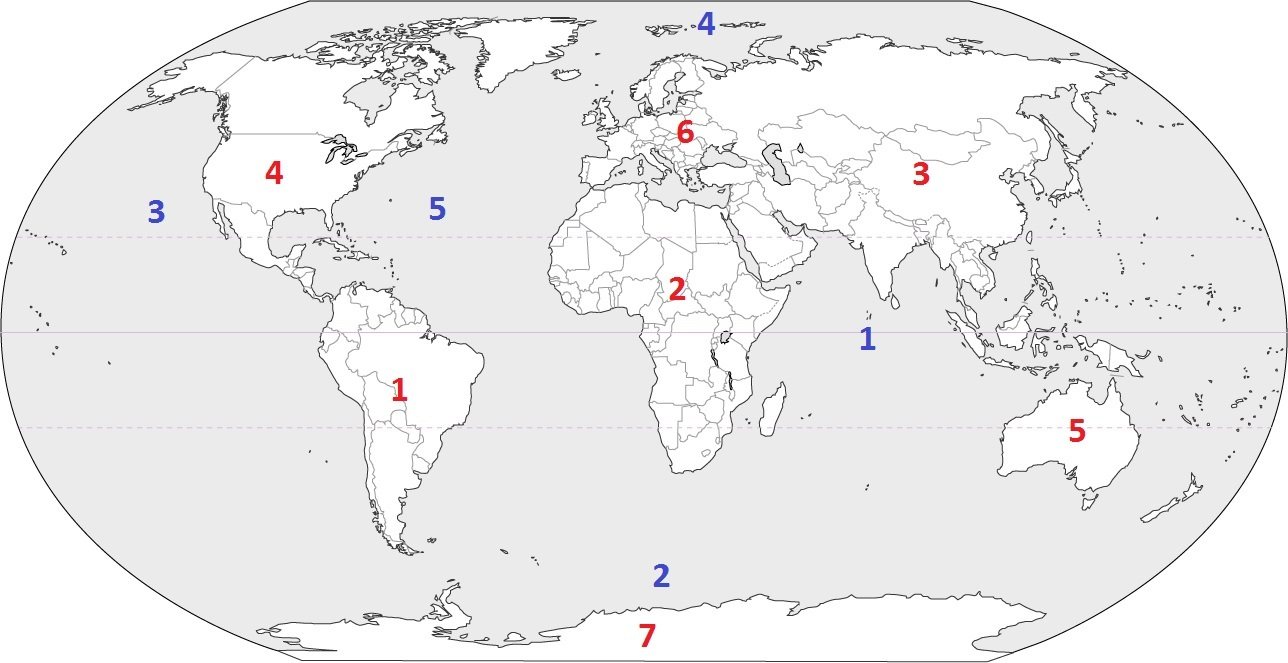
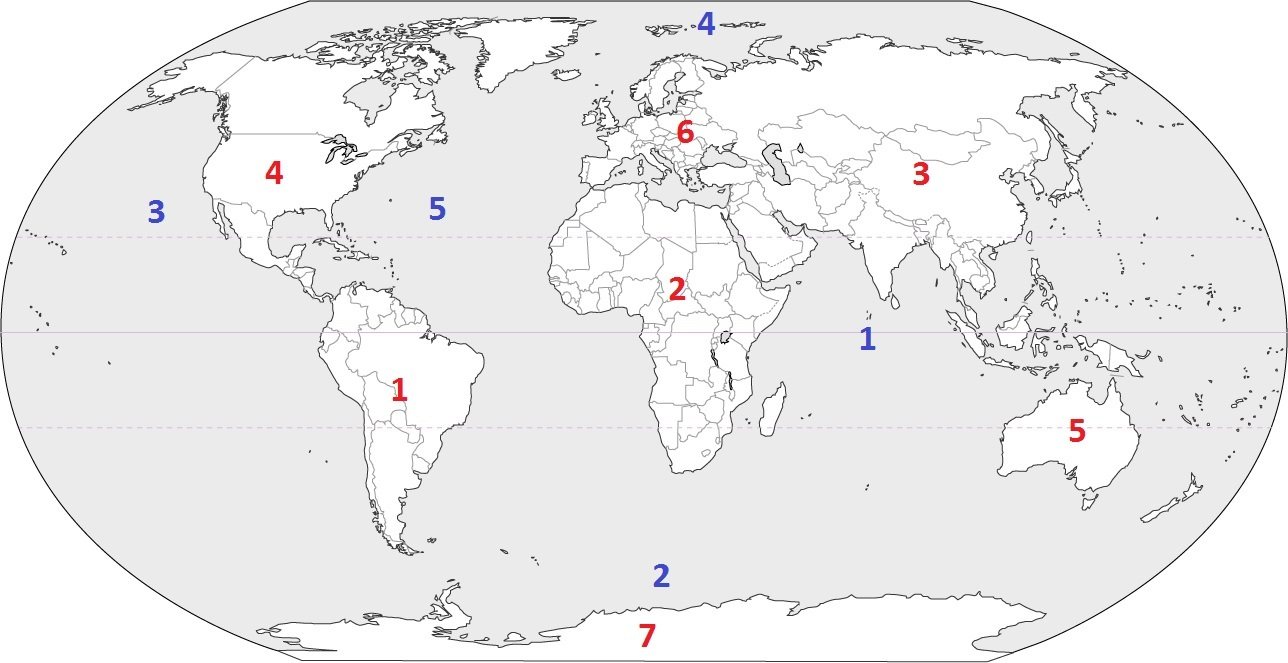
Which continent is located at #3?
a)
Australia
b)
Asia
c)
Europe
d)
South America
50.
Which continent is located at #5?
a)
South America
b)
Asia
c)
Australia
d)
Antarctica
51.
Which continent is located at #7?
a)
Asia
b)
Africa
c)
Australia
d)
Antarctica
52.
Which continent is located at #4?
a)
South America
b)
North America
c)
Europe
d)
Africa
53.
Which continent is located at #1?
a)
North America
b)
Antarctica
c)
South America
d)
Asia
54.
Which continent is located at #6?
a)
Asia
b)
Europe
c)
Africa
d)
Antarctica
55.
Which continent is located at #2?
a)
Africa
b)
South America
c)
Australia
d)
Europe
56.
Which is the largest continent in the world?
a)
Asia
b)
Africa
c)
North America
d)
Antarctica
57.
Which continent is home of the Sahara Desert and is considered the hottest?
a)
South America
b)
Europe
c)
Africa
d)
Australia
58.
On this continent, you can find animal species such as penguins, seals and some birds. This is the coldest continent.
a)
North America
b)
Antarctica
c)
South America
d)
Europe
59.
This continent is covered by large rainforests and is the wettest.
a)
North America
b)
Asia
c)
South America
d)
Africa
60.
This is the smallest continent, farthest away from the others where you may find koalas and kangaroos.
a)
Europe
b)
Africa
c)
South America
d)
Australia
61.
This continent contains major historic cities like Paris, London and Rome.
a)
Africa
b)
Europe
c)
Asia
d)
North America
62.
Identify the ocean at location #3
a)
Atlantic Ocean
b)
Arctic Ocean
c)
Pacific Ocean
d)
Indian Ocean
63.
Identify the ocean at location #5
a)
Atlantic Ocean
b)
Southern Ocean
c)
Pacific Ocean
d)
Arctic Ocean
64.
Identify the ocean at location #2
a)
Indian Ocean
b)
Pacific Ocean
c)
Southern Ocean
d)
Arctic Ocean
65.
Identify the ocean at location #1
a)
Southern Ocean
b)
Arctic Ocean
c)
Atlantic Ocean
d)
Indian Ocean
66.
Identify the ocean at location #4
a)
Indian Ocean
b)
Pacific Ocean
c)
Arctic Ocean
d)
Atlantic Ocean
67.
What continent is is shown in the picture?
a)
 North America 
b)
South America
c)
Asia 
d)
Europe
68.
What continent is in blue?
a)
Asia 
b)
Africa 
c)
Europe 
d)
Australia 
69.
What continent is in orange?
a)
South America 
b)
North America 
c)
Antarctica 
d)
Africa 
70.
What continent is in red?
a)
Asia 
b)
Africa 
c)
Australia 
d)
Antarctica 
71.
What continent is in red?
a)
Asia 
b)
Africa 
c)
North America 
d)
Australia 
72.
What continent is in red?
a)
Asia 
b)
North America 
c)
South America 
d)
Australia 
73.
What is this object known as?
a)
map symbol
b)
map key
c)
map scale
d)
compass rose
74.
What is a map scale?
a)
a tool to measure distance
b)
a tool to tell direction
c)
a tool to start a fire
d)
a tool to build a house
75.
Explains what the symbols on a map represent
a)
Bar Scale
b)
Map Key/Legend
c)
Compass Rose
d)
Parallels
76.
What group is this?
a)
Monkees
b)
Beatles
c)
Drifters
d)
Coasters
77.

What is at the end of a rainbow ?

a)

The letter W

b)

a pot of gold

c)

leprechaun

78.

I'm tall when I'm young and I'm short when I'm old. What am I ?

a)

A candle

b)

A child

c)

A tree

79.
The more you take the more you leave behind what am I
a)
footsteps
b)
Water
c)
memories
d)
farts
80.
How many letters are in alphabet?
a)
20
b)
26
c)
8
d)
14