wayground logo

Free Printable Worksheets

Font size

S
M
L
XL
Worksheets

Chemistry; Atoms, Compounds, and the Periodic Table

Total questions: 50

Worksheet time: 2hrs 40mins

Name
Class
Date
1.

The atomic mass is the

a)

number of protons and neutrons inside the nucleus

b)

number or electrons or protons

c)

number of protons, neutrons and electrons

2.
If an atom has 3 electrons, how many protons does it have?
a)
1
b)
2
c)
4
d)
3
3.

All matter is made of _________.

a)
energy 
b)
atoms 
c)
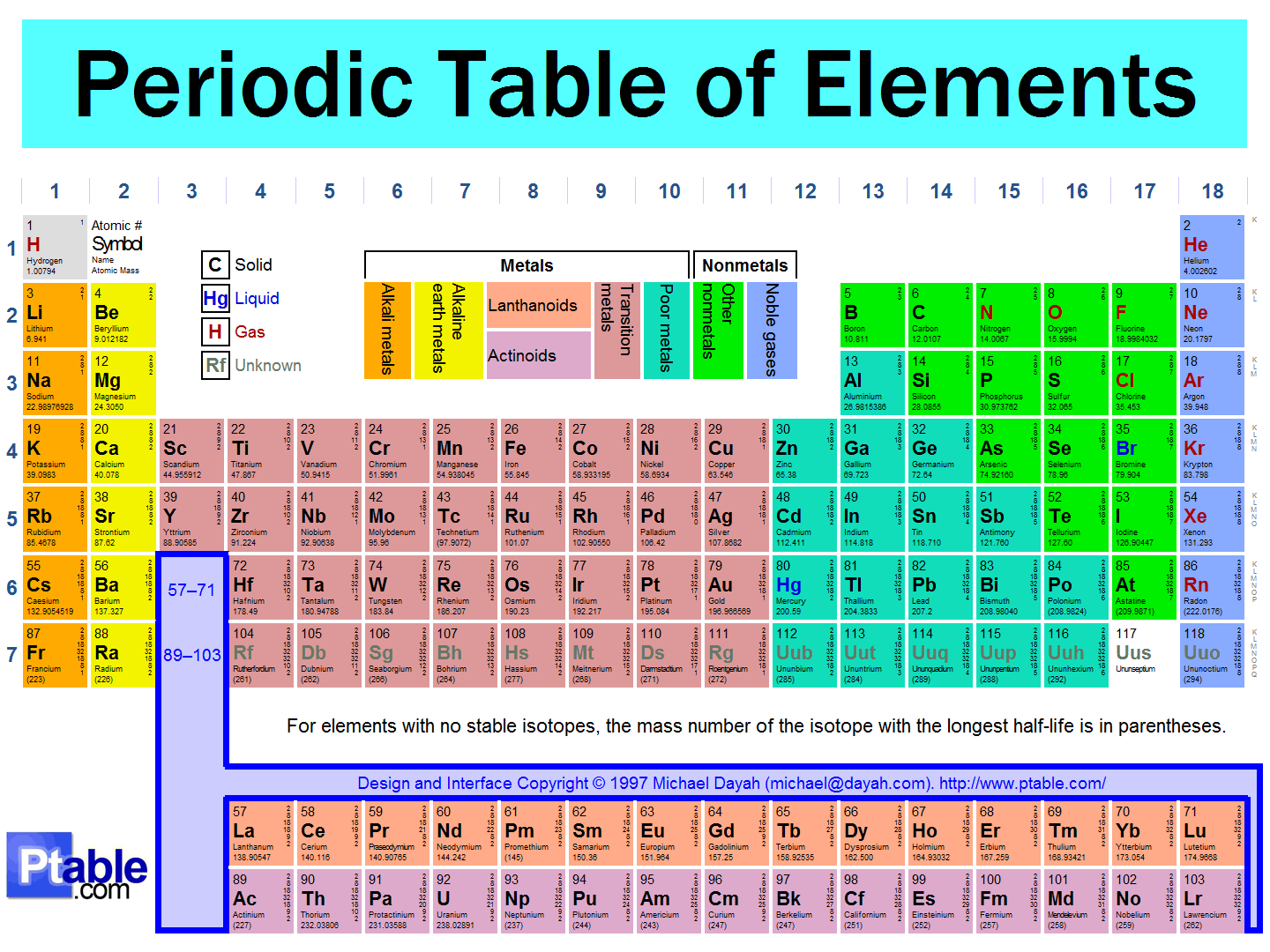
electrons 
d)
compounds 
4.
The horizontal row on the periodic table is called a
a)
group
b)
family
c)
period
d)
atomic number
5.
A vertical column is called...
a)
group
b)
tower
c)
period
d)
crew
6.
What is at the center of every atom?
a)
An electron
b)
A compound
c)
A molecule
d)
A nucleus
7.
The positively charged particles of an atom are the ________.
a)
electrons
b)
protons
c)
neutrons
d)
protons & neutrons
8.
The particles with no charge in an atom are the _______.
a)
electrons
b)
neutrons
c)
protons
d)
protons and neutrons
9.
What does the nucleus of an atom contain?
a)
Electrons and neutrons
b)
Protons and neutrons
c)
Neutrinos and positrons
d)
DNA and RN
10.

In what form does oxygen gas exist? a) As individual oxygen atoms. b) As a molecule containing two atoms. c) As a compound of two oxygen atoms d) As a large group of oxygen atoms.

a)

As a molecule containing two atoms

b)

As individual oxygen atoms

c)

As a compound of two oxygen atoms

d)

As a large group of oxygen atoms

11.

What is an atom?

a)

The smallest unit of an element that displays the properties of that element.

b)

A type of particle made up of two or more elements.

c)

Two or more different elements joined together.

d)

A particle that has a positive or negative charge.

12.

Which of the following is NOT located in the nucleus?

a)

Protons

b)

Neutrons

c)

Electrons

d)

None of the Above.

13.

The three main types of elements on the periodic table are:

a)

Earth, air, fire

b)

Metals, non metals and metalloids

c)

Metals, non metals and ions

d)

Metals, non metals and ionic compounds

14.

What type of elements are highlighted pink?

a)

Ionic Compounds

b)

Metalloids

c)

Metals

d)

Non Metals

15.

Which line points to the atomic number of Carbon?

a)

A

b)

B

c)

C

d)

D

16.

An atom is most stable if it...

a)

has 4 electrons on it's outer shell

b)

has one electron on it's outer shell

c)

has a full outer shell

d)

has seven electrons on it's outer shell.

17.
What's a valence electron?
a)
electrons in the second energy level
b)
electrons in the outermost energy level
c)
the atomic number
d)
electrons in the first level
18.

one or two letters that represent the name of an element

a)

element name

b)

element symbol

c)

atomic number

d)

atomic mass

19.
How did Mendeleev arrange the elements?
a)
alphabetical 
b)
density
c)
melting point
d)
atomic mass
20.

What charge do protons have?

a)

Positive

b)

Negative

c)

Neutral

21.

The formula used to calculate the number of neutrons is:

a)

Mass Number - Atomic Number

b)

Protons + Electrons

c)

Atomic Number - Mass Number

d)

Protons x2

22.
Which of these is not a noble gas?
a)
Helium
b)
Argon
c)
Nitrogen
d)
Krypton
23.

The reason that Noble Gases do not react is because

a)

Their outer electron shell is filled

b)

Their inner electron shell is filled

c)

They are able to bond to fill their outer shell

d)

None of the above, Noble Gases are highly reactive

24.

Which of the following is MOST reactive?

a)

Lithium

b)

Lead

c)

Tin

d)

Copper

25.
Which two groups on the Periodic Table are the MOST reactive?
a)
Group 1 and Group 17
b)
Group 2 and Group 16
c)
Group 13 and Group 15
d)
Group 17 and Group 18
26.
What determines the reactivity of an element?
a)
Size of its nucleus
b)
Number of total electrons
c)
Number of valence electrons
d)
Number of shells
27.
How many valence electrons?
a)
2
b)
3
c)
5
d)
10
28.

What is valence electrons?

a)

The electron present in the innermost shell

b)

The electron present in the 3rd or the 4rd shell

c)

The electron present in the outermost shell

29.

What is a cation's charge?

a)

positive

b)

negative

c)

neutral

d)

depends on the element

30.

What is an anion's charge?

a)

positive

b)

negative

c)

neutral

d)

depends on the element's charge

31.

What is anything that occupies space, has volume and mass?

a)

Solid

b)

Matter

c)

Plasma

d)

Particle

32.
Is Iron (Fe) an element or a compound?
a)
Element
b)
Compound
33.

Able to be beaten or hammered into shapes

a)

luster

b)

malleable

c)

brittle

d)

insulator

34.
I have an object that is dull, brittle, and an insulator, what is it?
a)
metalloid
b)
non-metal
c)
metal
d)
matter
35.
If you have a material that can conduct electricity well it is probably a...
a)
Metalloid
b)
Matter
c)
Non-metal
d)
Metal
36.
Metals are ductile, meaning they can be drawn into wire
a)
True
b)
False
c)
Never
37.
Unlike non-metals, most metals tend to —
a)
conduct electricity and heat well.
b)
be gases at room temperature.
c)
break easily when hammered.
d)
have less luster and shine.
38.
If an object is a better conductor of heat and electricity than nonmetals, but not as good of a conductor as metals, then it is a-
a)
semi-conductor
b)
non-conductor
c)
good conductor
39.
What is the atomic number for germanium?
a)
42
b)
33
c)
32
d)
38
40.

Where are the transition metals located on the periodic table?

a)

blue square

b)

red square

c)

yellow square

41.

How many electrons do the alkali metals have in their outer shell?

a)

1

b)

2

c)

8

d)

7

42.

What name is given to the elements in Group 2?

a)

Alkali metals

b)

Alkaline earth metals

c)

Halogens

d)

Transition metals

43.
Measure mainly of the nuclear particles: protons + neutrons
a)
Subatomic Particles
b)
Atomic Number
c)
Atomic Mass
d)
Gluons
44.
What element is represented in this Bohr Model?
a)
Boron
b)
Carbon
c)
Nitrogen
d)
Lithium
45.
What element is represented in this Bohr Model?
a)
Lithium
b)
Boron
c)
Carbon
d)
Neon
46.
What element is represented in this Bohr Model? 
a)
Carbon
b)
Hydrogen
c)
Aluminum
d)
Lithium
47.
What is the atomic number of this atom?
a)
2
b)
4
c)
6
d)
none of the above
48.

How many electrons can fit on the 1st energy level for any Bohr Model?

a)

2

b)

6

c)

8

d)

10

49.

The region inside an atom where electrons are likely to be found

a)

Proton

b)

Atom

c)

Electron Cloud

d)

Neutron

50.

The best breakfast meat is

a)

bacon

b)

sausage

c)

livermush

d)

ham