
 Worksheets
📚RMS: HW11 (9.11)
Total questions: 70
Worksheet time: 37mins

What letter on the diagram represents the substance only in the gas phase?
A
B
C
D
What letter on the diagram represents a substance only in the liquid?
A
B
C
D
What letter on the diagram represents a substance only in the solid phase?
A
B
C
D
What letter on the diagram represents the triple point?
A
B
C
D
What is the melting point of this substance at 1 ATM of pressure?
40
60
100
110
What is the boiling point of this substance at 1 ATM of pressure?
40
60
100
110
What would the state of this substance be at 0.5 ATM of pressure at a 100 degrees Celsius?
Solid
Liquid
Gas
Michigan

What term goes on the y-axis? (A)
Heat(Energy)
Temperature
Phase
Type of Matter
What term goes on the x-axis? (B)
Heat(Energy)
Temperature
Phase
Type of Matter
What phase of matter exists in part C of the graph?
Gas
Liquid
Solid
Plasma
What phase of matter exists in part D of the graph?
Gas
Liquid
Solid
Plasma
What phase of matter exists in part E of the graph?
Gas
Liquid
Solid
Plasma
What phase change occurs when you start at D and end at E?
Freezing
Melting
Condensing
Vaporization
What phase change occurs when you start at D and end at C?
Freezing
Melting
Condensing
Vaporization
What phase change occurs when you start at E and end at D?
Freezing
Melting
Condensing
Vaporization
What phase change occurs when you start at C and end at D?
Freezing
Melting
Condensing
Vaporization
On which parts of the graph does the temperature remain the same?
Between C and D
Between D and E
At C, D, or E
On both flat sections
On which parts of the graph does the temperature change?
Between C and D
Between D and E
At C, D, or E
On both flat sections

What will occur when the substance transitions from B to A? (Diagram A)
condensation
evaporation
melting
freezing

During a phase change, the temperature _____.

At higher temperatures, ________.

What happens at the AC line of this diagram (Select all that apply)?
Sublimation
Melting
Condensation
Deposition
What happens at the AD line of this diagram (Select all that apply)?
Sublimation
Melting
Condensation
Freezing
What happens at the AB line of this diagram (Select all that apply)?
Vaporization
Melting
Condensation
Freezing
At which point are all three states of matter existing at equilibrium?
A
D
C
B



TRUE/FALSE: Matter can change states by adding heat or cooling.
TRUE
FALSE

Compared to the other states of matter, the slower the particles in a substance move, _____ (Select all that apply).
the colder it is.
the warmer it is.
the more energy it has.
the less energy it has.

An atoms overall charge is
positive
depends on its mood
neutral
negative

The subatomic particle of an atom that orbits around the nucleus and has a negative charge.

The subatomic particle that is located in the nucleus of an atom with a neutral charge.

mass number

Mass Number + Atomic Number= Neutrons
Mass Number x Atomic Number = Neutrons
Mass Number - Atomic Number = Neutrons
Mass Number + Number of Protons = Neutron


TRUE/FALSE: Matter is made up of particles that are constantly moving.
TRUE
FALSE

Which state of matter requires the most energy?
Solids
Liquids
Gases

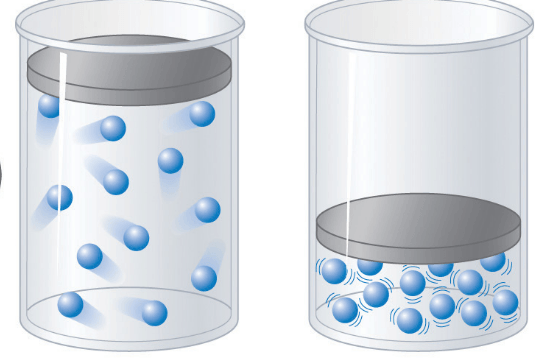
What state of matter does the picture below represent?
solid
liquid
gas
plasma

An element can be identified by its unique number of ____.
ions
electrons
protons
neutrons

What subatomic particle(s) would be found orbiting the nucleus?
Neutrons only
Electrons only
Protons and Neutrons
Protons and Electrons

TRUE/FALSE: Protons and electrons balance the charge of an atom.
TRUE
FALSE

Electrons are___________
Extremely small even in comparison to protons.
part of the nuclues.
Super Positive, like cheerleaders!
very large

At the center of every atom lies a small, dense ______ that is positively charged.
neutron
cloud
nucleus
orbital

Which statement best describes an atom?
Anything with mass and volume.
The smallest unit of a substance that exhibits all of the properties characteristic of that substance.
The substance that can not be broken down chemically into simpler substances.
The smallest particle that has the properties of an element.


What are Subatomic Particles?
The entire atom
the tiny parts inside the atom
The electron cloud and space surrounding the atom


Describe an Electron Cloud.
the mist outside of an atom
home of the protons
where electrons are located
nucleus
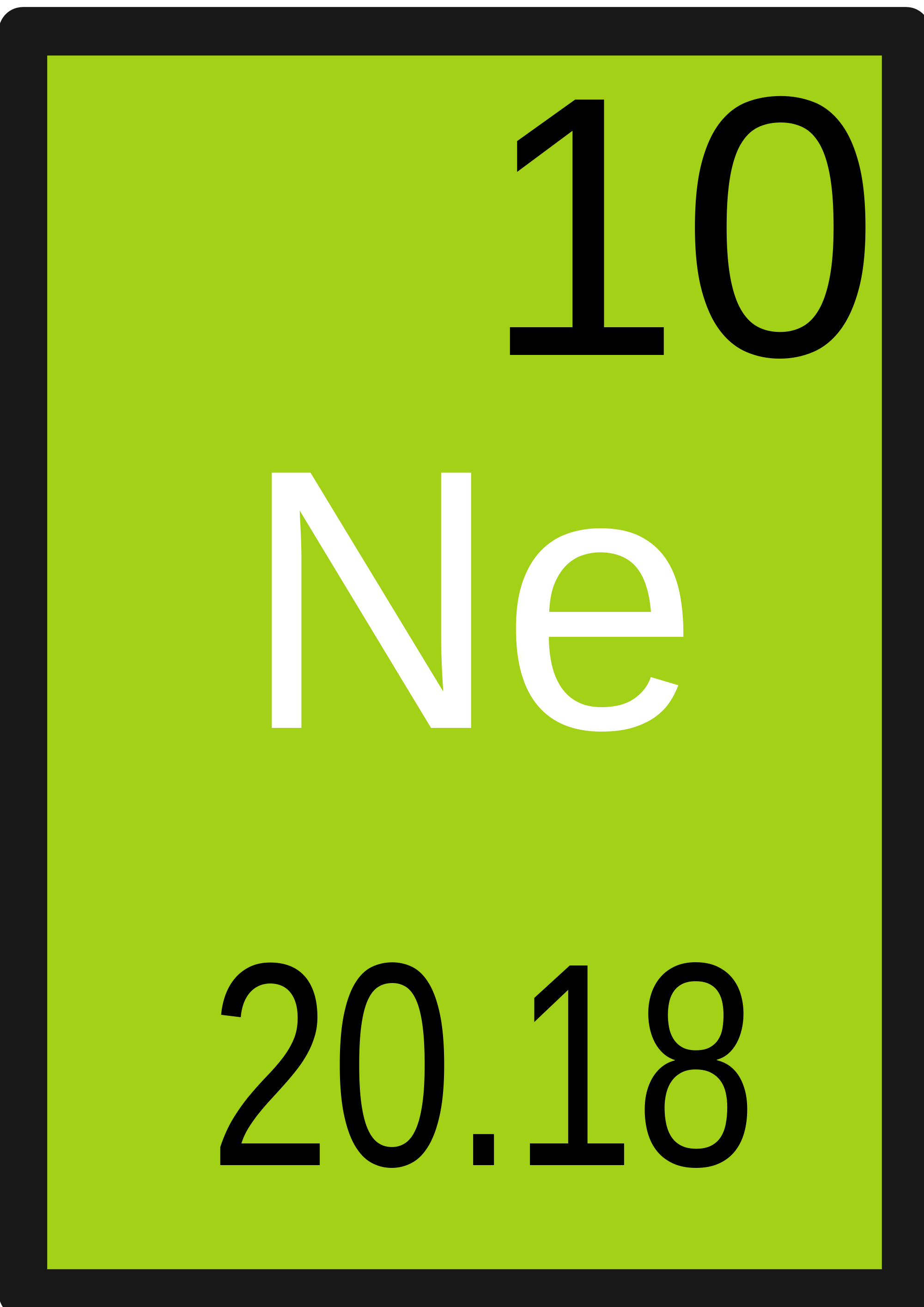
What is the mass number of Neon?
10
20.18
10.18
30.18

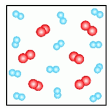

Pure substances include (Select all that apply):
Elements
Homogeneous Mixtures
Compounds
Heterogeneous Mixtures

Chicken noodle soup
Homogeneous mixture
Heterogeneous mixture

CF3CO2H

As

The law of conservation of mass states, ______.

Which of these is an element?
Salt (NaCl)
Water (H20)
Oxygen (O2)
Carbon Dioxide (CO2)

