
Font size
 Worksheets
Introduction to Anatomy - Review
Total questions: 73
Worksheet time: 42mins


Towards the head or above.
Superior
Proximal
Inferior
Medial
Toward the middle/midline of the body:
Medial
Intermediate
Lateral
Ipilateral
Closer to the surface of the body
Deep
Medial
Superior
Superficial
Front of the body
Ventral/ Anterior
Dorsal/ Posterior
Superior
Sagittal
Back of the body:
Ventral/ Anterior
Dorsal/ Posterior
Inferior
Sagittal
Body parts farther from the point of reference or point of origin:
Proximal
Medial
Distal
Lateral
Farther into the body, away from the surface:
Superficial
Deep
Inferior
Superior
The living human which represents the sum total of all its organ systems working together to maintain life.
Cell
Organelle
Organ
Organism
A group of organs that work together to perform a vital body function.
Organelle
Organism
Organ system
Organic
A part of the body formed of two or more tissues and adapted to carry out a specific function.
Organ
Organelle
Organ system
Organism
What body position is considered the “starting point” for describing body positions?
SOFT Planes
Anatomical Position
Quadrants
Cavities
Anatomy means:
the study of the form of all living things
the study of the body
the study of how living things work
None of the above
Physiology means
The study of the form of all living things.
The study of the body.
The study of how living things work.
None of the above.
Which cavity contains the brain?
Oral
Cranial
Orbital
Abdominopelvic
The posterior body cavity contains:
Thoracic and Abdominal
Thoracic and Spinal
Pelvic, Abdominal, and Thoracic
Spinal and Cranial
The anatomical terminology of position that also known as dorsal, and describe toward the back of the body part is known as _________________
anterior
posterior
superior
inferior
Based on the lower limb part, ankle joint is ___________ to the knee joint.
proximal
distal
deep
superficial
The axial plane or also known as transverse plane separate the body part into ______________
superior - inferior
anterior - posterior
right - left
lateral - medial
Which of these is NOT required for life?
water
food
blood
oxygen
pressure
What is the basic unit of structure and function of all LIVING organisms?
organism
species
cell
tissue
organ system
Which of these is NOT a characteristic of life?
movement
growth
excretion
sleeping
reproduction
Homeostasis refers to:
changing internal conditions
stable external conditions
stable internal conditions
changing external conditions
none of these is correct
The sum of all chemical reactions in the body is called
metabolism
assimilation
growth
digestion
What is formed when cells of the same type join to perform a common task?
cell
tissue
organ
system

This system circulates blood throughout the body
(a)

The system that breaks down the components of food into smaller components that can be absorbed and taken into the body
(a)

This system senses changes in the external environment and creates a reaction to them
(a)

This system's function is primarily to provide oxygen to body tissues for cellular respiration, remove the waste product carbon dioxide, and help to maintain acid-base balance.
(a)

The glands of this system secrete hormones, which are biological molecules that regulate cellular processes in other target tissues, so they require transportation by the circulatory system. Adequate nutrition is critical for the functioning of all the glands in this system.
(a)

This system involves cleansing the blood and ridding the body of wastes.
There are additional, equally important functions played by this system. Take for example, regulation of pH, a function shared with the lungs and the buffers in the blood. Additionally, the regulation of blood pressure is a role shared with the heart and blood vessels.
(a)

This system allows the body to move voluntarily, but also controls involuntary movements of other organ systems such as heartbeat in the circulatory system and peristaltic waves in the digestive system
(a)

This system provides structural support and protection for all the other organ systems in the body.
It also synthesizes red and white blood cells and platelets in bone marrow.
Another vital function is that the structures of this system act as a storage depot for minerals such as calcium, phosphorous, and magnesium
(a)

This system is also referred to as the immune system, and has its own vessel network with glands
(a)

This system consists of organs that differentiate male from female. Organs and their functions differ between male and female, in this system.
(a)
A collection of similar tissues that perform a specific function is called
Organ
Organ System
Tissue
Cell
Membrane

In what organelle is the genetic material (DNA) found inside?
Endoplasmic Reticulum
Golgi Complex
Nucleolus
Nucleus

What organelle is called the "powerhouse" of a cell because it breaks down food and converts it to energy.
Endoplasmic Reticulum
Nucleus
Mitochondria
Nucleolus

This organelles stores water, nutrients, and waste products
Vacuole
Mitochondria
Ribosomes
Cell membrane
Which organelle surrounds a cell and holds it together?
Cell Wall
Nucleus
Cell Membrane
Ribosome
This organelle controls what goes in and out of plant and animal cells.
Cell Wall
Cell Membrane
Chloroplasts
Cytoplasm
Which organelle is the location where protein is made?
Ribosome
Nucleus
Cytoplasm
Nucleotide

What is A?
Dorsal/posterior
spinal
cranial
ventral/anterior
What is B?
Dorsal/posterior
spinal
cranial
ventral/anterior
What is C?
Dorsal/posterior
spinal
cranial
ventral/anterior
What is L?
Dorsal/posterior
thoracic
abdominopelvic
ventral/anterior
What is K?
abdominal
thoracic
abdominopelvic
ventral/anterior
What is J?
abdominal
thoracic
abdominopelvic
pelvic

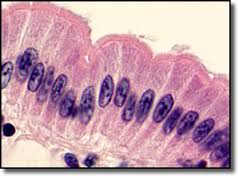


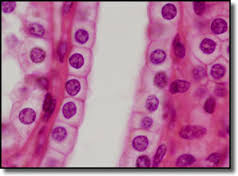


According to the picture, where is the basement membrane?
Apical Side
Columnar Cells
Avascular tissue
Basal Side
Epithelial tissue regenerate really quickly
True
False

