wayground logo

Free Printable Worksheets

Font size

S
M
L
XL
Worksheets

APHG Unit 3 Cultural Patterns & Processes

Total questions: 100

Worksheet time: 50mins

Name
Class
Date
1.
A lingua franca refers to
a)
the use of French in the field of diplomacy
b)
an archaic expression for kissing with one's tongue
c)
Any language used as a bridge between speakers of two different native tongues
d)
The difficulty of pronouncing French vowel sounds
e)
The practice of acquiring a second language
2.
Music that is original to a specific culture
a)
Folk music
b)
Folklore
c)
Pop music
d)
Bluegrass
e)
Jazz
3.
The manmade surroundings that provide the setting for human activity.
a)
Built environment
b)
Commercial buildings
c)
Architecture
d)
Housing types
e)
Contemporary design
4.
The language adopted for use by the government for the conduct of business and publication of documents.
a)
Official language
b)
Dialect
c)
Pidgin language
d)
Lingua Franca
e)
French Creole
5.
A regional variety of a language distinguished by vocabulary, spelling, and pronunciation.
a)
Official language
b)
Dialect
c)
Pidgin language
d)
Lingua Franca
e)
French Creole
6.
A form of speech that adopts a simplified grammar and limited vocabulary of a lingua franca, used for communications among speakers of two different languages.
a)
Official language
b)
Dialect
c)
Pidgin language
d)
Lingua Franca
e)
French Creole
7.
A language mutually understood and commonly used in trade by people who have different native languages.
a)
Official language
b)
Dialect
c)
Pidgin language
d)
Lingua Franca
e)
French Creole
8.
A language that results from the mixing of a colonizer's language with the indigenous language of the people being dominated.
a)
Official language
b)
Dialect
c)
Pidgin language
d)
Lingua Franca
e)
French Creole
9.
A collection of languages related to each other through a common ancestor long before recorded history.
a)
Language Families
b)
Language Groups
c)
Language branches
d)
Lingua Franca
e)
Official Language
10.
When one group of people adopt the culture traits of another culture.
a)
Acculturation
b)
Assimilation
c)
Appellation
d)
Swidden
e)
Cultural Adaptation
11.
A dialect that is in the mountainous region of the eastern US, which had been preserved by the region's isolation.
a)
Appalachian
b)
Ebonics
c)
Southernese
d)
Mandarin
e)
Rhyming Cockney
12.
Universalizing Religions
a)
Christianity
b)
Islam
c)
Buddhism
d)
Hindu
e)
Judaism
13.
Ethnic Religions
a)
Christianity
b)
Islam
c)
Buddhism
d)
Hindu
e)
Judaism
14.
A division of a branch of a religion that unites a number of local congregations in a single legal and administrative body.
a)
Denomination
b)
Sect
c)
Polytheistic
d)
Monotheistic
e)
Fundamentalist
15.
Based on the belief in many gods
a)
Compromising religion
b)
Polytheism
c)
Monotheism
d)
Fundamentalism
e)
Latter-Day Saints
16.
Based on the belief of one God
a)
Compromising religion
b)
Polytheism
c)
Monotheism
d)
Fundamentalism
e)
Latter-Day Saints
17.
Literal interpretation and strict adherence to basic principles of a religion
a)
Compromising religion
b)
Polytheism
c)
Monotheism
d)
Fundamentalism
e)
Latter-Day Saints
18.
A set of rigid social categories that determined not only a person's occupation and economic potential, but also his or her position in society.
a)
Nirvana
b)
Karma
c)
Shamanism
d)
Caste System
e)
Chakras
19.
A system of government in which priests rule in the name of God or a god.
a)
Theocracies
b)
Republics
c)
Monarchies
20.
A state in which supreme power is held by the people and their elected representatives, and which has an elected or nominated president rather than a monarch.
a)
Republics
b)
Monarchies
c)
Theocracies
21.
A form of government in which a group, generally a family representing a dynasty, embodies the country's national identity and its head exercises the role of sovereignty.
a)
Monarchies
b)
Republics
c)
Theocracies
22.
Islamic law derived from the Quran
a)
Sharia
b)
Sikh
c)
Shi'ite
d)
Sunni
23.
Largest denomination of Islam; Orthodox
a)
Sikh
b)
Sharia
c)
Shia
d)
Sunni
24.
Five Pillars of Islam
a)
Faith, prayer, charity, fasting, pilgrimage
b)
Peace, love, happiness, wealth, knowledge
c)
Faith, peace, love, fasting, charity
d)
Prayer, fasting, pilgrimage, love, giving
e)
Wealth, wisdom, love, knowledge, giving
25.
Commonly used wherever survey areas are irregular in size and shape.
a)
Metes and Bounds
b)
Township and range
c)
Longlot System
26.
Associated with the French. Example: Louisiana
a)
Metes and Bounds
b)
Township and range
c)
Longlot System
27.
Measures north/south and east west in 1 square mile sections
a)
Township and range
b)
Metes and Bounds
c)
Longlot System
28.
A social group that shares a common and distinctive culture, religion, language, or the like.
a)
Ethnicity
b)
Race
c)
Nation
29.
A grouping of humans based on shared physical or social qualities into categories generally viewed as inherently distinct by society.
a)
Race
b)
Ethnicity
c)
Nation
30.
A large aggregate of people united by common descent, history, culture, or language, inhabiting a particular country or territory.
a)
Nation
b)
Race
c)
Ethnicity
31.
People having a set of specific rights based on their historical ties to a particular territory.
a)
Melanesians
b)
Polynesians
c)
Micronesians
d)
Aboriginals
e)
Indigenous People
32.
People of mixed race, especially the offspring of a Spaniard and an American Indian.
a)
Mestizos
b)
Mulattos
c)
Garifuna
33.
A person of mixed white and black ancestry, especially a person with one white and one black parent.
a)
Mestizos
b)
Mulattos
c)
Garifuna
34.
The study of how the physical environment predisposes societies and states towards particular development trajectories.
a)
Environmental determinism
b)
Possibilism
35.
The theory that the environment sets certain constraints or limitations, but culture is otherwise determined by social conditions.
a)
Environmental determinism
b)
Possibilism
36.
A mother tongue formed from the contact of two languages through an earlier pidgin stage.
a)
Creole
b)
Lebensraum
c)
Xenophobia
d)
Fuzzy borders
e)
Enclave
37.
Intense or irrational dislike or fear of people from other countries.
a)
Creole
b)
Lebensraum
c)
Xenophobia
d)
Fuzzy borders
e)
Enclave
38.
A portion of territory within or surrounded by a larger territory whose inhabitants are culturally or ethnically distinct (Vatican City)
a)
Creole
b)
Lebensraum
c)
Xenophobia
d)
Fuzzy borders
e)
Enclave
39.
American geographer who was an authority on desert studies, tropical areas, the human geography of American Indians, and agriculture and native crops of the New World.
a)
Friedrich Ratzel
b)
Carl Sauer
c)
Ester Boserup
d)
William Denevan
e)
Thomas Malthus
40.
An area where new ideas and innovations spring up and spread to other parts of the world.
a)
Border states
b)
Fuzzy borders
c)
Enclaves
d)
Dixie
e)
Culture hearths
41.
The idea that historical cultures within a single space have all left their mark on this shared landscape over time.
a)
Sequent Occupance
b)
Acculturation
c)
Assimilation
d)
Ethnic cleansing
e)
Genocide
42.
The mass expulsion of members of an unwanted ethnic or religious group in a society.
a)
Sequent Occupance
b)
Acculturation
c)
Assimilation
d)
Ethnic cleansing
e)
Genocide
43.
The deliberate killing of a large group of people, especially those of a particular ethnic group or nation.
a)
Sequent Occupance
b)
Acculturation
c)
Assimilation
d)
Ethnic cleansing
e)
Genocide
44.
A widespread occurrence of an infectious disease in a community at a particular time.
a)
Epidemic
b)
Treaty of Versailles
c)
Dayton Peace Accords
d)
Holocaust
e)
Xenophobia
45.
The systematic, bureaucratic, state-sponsored persecution and murder of six million Jews by the Nazi regime.
a)
Epidemic
b)
Treaty of Versailles
c)
Dayton Peace Accords
d)
Holocaust
e)
Xenophobia
46.

All of the following are examples of a cultural hearth EXCEPT

a)

The development of democracy in ancient Greece

b)

The development of hip-hop culture in New York City

c)

The creation of soul food among African-Americans in the South

d)

The diffusion of Arabic words into the Spanish language

47.

Select TWO cultural traits.

a)

Hinduism is the most common religion in India.

b)

Rice is a staple in East Asian cuisine.

c)

The Midwest is a region located directly west of the Northeast.

d)

Africans experienced forced migration to the United States due to slavery.

48.

Select TWO images that demonstrate language's impact on the cultural landscape.

a)
b)
c)
d)
49.

Ethnic enclaves reflect all of the following EXCEPT

a)

The desire of people to remain apart from the larger society

b)

A dominant culture's desire to segregate a minority culture

c)

The desire of a minority culture to reflect its place of origin

d)

To completely eradicate the dominant culture from existence

50.

Which of the following developments allows for the globalization of culture?

a)

Space-time compression

b)

An increasing life expectancy

c)

Population distribution

d)

Spatial association

51.

All of the following are examples of the globalization of culture EXCEPT

a)

Japanese anime watched in the United States

b)

McDonald's establishing franchises in India

c)

The Amish developing their community in rural Pennsylvania

d)

The FIFA World Cup

52.

All of the following traits are of popular culture EXCEPT

a)

Many people speaking a lingua franca

b)

Weakly defined gender roles

c)

Variety of architectural styles

d)

Locally sourced and produced food

53.

The spread of pizza to the United States is caused by

a)

Relocation diffusion

b)

Contagious diffusion

c)

Hierarchical diffusion

d)

Stimulus diffusion

54.

White Americans creating and listening to rap and hip-hop music is an example of

a)

Relocation diffusion

b)

Reverse hierarchical diffusion

c)

Stimulus diffusion

d)

Contagious diffusion

55.

The forcing of Native Americans to adopt fully American names and attend American schools is an example of

a)

Acculturation

b)

Assimilation

c)

Multiculturalism

d)

Nativism

56.

All of the following result from the distribution of lingua francas EXCEPT

a)

English is spoken in international business settings

b)

Spanish is taught in American public schools

c)

Arabic is the official language of most Muslim countries

d)

French is the official language in France

57.

The Gullah language is a mix of English and various African languages, making it a

a)

Pidgin

b)

Isogloss

c)

Creole

d)

Lingua franca

58.

An example of a theocracy, or countries run by religious leaders, is

a)

Vatican City

b)

Iraq

c)

United Kingdom

d)

Indonesia

59.

An example of a polytheistic religion is

a)

Hinduism

b)

Judaism

c)

Islam

d)

Christianity

60.

Select TWO Eastern religions.

a)

Hinduism

b)

Buddhism

c)

Islam

d)

Judaism

61.

TWO examples of a universal religion in action is

a)

Christians sending missionaries to developing countries

b)

The Jewish Diaspora throughout Europe

c)

Islamic invasions of Spain in the 700s

d)

Hindu belief affecting what is served at Indian McDonalds

62.

The body of customary beliefs, social forms and material traits that constitute a group's distinct traditions would best describe a specific population's

a)

folklore.

b)

political agenda.

c)

culture.

d)

education system.

e)

religious organization.

63.

Which of the following statements reflects the environmental impact of uniform cultural experiences?

a)

Folk culture never causes environmental impacts because it lacks a uniform spatial distribution.

b)

Solid waste is the least visible of wastes generated from the spread of franchises.

c)

Popular culture may cause a rapid increase in demand for certain natural resources.

d)

Environments are not affected by the expansion of leisure activities.

e)

Popular culture causes no environmental damage because it is often difficult to tell the difference between "natural" and "modified" landscapes.

64.

Popular culture preferences interest geographers because they illustrate

a)

how rural and urban areas show limited variation choice of television programs.

b)

the diffusion of leisure activities across various scales including region, class, and gender.

c)

that crime shows remain controversial in both rural and urban areas.

d)

the extent of time use survey participation.

e)

that social media is not useful in gathering data on leisure time habits.

65.

A restriction on behavior imposed by social custom is a

a)

folk culture.

b)

habit.

c)

popular culture.

d)

taboo.

e)

tariff.

66.

A taboo against pork is a characteristic of

a)

Judaism and Islam.

b)

Judaism and Buddhism.

c)

Christianity and Buddhism.

d)

Christianity and Hinduism.

e)

Islam and Hinduism.

67.

Hip hop music demonstrates an interplay between globalization and local diversity because

a)

it is a form of folk culture responsible for the globalization of modern music.

b)

musical traditions had rarely been shared prior to the 1990s.

c)

artists may be widely popular yet still make local references in their song lyrics.

d)

some lyrics can't be transmitted over the radio and television.

e)

hip hop music is played in many Islamic countries.

68.

Groups living in proximity to one another yet practicing uniquely different social customs suggests

a)

refusal to teach other customs in schools.

b)

refusal to share other customs in religious ceremonies.

c)

inability to set up telephone service.

d)

limited connections due to topographic, linguistic or ethnic barriers.

e)

military confrontation.

69.

The contemporary distribution of languages around the globe is largely a result of

a)

social media.

b)

the Internet.

c)

Rosetta Stone sales.

d)

migration.

e)

high school requirements to learn a second language.

70.

When it comes to languages, an example of a centripetal force would be

a)

historical migration patterns.

b)

groups of people who speak different languages.

c)

a group of people who share the same language.

d)

language requirements in school.

e)

movements, sounds, and symbols.

71.

Which of the following is TRUE regarding African languages?

a)

Each has its own unique alphabet developed because of centuries of isolation from other groups.

b)

The exact number of languages was documented by missionaries in the nineteenth century.

c)

In villages, people tend to speak to each other in their own language but may rely on a lingua franca such as Swahili or English to speak to outsiders.

d)

Most countries in Africa have just one Official language.

e)

Yoruba, spoken in Nigeria, is one of the major languages of the Afro-Asiatic family.

72.

The universalizing religion with the most adherents worldwide is

a)

Buddhism.

b)

Christianity.

c)

Hinduism.

d)

Islam.

e)

Shintoism.

73.

Which is a common characteristic of an ethnic religion?

a)

based on only one language

b)

appealing mostly to one group of people in one place

c)

based on belief in one particular spiritual leader

d)

younger than a universalizing religion

e)

more peaceful than a universalizing religion

74.

Which of the following is an ethnic religion?

a)

Buddhism

b)

Baháʹí

c)

Islam

d)

Judaism

e)

Christianity

75.

Use Figure 6-1 to answer the question. Which of the following statements is TRUE regarding religious adherents among the world's population?

a)

more than half of the people are nonreligious

b)

less than one-fifth of the people are non-religious

c)

more than half of the people are Christian

d)

about half of the people are Muslim

e)

about two-thirds of the people are Christian

76.

Which term identifies a place with a high concentration of an ethnic group distinct from those living the surrounding area?

a)

enclave

b)

neighborhood

c)

census block

d)

county

e)

urban area

77.

Which set of words pairs the type of migration associated with eighteenth and nineteenth century African slaves with the type of migration associated with Latin Americans and Asians in the twentieth century?

a)

chain; hierarchical

b)

forced; voluntary

c)

voluntary; forced

d)

chain; voluntary

e)

forced; forced

78.

An example of "white flight" is the

a)

movement of whites from northern cities like Chicago and New York to southern cities.

b)

movement of whites from southern cities like New Orleans to western cities like Los Angeles.

c)

establishment of integrated suburbs around Baltimore.

d)

decrease in the percent of whites remaining in the Southeast because of black migration.

e)

emigration of whites from central Detroit as blacks moved in.

79.

Neighborhood changes in ethnicity are sometimes caused by the illegal practice of persuading owners to sell property cheaply because of the fear of people of another race or class moving into the neighborhood, and thus profiting by reselling at a higher price. This is referred to as

a)

segregation.

b)

separate but equal.

c)

blockbusting.

d)

housing shortages.

e)

white flight.

80.

The definition of nationality is

a)

a group of people tied to a place through legal status and tradition.

b)

a country.

c)

an ethnic identity.

d)

any cohesive group of people.

e)

any group with shared religion, language, and origin of birth.

81.

Which of the following is the best example assimilation?

a)

Hinduism diffused from India to Bali, where it blended with traditional Balinese beliefs to create a form of Hinduism unique to Bali.

b)

The American government educated Native American children in American-style boarding schools. All of the children were taught English, and girls were taught how to be homemakers.

c)

Despite the large number of historic churches in France, many French identify as nonreligious and believe that religion is a private matter.

d)

A family immigrates to a new country, settles near others from their homeland, and conducts most of their day-to-day activities within their ethnic neighborhood.

82.

Which of the following countries has not broken into two political entities as a result of cultural or ideological differences?

a)

Ireland

b)

Korea

c)

Vietnam

d)

Japan

83.

Cultural landscape can be defined as

a)

the types of art, music, dance, and theater practiced in a particular region

b)

the ways that people in differing cultures perceive the environment

c)

a particular area within a geographic region dedicated to cultural activities

d)

the forms superimposed on the physical environment by the activities of humans

84.

Cultural landscape is closest in meaning to which of the following?

a)

Built environment

b)

Physical environment

c)

Environmental determinism

d)

Cultural ecology

85.

The spread of specialty coffee shops across the United States in the 1990s is an example of

a)

hierarchical diffusion

b)

contagious diffusion

c)

stimulus diffusion

d)

relocation diffusion

86.
Ethnicity is associated with _____ ancestry, while race is associated with _____ ancestry. 
a)
cultural: biological 
b)
biological: cultural 
c)
cultural: religious 
d)
religious: cultural 
87.
Folk cultures are typically associated with _____ groups of people in __________.
a)
homogeneous : isolated areas 
b)
heterogeneous : isolated areas 
c)
homogeneous : large societies 
d)
heterogeneous: large societies 
88.
Which of the following is an element of material culture?
a)
clothing 
b)
behavioral norms 
c)
religious beliefs 
d)
family beliefs 
89.
The popularity of American bands in Europe is an example of:
a)
globalization of culture 
b)
assimilation 
c)
ethnocentrism 
d)
transculturation 
90.
In the face of globalization, folk cultures face _____ challenges
a)
sustainability 
b)
ethnocentrism 
c)
geographic 
d)
relativism 
91.
People in Chicago call it pop. People in Charlotte call it coke. This is an example of:
a)
creole dialects 
b)
differences due to dialects 
c)
lingua franca influencing vocabulary 
d)
isolated languages 
92.
In terms of diffusion, what is a hearth?
a)
The point of origin
b)
The final destination
c)
The mid-way point
d)
All points along the diffusion route
93.
The clearest example of a folk culture today in the US is
a)
Hispanics in southwest Florida
b)
Catholics in the northeast U.S.
c)
Harlem in New York City
d)
Amish of southeast Pennsylvania
94.
practice of judging another culture by the standards of one’s own culture and generates misunderstanding, ignorance and conflict 
a)
Ethnosuperiorism
b)
Egotism
c)
Ethnocentrism
d)
Human nature
95.
The presence of similar restaurants, gas stations, and stores throughout the United States 
a)
is an example of possibilism
b)
illustrates how popular culture can create a uniform landscape
c)
increases cultural awareness
d)
is a prime example of regionalization
96.
Which of the following best accounts for the universal appeal of blue jeans?
a)
Adoption of unique folk culture
b)
Need for durable clothing
c)
Impact of high income on clothing habits
d)
Diffusion of popular culture
97.

Acculturation is a process whereby

a)

A more dominant culture adopts most of the traits of the less dominant culture

b)

The dominant culture completely absorbs the less dominant one

c)

Cultural traits are equally exchanged between cultures

d)

The less dominant culture adopts some of the traits of the more influential one
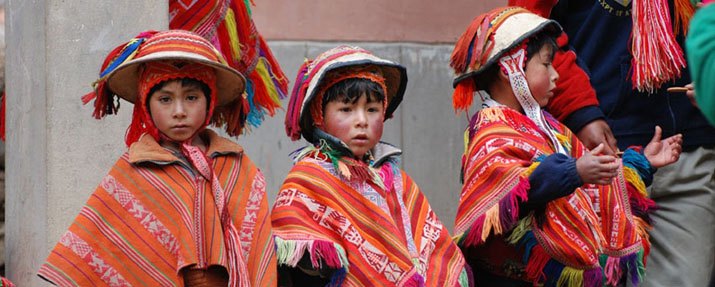
98.
What is culture?
a)
Set of beliefs/values/practices a group has in common
b)
People who share similar culture traits
c)
Activity/behavior in which people take part
d)
Area in which people share culture traits
99.
Folk culture is most likely to spread by _____.  
a)
contagious diffusion 
b)
relocation diffusion 
c)
hierarchical diffusion 
d)
stimulus diffusion 
100.
Cultural diffusion describes
a)
how culture is used
b)
how culture affects peoples
c)
how culture spreads
d)
how culture develops