
 Worksheets
Chemistry of Life
Total questions: 88
Worksheet time: 2hrs 51mins
What is a tissue?
Groups of similar types of cells that work together to carry out a specific task
Groups of different tissues working together to perform a particular job
Groups of different organs working together to complete a series of tasks
The smallest unit of life
What is the order of levels of organization of the body from SMALLEST to Largest
cell, organ, tissue, organ system, organism
organism, organ system, organ, tissue, cell
cell, organ, tissue, organ system, organism
cell, tissue, organ, organ systems, organism

Water is the univeral ____.
solute
solvent
solution
What is cohesion?
The ability of a molecule to "stick" to itself
The ability of a molecule to "stick" to other molecules
Large amounts of energy are required to change the temperature of a substance
A well-organized and efficient team





What characteristic is shown in the image?
Polarity
Hydrogen Bonds
Cohesion
Adhesion

This organelle contains DNA and controls cellular growth and reproduction
mitochondria
nucleus
cell wall
cytoplasm
Lipids/Carbohydrate provide long-term energy for cells.
Lipids
Carbohydrates
Lipids / carbohydrates are also called fats.
Lipids
Carbohydrates
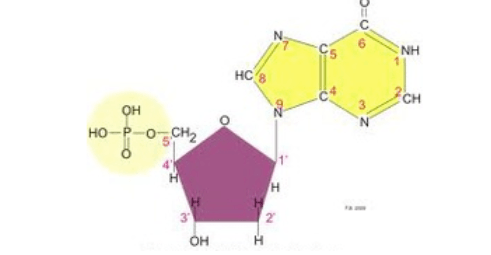
DNA and RNA are made up of nucleotides / amino acids.
nucleotides
amino acids
Nucleic acids / Carbohydrates provide proteins with specific instructions for cell growth and repair.
Nucleic acids
Carbohydrates
Polymers can be broken down into other polymers / monomers.
other polymers
monomers

How many calories are in the food label?
240
220
0
53

How many grams of short-term energy does this food label contain?
220
46
4
11

How many grams of lipids does this food label contain?
220
46
4
11

How many grams of the biomolecule used for cell growth and repair are in the food label?
220
46
4
11
Which two biomolecules are used for energy?
Carbohydrates and Proteins
Lipids and Carbohydrates
Proteins and Lipids
Nucleic Acids and Proteins
Which of the following has the correct monomer matched?
Protein -> Nucleotide
Carbohydrate -> Monosaccharide
Lipids -> Amino Acid
Nucleic Acid -> Glycerol & Fatty Acid

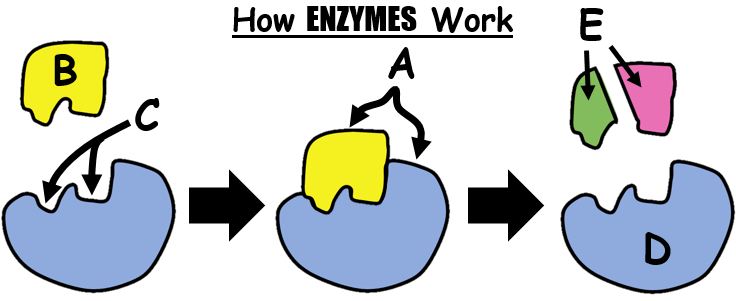
What is represented by letter A
Enzyme
Substrate
Active Site
Enzyme Substrate Complex
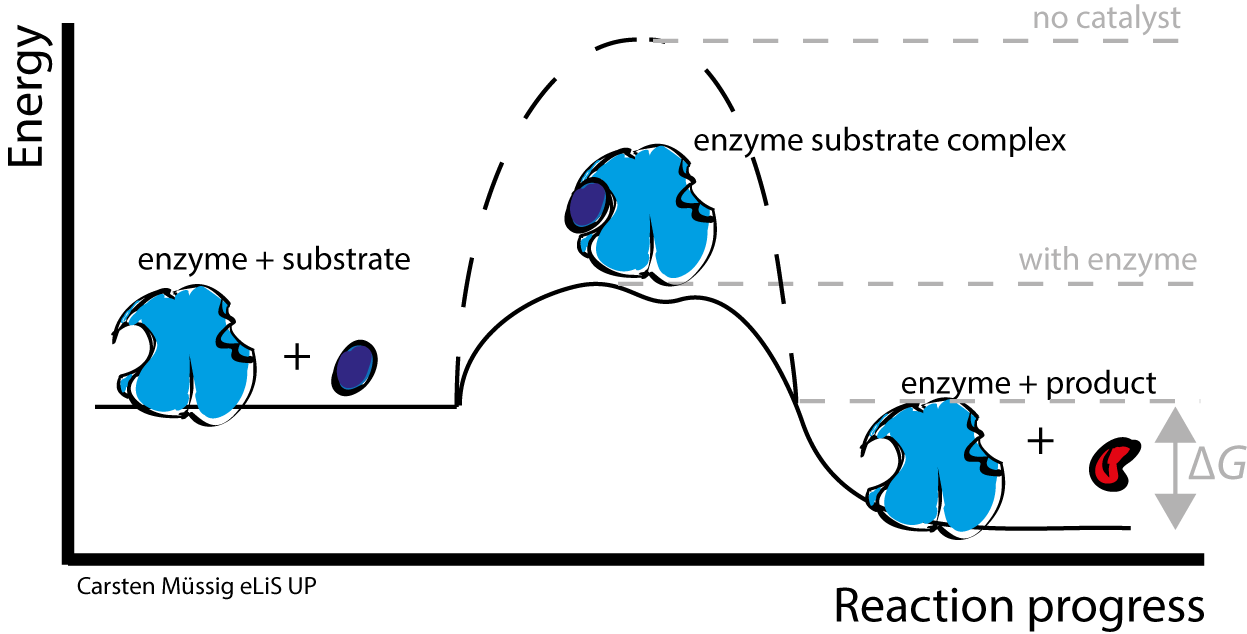
What does an enzyme do to a chemical reaction?
Speeds it up (catalyzes)
Slows it down
Breaks it down
What happens to an enzyme after it releases the product?
Enzyme is expelled from the cell.
Enzyme is denatured and can no longer catalyze a reaction
Enzyme is re-used and attaches to a new substrate
Enzyme becomes the product
All of the following can cause an enzyme to work less effectively EXCEPT -
Concetration (amount of) substrate
Temperature
pH
Perfect Conditions
Which of the following best defines denature?
An enzyme working in optimal conditions
An enzyme's shape changes causing it to no longer catalyze reactions.
A substrate's shape changes to match the enzyme
An enzyme shape changes to match the substrate.
What are the 2 factors that denature an enzyme?
pH and concentration
concentration and temperature
temperature is the only factor
pH and temperature

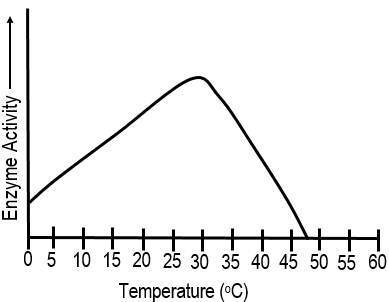
Based on the graph, what is the optimal temperature for the enzyme?
20
40
43
60

Based on the graph, what pH does Enzyme C work best at?
1.5
6
8
9
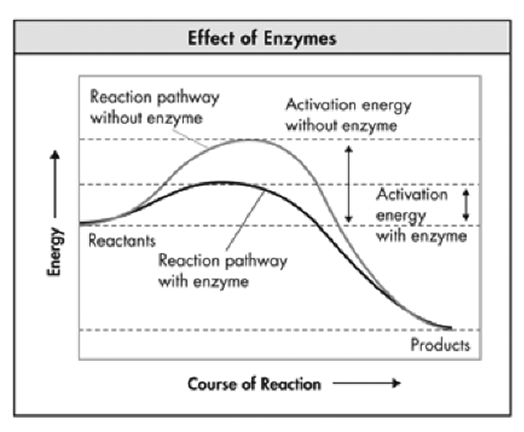
What does an enzyme do for the activation energy?
It raises it
It slows it down
It speeds it up
It reduces it
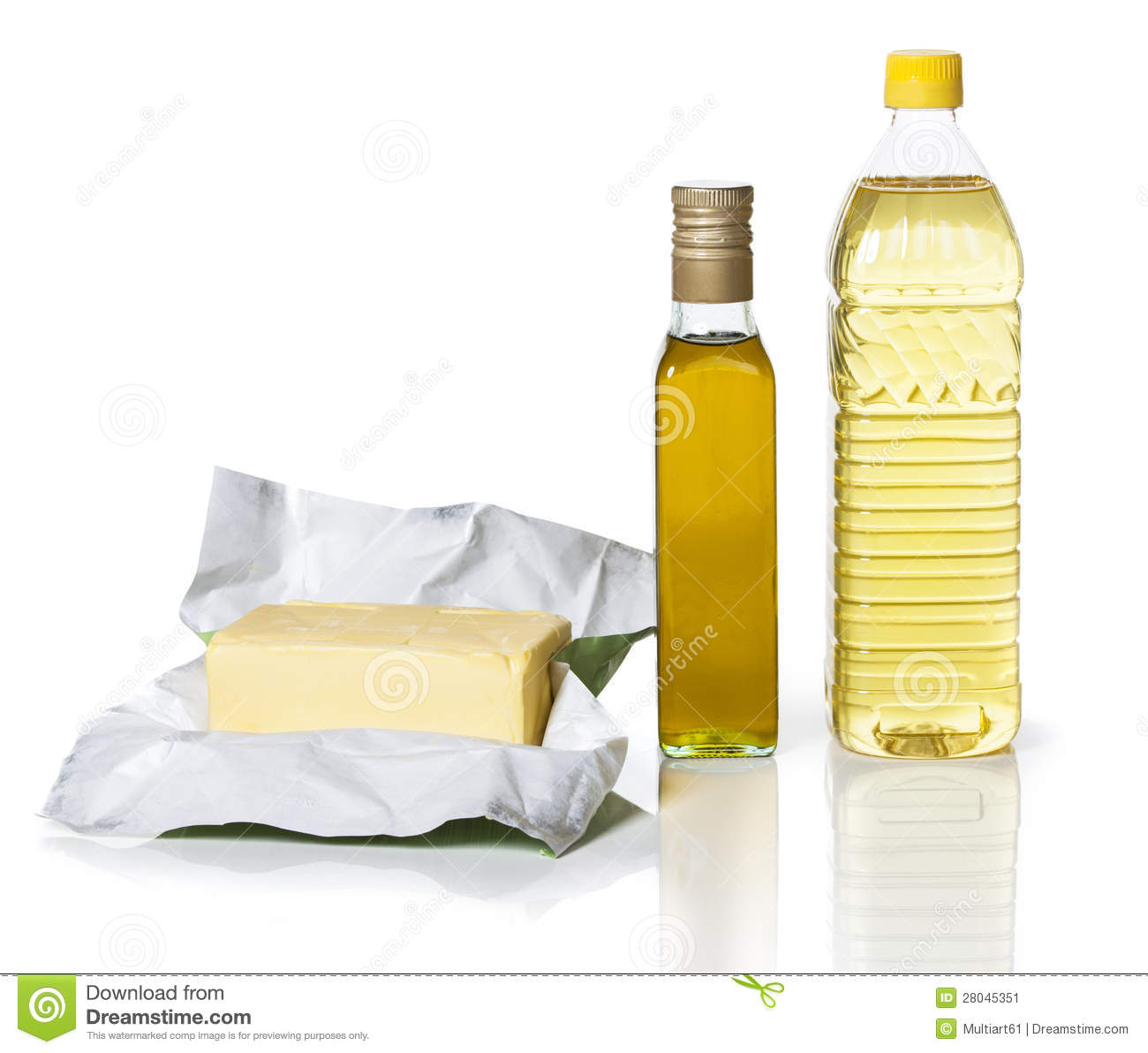
Which of the following contains the most lipid?


Below are the four biomolecules, EXCEPT:
Protein
Lard
Carbohydrates
Nucleic Acid

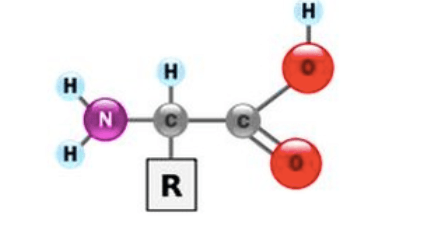
What type of biomolecule contains carbon, hydrogen, oxygen, and nitrogen?
carbohydrate
lipid
nucleic acid
protein

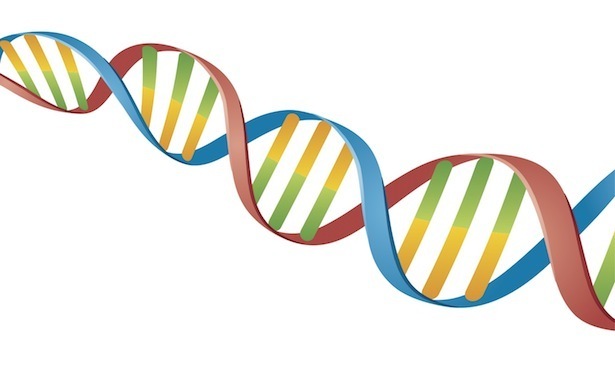
The biomolecule that holds an organism's genetic information is called ___________.
carbohydrate
lipid
nucleic acid
protein
Which of the following is the correct pair of biomolecules and their monomers?
Carbohydrate: Fatty Acids
Protein: Amino acid
Lipid: Nucleotide
Nucleic Acid: DNA

The following statements are TRUE regarding lipids, EXCEPT:
they store energy for later use
they are insoluble in water
they are composed of carbon, hydrogen, oxygen and phosphorus
they can be found in fats and oils
Which of the following is a monosaccharide?
Chitin
Sucrose
Starch
Glucose
Cholesterol is a/an...
carbohydrate
lipid
protein
nucleic acid
Enzyme is a/an...
carbohydrate
lipid
protein
nucleic acid
Which of the following transfers the genetic information for the creation of proteins
from the nucleus to the ribosomes?
DNA
RNA
nucleotide
enzyme
What biomolecule serves as structural materials in hair, nails and connective tissues?
protein
lipid
carbohydrate
nucleic acid
Monosaccharides are the building blocks of which group of biomolecules?
protein
lipid
carbohydrate
nucleic acid

The sugar in RNA is _____________while the sugar in DNA is ________.
deoxyribose, ribose
ribose, deoxyribose
c. ribose, phosphate
ribose, uracil
Which of the following sugars are the components of lactose?
glucose & galactose
fructose and galactose
glucose and glucose
glucose & fructose
Which of the following elements is present in Nucleic acid but not in other biomolecules?
Carbon
Phosphorus
Nitrogen
Hydrogen
Are enzymes used up in chemical reactions?
Yes, they can not be used again for another reaction
No, they can be used again in another reaction
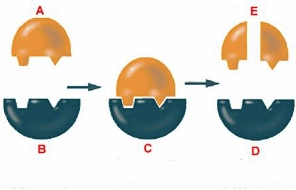
Which letter represents the enzyme?
A
B
Which letter represents the substrate?
A
B
Which letter represents the Product ?
B
C
D
E
Enzymes are "Specific", which best describes this?
function best under certain environmental conditions
speeds up only one type of reaction.
can catalyze the same reaction over and over again.
Enzymes are "Sensitive" which best describes this?
function best under certain environmental conditions
speeds up only one type of reaction. (Like a lock and key!!!) Example: Amylase – only breaks down starches.
can catalyze the same reaction over and over again.
Proteins


Which of these is most likely an enzyme?

