
 Worksheets
Astronomy Light & Atoms Review
Total questions: 40
Worksheet time: 10mins
An ideal radiator when hot and a perfect absorber when cool.
thermal oscillator
radiant source
black body
ideal gas
When light gives up its energy to an atom or molecule
absorption
emission
energy levels
spectrum
When an atom produces light or radiation
wien's law
absorption
energy levels
emission
EM Radiation with a wavelength longer than visible light but shorter than radio waves.
ultraviolet
infrared
x-rays
sound waves
Light, x-rays, and radio waves are all types of
exteromacular radiation
electromagnetic radiation
endomyostasis radiation
compressional radiation
EM radiation with a wavelength shorter than visible light but longer than x-rays
infrared
gamma
ultraviolet
microwave
Wien's Law states the relationship between
wavelength and frequency
temperature and wavelength
frequency and speed
temperature and speed
Light is _____________.
a wave
a particle
both a wave and a particle
neither a wave nor a particle
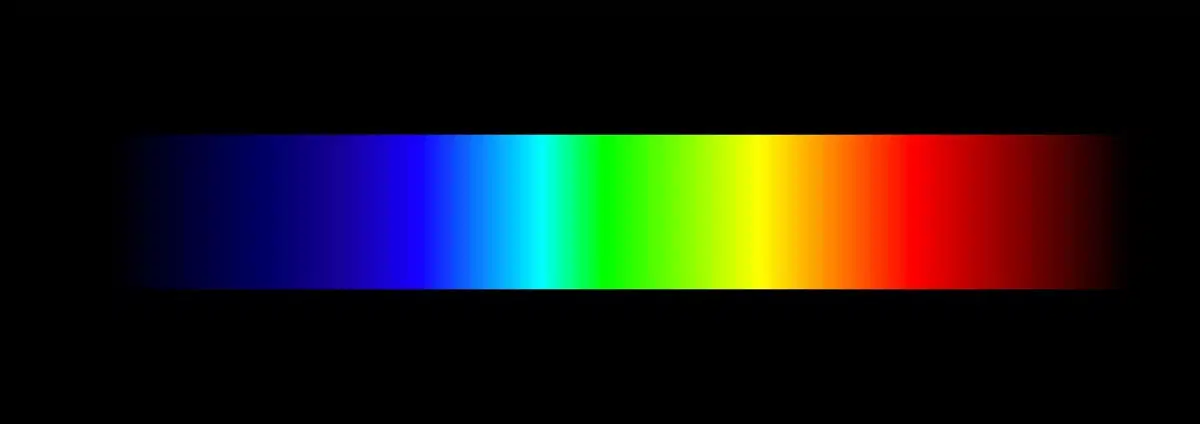
A smooth spectrum that does not have dark or bright lines
absorption spectrum
emission spectrum
continuous spectrum
charter spectrum

A spectrum with dark lines at some narrow color regions
absorption spectrum
emission spectrum
continuous spectrum
visible spectrum

A spectrum with bright lines at some narrow color regions
absorption spectrum
emission spectrum
continuous spectrum
visible spectrum
The part of the EM spectrum we can see with our eyes
absorption spectrum
emission spectrum
continuous spectrum
visible spectrum
The electrons in an atom can only exist in a specific
elemental
frequency
energy level
photon
A mix of all the visible colors of light
white
black
cyan
ultraviolet
A wavelength band where our atmosphere absorbs little radiation
atmospheric window
electromagnetic wave
atmospheric anomaly
ozone layer
A fundamental type of matter that cannot be broken down into a simpler chemical substance
photon
orbital
element
light
A particle of light or other EM radiation
photon
orbital
element
light
A system that only allows specific/discrete values.
quantized
spectroscopy
emission
nanometer
When an electron is moved to a higher energy state in an atom
electrified
excited
energized
entropy
The change in observed wavelength when a source is moving relative to an observer
tyndall effect
doppler effect
mass effect
cherenkov effect
The study and analysis of spectra
quantum theory
spectroscopy
emission
nanology
The colors of the visible spectrum
RMIVUXG
ROYGBIV
ROYROGERS
BELBIVDEVOE
What is temperature
measure of total thermal energy
measure of average particle speed
measure of electron energy level
measure of total matter
A light source moving away from you will show
blueshift
redshift
violetshift
greenshift
The atmosphere blocks most
visible light
radio waves
gamma rays
sound waves
Where are electrons found in an atoms
inside the nucleus
outside the nucleus
inside the mitochondria
orbiting the sun
As a solid object gets hotter and hotter it will glow
red, then green, then blue
blue, then red, then white
red, then white, then blue
red, then pink, then plaid
Light can travel through empty space
true
false
If the wavelength of a wave increases, its frequency _____________
increases
decreases
What electromagnetic wave has the shortest wavelengths and the highest frequencies?
Gamma Rays
Ultraviolet Rays
Radio Waves
X Rays
What electromagnetic wave has the longest wavelengths and lowest frequencies?
Microwaves
Ultraviolet Rays
Infrared Waves
Radio Waves

What electromagnetic wave do humans emit as heat energy?
infrared light
ultraviolet light
visible light
microwaves
Which of the following is correct in order from lowest to highest energy?
X Rays, Visible Light, Microwave
Ultraviolet, Visible Light, Gamma-Rays
Microwave, Visible Light, Gamma Rays
The color blue has more energy than the color red.
True
False
When a car is coming towards you its horn will have _______ pitch
higher
lower
the same
According to the Doppler effect, when the source of sound is moving towards an observer, the sound is altered and will have :
a lower pitch
a louder volume
a higher pitch
a quieter volume

A cold gas can block some of the light at specific frequencies producing dark lines and is called a(n)
emission spectrum
absorption spectrum
continuous spectrum

