
 Worksheets
Chemistry Unit 1
Total questions: 93
Worksheet time: 57mins
Properties that change based on the amount of the substance is
Extensive Properties
Intensive Properties
Chemical Properties
Real Properties
Properties that do not change based on the amount of the substance is
Extensive Properties
Intensive Properties
Associative Properties
Real Properties
Which is a chemical property?
Reactivity
boiling point
density
conductivity
Conductivity is a
Intensive property
Chemical property
Extensive property
Fake property
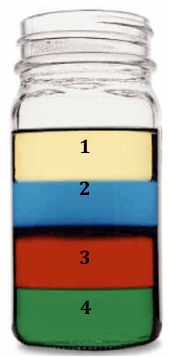
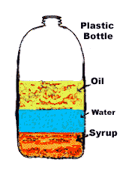
Boiling Point
Intrinsic
Extrinsic
Freezing Point
Intrinsic
Extrinsic
Density (an object's mass divided by its volume)
Intrinsic
Extrinsic
Odor
Intrinsic
Extrinsic
Color
Intrinsic
Extrinsic
Volume
Intrinsic
Extrinsic
Mass
Intrinsic
Extrinsic
Mass is the amount of _______ an object has
Matter
weight
The unit for mass is...
Newton
grams
mililiters
centimeters

What is this tool called....
Ruler
Thermometer
Beaker
Graduated Cylinder

A graduated cylinder is used to measure...
Volume
mass
weight
density
The unit for volume is
grams
milliliters (mL)
Newton
Centimeters Cubed
What two types of measurements make up DENSITY?
Volume and Weight
Temperature and Mass
Mass and Volume
What is the density of water?
34 g/mL
1 g/mL
29 g/mL
6 g/mL

Measuring the volume of a block uses which equation
Length ×Width×Height
(radius)2×Length×π

When measuring the volume of a cylinder , what equation would you use
Width×Length×Height
(radius)2×Length×π
What is the unit for density ?
g/ mL
g
cm3g
cm4


10.0 ml
15.0 ml
20.0 ml
25.0 ml

18.0 ml
6.0 ml
38.0 ml

Which box has a higher density?
A
B
They are the same
The amount of space something takes up
density
mass
volume
matter
A student mixes yellow powder with water. Which observation would prove a CHEMICAL change occurred?
The powder DISSOLVED in the water
The water turned the COLOR yellow
The bag's TEMPERATURE changed
The STATE OF MATTER changed
Which of the following options provides evidence of a CHEMICAL change?
Wood is burned releasing ash and smoke
Rocks separate when soil is sifted
Water turns to ice when you put it in the freezer
Salt dissolves in water
Which of the following examples provides evidence of a PHYSICAL change?
Wood is burned and releases ash and smoke
Iron rusts over time
When mixed, baking soda and vinegar form gas bubbles
A piece of paper changes shape when you rip it up

A white tablet is dropped into water. The water becomes cloudy and bubbles are produced. What type of change has occurred?
Physical change
Chemical change
No change
Which observations prove a chemical change has occurred?
Dissolving and expected color change
Mixing and dissolving
State of matter change and boiling water bubbles
Unexpected color change and temperature change
When mixing milk and vinegar, a white, chunky, solid substance is formed. What has occurred?
Physical change: state of matter
Chemical change: production of a solid
Physical change: freezing
Chemical change: rust
When iron is exposed to air over a long period of time, it forms rust. This is an example of what?
A new substance forming
Color change: no new substance
Shape change: no new substance
Burning: a new substance
A physical change...
Changes the physical properties of an object, but does not create a new substance.
Creates a new substance and cannot be undone.
A chemical change...
Changes the physical properties of an object, but does not create a new substance.
Creates a new substance and cannot be undone.

Is this an example of a physical or chemical change?
Physical
Chemical

Is this an example of a physical or chemical change?
Physical
Chemical

Is this an example of a physical or chemical change?
Physical
Chemical

Is this an example of a physical or chemical change?
Physical
Chemical

Is this an example of a physical or chemical change?
Physical
Chemical

Is this an example of a physical or chemical change?
Physical
Chemical

Is this an example of a physical or chemical change?
Physical
Chemical

Melting a chocolate bar is a...
Physical change
Chemical change
Which of the following is NOT an example of a physical change?
Crumpling paper
Sharpening a pencil
Clothes shrinking in the dryer
Milk turning sour
A change in which NEW substances are formed.
Chemical change
Physical change
Which of the following is NOT an example of chemical change?
Milk turning sour
Burning wood
Breaking a pencil
Metal turning rusty


A pure substance that cannot be broken down into any other substance.
Elements
Compounds
Mixtures
Fe is the ___________________ for iron
Letters
Chemical Symbol
Equation
A(n) ______________ is formed when two or more elements chemically combine.
Compound
Element
Mixture
A ___________ is a combination of many different elements not chemically combined.
Element
Compound
Mixture
Brass is a metal that is bright red and gold. It is formed by combining, not chemically, two elements, zinc and copper. Based on the information, how would brass be classified?
an element
compound
mixture
suspension
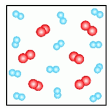
A student placed a small chip of limestone into a hydrochloric acid solution, and carbon dioxide gas was released. The carbon dioxide provided evidence that
only a physical change occurred.
a chemical change occurred.
only a loss of mass occurred.
the formation of an element occurred.
Humans absorb oxygen from the air they breathe in and exhale carbon dioxide gas, CO2. Carbon dioxide gas is
an element made of carbon and oxygen atoms.
a solution made of carbon and oxygen atoms.
a compound of carbon and oxygen atoms.
a mixture of carbon and oxygen atoms.

What type of change is this?
Chemical
Melting
Evaporation
Condensation
Sublimation
What makes elements and compounds different from mixtures? Elements & compounds-
have a constant composition (pure substances)
are made of gases
Will not change when heated
conduct electric current
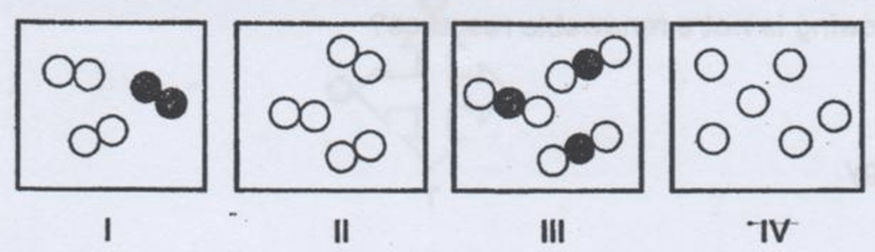
In the diagrams provided, the circles of different colors represent the atoms of different elements. Which diagram represents a mixture?
I
II
III
IV
Mixtures are different than pure substances because mixtures-
have lower boiling points
can be separated physically
are less dense than pure substances
contain only one type of atom
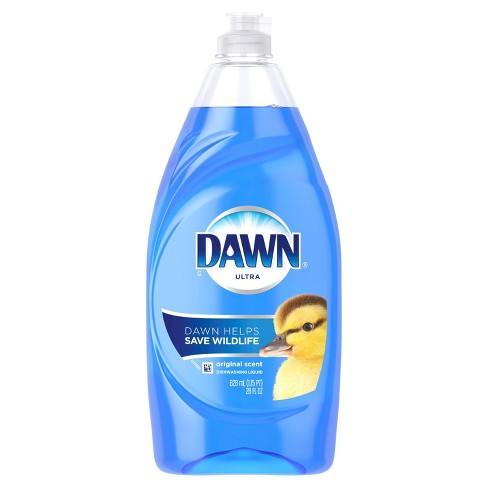
A bottle of dishwashing detergent contains a clear, viscous liquid. The label has a long list of ingredients, including water, sodium lauryl sulfate, fragrance, and Blue dye #5.
What can you infer about the material in the bottle from this label and the appearance of the liquid?
It is a pure substance.
It is a compound.
It is a heterogeneous mixture.
It is a homogeneous mixture.
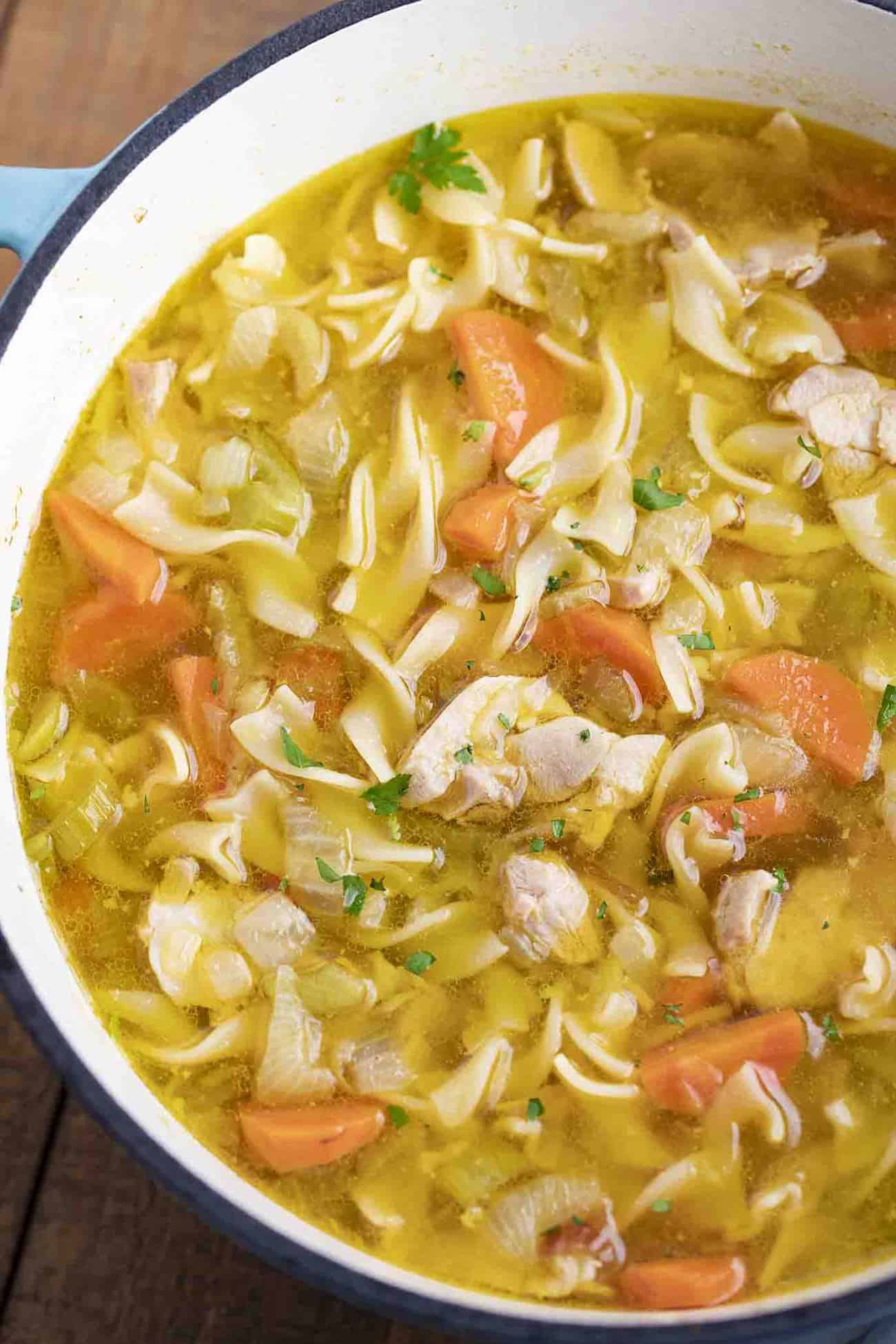
Chicken noodle soup is
Homogeneous mixture
Heterogeneous mixture
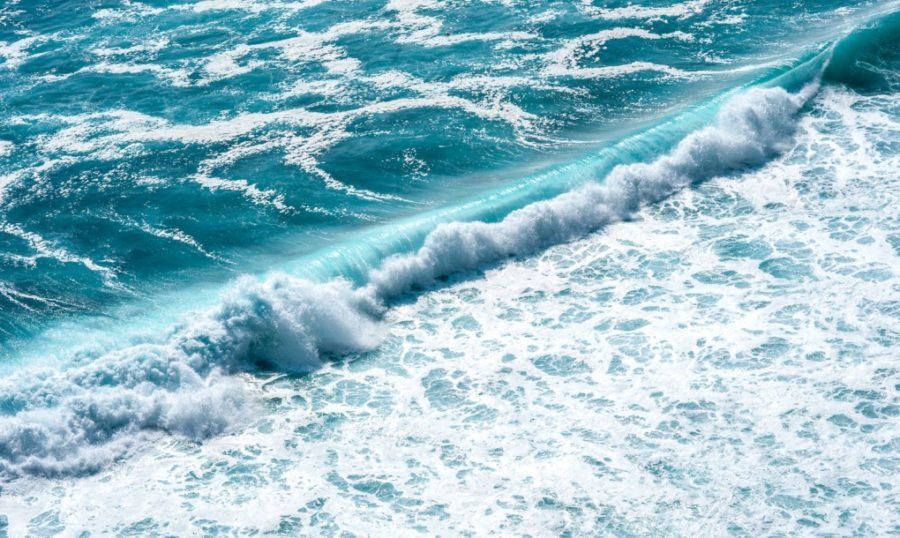
Saltwater is
Mixture
Compound
[check all that apply] Pure substances include:
Elements
Homogeneous Mixtures
Compounds
Heterogeneous Mixtures
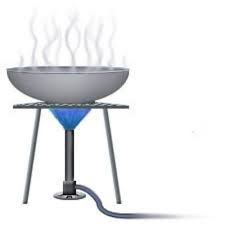
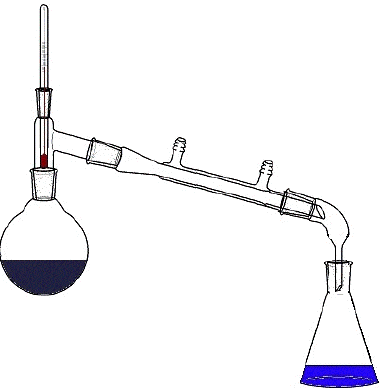
Name the separation technique shown in the diagram.
evaporation
distillation
filtration
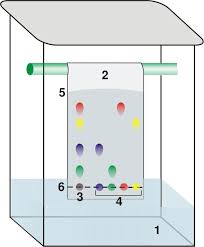
Dyes in water soluble markers may be separated by means of..
crystallization
sublimation
chromatography
sedimentation


In a coffee machine, the ground coffee is separated from the coffee solution by using..
sand paper
filter paper
toilet paper
tissue paper
A mixture is a combination of elements where no ___________ reaction takes place
physical
chemical
Which process would you use to separate solid particles from larger particles in a mixture with filter paper in a funnel to trap solids so that the liquids will pass through.
Chromatography
Magnetic Attraction
Filtration
Flotation
Which process would you use to separate smaller solid particles from larger solid particles. A mixture of different sized solids is put into a container that has a screen material at the bottom with certain sized holes in it. The smaller particles go through the screen and the larger ones do not.
Evaporation
Magnetic Attraction
Filtration
Sifting

