Wayground logo

Free Printable Worksheets

Font size

S
M
L
XL
Worksheets

Skeletal System

Total questions: 82

Worksheet time: 41mins

Name
Class
Date
1.

What is the function of yellow bone marrow?

a)

“Cushions the joints.”

b)

“Supplies minerals.”

c)

“Stores fat.”

d)

“Produces energy.”

2.

Which of the following connects muscle to bone?

a)

“Marrow”

b)

“Cartilage”

c)

“Tendons”

d)

“Ligaments”

3.

The chest is ________ and _________ to the shoulder.

a)

“anterior, superior”

b)

“anterior, inferior”

c)

“posterior, inferior”

d)

“posterior, superior”

4.

Which mineral is essential for maintaining bone mass?

a)

“Iron”

b)

“Potassium”

c)

“Calcium”

d)

“Salt”

5.

What is the name of the bones that form the fingers and toes?

a)

“Carpals”

b)

“Metatarsals”

c)

“Phalanges”

d)

“Tarsals”

6.

HOW MANY BONES DOES AN ADULT HUMAN HAVE?

a)

206

b)

200

c)

306

d)

300

7.

It is the formation of blood cellular components.

a)

hematopoiesis

b)

hemoglopoiesis

c)

hematogenesis

d)

hemogloregeneris

8.

This is the medical name for bone cells.

a)

hepatocytes

b)

osteocytes

c)

leukocytes

d)

erythrocytes

9.
The shaft of the bone is also called the
a)
epiphysis
b)
diaphysis
c)
endosteum
d)
periosteum
10.
Bone forming cells are called...
a)
osteoblasts
b)
osteocytes
c)
osteoclasts
d)
osteons
11.

How many bones make up the cervical vertebrae?

a)

12

b)

5

c)

7

d)

2

12.

The first vertebrae is called the what?

a)

saccrum

b)

axis

c)

atlas

d)

coccyx

13.

How many bones make up the thoracic spine?

a)

5

b)

7

c)

12

d)

6

14.

How many bones make up the lumbar spine?

a)

5

b)

12

c)

7

d)

6

15.

The second vertebrae is called the what?

a)

axis

b)

atlas

c)

saccrum

d)

clavicle

16.

What are the two basic types of bone?

a)

hard

b)

spongy

c)

compact

d)

porous

17.
What type of bone is the scapula?
a)
long bone
b)
short bone
c)
flat bone
d)
sesamoid bone
18.
What type of bone is the femur?
a)
Long bone
b)
Short bone
c)
Flat bone
d)
Irregular bone
19.
Which one of the following is an irregular bone?
a)
humerus
b)
tibia
c)
temporal
d)
vertebrae
20.
What is the name of the collar bone?
a)
Clavicle
b)
Scapular
c)
Sternum
d)
Xiphoid
21.
What is the name of the long bone in the top part of the leg?
a)
Patella
b)
Femur
c)
Fibula
d)
Tibia
22.
Name the bone located at number  8.
a)
Humerus
b)
Radius
c)
Fibula
d)
Tibia
23.
Name the bone located at number 12.
a)
Patella
b)
Clavicle
c)
Sternum
d)
Scapula
24.
The ______________ is made up of arms, wrists, hands, fingers, legs, ankles, feet, and toes.
a)
Axial
b)
Appendicular
25.
One function of the skeletal system is _______ especially in regards to the vital organs, such as the brain, heart, and lungs.
a)
Protection
b)
Storage
c)
Synthesis
d)
Movement
26.
The site of bone growth on a long bone is called
a)
Epiphyseal plate
b)
diaphysis
c)
periosteum
d)
meduary cavity
27.
_________ is a function of the skeletal system that is completed by joints, ligaments, and tendons.
a)
Protection
b)
Storage
c)
Synthesis
d)
Movement
28.

Which of the following is NOT a bone area associated with the axial skeleton?

a)

pelvic girdles

b)

the skull

c)

rib cage

d)

vertebral column

29.

The ends of a long bone are called the

a)

diaphysis

b)

epiphyses

c)

periosteum

d)

endosteum

30.

The process by which bones increase in diameter:

a)

ossification

b)

hematopoiesis

c)

appositional growth

d)

longitudinal growth

31.

Process of bone formation before birth:

a)

ossification

b)

hematopoiesis

c)

appositional growth

d)

atrophy

32.

Mature bone cells:

a)

osteoblasts

b)

osteomasts

c)

osteocytes

d)

osteoclasts

33.

How many bones are present in the rib cage?

a)

11 pairs

b)

12 pairs

c)

13 pairs

d)

14 pairs

34.

What bone is located between your elbow and your shoulder?

a)

Radius

b)

Ulna

c)

Scapula

d)

Humerus

35.

What is the loss of bone mass, leading to brittle bones?

a)

osteoporosis

b)

Cleidocanial dysostossis

c)

Cleidocanial dysostossisy

36.

This is also called the heel bone.

a)

calcaneus

b)

calcaneous

c)

calcium

d)

knee

37.

Bones on top of the hands

a)

carpals

b)

metacarpals

c)

phalanges

d)

rib cage

38.

The bone is splintered into many pieces:

a)

Simple

b)

Compound

c)

Greenstick

d)

Comminuted

39.

The simplest type of fracture; bone is partly bent, but not completely separated:

a)

Greenstick

b)

Stress fracture

c)

Comminuted

d)

Simple

40.

Spinal deformity that causes the hunchback appearance:

a)

scoliosis

b)

kyphosis

c)

lordosis

d)

spina bifida

41.

Deformity of spine that has the swayback appearance:

a)

kyphosis

b)

lordosis

c)

scoliosis

d)

osteoporosis

42.

Inflammation of the joints; there are at least 20 different types:

a)

dislocation

b)

osteoarthritis

c)

arthritis

d)

sprain

43.

This disorder is from a vitamin deficiency and causes soft and weak bones usually in children:

a)

osteoarthritis

b)

gout

c)

rickets

d)

dislocation

44.

This is an autoimmune disorder that causes painful, stiff joints that become deformed:

a)

arthritis

b)

osteoarthritis

c)

rheumatoid arthritis

d)

whiplash

45.

Bones are held together at joints with

a)

cartilage

b)

tendons

c)

ligaments

d)

muscles

46.

This type of joint allows for the widest range of motion

a)

ball and socket joint

b)

hinge joint

c)

gliding joint

d)

pivot joint

47.

This type of joint is found in the skull

a)

fixed (immovable)

b)

hinge joint

c)

pivot joint

d)

ball and socket joint

48.

The wrist and ankle are examples of a

a)

ball and socket joint

b)

hinge joint

c)

gliding joint

d)

pivot joint

49.
_________ is a function of the skeletal system that is completed by joints, ligaments, and tendons.
a)
Protection
b)
Storage
c)
Synthesis
d)
Movement
50.

What is another name for an articulation?

a)

Joint

b)

Suture

c)

Ligament

d)

Hole in a bone

51.
What are functions of the skeleton?
a)
Protection
b)
Blood cell production
c)
Movement
d)
All of these
52.
The primary mineral stored by compact bone is
a)
Calcium
b)
Selenium
c)
Zinc
d)
Magnesium
53.

Two bones, the ___ and the ulna, form the skeleton of the forearm.

a)

radius

b)

tibia

c)

fibula

d)

femur

54.

The skeleton of the hand consists of the ___, the metacarpals, and the phalanges.

a)

tarsals

b)

metatarsals

c)

carpals

d)

fibula

55.

Your sister hurt her thoracic vertebrae in a car accident. Which skeleton is injured?

a)

axial skeleton

b)

appendicular skeleton

56.

Which skeleton is more likely to get a fracture?

a)

axial skeleton

b)

appendicular skeleton

57.

What is the function of the skull?

a)

Only helps protect the nerves to the brain

b)

Helps protect the entire spinal cord and brain

c)

Helps protect the brain

d)

Helps protect the spinal cord

58.
Is this the axial or appendicular skeleton?
a)
Axial
b)
Appendicular
59.
Is this the axial or appendicular skeleton?
a)
Axial
b)
Appendicular
60.
Bones of the arms and legs, such as the humerus, femur, and tibia are part of which skeleton?
a)
Axial
b)
Appendicular
61.
Bones in the center of the body, such as the vertebrae, skull, and sternum are part of which skeleton?
a)
Axial
b)
Appendicular
62.

The foot, composed of the ___, metatarsals, and phalanges

a)

tarsals

b)

carpals

c)

metacarpals

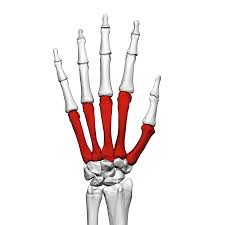
63.

Which bones are highlighted

a)

metacarpals

b)

metatarsals

c)

carpals

d)

tarsals

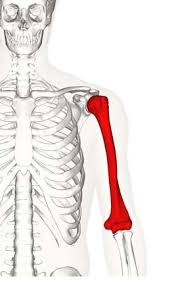
64.

Which bone is highlighted

a)

humerus

b)

fibula

c)

radius

d)

ulna

e)

tibia

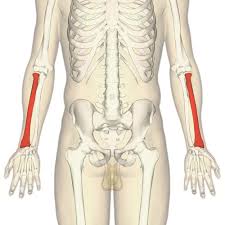
65.

Which bone is highlighted

a)

humerus

b)

radius

c)

ulna

d)

femur

e)

fibula

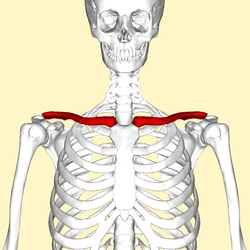
66.
What bones are these?
a)
Sternums
b)
Scapulae
c)
Clavicles
d)
Hyoids
67.
The bones labeled in red are called the 
a)
clavicle
b)
humerus
c)
scapula
d)
sternum
68.
The pelvis of a female is _____ as compared to a male.
a)
wide and circular
b)
wide and heart-shaped
c)
narrow and circular
d)
narrow and heart-shaped
69.
The bone shown in green is:
a)
coccyx
b)
sacrum
c)
ichium 
d)
vertebra
70.
The bone shown in green is:
a)
coccyx
b)
sacrum
c)
ichium 
d)
vertebra
71.
The bone shown in green is:
a)
coccyx
b)
manubrium of sternum
c)
body of sternum 
d)
xiphoid process
72.
Name the bone located at number  8.
a)
Humerus
b)
Radius
c)
Fibula
d)
Tibia
73.
What two bones make up the shoulder girdle?
a)
Scapula and Clavicle
b)
Scapula and Humerus
c)
Humerus and Clavicle
d)
Sternum and Clavicle
74.
Which is the tip of the shoulder that also articulates with the clavicle 
a)
acromion process
b)
glenoid cavity
c)
coracoid process
d)
xiphoid process
75.
The bone that connects the upper limbs to the axial skeleton and includes the clavicle and scapula is called the
a)
ribs
b)
Pectoral girdle 
c)
sternum 
d)
vertebrae 
76.
How many phalanges are there on one hand? 
a)
14
b)
10
c)
18
d)
4
77.
How many metacarpal bones are there on one hand? 
a)
8
b)
5
c)
10
d)
14
78.
How many carpal bones are there on one hand? 
a)
14
b)
12
c)
5
d)
8
79.
Which bone is this?
a)
clavicle
b)
ulna
c)
humerus
d)
radius
80.
The radius is parallel to the ulna and is found on the ______________ (also known as the thumb side).
a)
medial
b)
lateral
c)
superior
d)
distal
81.
Which marking is this?
a)
iliac crest
b)
pubis
c)
ilium
d)
ischium
82.
A tendon connects
a)
bone to bone 
b)
muscle to muscle 
c)
muscle to bone
d)
ligaments to tendons