
NEW
Font size
 Worksheets
Geol 115 Unit 1 Review of Rocks and Minerals
Total questions: 61
Worksheet time: 1hrs 18mins


Which type of breakage does this mineral have?
Cleavage
Fracture
What is the chemical formula of Quartz?
si2
FeS
SiO3
SiO2

#1 on the Mohs Hardness Scale and also used in baby powder.
halite
talc
graphite
gypsum
This mineral is used to preserve and season food. It is the mineral name for salt.
magnetite
graphite
gypsum
halite


Which mineral property is being tested in the following diagram?
density
luster
fracture
streak

White or pink. White streak. Perfect cleavage in two directions.
calcite
halite
quartz
K-feldspar


This mineral is metallic, dense, is copper colored and tarnishes green.
Pyrite
Chalcopyrite
Galena
Copper

This mineral has a hardness of 6.5 and is brassy gold with cubic crystals. It does not tarnish.
Pyrite
Chalcopyrite
Olivine
Chalcedony

This mineral is magnetic, metallic, and has a grey to dark grey streak.
Hematite
Magnetite
Chalcopyrite
Galena

This mineral has 3 cleavages not at 90 (rhombohedral), hardness of 3.5 and fizzes with acid
Calcite
Gypsum
Fluorite
Quartz

This mineral is very soft (2), comes in several colors and forms such as orange, colorless or white, and does not fizz with acid or have a soapy feel
Talc
Gypsum
Calcite
Fluorite

THis mineral is very hard (7) can be found as hexagonal crystals but will fracture if broken. It comes in many colors (smoke, rose, orange, purple, white, colorless).
Fluorite
Calcite
Quartz
Garnet

This mineral, is colorless, purple, or greenish. Has a white streak and a hardness of 4.
Fluorite
Quartz
Calcite
Garnet

This mineral is very dense, can streak on paper, and has cubic cleavage (3 at 90)
Graphite
Garnet
Galena
Biotite

This mineral can be magnetic, can be dull/Earthy or very specular. It's must distinguishing property is its reddish brown streak.
Magnetite
Hematite
Graphite
Galena

This mineral has 1 cleavage, is dark colored and can peel into sheets.
Muscovite
Biotite
Graphite
Plagioclase

This mineral is light colored to transparent and has 1 cleavage and can peel into sheets.
Muscovite
Biotite
Graphite
Plagioclase

This mineral is very soft (less than a fingernail 1.5-2), is metallic and has a very low density for being metallic. It will easily write on paper and has no cleavage.
Muscovite
Biotite
Graphite
Galena

This rock is called ___________.
granite
gabbro
diorite
rhyolite
basalt

This rock is called ___________.
granite
gabbro
diorite
rhyolite
basalt

This rock is called ___________.
granite
andesite
diorite
rhyolite
basalt

This rock is called ___________.
granite
andesite
diorite
rhyolite
basalt

This rock is called ___________.
granite
obsidian
diorite
rhyolite
basalt

This rock is called ___________.
scoria
obsidian
diorite
rhyolite
basalt

What is the texture of this rock?
aphanitic
phaneritic
porphyritic
glassy
vesicular

What is the texture of this rock?
aphanitic
phaneritic
porphyritic
glassy
vesicular

What is the texture of this rock?
aphanitic
phaneritic
porphyritic
glassy
vesicular

Breccia is composed of large, angular fragments of rocks and minerals cemented together.
igneous
sedimentary
metamorphic

The compacting and cementing of sediments to form sedimentary rock is called
weathering
erosion
deposition
lithification

This rough textured sedimentary rock, made of quartz sand
sandstone
conglomerate
shale
coal

This blackish, organic sedimentary rock is
sandstone
conglomerate
shale
coal

This sedimentary rock that contains rounded clasts
sandstone
conglomerate
shale
coal
Limestone is composed mainly of a mineral called calcium carbonate.
True
False

Sedimentary, very fine texture, breaks in thin sheets
shale
siltstone
sandstone
conglomerate
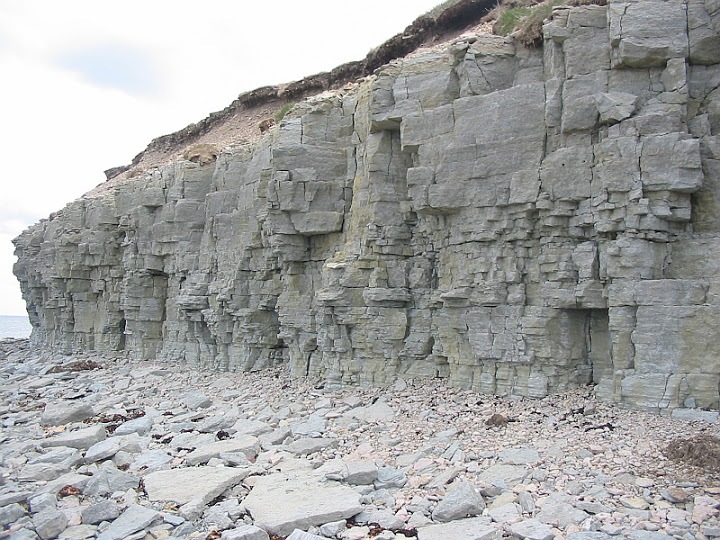
What factors can lead to the formation of a sedimentary rock?
evaporation and precipitation
melting and solidification
extreme heat and pressure

Describe the texture of breccia.
vesicular
clastic
crystalline
bioclastic
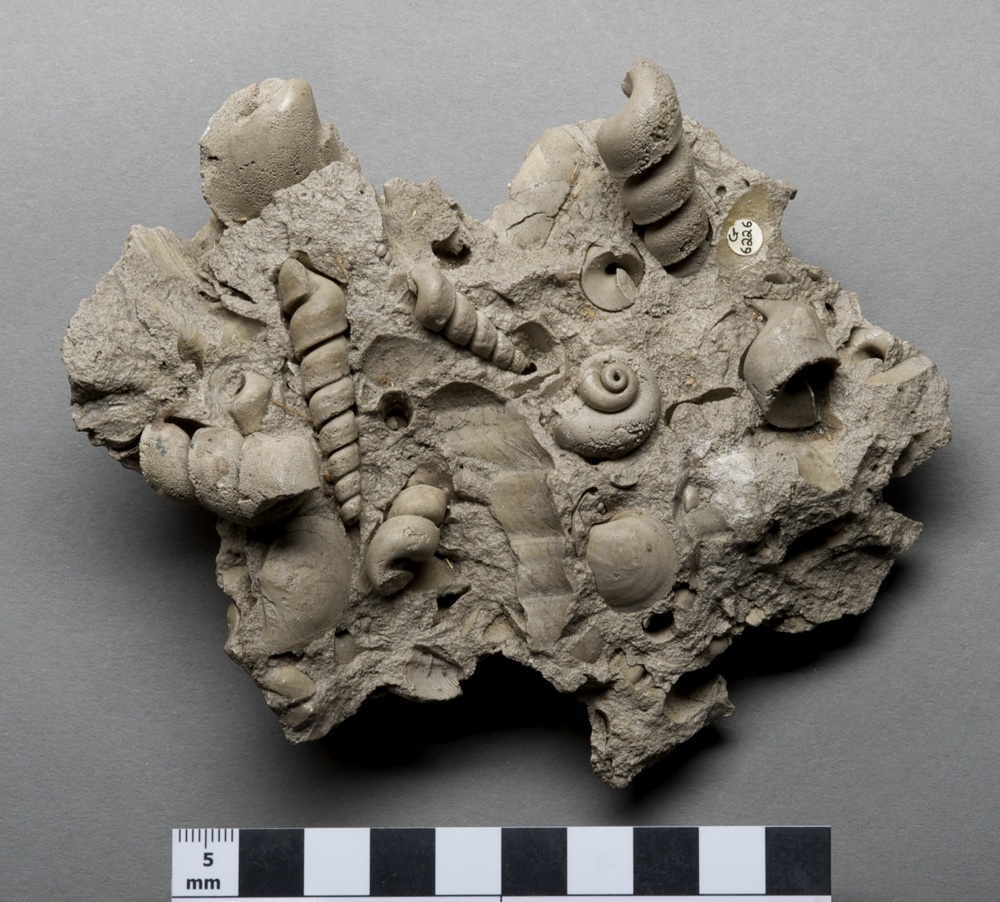
Describe the texture of limestone.
fossiliferous
clastic
vesicular
glassy

The photograph shows the texture of a rock composed of various minerals as seen through a microscope. Which rock is most likely shown above?
sandstone
anthracite coal
dunite
schist

The rock shown has a foliated texture and contains the minerals amphibole, quartz, and feldspar arranged in coarse-grained bands. Which rock is shown?
slate
dunite
gneiss
quartzite


What type of rock is this?
Amphibole schists
Mica Schists
Gneiss
Granit

This rock is called ___________.
andesite
gabbro
diorite
rhyolite
basalt


Igneous, glassy
Obsidian
Tuff

Very hard, made of microcrystalline quartz
Chert
Dolostone
Breccia
Bituminous coal
Which sequence of change in rock type occurs as shale is subjected to increasing heat and pressure?
shale-schist-phyllite-slate-gneiss
shale-slate-phyllite-schist-gneiss
shale-gneiss-phyllite-slate-schist
shale-gneiss-phyllite-schist-slate
During the Permian Period, sedimentary bedrock in the Appalachian Region was subjected to high temperature and pressure. Calcite deposits that had existed in this environment would most likely have formed
schist
gabbro
marble
gneiss
How do the metamorphic rocks schist and quartzite differ?
Quartzite contains the mineral quartz and schist does not.
Quartzite forms from regional metamorphism and schist does not.
Schist is organically formed and quartzite is not.
Schist is foliated and quartzite is not.

