
NEW
Font size
 Worksheets
A&P Unit 1 Review: Body Organization & Terminology
Total questions: 50
Worksheet time: 35mins
Closer to the head.
Anterior
Proximal
Superior
Medial
A term meaning toward the front
Cranial
Caudal
Ventral
Dorsal
Toward the midline of the body
Inferior
Superficial
Proximal
Medial
Toward the surface of the body.
Deep
Superficial
Inferior
Distal
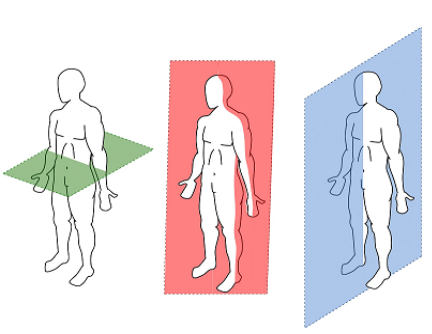
The body plane that divides the body into front and back portions.
Sagittal
Frontal
Transverse
Anterior
Away from the head.
Inferior
Lateral
Deep
Distal
Toward the back of the body.
Superficial
Distal
Superior
Posterior
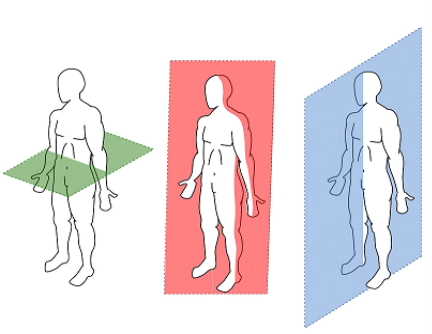
The body plane that divides the body into superior and inferior portions.
Sagittal
Frontal
Transverse
Oblique
Away from the surface of the body.
Medial
Inferior
Proximal
Deep
Away from the trunk.
Superior
Distal
Lateral
Anterior
Another term for posterior.
Medial
Deep
Dorsal
Anterior
An example of a non-vertical plane
Frontal
Parasagittal
Sagittal
Oblique
Toward the front of the body.
Superficial
Anterior
Inferior
Proximal
Another term for anterior.
Dorsal
Distal
Lateral
Ventral
Away from the midline of the body
Inferior
Distal
Lateral
Posterior
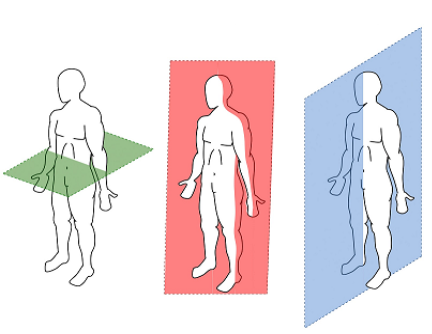
Plane that divides the body into left and right portions
Frontal
Transverse
Sagittal.
Oblique
Closer to the trunk.
Proximal
Medial
Lateral
Deep
The thigh is ____ to the hip
distal
inferior
superior
posterior
The back of the hand is ____ to the palm of the hand.
anterior
inferior
posterior
proximal
The chest is ____ to the heel.
posterior
anterior
distal
lateral
The brain is ____ to the skull.
proximal
superficial
deep
lateral
The neck is ____ to the shin.
lateral
superficial
superior
proximal
The thigh is ____ to the hand.
medial
superior
proximal
superficial
The knee is ____ to the ankle.
medial
proximal
inferior
distal
The foot is ____ to the calf.
superior
lateral
distal
posterior
dorsal
mediastinum
In the _________________________ position, the body is upright, directly facing the observer, feet flat and directed forward. The upper limbs are at the body's sides with the palms facing forward.
inferior
superior
frontal
anatomical
Which organ is located in the pericardial cavity?
lungs
heart
mediastinum
trachea
Which organ is located in the cranial cavity?
spinal cord
brain
lungs
esophagus
Vertebral
The heart, lungs, and mediastinum are located in what body cavity?
cranial
spinal
abdominopelvic
thoracic
The nose is inferior and ________________________ to the eyes.
inferior
superior
cranial
medial
Your eyes and nose are on the _________ side of your body.
Anterior
Posterior
Superior
Inferior
The diaphragm separates the ______ cavity and the ______ cavity.
doral, ventral
superior, inferior
abdominal, pelvic
thoracic, abdominopelvic
Away from the midline of the body
Inferior
Distal
Lateral
Posterior
Toward the midline of the body
Inferior
Superficial
Proximal
Medial
Which of the following body parts is not found within the axial body region?
Brain
Elbow
Neck
Spinal cord
Divides the body into UNEQUAL right and left sections
Transverse
Oblique
Parasagittal
Coronal
Homeostasis can best be defined as ___________.
good health
balance within the body systems
the ability to regulate heat
The ability to become one with nature
Which plane is non-vertical?
Sagittal
Transverse
Parasagittal
Coronal
Which of the following is NOT a level of organization?
Molecule
Micromolecule
Macromolecule
Cell
From the simplest to most complex, which level of organization comes after organelle?
Organism
Organ
Tissue
Cell
An organ is defined as a group of ________ working together to perform a similar function.
cells
organelles
organ systems
tissues
Which organ system is NOT primarily involved in the maintenance of the body?
Integumentary system
Circulatory system
Digestive system
Immune system
Which organ system is NOT primarily involved in the support and protection of the body?
Skeletal system
Immune system
Muscular system
Integumentary system
How many organ systems does the human body have?
9
10
11
12
Childbirth is an example of a ______________ feedback mechanism
Static
Negative
Positive
Homeopathic
The appendicular region consists of ________________.
the head, neck and torso
the upper limbs
the lower limbs
both the upper and lower limbs

