
 Worksheets
Big Bang to Planets Review
Total questions: 46
Worksheet time: 2hrs 38mins
In the core of our Sun, Nuclear Fusion takes place and ....
Hydrogen is converted into Helium
Protons are converted into Electrons
Gas is converted into Dust
White Dwarves are converted into Red Giants

The main force that acts on a nebula and allows stars to form within them is
thermal expansion
singularities
gravity
microscopic adhesion

This is a high mass star that is expanding and using energy at a a very fast rate and is usually very bright!
Red giant
Supergiant
White dwarf
Supernova
Our Sun will eventually become which of the following?

Stars can take different life paths due to having different _____________
temperature
mass
brightness
color
After a supergiant, a high mass star explodes and that explosion is called a
Apparent magnitude is a star's brightness as seen from Earth.

The brightness scale of stars created as if all the stars were the same distance (33 Light Years) from Earth is called:
Absolute Magnitude
Apparent Magnitude
Parsecs
The Richter Scale
What is the Milky Way?
our constellation
our galaxy
our sun
our solar system
Blue stars are hotter than red stars.
true
false

How are galaxies held together?
Which of the following is NOT a type of galaxy?
spiral
circular
elliptical
irregular
What is thought to be at the center of many galaxies?
Larger stars
Supermassive blackholes
A massive planet
A smaller galaxy
A bright, shiny sphere of plasma (very hot gas) is called a ______ only once it starts nuclear fusion!
moon
star
planet
What is meant when a galaxy is redshifted?
Distant galaxies appear blue in color due to having older stars
The temperature of distant galaxies is decreasing
The galaxy is moving away from us, so the wavelengths are longer and appear red in color.
The light from distant galaxies appear red because of all the dust it travels through
How old is the universe (approximately)?
4 billion years
1 billion years
100 million years
14 billion years
What is happening to the Universe to this day?
The universe is getting smaller and hotter.
The universe is staying the same.
The universe is getting cooler and bigger.
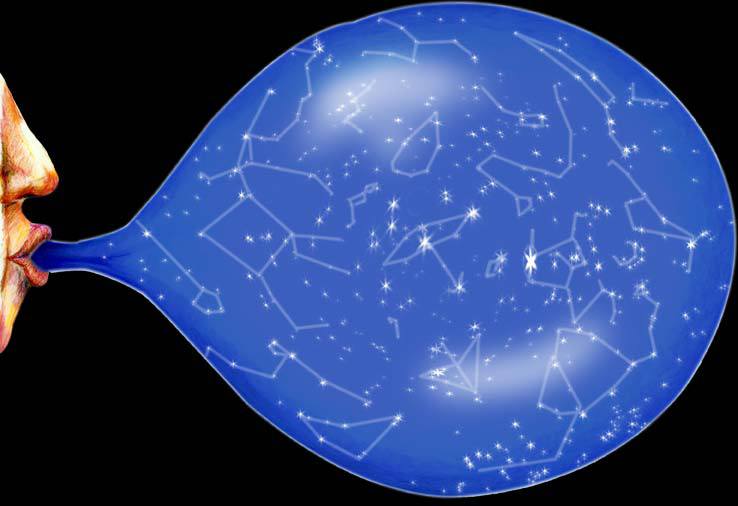
Where are we located within our galaxy?
On a spur of one of the spiral arms
On the outer edge
In the center bulge

contracting mass of gas which represents an early stage in the formation of a star, before fusion has begun
supervona
black hole
protostar
gravity

90% of all stars which are fusing hydrogen atoms to form helium atoms in their cores.
super redgiant
red giant
Nebula
main sequence star

Would the surface temperature of a red supergiant be higher or lower than a white dwarf?
Higher
Lower

a linear, direct relationship
an inverse squared relationship

In which of the following layers of a star can sunspots and solar flares occur?

What layer is #2? It is so dense that light takes over 100,000 years to move through it!

Which layer of the Sun can be seen here during a solar eclipse?

a cooler, dark spot on the photosphere of the sun is called a:

What stage in the life cycle does this describe?

An object whose surface gravity is so great, that even light cannot escape it.
white dwarf
supernova
black hole


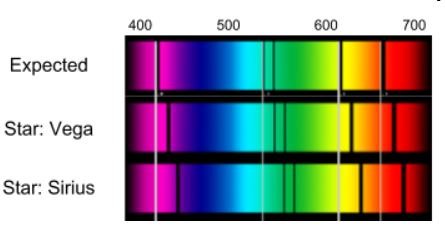
Which star would be very hot and very bright?
Rigel
Sirius
Alpha Centauri B
Betelgeuse

A collection of gas and dust where new stars are born is known as a...
Planetary Nebula
Black Hole
Supernova
Stellar Nebula

Which category of stars are very hot, but not very bright?
Blue Giants
Red Giants
White Dwarfs
Red Supergiants
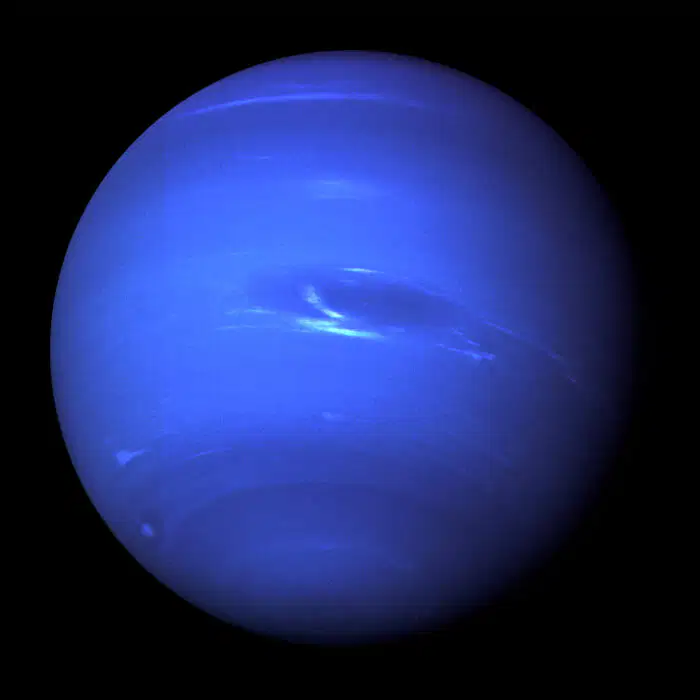
In the atmospheres of both Uranus and Neptune, what gas is responsible for their blueish colors?
Methane
Hydrogen
Carbon Dioxide
Iron
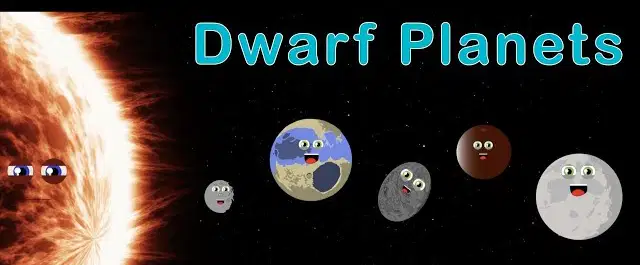
Which of the following is NOT catagorized as a Dwarf Planet?
Eris
Makemake
Pluto
Mars

Where in our solar system are MOST dwarf planets found?
in the Asteroid Belt
Between Mercury and Venus
in the Kuiper Belt
orbiting Saturn
The order of the planets from the Sun is:
Mars,Venus,Earth, Mercury,Saturn Jupiter, Uranus, Neptune
Earth,Venus,Mars Jupiter, Neptune, Mercury,Saturn, Uranus
Mercury,Venus,Earth Mars,Jupiter, Saturn,Uranus Neptune

Which planet is the smallest?
Mercury
Mars
Earth
Which of the following planets does NOT have rings?
Jupiter
Saturn
Venus
Uranus

