wayground logo

Free Printable Worksheets

Font size

S
M
L
XL
Worksheets

Molecules and Organic Compounds

Total questions: 45

Worksheet time: 26mins
Name
Class
Date
1.
Made of monomers of amino acids
a)
Carbohydrates 
b)
Lipids
c)
Proteins 
d)
Nucleic Acids
2.
Made of monomers of monosaccharides
a)
Carbohydrates
b)
Lipids
c)
Proteins
d)
Nucleic Acids
3.
Made of monomers of nucleotides
a)
Carbohydrates
b)
Lipids
c)
Proteins
d)
Nucleic Acids
4.
Made of glycerol and fatty acids
a)
Carbohydrates
b)
Lipids
c)
Proteins
d)
Nucleic Acids
5.
Include sugars (ex. glucose) and starches
a)
Carbohydrates
b)
Lipids
c)
Proteins
d)
Nucleic Acids
6.
Include waxes, oils, steroids (hormones)
a)
Carbohydrates
b)
Lipids
c)
Proteins
d)
Nucleic Acids
7.
Includes catalase (enzyme), actin, and myosin (muscle fibers)
a)
Carbohydrates
b)
Lipids
c)
Proteins
d)
Nucleic Acids
8.
Includes DNA and RNA
a)
Carbohydrates
b)
Lipids
c)
Proteins
d)
Nucleic Acids
9.
Provide quick energy 
a)
Carbohydrates
b)
Lipids
c)
Proteins
d)
Nucleic Acids
10.
Waterproofs, insulates, and stores energy long-term
a)
Carbohydrates
b)
Lipids
c)
Proteins
d)
Nucleic Acids
11.
Speed up chemical reactions, protects against infections, and structural component of hair, skin, and muscles
a)
Carbohydrates
b)
Lipids
c)
Proteins
d)
Nucleic Acids
12.
Stores genetic information and carries out protein synthesis
a)
Carbohydrates
b)
Lipids
c)
Proteins
d)
Nucleic Acids
13.

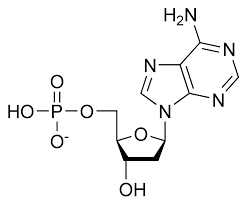
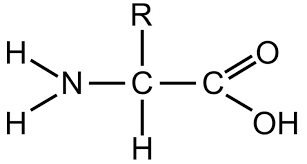
Identify the macromolecule associated with this image.

a)

Protein

b)

Carbohydrate

c)

Lipid

d)

Nucleic Acid

14.

Identify the macromolecule associated with this image.

a)

Protein

b)

Carbohydrate

c)

Lipid

d)

Nucleic Acid

15.

Identify the macromolecule associated with this image.

a)

Protein

b)

Carbohydrate

c)

Lipid

d)

Nucleic Acid

16.
The element _______is found in all of the organic compounds.
a)
Iron
b)
Nitrogen
c)
Carbon
d)
Oxygen
17.
What are the 4 most abundant elements in living things?
a)
hydrogen, oxygen, nitrogen, carbon
b)
hydrogen, helium, oxygen, carbon
c)
carbon, manganese, iron, hydrogen
18.
___________ are many monomers bonded together that form a larger molecule.
a)
Polymers
b)
Monomers
c)
Trinominers
d)
DNA
19.
Nucleotides are the building blocks (monomers) of ______.
a)
Carbohydrates
b)
Lipids
c)
Proteins
d)
Nucleic Acids
20.
Sugars, starches and chitin are examples of
a)
Carbohydrates
b)
Lipids
c)
Proteins
d)
Nucleic Acids
21.
What are the building blocks of carbohydrates?
a)
simple sugars (glucose)
b)
amino acids
c)
glycerol
d)
DNA
22.
What is the function of proteins?
a)
store genetic information
b)
store energy (long-term)
c)
store energy (short-term)
d)
build skin, hair, nails, muscles
23.

_ and _ make up the nucleus of an atom.

(a)  

24.

An electron of an atom...

a)

lives inside the nucleus and has a neutral charge.

b)

circles the nucleus and has a positive charge.

c)

lives inside the nucleus and has a negative charge.

d)

circles the nucleus and has a negative charge.

25.

The total number of electrons in a neutral atom of every element is always equal to the atom's ________________________.

a)

atomic mass number

b)

number of neutrons

c)

number of shells

d)

number of protons

26.

The atomic mass is equal to which two items added together?

a)

Protons

b)

Neutrons

c)

Electrons

d)

Atom

e)

Electron Shells

27.

Look at the information on the element box below to answer the following questions.

Number of Protons: (a)  

28.

Look at the information on the element box below to answer the following questions.

Number of neutrons: (a)  

29.

Look at the information on the element box below to answer the following questions.

Number of electrons: (a)  

30.

Which TWO of the following below would represent correct Bohr models?

Pay attention to the number of electrons in each shell.

a)

A

b)

B

c)

C

d)

D

31.

Elements can be made of a single _____

a)

subatomic particle

b)

particle

c)

atom

d)

molecule

32.

A ______ is made when more than one element is chemically bonded together.

a)

atom

b)

compound

c)

particle

d)

bond

33.

H₂O is a compound molecule.

a)

TRUE

b)

FALSE

34.
How many Hydrogen atoms are in Water (H2O)
a)
1
b)
2
c)
3
d)
4
35.

How many valence electrons ae in the element Carbon?

a)

2 electrons

b)

6 electrons

c)

4 electrons

d)

None of the above

36.

Are these molecules also compounds?

a)

YES

b)

NO

37.

Which of the following is NOT a compound?

a)

HCl

b)

Cl2

c)

NaCl

d)

CO2

38.

A substance that is formed as the result of a chemical reaction is a __________________

a)

Product

b)

Reactant

c)

Starters

d)

Enders

39.
In a ___________change, a substance changes into a different substance.
a)
Physical
b)
Chemical
40.
the starting materials in a chemical reaction
a)
Products
b)
Reactants
c)
Starters
d)
Enders
41.

In the equation 2Mg+O2  2MgO2Mg+O_2\ \rightarrow\ 2MgO   which are the reactants?

a)
Mg and O
b)
MgO
c)
Mg and MgO
d)
O and MgO
42.

NaHCO3 is an example of

a)
an abbreviation
b)
a compound
c)
a mixture
d)
an element
43.
Consider the chemical equation CH4 + 2 O2 → CO2 + 2 H2O. In this equation, CH4 is a
a)
product
b)
reactant
c)
displacement
44.
This is used to represent the number of each atom being represented. 
a)
A Exponent
b)
The Coefficient
c)
A Molecule
d)
The Subscript
45.
How many TOTAL atoms are on the REACTANT side of this equation?
CH4 + 2O2 → CO2 + 2H2
a)
5
b)
7
c)
9
d)
11