
 Worksheets
Walker Physics Ch 1-3 study deck
Total questions: 66
Worksheet time: 50mins

A golf ball accelerates off a tee at 15m/s2, changing its velocity from 0m/s to 50 m/s down the fairway. How long did it take the golf ball to accelerate?
750 seconds
35 seconds
0.3 seconds
3.3 seconds
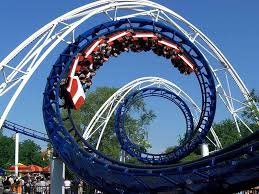
A roller coaster accelerates from an initial velocity of of 6.0 m/s to a final velocity of 70 m/s over 4 seconds. What's the acceleration?
24 m/s2
18 m/s2
16 m/s2
16 m/s
Why does a car accelerate as it rounds a corner at a constant speed?
Its direction changes
It doesn't
It slows down
Its speeds up
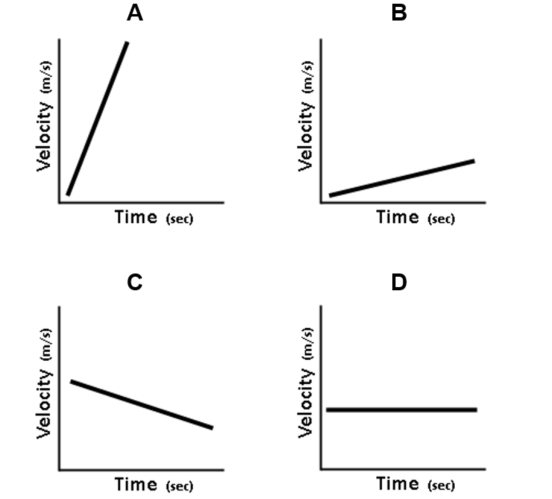
In each of the following cases, determine where the car has no acceleration.
A car speeds up after a stoplight turns green.
A car slows down as it approaches a red light
A car with the cruise control set at 80 km/h going down a straight highway
A car turning a curve at a constant speed
When are you undergoing an acceleration in a car? (Choose all that are correct)
speed up
slow down
make turns
constant speed

A fighter jet goes from +100 m/s to + 230 m/s in a time of 10 s. What was its acceleration?
-10 m/s2
+33 m/s2
-23 m/s2
+13 m/s2
A negative acceleration means that your object is
constant
speeding up
at rest
slowing down
A positive acceleration means that your object is
at rest
speeding up
moving
slowing down
As the ball falls towards the ground, its velocity
zero
decreases
at rest
increases
A bus starts from rest and accelerates to 14 m/s in 4 s. What is the average acceleration of the bus?
3.5 m/s2
5.9 m/s2
10.5 m/s2
24 m/s2
The formula for calculating avg acceleration is
t(vf−vi) True or False
True
False

What does the slope of this graph represent?
(a)
Dorothy was initially at rest. She sped up to 9 m/s in 24 seconds. What was her acceleration?
2.7 m/s2
-2.7 m/s2
-0.375 m/s2
0.375 m/s2
A rocket started at rest. After initiating the launch, it had an acceleration of 90 m/s2. How long did it take to reach a speed of 2430 m/s?
13.5 s
65610 s
27 s
32805 s
A cheetah can accelerate from rest to a speed of 30.0 m/s in 7.00 s. What is its acceleration?
4.29 m/s3
4.29 m/s2
4.29 m/s1
4.29 m/s
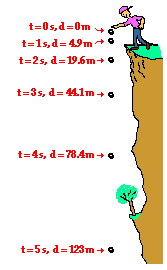
An object free falls for 3.5 seconds. How far does it fall?
120.05 m
17.15 m
60.03 m
34.3 m


A baseball is thrown up into the air. What happens to the acceleration as the ball rises in the air?
the acceleration increases
the acceleration decreases
the acceleration remains constant

A baseball is thrown up into the air. What happens to the velocity as the ball rises in the air?
the velocity increases
the velocity decreases
the velocity remains constant
The standard acceleration due to gravity (or standard acceleration of free fall),is the nominal gravitational acceleration of an object in a vacuum near the surface of the Earth. It is defined by standard as:
9.8 m/s.
9.8 m.
9.8 m/s2.
9.8 s.
If an object is in free fall for three seconds, how fast will it be falling?
9.8 m/s
19.6 m/s
29.4 m/s
39.2 m/s
Heavier objects free fall faster than lighter objects.
True
False
A free falling objects falls under the influence of the
force of air
force of gravity
force of resistance
net force
What is acceleration of an object flying upward during free fall?
+ 9.8 m/s2
- 9.8 m/s2
+ 9.8 m/s
-9.8 m/s
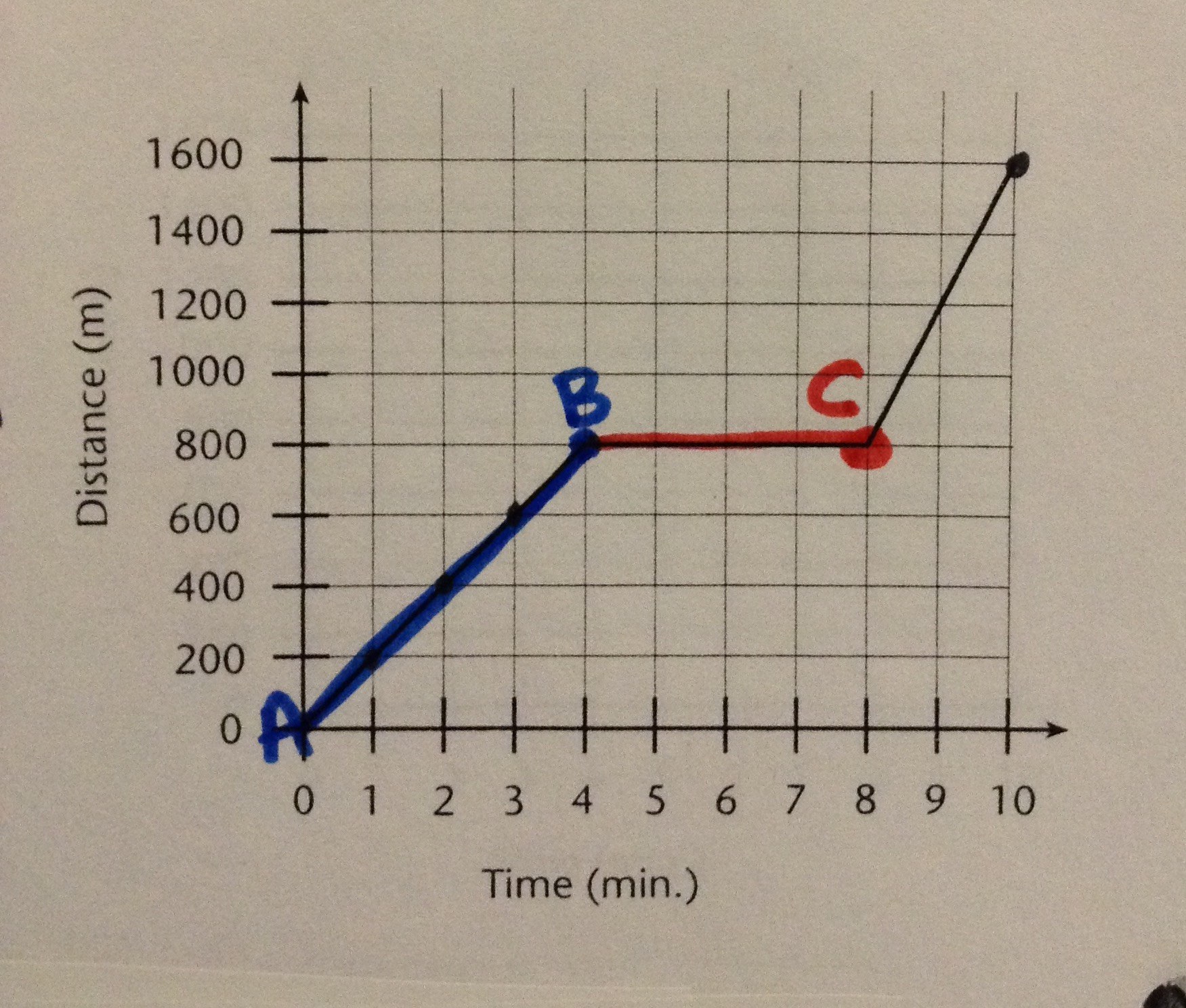
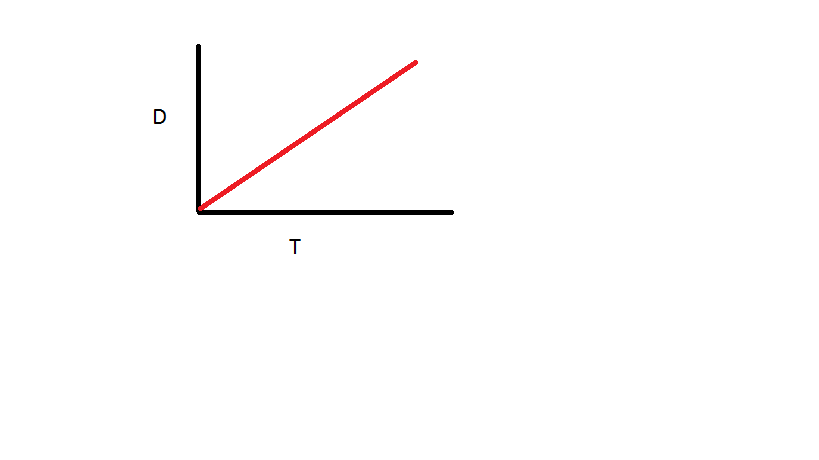
What is occurring from point A to point B?
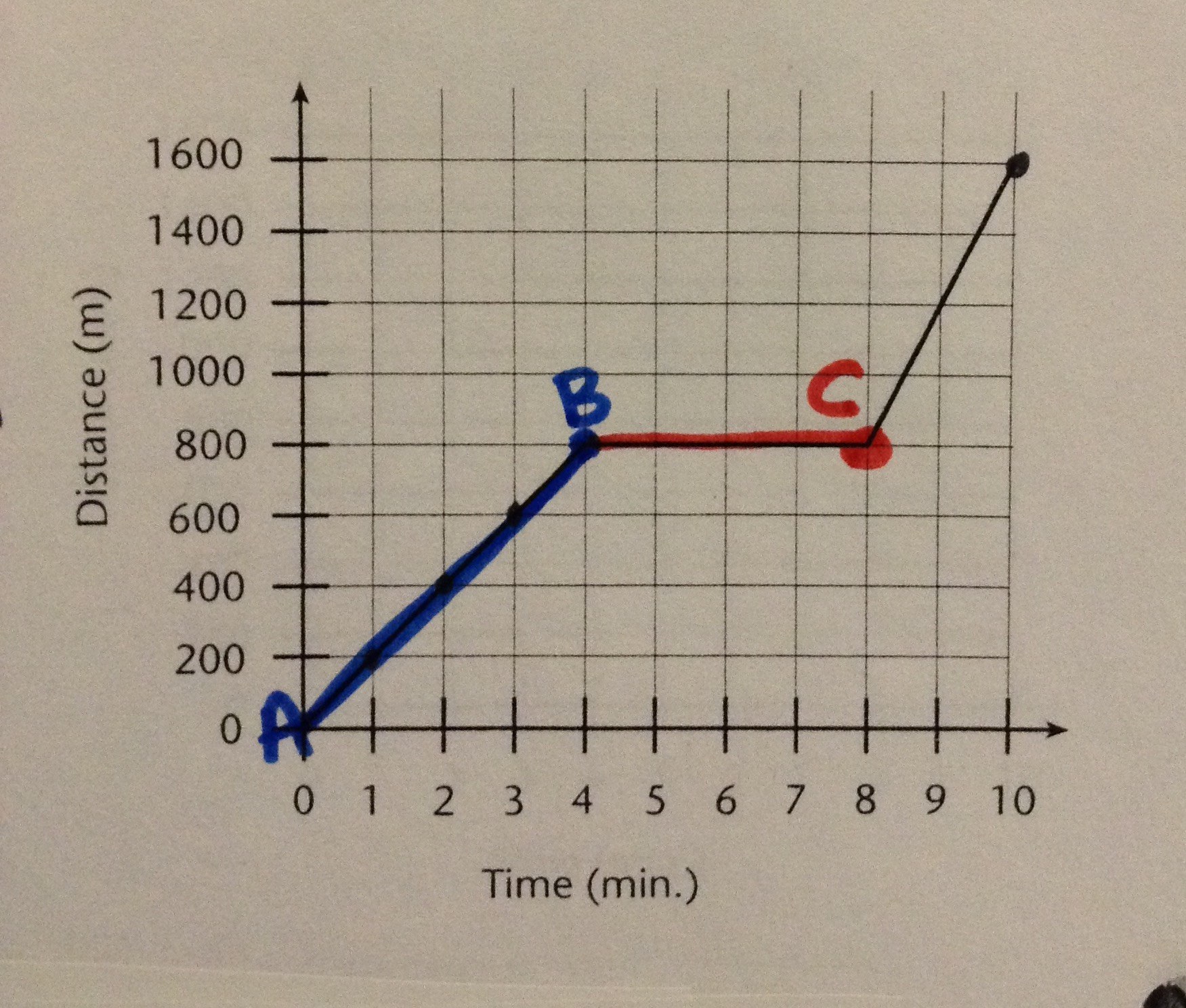
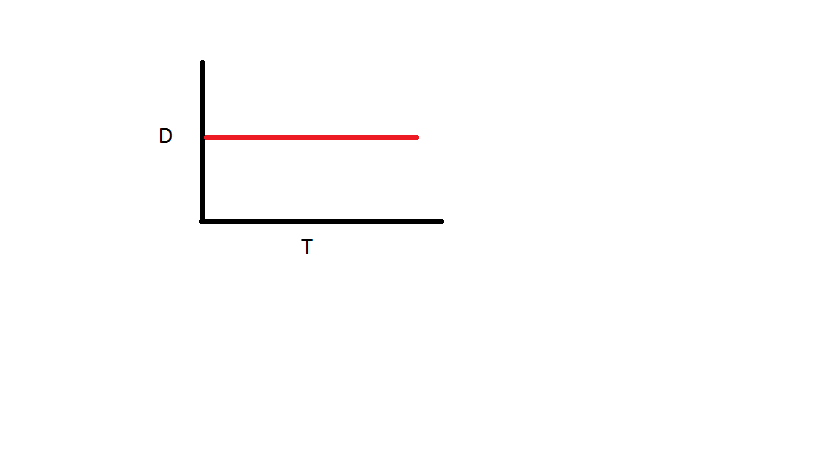
What was occurring from point B to point C?



An airplane accelerates down a runway at 3.20 m/s/s for 32.8 s until is finally lifts off the ground. Determine the distance traveled before takeoff.
1720m
104.96m
1270m
2704m
d
distance / displacement
direction
velocity
acceleration
vi
velocity
initial velocity
final velocity
acceleration
vf
velocity
initial velocity
final velocity
acceleration
a
velocity
distance
acceleration
accuracy
acceleration units
m/s
m/s2
m2/s2
m
distance or displacement units
m/s
m/s2
m2/s2
m
time units (that we use in physics)
s
min
hr
year
a tiger travels 96 m in 8s. what is his velocity over the interval
0.04m/s
25m/s
225m/s
12m/s
what is the formula to calculate speed.
S=d/t
S=t/d
S=t x d^2
S=d x t
A car travels 100km. The journey takes two hours. The highest speed of the car is 80km/ h, and the lowest speed is 40km/ h. What is the average speed for the journey?
40km/ h
50km/ h
60km/ h
120km/ h
An object is released from rest and falls to Earth. During its fall, the object is affected by air resistance. The air resistance eventually reaches a constant value. Which description about successive stages of the motion of the object is correct?
constant acceleration, then constant deceleration
constant deceleration, then zero acceleration
decreasing acceleration, then constant deceleration
decreasing acceleration, then zero acceleration

On Earth, a ball is dropped and falls 2.0 m in a vacuum. The acceleration of the ball at 1.0 m is 10 m/s2 .
What is the acceleration of the ball at 0.5 m?
5.0 m / s2
10 m / s2
15 m / s2
20 m / s2
An ice crystal falls vertically from a cloud. What happens to the acceleration of the ice crystal as it falls?
It decreases because of air resistance.
It decreases because of gravity.
It increases because of air resistance.
It increases because of gravity.
An athlete runs at a speed of 8 m / s for 10 s, and then at a speed of 6 m / s for 12s. Which calculation gives the average speed of the athlete in m / s?
28+6
22(8×10)+(6×12)
22(8÷×10)+(6÷×12)
22(10÷×8)+(12÷6)
A boy runs 400 m at an average speed of 4.0 m / s. He runs the first 200 m in 40 s. How long does he take to run the second 200 m?
60 s
66.7 s
80 s
140 s
An object is moving with uniform deceleration. Which statement describes its motion?
Its rate of change of speed is decreasing.
Its speed is constant.
Its speed is decreasing.
Its speed is increasing.
The velocity of an object increases from 30 m / s to 50 m / s in 5.0 seconds.
What is the average acceleration of the object?
0.10 m / s2
0.25 m / s2
4.0 m / s2
10 m / s2
A car travels at an average speed of 60 km / h for 15 minutes. How far does the car travel in 15 minutes?
4.0 km
15 km
240 km
900 km

A student investigates the motion of a ball rolling down a slope. The diagram shows the speed v of the ball at different times t.
Which statement describes the motion of the ball?
The acceleration is not constant.
The acceleration is negative.
The speed is decreasing.
The velocity is constant.
A car is travelling at a velocity of 2.0 m / s. It accelerates at a constant 0.20 m / s2 for 2.5 minutes. What is the final velocity of the car?
2.5 m / s
5.2 m / s
30 m / s
32 m / s

A ball falls from rest through the air towards the ground. The diagram shows two forces acting on the ball.
As the ball falls, the air resistance increases. Which statement is correct?
The acceleration of the ball decreases.
The acceleration of the ball increases.
The speed of the ball decreases.
The gravitational force on the ball decreases.
Which statement about acceleration is correct?
It is the force acting on an object when it is near to the Earth.
It is the distance an object travels in one second.
It is the force acting on an object divided by the distance it travels in one second.
It is related to the changing speed of an object.
A train begins a journey from a station and travels 60 km in a time of 20 minutes. What is the average speed of the train?
3.0 m / s
5.0 m / s
50 m / s
60 m / s
A light object is dropped from rest. It falls a large distance vertically through air. How can the motion of the object be described?
constant acceleration
increasing acceleration
decreasing acceleration and then moving at terminal velocity
increasing acceleration and then moving at terminal velocity

