
 Worksheets
Chapter 1 Nature of Science
Total questions: 120
Worksheet time: 3600secs
An Educated Guess
hypothesis
observation
experiment
variable
The use of scientific methods to test a hypothesis
hypothesis
observation
experiment
variable
A prediction that can only be supported or not supported by scientific experimentation.
hypothesis
theory
law
Explains something we see in the natural world that has been verified through repeated experiments or testing.
hypothesis
law
theory
A ___ is observed and describes in the natural world what appears to always be true.
hypothesis
theory
law
Explains HOW nature works.
hypothesis
theory
law
Helps us understand laws.
hypothesis
theory
another law
Describes What nature does
hypothesis
theory
law
Happens under very specific conditions in nature.
hypothesis
theory
law
A theory can be supported by enough empirical evidence to become a law.
True...with enough new empirical evidence by scientists.
False...it can never be a law.
If-Then statements
Hypothesis
Law
Theory
Guess
Theories can be proven with enough evidence
True
False
Force = mass x gravity
Hypothesis
Theory
Law
If other people are watching you, then you will be better behaved.
Hypothesis
Theory
Law
Germs cause diseases in living organisms.
Hypothesis
Theory
Law
Time should be the independent variable
True
False
Which variable goes on the Y axis?
Independent
Dependent


At what time is the rocket the highest according to the graph?
60 seconds
80 seconds
100 seconds
120 seconds
Which domain includes all multicellular plants and animals?
Archaea
Eukarya
Eubacteria
Protista
Organisms were orginally catergorized into just two kingdoms. How many are there today?
2
3
4
6
Why were more kingdoms added to the two original kingdoms?
The number of organisms on Earth increased over time.
There were too many plants to place them in one kingdom.
Scientists could not agree on the placement of some animals.
The knowledge of the diversity of organisms increased over time.
Why have scientists most likely classified archaebacteria and eubacteria together?
They have similar DNA.
They are both eukaryotes.
They are both prokaryotes.
They evolved around the same time.
Which kingdoms contain autotrophic organisms?
Protista and Fungi
Fungi and Animalia
Plantae and Protista
Animalia and Plantae
Which two organisms are least closely related?
two organisms from the same kingdom
two organisms from the same order
two organisms from the same family
two organisms from the same genus

Plants and animals are considered Heterotrophs. How do plant and animal cells acquire energy for basic life processes?
by breakdown of ATP
by breakdown of ADP
by synthesis of proteins
by synthesis of carbon dioxide

What components do all fungal cells contain?
Nucleus, Cell membrane
Nucleus, Cell wall made of Cellulose, Cell membrane
Nucleus, Cell wall made of Chitin, Cell membrane
Nucleus, Cell Membrane Chloroplast
Which kingdom is autotrophic AND has a cell wall made of Cellulose?
Bacteria
Fungi
Plantae
Protista


I have cell walls made of cellulose
I am an autotroph
I am multicellular
What kingdom am I?
Plantae
Animalia
Eubacteria
Unicorn
I am eukaryotic
I reproduce sexually
I am multicellular
What kingdom do I belong to?
I am prokaryotic
I am found in extreme ecosystems
What kingdom do I belong to?
I can be either a heterotroph or an autotroph-
I can be either multicellular or unicellular-
I can have cell walls or not-
The only thing for sure about me is that I have a nucleus in my cells...
I am Kingdom ____________ .
Plantae
Protista
Animalia
Fungi

Kingdom Plantae is
autotroph
heterotroph
Kingdom Animalia is
Eukayotic
Prokaryotic
In my kingdom, we have strange and amazing members that don't seem to fit well in any of the other kingdoms.
Who am I?
Plantae
Animalia
Eubacteria
Protista
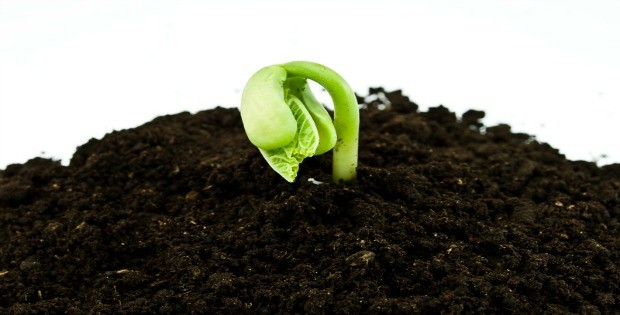
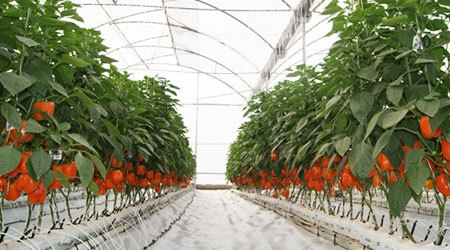
Bob read about growing plants in water. He wanted to know how plants could grow without soil.
coming up with a question
test the hypothesis with an experiment
form a hypothesis
draw conclusions
The information you collect while doing your experiment is called
conclusions
data
hypotheses
procedures
How many independent variables should you have in an experiment?
two
as many as possible
four
one
What is an independent variable?
What a scientist changes in an experiment to test their hypothesis
What scientist measure to see if it responded to a change
What happens when you do an experiment
What you keep the same throughout all experimental groups
What is an dependent variable?
What a scientist changes in an experiment to test their hypothesis
What scientist measure to see if it responded to a change
What happens when you do an experiment
What you keep the same throughout all experimental groups

At what temperature did bread mold the slowest?
20
40
60
80
A(n) ___________________________ is what you can learn about an object by using your 5 senses.
Qualitative Observation
Quantitative Observation
Inference
Hypothesis
Something that you keep the same in an experiment is called a(n) _________________________.
variable
control
procedure
conclusion
I want to know if low strength bleach, medium strength bleach, or maximum strength bleach will get Heinz ketchup stains out of white T-shirts the best. What is the variable in this experiment?
the type of stain
the strength of the bleach
the color of shirt
the brand of ketchup
The plastic bottle holds two liters of soda. Is this a Qualitative Observation, Quantitative Observation, or an Inference
Qualitative Observation
Quantitative Observation
Inference
If I floss more, then I will have fewer cavities. What is the independent variable?
Number of cavities
Amount of flossing
Type of floss used
Amount of brushing
If I put on a higher factor sunscreen, then I will burn less. What is the dependent variable?
Severity of sunburn
Factor of sunscreen
Time spent in the sun
Weather conditions
For a graph, we need
A title
Axis labelled with units
Independent variable on x-axis, dependent on y-axis
All of the above
The one factor that a scientist controls during an experiment. This goes on the x-axis.
Independent Variable
Dependent Variable
The variable that is measured. It goes on the y-axis.
Independent Variable
Dependent Variable

When should a bar graph be used?
When comparing parts of a whole
When showing change over time
When comparing data between different groups of categories
Whenever you want
When should a line graph be used?
When comparing parts of a whole
When showing change over time
When comparing data between different groups of categories
Whenever you want

According to the pie chart, how much of a house's water usage is for showers?
26.7%
13.7%
21.7%
16.8%
What is a variable?
something used to compare the parts of a whole
Something that is useful for displaying data or information that changes over time
Any display of information with tabs, rows and/or columns
Anything in an experiment that can change and can affect the outcome of the experiment


What is a data table?
Is a visual tool that uses that uses bars to compare data among categories
Used to compare the parts of a whole
Any display of information in tabular form, with rows and or columns named
Is a visual tool that uses that uses lines to compare data among categories

The cooler the temperature, the louder the crickets chirp.
The crickets cannot chirp at temperatures lower than 10 degrees C.
The warmer the temperature, the more often crickets chirp.
The temperature and the chirping of crickets are not related.

You did a survey among 35 teenagers about their favorite sports. What graph should you use to represent the number of responses in each sport?
bar graph
line graph
This variable in an experiment is the one being purposefully changed (or manipulated) by the scientist before the experiment is even conducted.
An experiment is performed on plants to see how different liquids affect plant growth. Each plant in the experiment is given a different liquid; water, apple juice, or milk. Each plant has the same amount of soil, sunlight, and listens to the same music. In this investigation, the independent variable is _____________.
the type of plant
the amount of sunlight
the type of music
the type of liquid
If you increase the amount of spinach you eat, then you will increase the iron in your blood.
What's the dependent variable in the statement above?
You will want your experiment to have ____ independent variable(s) in it for the experiment to be scientifically valid.
In an experiment to find out how the temperature affects the bounce height of a ball, the dependent variable is _____________.

Total cost of mowing

What is the dependent variable of the graph?
A student wants to test the effects of different types of exercise on heart rate. What would be the dependent variable of the experiment?
the measurement of heart rate
People's lives do not depend upon exact measurements.
True
False
Which unit of measurement describes the amount of mass in a piano?
liter
meter
second
kilogram
Which unit of measurement describes the length of a piece of lumber?
meter
liter
kilogram
second
Which unit of measurement describes when a finish line is crossed?
kilogram
second
liter
meter
The SI system includes parts of the metric system.
True
False
The meter is the standard unit for:
volume
length
mass
What is mass?
how big the object is (its dimensions)
the amount of space something takes up
the amount of matter in an object
The kilogram is the standard unit for what measurement?
length
mass
volume
The liter is used to measure what property?
volume
length
mass
Identify the metric unit used to measure the height of a chair.
millimeter
liter
meter
gram
Identify the metric unit used to measure the weight of a German Shepherd.
kilometer
millimeter
kilogram
centimeter
Identify the metric unit used to measure the volume of a gas.
kilogram
liter
gram
centimeter
Which unit is NOT used in the metric system?
Meter
Gram
Liter
Pound
A unit of length in the metric system is the:
Liter
Meter
Gram
Newton
Two tools used to find the volume of an object are the
ruler and graduated cylinder
graduated cylinder and triple beam balance
triple beam balance and ruler
test tube and graduated cylinder

Name the lab equipment shown in the picture
graduated cylinder
beaker
flask
test tube

What is the correct measurement?
33 ml
39ml
40 ml
38 ml
The SI unit for mass is the ___________.
meter
kilogram
liter
second
Newton
The SI unit for measuring length is the __________.
meter
kilogram
liter
Newton
second
The SI unit for volume is the __________.
meter
kilogram
liter
second
Newton
What is your favorite subject?
Science
Math
English
History
Arts
What is your favorite color?
Blue
Red
Green
Yellow
Orange
What is your favorite season?
Spring
Summer
Fall
Winter
What is your favorite time of day?
Morning
Afternoon
Evening
What is your pastime/hobby?
Drawing/
Painting
Exercising/
Sports/
Outdoor Activities
Singing/Dancing
Reading
Video games

