Wayground logo

Free Printable Worksheets

Font size

S
M
L
XL
Worksheets

Cells Test

Total questions: 121

Worksheet time: 3hrs 54mins

Name
Class
Date
1.
Robert Hooke, Anton van Leeuwenhoek, Theodor Schwann, Rudolf Virchow, and Matthias Schliden were all responsible for what theory?
a)
The Theory of Gravity
b)
The Theory of Relativity
c)
The Cell Theory
d)
The Theory of Continental Drift
2.
What tool do you use to view the cells?
a)
metric ruler
b)
centrifuge
c)
microscope
d)
telescope
3.
Which of the following is NOT a cell theory.
a)
All non-living things are made of cells
b)
All cells come from pre-existing cells
c)
Cells are the basic unit of structure and function of all living things
4.
All living things are made up of...
a)
cells
b)
cell tissues
c)
organ
d)
organ systems
5.
All cells come from___________ cells.
a)
pregnant
b)
pre-existing
c)
paternal
d)
pin size
6.
What is the basic structural and functional unit of all living things? 
a)
atom
b)
cell
c)
molecule
d)
human
7.
All cells are produced ____________.
a)
From pre-existing and deceased cells
b)
from other pre-existing cells
c)
Cells can come from anywhere, as long as there is the sun.
8.

The 3 parts of the Cell Theory are...?

a)

All living things are composed of cells

Cells are the basic units of structure and function in living things

All cells are produced from other cells

b)

All living things are composed of cells

Cells are the basic units of dance and vibes in living things

All cells are destroyed from other aliens

c)

All living things are composed of Jell-O

Cells are the basic units of structure and function in living things

All cells are produced from factories in Canada

d)

All living things are composed of cells

Cells do karate and practice eating whole pies in their free time

All cells are produced from other cells
9.
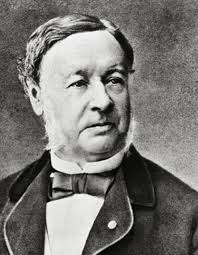
Which of the following scientists concluded that all animals are made of cells?
a)
Rudolf Virchow
b)
Matthais Schleiden
c)
Robert Hooke
d)
Theodor Schwann
10.

When cells are damaged, new cells are created by cell a process called cell division. How does the cell theory support this fact?

a)

It states that all cells have a nucleus which divides.

b)

It states that all living things are made up of one or more cells.

c)

It states that cells come from previously existing cells.

d)

It states that the basic units of structure and function are cells.
11.
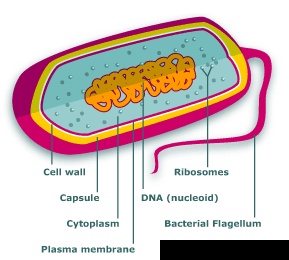
Who looked at cork and named the cell?
a)
Robert Hooke
b)
Van Leeuwenhoek
c)
Robert Brown
d)
Francesco Redi
12.
All plants are made of cells.  This was discovered by....
a)
Matthias Schleiden
b)
Rudolf Virchow
c)
Robert Hooke
d)
Aristotle
13.
What type of cell has a nucleus? 
a)
eukaryotic
b)
prokaryotic 
14.
What type of cell does not have a nucleus?
a)
eukaryotic 
b)
prokaryotic 
15.
Plants and animal cells are examples of ___ cells 
a)
prokaryotic cells 
b)
eukaryotic cells 
16.
Prokaryotic cells include bacteria.
a)
True
b)
False
17.
Which type of cell?
a)
Prokaryote
b)
Eukaryote
18.
Both prokaryotes and eukaryotes have a nucleus.
a)
True
b)
False
19.
Animal, fungi, plant, and protista cells are all examples of which type of cell?
a)
Eukaryotic
b)
Prokaryotic
c)
Both prokaryotic and eukaryotic
20.
Bacteria is what kind of cell?
a)
Eukaryotic
b)
Prokaryotic
21.
What structures distinguish a plant cell from an animal cell?
a)
Plant cells have cell walls and ribosomes.
b)
Plant cells have cell walls and chloroplasts.
c)
Plant cells have chloroplasts and ribosomes.
d)
Plant cells have chloroplasts and mitochondria.
22.

A cell has a cell wall and chloroplasts. What kind of cell is this?

a)

Prokaryotic

b)

Eukaryotic

c)

Plant

d)

Animal

23.
Which organism is made up of cells that have both a cell membrane and a cell wall?
a)
desert mouse
b)
human 
c)
maple tree
d)
zebra
24.
What is the name of the genetic material that is inside the nucleus?
a)
ER
b)
ATP
c)
YOLO
d)
DNA
25.
What is the function of nucleus?
a)
Structure that organizes motion of chromosomes. 
b)
Structure that contains DNA and directs the cell 
c)
Membrane that surrounds and protects the cell 
d)
Stack of membranes that packages chemicals
26.
The site of photosynthesis
a)
ribosome
b)
mitochondria
c)
chloroplast
d)
nucleus
27.

This pigment is found in chloroplasts.

a)

rhodopsin

b)

chlorophyll

c)

thylakoid

d)

stroma

28.

Proteins are produced at this organelle.

a)

golgi body

b)

ribosome

c)

cytoskeleton

d)

cilia

29.

this organelle makes ATP.

a)

chloroplast

b)

mitochondria

c)

ribosome

d)

nucleolus

30.
The ____________ packages and processes material before it exports out of the cell.
a)
Vacuoles
b)
mitochondria
c)
Golgi apparatus 
d)
nucleus 
31.
Which of the following is an enzyme filled organelle that breaks down waste in the cell?
a)
lysosomes
b)
chloroplast
c)
mitochondria 
d)
Golgi apparatus 
32.
Which of the following is found inside a prokaryote?
a)
cytoplasm
b)
DNA
c)
ribosomes
d)
all of these
33.

Both Eukaryotic and Prokaryotic cells have __________.

a)

ribosomes

b)

nucleus

c)

ribosomes and a nucleus.

34.

Which organelle controls what goes in and out of the cell?

a)

nucleus

b)

nucleolus

c)

cell membrane

d)

nuclear membrane

35.

Prokaryotic cells do not have…….

a)

membrane bound organelles

b)

cell membrane

c)

DNA

d)

genetic material

36.

3 structures found only in a plant cell -

a)

Call membrane, vacuoles, Chloroplast

b)

Cell wall, large vacuole, cytoplasm

c)

Cell membrane, large vacuole, cytoplasm

d)

Cell wall, large vacuole, chloroplast

37.

Includes millions of ribosomes, protein folding, production, and dispatching of protein -

a)

Rough ER

b)

Smooth ER

c)

Nucleus

d)

Mitochondria

38.

Lipid (fat) manufacture and metabolism, steroid and hormone production

a)

Rough ER

b)

Smooth ER

c)

Lysosomes

d)

Cytoplasm

39.

Gel-like substance that holds all organelles in place -

a)

Chloroplast

b)

Call wall

c)

Cytoplasm

d)

Lysosomes

40.

Stores water and nutrients for the cell

a)

Lysosomes

b)

Vacuole

c)

Chloroplast

d)

Cytoplasm

41.
Layered stack of flat membrane-enclosed spaces containing enzymes that process, sort, and deliver proteins. 
a)
Golgi apparatus 
b)
vacuole 
c)
cell wall
d)
none of these 
42.
A rigid structure that gives protection, support, and shape to plants, algae, fungi and some bacteria. 
a)
cell wall
b)
cell membrane 
c)
cytoskeleton 
d)
cytoplasm 
43.

network of proteins found within the cytoplasm

for support and structure in cell

a)

Cytoskeleton

b)

Mitochondria

c)

Cilia

d)

Ribosome

44.

transports proteins throughout the cell

a)

lysosome

b)

vesicle

c)

cilia

d)

vacuole

45.
What do plants give off after photosynthesis?
a)
Oxygen
b)
carbon
c)
nitrogen
d)
hydrogen
46.
Plants need ________from the air for photosynthesis
a)
oxygen
b)
soil
c)
carbon dioxide
d)
sugar
47.
What molecule absorbs sunlight during photosynthesis?
a)
Epidermis
b)
thylakoid
c)
the leaf
d)
chlorophyll
48.
The products of photosynthesis are
a)
water and carbon dioxide
b)
oxygen and water
c)
sugar and cabon dioxide
d)
oxygen and sugar (glucose)
49.
The main source of energy for all life comes from ____.
a)
the Earth
b)
the moon
c)
the sun
d)
the food we eat/make
50.
In what part of the cell does photosynthesis occur?
a)
Nucleus
b)
Chloroplast
c)
Epidermis
d)
Vacuole
51.
After photosynthesis, plants store their energy as _________ .
a)
chlorophyll
b)
pigment
c)
glucose (sugar)
d)
Oxygen
52.

How does most of the water needed by the plant get into its leaves?

a)

It enters through the stomata

b)

The roots absorb it and then it travels up the xylem

c)

It's made during a chemical reaction in the stem

d)

The flowers capture water and deliver it to the leaves

53.
How does carbon dioxide get into the leaves of a plant?
a)
It's absorbed by the roots
b)
It's made in a chemical reaction in the stem
c)
It enters through the stomata
d)
It goes through the flowers
54.
Which choice correctly shows the gases that enter and exit plants during photosynthesis?
a)
Enter: Oxygen
Exit: Carbon dioxide
b)
Enter: Water vapor
Exit: Glucose
c)
Enter: Carbon dioxide
Exit: Oxygen
d)
Enter: Light
Exit: Water vapor
55.

When light intensity goes up, the rate of photosynthesis goes _______.

a)

up

b)

down

c)

at the same rate. It does not change.

56.
__________ energy from the sun is changed intto __________ energy during photosynthesis
a)
Chemical energy to light energy
b)
Light energy to chemical energy
c)
Thermal energy to light energy
d)
Electrical energy to chemical enerfy
57.
What are the 3 key ingredients needed for photosynthesis
a)
glucose, oxygen, carbon dioxide
b)
carbon dioxide, water, glucose
c)
water, soil, sunlight
d)
sunlight, water, carbon dioxide
58.
Which of the following examples go through the process of photosynthesis?
a)
bees
b)
algae
c)
humans
d)
mushrooms
59.
What is the chemical formula for glucose?
a)
C6H12O6
b)
C6H6O12
c)
C12H6O12
d)
C6O2H6
60.
What is the chemical formula for water?
a)
H2O
b)
HO2
c)
CHO2
d)
CO2H
61.
What is the chemical formula for oxygen?
a)
H12O2
b)
C6O2
c)
O3
d)
O2
62.

Why are plants usually green?

a)

Because the chlorophyll reflects green light

b)

Because the chlorophyll absorbs green light

c)

Because the accessory pigments combine to make green

d)

Because the accessory pigments only absorb green light

63.
Which of these conditions would decrease the rate of photosynthesis in a plant?
a)
Above average precipitation
b)
Changing the daylight hours from 14 hrs to 10 hrs
c)
Changing the CO2 concentration from 380 ppm to 410 ppm
d)
All of these choices
64.
Which of the following is the correct equation for PHOTOSYNTHESIS?
a)
CO2 + light + H2O --> O2 + Sugar
b)
CO2 + sugar + H2O --> O2 + light
c)
O2 + light + H2O --> CO2 + Sugar
d)
CO2 + O2 + H2O --> Light+ Sugar
65.
A student is collecting the gas given off from a plant in bright sunlight at a temperature of 27°C. The gas being collected is probably ________.
a)
oxygen
b)
carbon dioxide
c)
ATP
d)
glucose
66.
If carbon dioxide is completely removed from a plant’s environment, what would you expect to happen to the plant’s production of high-energy sugars (rate of photosynthesis)?
a)
Sugar production will likely increase.
b)
Sugars will not be produced.
c)
The rate of sugar production will decrease .
d)
Fewer sugars will be produced at first, but then the plant will recover.
67.

Most of the oxygen in the Earth’s atmosphere was produced by —

a)

a big explosion

b)

photosynthesis

c)

digestion

d)

metabolism

68.
How would the concentration of CO2 in water affect photosynthesis?
a)
The higher the CO2, the greater the rate
b)
The higher the CO2, the lower the rate
c)
CO2 concentration doesn't affect photosynthesis
d)
a greater rate of photosynthesis causes higher CO2 concentrations 
69.

Why does the rate of photosynthesis decrease at high temperatures?

a)

Enzymes are denatured

b)

Enzymes do not have enough kinetic energy

70.
What is the name of the 1st step of cellular respiration?
a)
Glycolysis
b)
Kreb's Cycle
c)
ETC
d)
Anaerobic respiration
71.
Where does glycolysis take place?
a)
Cytoplasm
b)
Stroma
c)
Thylakoid
d)
Mitochondria
72.
This process releases chemical energy from sugars and other carbon-based molecules to make ATP when oxygen is present.
a)
photosynthesis
b)
light-independent reaction
c)
cellular respiration
d)
light-dependent reaction
73.
Glucose is broken down during which process
a)
Krebs cycle
b)
Calvin cycle
c)
Glycolysis
d)
Photosynthesis
74.
Which is not a waste product of cellular respiration?
a)
Water
b)
Heat
c)
Carbon Dioxide
d)
Oxygen
75.
What is the correct equation for cellular respiration?
a)
6O2 + C6H12O6 -> 6CO2 + 6H2O + Energy
b)
6O2 + C6H12O6 + Energy -> 6CO2 + 6H2O
c)
6CO2 + 6H2O -> 6O2 + C6H12O6 + Energy
d)
6CO2 + 6H2O + Energy -> 6O2 + C6H12O6
76.
The energy in ATP is stored 
a)
in the bond between the second and third phosphate
b)
in the bond between the first and second phosphate
c)
in the bond between the adenosine and the first phosphate
d)
I like turtles
77.

Which of the following is a reactant of cellular respiration?

a)

Glucose

b)

Carbon Dioxide

c)

Water

d)

ATP

78.

Which of the following is a reactant of cellular respiration

a)

Carbon Dioxide

b)

Water

c)

Oxygen

d)

ATP

79.

Which of the following is a product of cellular respiration?

a)

Glucose

b)

Carbon Dioxide

c)

Oxygen

d)

Radiant Energy

80.

Which of the following is a product of cellular respiration?

a)

Radiant Energy

b)

Oxygen

c)

Glucose

d)

Water

81.

Which statement is true regarding cellular respiration?

a)

The reactants of cellular respiration are identical to the reactants of photosynthesis.

b)

The reactants of cellular respiration are obtained from the products of photosynthesis.

c)

The products of cellular respiration are the same as the products of photosynthesis

d)

Cellular respiration only occurs in autotrophs, photosynthesis occurs only in heterotrophs.

82.

A decrease in the amount of oxygen available will....

a)

not have an effect on the amount of energy produced during cellular respiration

b)

decrease the amount of glucose produced during cellular respiration

c)

cause the amount of water produced during cellular respiration to increase

d)

decrease the amount of energy produced during cellular respiration

83.
Where does the Krebs Cycle take place?
a)
mitochondria
b)
chloroplast
c)
cytoplasm
d)
nucleus
84.
Which molecule isn't an energy carrier?
a)
FADH2
b)
NADH
c)
oxygen
d)
ATP
85.
Glycolysis results in a net gain of how many ATP?
a)
0
b)
2
c)
4
d)
1
86.
Where does anaerobic respiration occur?
a)
glucose molecule
b)
mitochondria
c)
cytoplasm
87.
Which is a product of glycolysis?
a)
pyruvate
b)
carbon dioxide
c)
water
d)
glucose
88.

What is the alternative name for the Krebs cycle?

a)

acetic acid cycle

b)

carbon fixation

c)

citric acid cycle

d)

pyruvic acid cycle

89.

Aerobic means __________ .

a)

"requires hydrogen"

b)

"needing electrons"

c)

"forming ATPs"

d)

"requires oxygen"

90.

__________ are the infoldings of the inner membrane of the mitochondria that increase the surface area.

a)

Cristae

b)

Grana

c)

Stroma

d)

Thylakoids

91.

The correct order of stages of cellular respiration is

a)

glycolysis - the Calvin cycle - electron transport.

b)

the light reactions - glycolysis - the Krebs cycle.

c)

glycolysis - the Krebs cycle - electron transport.

d)

electron transport - glycolysis - the Krebs cycle.

92.
Which of the three steps of cellular respiration is anaerobic?
a)
Glycolysis
b)
Citric Acid Cycle
c)
Kreb's Cycle
d)
Electron Transport Chain
93.
What does ATP stand for?
a)
Adenosine Triphosphate
b)
Deoxyribonucleic acid
c)
Ribonucleic acid
d)
Ants Thinking about Pasta
94.

Which step of aerobic cellular respiration makes the most ATP?

a)
Glycolysis
b)
Krebs Cycle
c)
Electron Transport Chain
d)
Light Dependent Reactions
95.

Which of the following is NOT a stage of cellular respiration?

a)

Glycolysis

b)

Fermentation

c)

Krebs cycle

d)

Electron transport

96.

The Krebs cycle does NOT occur if

a)

oxygen is present

b)

oxygen is not present

c)

glycolysis occurs

d)

carbon dioxide is present

97.

In cellular respriration, high-energy electrons that move down the electron transport chain ultimately provide the energy needed to

a)

transport water molecules across the membrane.

b)

convert ADP molecules into ATP molecules.

c)

convert carbon dioxide into water molecules.

d)

break down glucose into pyruvic acid molecules.

98.
What does ATP synthase do?
a)
Create ATP in chemiosmosis.
b)
Break down ATP in chemiosmosis.
c)
Break down NADPH. 
d)
Create NADPH.
99.
The function of the plasma membrane is....
a)
to regulate what enters and leaves the cell.
b)
fight bacteria and viruses that enter the cell.
c)
provide rigid support and protection to the cell.
d)
make sure each cell can move
100.

Most of the cell membrane is made of...

a)

Phospholipids

b)

Carbohydrates

c)

Proteins

d)

Nucleic acids

101.

What do the brown structures represent?

a)

Phospholipids

b)

cholesterol

c)

Proteins

d)

Cyctoskeleton Filaments

102.
Hydrophilic means...
a)
water-loving
b)
water-fearing
c)
nonpolar
d)
lipid soluble
103.

Hydrophobic region of the cell membrane?

a)

E

b)

B

c)

C

d)

A

104.
What is D
a)
Phospholipid
b)
carrier protein
c)
cholesterol
d)
peripheral protein
105.
The diffusion of water across a selectively permeable membrane is called
a)
osmotic pressure.
b)
osmosis.
c)
pinocytosis.
d)
active transport.
106.

Cells in a hypertonic solution will _________

a)

shrink

b)

swell

c)

increase in mass

107.

cells in a hypotonic solution will ___

a)

shrink

b)

swell

c)

decrease in mass

108.

Active transport moves substances ________ the concentration gradient

a)

against (low to high)

b)

down (high to low)

109.

Passive transport moves molecules ________ the concentration gradient

a)

against (low to high)

b)

down (high to low)

110.

The sodium potassium pump is a type of active transport that transfers Na+ and K+ ___________ the concentration gradient

a)

against (low to high)

b)

down (high to low)

111.

Exocytosis moves substance __________ the cell

a)

out

b)

inot

112.

Endocytosis moves substances _____ the cell

a)

into

b)

out of

113.
Something is ___________ ____________
when some molecules can cross the membrane while others cannot. 
a)
Selectively (or Semi) Permeable 
b)
Totally Transparent
c)
Liquid Licorice 
d)
Heavily Patrolled 
114.
A phospholipid has 2 parts. What are they called? 
a)
Hydrophilic Head, Hydrophobic Tail 
b)
Hydrophobic Head, Hydrophilic Tail 
115.
Another term for equilibrium is...
a)
Equality
b)
Babycakes
c)
Homeostasis
d)
Balance
116.

Where will the water go?

a)

Out of cell - solution in beaker is HYPERtonic

b)

Out of cell - solution in beaker is HYPOtonic

c)

Into cell - solution in beaker is HYPERtonic

d)

Into cell - solution in beaker is HYPOtonic

117.

What type of solution is the blue cell immersed in?

a)

isotonic - water moves in and out equally

b)

hypertonic - water will move out of the cell

c)

hypotonic - water will move into the cell

118.

What is F?

a)

glycoprotein

b)

phospholipid

c)

cholesterol

d)

protein channel

119.

What is C?

a)

glycoprotein

b)

phospholipid

c)

cholesterol

d)

protein channel

120.

Which part of the phospholipid is hydrophilic?

a)

B

b)

D

c)

both B & D

d)

neither B & D

121.

Match the following processes to the illustration:

a)

1.

Diffusion

b)

2.

facilitated diffusion

c)

3.

active transport

d)

4.

exocytosis

e)

5.

endocytosis